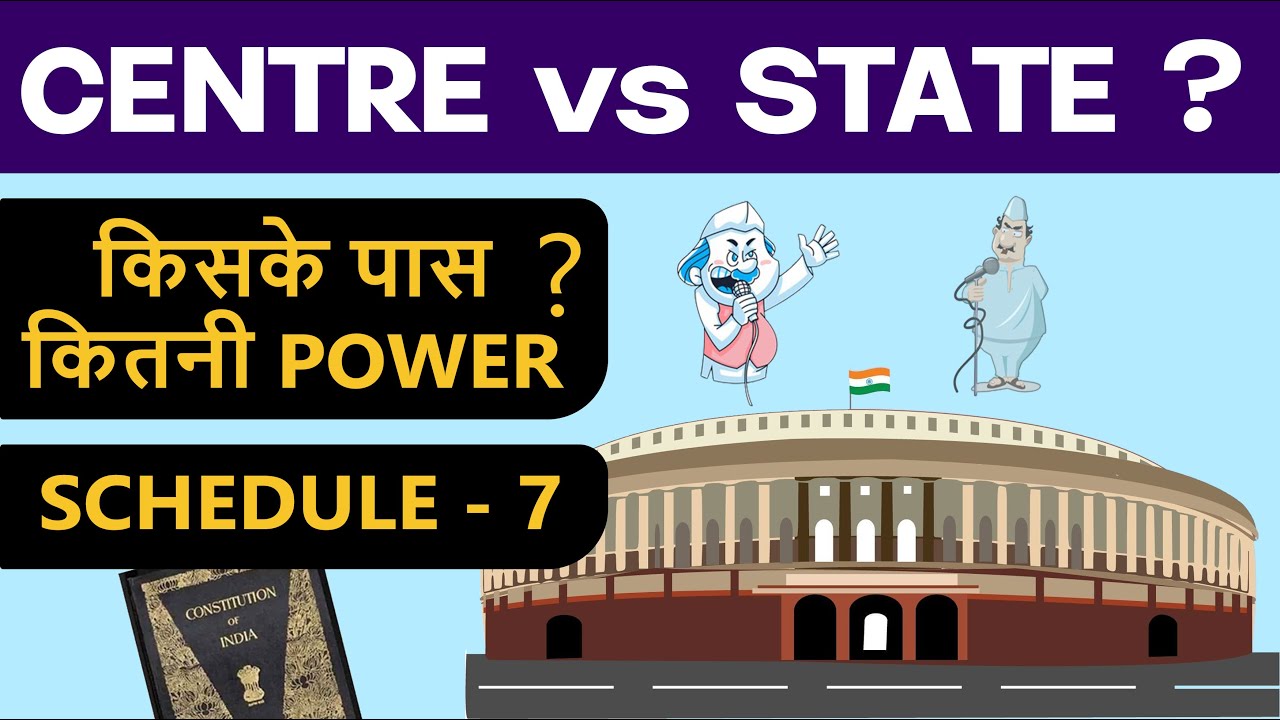
Explore the intricate Administrative Relations Between the Centre and the States as defined under Articles 256 to 263 of the Indian Constitution, a cornerstone topic for students preparing for competitive UPSC and State PSC examinations. Think of India as one giant team where the national government in New Delhi and local state governments work together. This detailed guide simplifies the complex federal structure and executive authority sharing mechanism between the Union and State governments, showing how rules are made, shared, and followed so the whole country runs smoothly like a well-managed school.
🎯 In this chapter, you will understand:
- How Articles 256 to 263 in Part XI set up the official rules for running the country.
- How central and state leaders divide their daily work and power to enforce laws.
- Why states must follow central rules and what happens if they refuse under Article 365.
- How both levels of government share duties and solve water or boundary disagreements peacefully.
💡 Why this topic matters: India is a huge country with many states. Without clear administrative rules, central laws might not be carried out, causing confusion, arguments between governments, and delays in helping people.
🧠 Core Idea: The central government lets states run their own local affairs, but keeps overall control to ensure national safety, unified rules, and teamwork across all state borders.
Administrative Relations Between the Centre and the States: Constitutional Overview
The journey of Indian federalism is defined by how the Union and State governments coordinate their executive functions to ensure national integrity. Imagine the Union as the principal of a big school and the states as class teachers. While teachers manage their own classrooms, everyone must follow the same school handbook so things do not turn chaotic.
The administrative framework ensures that while states enjoy autonomy, the national interest remains supreme through a system of coordinated governance and specific constitutional mandates. This system prevents individual states from ignoring general welfare rules while giving them enough space to care for their local needs.
- (i) The foundational Constitutional Framework is primarily rooted in Part XI of our nation's rulebook.
- (ii) These relations ensure a smooth distribution of executive powers across the Indian territory so no area is left without governance.
- (iii) The system relies on mutual delegation and intergovernmental cooperation to resolve potential conflicts without fighting in courts every day.
The Constitutional Framework of Administrative Governance
A deep dive into the legal pillars that support the administrative bridge between the two tiers of government. When lawmakers created India's rules after independence, they knew that making laws is only half the battle; the real work lies in executing them daily.

Core Provisions and Articles
The Administrative Relations are meticulously etched within Articles 256 to 263, residing in Part XI of the Indian Constitution. These laws serve as the primary blueprint for executive interaction, detailing who gives orders, who carries them out, and what happens when opinions differ.
- (i) These articles provide the legal sanctity for the Centre's intervention in state administration under specific conditions, ensuring national safety comes first.
- (ii) Beyond Part XI, supplementary articles across the Constitution address nuanced administrative matters to prevent legal vacuums during special situations or emergencies.
Mechanics of Executive Power Distribution
Understanding how the power to execute laws follows the power to make them, maintaining a balanced federal hierarchy. In simpler terms, whichever government is allowed to write a rule is usually the one given the job to enforce it in real life.
The Mirror Principle of Executive Authority
Generally, the executive authority follows the distribution of legislative powers, ensuring that whichever body makes the law also holds the power to implement it, subject to specific constitutional exceptions. This keeps work organized so governments do not fight over the same tasks.
The Centre’s Executive Domain
The central government has total control over big national matters that affect the whole country, like defense, borders, and foreign relationships.
- (i) Jurisdiction extends to all matters where Parliament holds exclusive legislative rights, specifically Union List subjects.
- (ii) It covers all authority and rights stemming from international treaties or agreements signed with other countries.
The State’s Executive Domain
State governments handle everyday local needs that directly touch people's lives inside their specific borders, like police stations, local public health, and agriculture.
- (i) Authority is confined to the state's territory for matters categorized under the State List.
- (ii) For Concurrent List subjects like education or forests where both levels can pass rules, the state usually maintains executive power, unless the Constitution or a Parliamentary enactment explicitly grants it to the Centre.
Obligations and Central Directives
The Constitution places certain responsibilities on States to ensure they do not collide with the Union's broader national objectives. Just like cars driving on a highway must follow traffic signals, state officials must follow central directions so the whole nation stays safe and connected.
Limits on State Executive Authority
To provide the Centre with an unobstructed operational path, the Constitution imposes two specific limits on how a state exercises its power so it never blocks central work.
- (i) Mandatory Compliance: States must ensure their actions align with Parliamentary laws and any existing laws applicable within their borders.
- (ii) Non-Interference: A state’s executive power must never be used to hinder or prejudice the exercise of the Centre’s executive power.
Enforcement through Article 365
The Article 365 acts as a powerful deterrent, empowering the President to intervene if a state fails to comply with Central directions or breaks national rules.
- (i) Non-compliance provides legal grounds to conclude that the state government cannot function per the Constitution.
- (ii) This often serves as the precursor to the imposition of President’s Rule under Article 356, where the central government takes over state management temporary.
Key Areas for Central Directives
The Centre is authorized to issue specific directions to ensure national stability and welfare across several critical sectors where uniform action is necessary.
Key sectors including railways, national highways, and minority education receiving central directives. - Infrastructure: Construction and maintenance of communication routes deemed to be of national or military significance.
- Railways: Specific measures required for the protection of railways operating within state boundaries.
- Linguistic Rights: Ensuring mother-tongue primary education is provided for linguistic minority children.
- Tribal Welfare: Planning and executing essential welfare schemes for Scheduled Tribes.
Mutual Delegation and Inter-State Cooperation
How the Union and States share tasks and resolve disputes through constitutional "safety valves." When two governments need to work together, the Constitution lets them share workload or build special boards to talk out problems peacefully.
The Process of Mutual Delegation
To resolve administrative rigidities, the Constitution allows for the transfer of functions between the two levels of government through specific channels so work does not stall.
- (i) By Mutual Agreement: The President (with State consent) or a Governor (with Central consent) can entrust functions to one another seamlessly.
- (ii) By Parliamentary Legislation:Parliament can unilaterally impose duties on states regarding Union List matters. However, states cannot confer powers on the Union without its express agreement.
Fostering Intergovernmental Cooperation
The Indian Constitution promotes cooperative federalism through several dedicated institutions and rules designed to bring people together.
- (i) Water Disputes:Parliament is the deciding authority for disputes involving inter-state river waters so states do not fight over drinking water.
- (ii) Inter-State Council: Established under Article 263 by the President to investigate matters of common interest; notably, this was .
- (iii) Public Acts and Records: A "Full faith and credit" clause ensures that judicial proceedings and official public records are recognized throughout the territory of India.
- (iv) Trade Authority:Parliament holds the power to appoint an authority for inter-state trade and commerce, though this remains an unutilized provision to date.
⚡ Quick Revision Capsule: Centre-State Administrative Relations
Here is a handy summary table showing key constitutional articles, their main functions, and how they shape governance in India.
| Article Number | Core Subject / Focus Area | Key Governance Impact |
|---|---|---|
| Article 256 | State obligation to follow Parliament laws | Ensures central laws are obeyed uniformly in every state. |
| Article 257 | Control of Union over States in specific cases | Protects national highways, military paths, and railways. |
| Article 258 | Power of Union to confer powers on States | Allows Union to share administrative tasks with state officers. |
| Article 262 | Adjudication of inter-state river water disputes | Prevents state court arguments over shared river waters. |
| Article 263 | Establishment of Inter-State Council | Fosters teamwork, created in for coordination. |
📝 Summary
The Administrative Relations Between the Centre and the States are designed to maintain a delicate balance between state autonomy and national unity. For students, mastering Articles 256 to 263 and the role of Article 365 is essential for understanding how the Indian Federation functions during both normal times and emergencies. Ever since the Indian Constitution came into force, these rules have kept the country united while letting diverse regional populations manage local needs.
🚀 Quick Revision Points
Essential facts to review before examinations:
- (i) Administrative rules reside in Part XI covering Articles 256 to 263.
- (ii) Executive power mirrors legislative power across Union, State, and Concurrent lists.
- (iii) Failure to follow central directions triggers Article 365, leading to possible President's Rule under Article 356.
- (iv) The Inter-State Council under Article 263 was established in to improve cooperation.
- 💡 Exam Tip: Always remember that under Article 258, the Centre can delegate duties to a state with or without its consent via Parliamentary law, but a state needs the Centre's consent to delegate duties to the Union!
❓ Frequently Asked Questions (FAQ)
Q1: What are administrative relations between the Centre and States?
A1: They are the constitutional rules (Articles 256 to 263) that decide how executive powers and daily administrative work are shared between the national government and state governments.Q2: What happens if a State refuses to follow Central administrative directions?
A2: Under Article 365, the President can declare that the state government is not working according to the Constitution, which may lead to President's Rule under Article 356.Q3: When was the Inter-State Council established and under which Article?
A3: It was set up in under Article 263 of the Indian Constitution to resolve disputes and discuss common interests among states.