The Types of Amendments in the Indian Constitution serve as the backbone of India’s democratic resilience because they allow the country to change with time while protecting its most important values. By understanding Article 368 of the Constitution of India, students can learn how the Indian Constitution remains a living document through different legislative procedures. These procedures make sure that important changes are not made carelessly and that both Parliament and, in some cases, the states take part in decision-making.
🎯 In this chapter, you will understand:
- Why the Indian Constitution needs both rigidity and flexibility.
- How Article 368 controls the formal amendment procedure.
- The difference between simple majority, special majority, and state ratification.
- Which constitutional matters require the consent of state legislatures.
💡 Why this topic matters: The amendment process helps India respond to new social, political, and administrative needs without breaking the basic framework of the Constitution. It also protects the federal balance between the Union Government and the States.
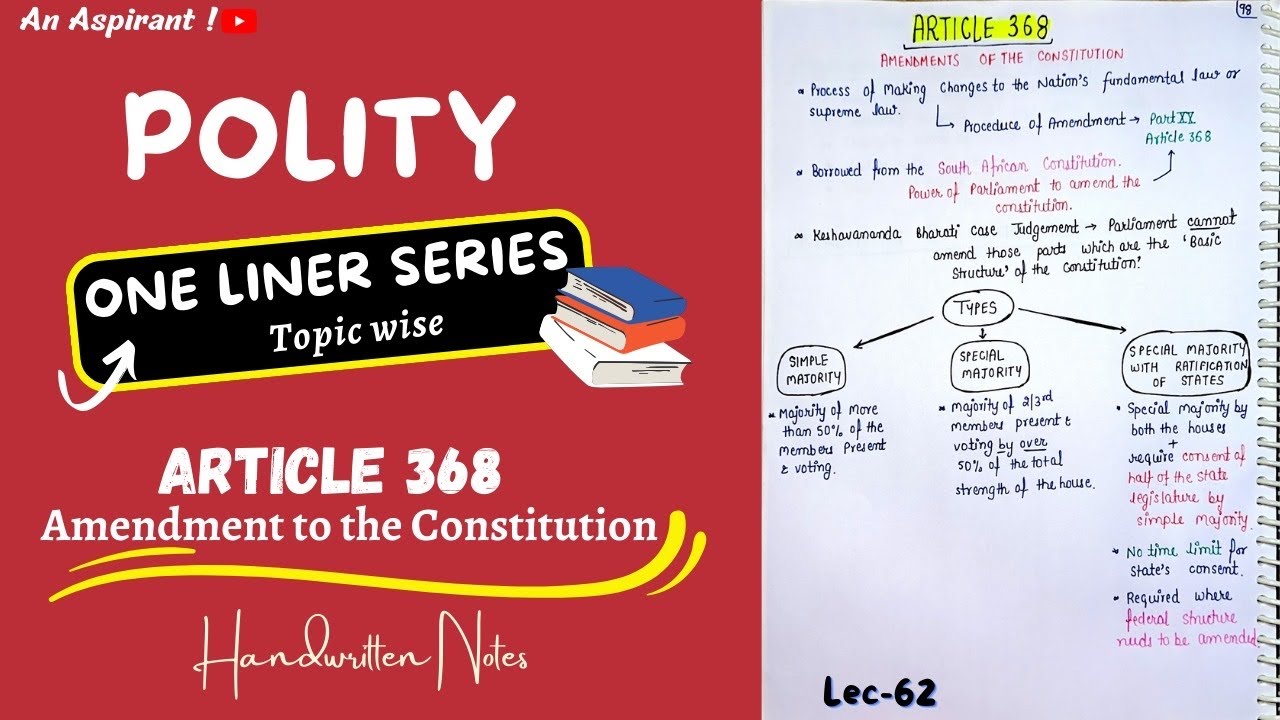
🧠 Core Idea: The Indian Constitution can be amended in three broad ways: by a simple majority, by a special majority of Parliament, or by a special majority along with ratification by at least half of the state legislatures.
Comprehensive Types of Amendments in the Indian Constitution under Article 368
The Indian Constitution is a unique blend of rigidity and flexibility. It is rigid because some of its provisions cannot be changed easily, and flexible because other parts can be updated through simpler procedures. The makers of the Constitution understood that a completely unchanging document would not be able to serve a growing and changing society. Therefore, they created a system in which the Constitution could be improved while its fundamental essence remained safe.
The architects of the nation realised that a static constitution would eventually face pressure from changing social conditions, new administrative needs, and evolving ideas of governance. For this reason, they established a framework where the document could be updated carefully without damaging its basic structure. According to the provisions of Article 368, the amendment process is divided into three distinct pathways so that every change receives the level of scrutiny appropriate to its importance.
- (i) Amendments by a simple majority of Parliament, which follow the same path as ordinary legislative bills.
- (ii) Amendments by a special majority of Parliament, reserved for important constitutional provisions.
- (iii) Amendments by a special majority coupled with state ratification, used when the federal structure of the nation is affected.
Methods of Constitutional Amendment (Article 368)
Article 368 of the Constitution acts as the primary gatekeeper for formal constitutional amendments. It explains how the supreme law of the land can be modified through careful democratic checks. The purpose of these checks is to prevent sudden or temporary political majorities from changing the Constitution without broad support. At the same time, the procedure allows Parliament to respond to genuine national needs.
Detailed Article 368 Amendment Procedure
The Constitution of India uses Article 368 to classify two major formal methods of amendment. This system ensures that while some parts of the Constitution can adapt to changing circumstances, other parts require a broad national consensus before they can be changed. The distinction is important because it protects both democratic flexibility and constitutional stability.
- (i) Requirement of Special Majority: This involves obtaining the support of more than 50% of the total membership of each House, along with at least two-thirds of the members present and voting.
- (ii) Federal Consent Framework: For matters that alter the balance of power between the Centre and the States, the special majority must be supported by ratification from at least half of the state legislatures, ensuring federal consent is achieved.
Simple Majority Provisions under Other Articles
Beyond the formal constraints of Article 368, several parts of the Constitution can be altered by a simple majority. These changes are legally important, but they are treated like ordinary laws because they do not directly disturb the core constitutional framework. This flexibility helps the government manage practical matters of administration and governance without making every small adjustment a major constitutional event.
- (i) Administrative Agility: These amendments allow the government to make procedural or administrative changes without creating a constitutional crisis.
- (ii) Maintaining Governance: The goal is to ensure that the daily functioning of the Indian Republic remains flexible for routine governance matters.
- (iii) Operational Examples: This includes the reorganisation of state boundaries, adjustment of salaries, and the formulation of procedural rules for Parliament.
Amendment by Simple Majority of Parliament
Certain amendments do not affect the Basic Structure or the federal character of the Constitution. Such amendments are processed through a simple majority, which means they can be passed in the same way as an ordinary law. This does not make them unimportant; rather, it shows that the Constitution separates routine administrative adjustments from changes that affect fundamental rights, federal relations, or the structure of government.
Practical Examples of Amendments by Simple Majority
This category is largely connected with the administrative machinery of the state. It allows democratic institutions to work smoothly by keeping the legislative path simple for non-core issues. These provisions help Parliament respond quickly to practical needs while keeping major constitutional safeguards intact.
Territorial and Legislative Adjustments
Changes related to states and legislative bodies are often handled through a simple majority because they are mainly organisational in nature. They help the country adjust its administrative map and legislative arrangements according to present needs.
- (i) The formation of new states, or the alteration of areas and names of existing states, under Articles 2 and 3.
- (ii) The creation or abolition of State Legislative Councils, also called Vidhan Parishads, according to the needs of the states.
Procedural and Administrative Rules
Parliament also uses the simple-majority method for rules that support the day-to-day working of government institutions. These provisions keep the administrative system practical, organised, and responsive to changing requirements.
- (i) Setting the salaries and allowances of Members of Parliament, the Speaker, and other constitutional dignitaries.
- (ii) Determining the rules of procedure, privileges, and the quorum required for parliamentary sittings.
- (iii) Regulating matters related to citizenship, the use of official languages, and the governance of Union territories.
- (iv) Direct administration of Scheduled Areas and Tribes governed under the Fifth and Sixth Schedules.

Amendment by Special Majority of Parliament
To protect the Fundamental Rights and the Directive Principles of State Policy, the Constitution requires a special majority. This ensures that these important pillars cannot be altered by a momentary political whim. A special majority makes sure that a proposed change has substantial support within both Houses of Parliament, not merely the support of a small group of members.
Rigorous Procedure of Special Majority Amendments
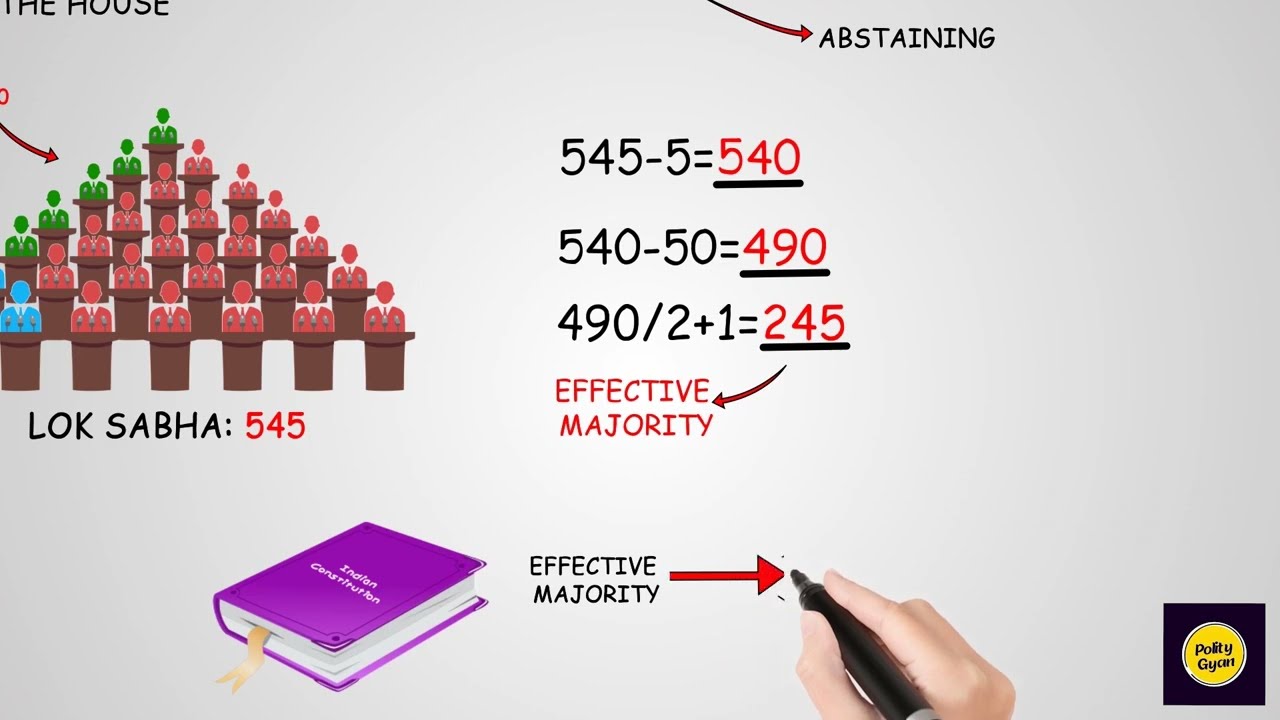
The special majority acts as a safeguard for the Constitution. It requires a high level of agreement within the Parliament of India and demands that two separate numerical conditions are fulfilled at the same time. This makes the process more difficult than passing an ordinary law and helps preserve the stability of the constitutional system.
- (i) Total Membership Threshold: The bill must be supported by a majority of the total membership of the House, regardless of existing vacancies or absentees.
- (ii) Voting Majority: Among the members actually present and voting, at least a two-thirds majority must support the bill.
- (iii) Consistency Rule: This strict standard applies at every effective stage of the bill, helping ensure that the core framework of the Constitution remains protected.
Thematic Examples of Special Majority Amendments
This method is reserved for provisions that define the relationship between the state and its citizens. Because these provisions affect liberties, governance goals, and the wider constitutional framework, they require a broad national consensus before they can be changed.
- (a) Fundamental Rights: These provisions safeguard individual liberties and protect the dignity of citizens.
- (b) Directive Principles of State Policy: These principles provide social and economic goals for the governance of the country.
- (c) All other provisions that are not specifically covered by the simple-majority or state-ratification categories.
Amendment by Special Majority of Parliament with State Ratification
When an amendment seeks to change the federal structure, the Union cannot act alone. It must seek the collective agreement of the states to maintain cooperative federalism. This requirement recognises that India is not only a union of people but also a union of states, and therefore both levels of government should have a voice in changes affecting their relationship.
Principles of Federal Consent and Balance
This dual-layer process ensures that the Union Government and the State Legislatures act as partners in shaping the most sensitive parts of the constitutional framework. It prevents the Centre from making major federal changes without consulting the states, thereby protecting the balance of power in the Indian federal system.
- (i) Ratification Mechanics: Once Parliament passes the bill by a special majority, it is sent to the states. A simple majority in at least half of the state legislatures is needed for ratification.
- (ii) Absence of Time Limits: The Constitution does not set a specific deadline for states to respond, but the amendment moves to the President only after the 50% threshold is met.
- (iii) Stability of the Union: This process prevents the central government from unilaterally reducing the constitutional powers of the states.
Structural Examples of Amendments Requiring State Ratification
The provisions in this category define the architecture of the Indian Federal System and protect important institutions such as the judiciary. Since these matters affect both the Union and the States, state consent is necessary to preserve cooperative federalism.
Executive and Judicial Powers
Changes to executive authority or the judicial system can affect the balance between the Centre and the States. Therefore, such amendments require special parliamentary approval as well as ratification by at least half of the state legislatures.
- (a) The Election of the President and the manner in which voting takes place.
- (b) The extent of the executive powers held by both the Union and the various States.
- (c) The structure and jurisdiction of the Supreme Court and the High Courts.
Legislative and Constitutional Authority
Legislative powers decide which level of government can make laws on a particular subject. Any change in this division can affect the rights and responsibilities of both the Union and the States, which is why state ratification is required.
- (a) The distribution of legislative powers between the Union and the States.
- (b) Any change to the Lists in the Seventh Schedule, namely the Union, State, and Concurrent Lists.
- (c) The representation of States within the Parliament, especially in the Rajya Sabha.
- (d) The power of Parliament to amend the Constitution and the amendment procedure laid down in Article 368.
⚡ Quick Revision Capsule: Constitutional Amendment Methods
The table below gives a simple overview of the three main amendment methods. It helps students quickly revise which method applies to which type of constitutional change.
| Amendment Method | Main Requirement | Examples |
|---|---|---|
| Simple Majority | Passed like an ordinary law by Parliament. | Creation or abolition of State Legislative Councils; changes in citizenship rules. |
| Special Majority | Majority of total membership plus two-thirds of members present and voting. | Changes to Fundamental Rights and Directive Principles of State Policy. |
| Special Majority with State Ratification | Special majority in Parliament plus ratification by at least half of the state legislatures. | Election of the President; distribution of legislative powers; changes to the Seventh Schedule. |
| Purpose | To balance flexibility with constitutional stability. | Routine administrative changes, major rights-related changes, and federal structural changes. |
| Key Article | Article 368 governs the formal amendment procedure. | It explains the special-majority and state-ratification procedures. |
📝 Summary
The amendment process in India under Article 368 balances rigidity and adaptability. It allows the Constitution to grow with the needs of the people while protecting its federal structure and core values. For students and aspirants, mastering the three methods—simple majority, special majority, and state ratification—is essential to understanding the democratic and federal nature of India’s supreme law. This framework helps the Indian Constitution remain progressive and enduring for future generations.
🚀 Quick Revision Points
Essential facts to review before examinations:
- (i) Article 368 provides the formal procedure for amending the Constitution.
- (ii) Simple-majority amendments are treated like ordinary laws and mainly concern administrative matters.
- (iii) A special majority means a majority of the total membership of each House and two-thirds of members present and voting.
- (iv) Federal amendments require ratification by at least half of the state legislatures under Article 368.
- 💡 Exam Tip: Remember that “simple majority” amendments are outside the formal scope of Article 368, while “special majority” and “special majority with state ratification” are the two formal methods under it.
❓ Frequently Asked Questions (FAQ)
Q1: What is Article 368?
A1: Article 368 is the provision of the Indian Constitution that lays down the procedure for amending constitutional provisions through Parliament and, in certain cases, state legislatures.Q2: What is a special majority?
A2: A special majority means support from a majority of the total membership of each House and at least two-thirds of the members present and voting.Q3: When is state ratification required?
A3: State ratification is required when an amendment affects the federal structure, such as the election of the President, the distribution of legislative powers, or the provisions of the Seventh Schedule.