The Indian agricultural sector is going through a massive structural shift. By looking closely at how researchers Srijit Mishra and D. Narasimha Reddy break down the Agrarian Crisis, we can better understand the real issues behind farmers' distress and see where High Value Agriculture (HVC) fits into the future. This overview offers clear, foundational insights for students digging into rural development, economic policies, or preparing for competitive exams.
🎯 In this chapter, you will understand:
- The fundamental distinction between an agricultural production crisis and an agrarian livelihood crisis.
- How land fragmentation, indebtedness, and weak extension support trigger farmer vulnerability.
- Sustainable technology models and institutional frameworks like Self-Help Groups (SHGs).
- Opportunities, regional distributions, and cold-chain infrastructure hurdles in High Value Agriculture.
💡 Why this topic matters: Bridging the gap between crop output statistics and the real living conditions of rural cultivators is vital for effective agrarian reform and policy design.
🧠 Core Idea: Solving Indian rural distress requires shifting focus from simple production output targets to protecting producer livelihoods through high-value commodities and community institutions.
Agrarian and Agricultural Crisis in India: Perspectives from Srijit Mishra and D. Narasimha Reddy ()
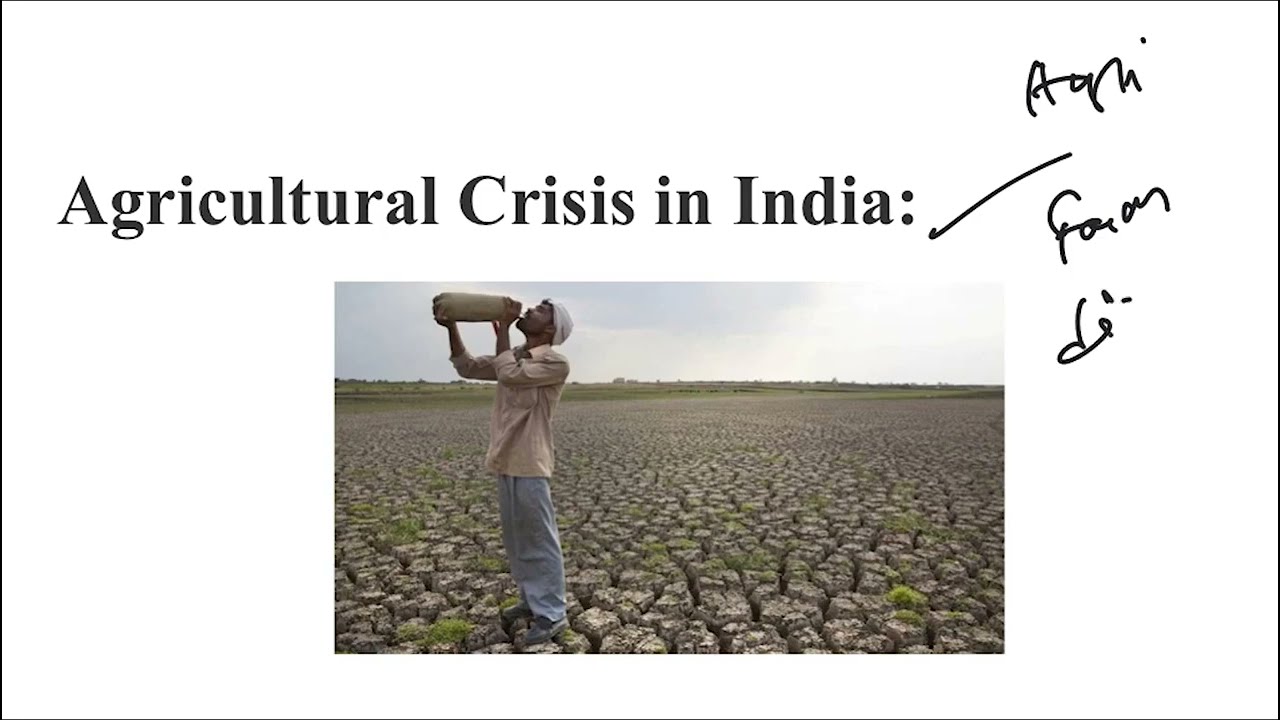
When you examine the deep economic troubles in rural India, a glaring contradiction stands out: our national economy has been growing rapidly, yet the actual well-being of the people growing our food has steadily declined. This structural imbalance has put millions of livelihoods at risk for the last two decades.
- (i) The issue is a dual challenge, hurting both the mechanics of production and the daily lives of the producers themselves.
- (ii) Decades of neglecting long-term rural development and gaps in funding have caused this gradual structural decline.
- (iii) This imbalance has persisted for nearly , leaving rural communities in distress even as the national GDP numbers look strong.
Understanding the Dual Crisis in Agriculture
Mishra and Reddy emphasize that if policy makers cannot see the difference between an agricultural problem and an agrarian one, the solutions they design will keep missing the mark.

The Distinction Between Sectoral and Livelihood Crisis
An agricultural crisis deals with technical and financial failures in the industry, but an agrarian crisis is an immediate threat to human survival.
- (i) Agricultural Crisis: Driven by poorly planned government programs and weak resource allocation.
- (ii) Agrarian Crisis: A profound livelihood emergency where rural families simply cannot survive on traditional farming anymore.
- (iii) Structural Nature: These hardships are deeply woven directly into the social and economic fabric of village communities.
Marginalisation and Farmers' Distress
Shrinking plot sizes and a heavy build-up of debt have created an unstable, high-risk environment for small-scale cultivators across the country.
Fragmentation of Land and Socio-Economic Impact
Data from clearly shows how intense marginalisation has become, with most farmers operating on tiny patches of land.
- (i) More than 60% of operational farms were under 1 hectare, making it nearly impossible to hit economies of scale.
- (ii) Farmers' suicides stand as a tragic symptom of extreme, unmanageable indebtedness, appearing at rates out of proportion with non-farming sectors.
- (iii) Rural poverty remains directly tied to how well crops perform and how far farm returns continue to drop.
The Collapse of Institutional and Extension Support
As state support systems have receded, unregulated market players have moved into the vacuum, often exploiting vulnerable communities.
Research Gaps in Rain-fed Areas and Input Risks
A lack of support in rain-fed regions creates severe technical vulnerabilities for smallholders.
- (i) A lack of proper extension advice for dry and drought-prone regions has forced farmers to rely entirely on what local commercial vendors want to sell them.
- (ii) Unregulated dealers have essentially become the main source of new farming tech, which frequently leads to high-cost, high-risk practices.
Community-Managed Sustainable Agriculture Model - Transitioning to community-managed sustainable agriculture is critical to resetting the ecological and financial balance on these farms.
Technology and Institutional Alternatives for Sustainable Farming
To keep Indian farming viable over the long term, we have to look past the old, resource-heavy strategies that cost too much to maintain.
Beyond the Resource-Intensive Green Revolution
The Green Revolution successfully drove up production volumes, but its high-input nature made it far too expensive and risky for smallholders.
- (i) Modern financial credit products frequently loaded more risk onto the farmer rather than protecting them from market swings.
- (ii) Today, the focus must shift to knowledge-centric models that optimize local inputs instead of relying on expensive external chemicals.
- (iii) The main goal now has to be cutting down cultivation costs so that final earnings actually result in remunerative returns.
Empowerment via Social Capital and SHGs
Bringing farmers together into collaborative networks is one of our best tools against market marginalisation.
- (i) Self Help Groups (SHGs) and regional federations build real empowerment structures right at the village level.
- (ii) We need to restructure government agricultural departments so they work as helpful enablers rather than slow, bureaucratic hurdles.
- (iii) Successful local pilots prove that mixing cost-saving techniques with community-led ideas can breathe new life into the sector.
High Value Agriculture in India: Opportunities and Challenges
As the wider economy changes, shifting consumer preferences offer smallholders a solid chance to boost their take-home income.
Urbanisation and the Shift to High Value Commodities (HVC)
Steady economic growth and fast-paced urbanisation are creating huge demand for items like milk, meat, fish, fruits, and vegetables.
- (i) The demand for High Value Food options is on track to double, creating an ideal opening for the 80% of Indian farmers working small plots.
- (ii) HVC farming requires more hands-on labor, meaning it naturally helps with rural jobs and poverty reduction.
- (iii) While globalisation has opened up foreign export potential, small farmers still need significant help building the skills to compete globally.
Spatial Mapping of HVC Production in India
Different parts of the country have built unique farming specialities based on their local climate zones and how close they are to major city markets.
- (a) Fruits & Vegetables: Primarily grown in coastal areas, the North-East, and regions with steady rainfall.
- (b) Dairying: Highly successful across Northern and Western India, bringing in reliable daily cash flow for households.
- (c) Poultry & Small Ruminants: Widely successful in the Southern and Eastern states, typically positioned close to large urban demand centers.
Constraints and Policy Support for HVC
Despite all the clear advantages, poor logistics and unpredictable price crashes make it tough for average farmers to switch to high-value produce.
The Critical Need for Specialized Infrastructure
Because HVCs are highly perishable, they require a dependable cold chain and logistics network that simply isn't there yet.
- (i) Infrastructure Deficiencies: A shortage of refrigerated trucks and cold storage hubs leads to massive post-harvest spoilage.
- (ii) Uneven Distribution: Most advanced storage setups are clustered around cities, leaving remote farmers stuck with steep transport costs.
- (iii) Price volatility remains a severe danger; a minor jump in local supply can cause dramatic price drops overnight.
Mitigating Risks through Policy and Private Participation
To keep this growth fair and balanced, the Government of India and private investors have to cooperate on managing financial risks.
- (i) Contract Farming: Supporting producer organizations and cooperatives helps connect the farm gate directly to retail buyers.
- (ii) Financial Inclusion: Pushing banks and credit institutions to offer accessible working capital designed for intensive cultivation setups.
- (iii) Government Initiatives: Recent policy focus on food processing units and building stronger supply networks is designed to keep farmer earnings stable.
⚡ Quick Revision Capsule: Agrarian Crisis vs. High Value Agriculture
A side-by-side snapshot comparing traditional cereal farming challenges with high-value agricultural solutions.
| Dimension | Traditional Agricultural Crisis | High Value Agriculture (HVC) Solution |
|---|---|---|
| Primary Focus | Bulk output volume & resource-heavy inputs | Market demand, quality & labor-intensive returns |
| Key Vulnerability | High cultivation cost, unguided debt & crop failure | Perishability, cold storage shortages & price swings |
| Target Produce | Staple cereals & water-intensive crops | Milk, poultry, fruits, vegetables & fisheries |
| Institutional Role | Declining state extension, unregulated private vendors | Self Help Groups (SHGs), FPOs & contract farming |
| Livelihood Impact | Shrinking farm size & severe producer distress | Enhanced rural employment & higher daily cash flow |
📝 Summary
Fixing the agrarian crisis requires turning our focus from simple production targets to the actual livelihoods of the producers. By embracing High Value Agriculture and building strong community institutions like SHGs, India can create a sustainable safety net for its marginal farmers. For students, understanding how this structural transition has played out since is central to parsing the realities of rural development and modern economic policy.
🚀 Quick Revision Points
Essential facts to review before examinations:
- (i) The crisis in Indian agriculture is dual: an agricultural crisis (production/tech) and an agrarian crisis (livelihood/survival).
- (ii) Over 60% of operational land holdings in India are smaller than 1 hectare, creating massive marginalisation.
- (iii) Transitioning to community-managed sustainable agriculture reduces reliance on costly external chemical inputs.
- (iv) Urbanisation and rising incomes are driving double-digit demand growth for high-value food items.
- 💡 Exam Tip: When answering questions on rural distress, always distinguish between "agricultural" output issues and "agrarian" livelihood challenges. Mention Srijit Mishra and D. Narasimha Reddy's work on land fragmentation (>60% under 1 ha) and how SHG-led high-value agriculture acts as an economic alternative.
❓ Frequently Asked Questions (FAQ)
Q1: What is the main difference between an agricultural crisis and an agrarian crisis?
A1: An agricultural crisis focuses on technical, input, and production failures in the sector, while an agrarian crisis represents a severe livelihood emergency threatening the basic survival of rural households.Q2: How does High Value Agriculture (HVC) benefit small-scale farmers?
A2: HVC crops (like fruits, vegetables, dairy, and poultry) are labor-intensive, suitable for small land holdings, and generate higher income per acre compared to traditional staple grains.Q3: What are the main barriers preventing farmers from switching to High Value Commodities?
A3: High perishability, lack of refrigerated transport and cold storage, high market price volatility, and limited access to institutional credit.