Disclaimer: We do not sell or facilitate the sale of physical books.
The decade of the 1990s and the dawn of the 2000s represented a volatile era for India's economy, characterized by initial successes in stabilization followed by a period of structural strain and rising deficits that tested the nation's financial resilience.
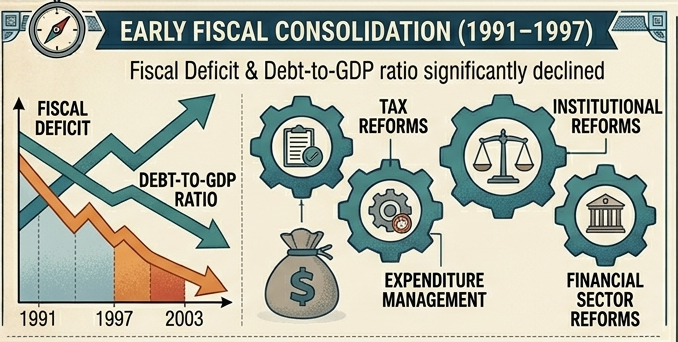
Through a narrative of reform, the nation embarked on a path of tax reforms, expenditure management, institutional reforms, and financial sector reforms. These concerted efforts yielded tangible results as the fiscal deficit and debt-to-GDP ratio significantly declined between 1991 and 1997, marking a triumphant phase of early consolidation.
This era was defined by the transition from a closed economy to one seeking stability through institutional change. The reduction in the debt-to-GDP ratio during these years proved that strategic policy shifts could effectively curb uncontrolled government borrowing.
The core of this success lay in the synergy between taxation logic and financial sector efficiency, which allowed for a more streamlined public treasury and enhanced the credibility of India's fiscal position on the global stage.

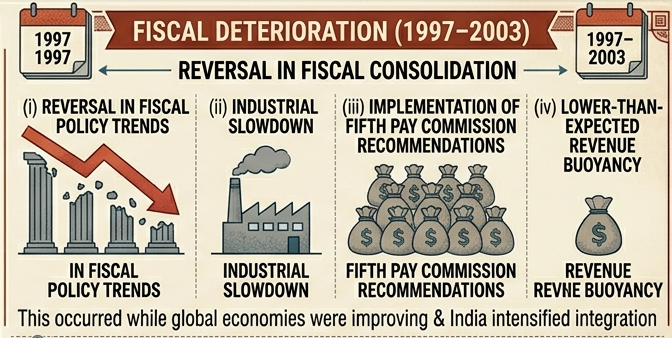
However, the narrative shifted dramatically between 1997 and 2003, when India witnessed a reversal in fiscal consolidation. This downturn was not the result of a single failure but a confluence of multiple economic pressures.
The deterioration was fueled by a reversal in fiscal policy trends and a significant industrial slowdown that severely impacted tax revenues. The burden was further exacerbated by the implementation of the Fifth Pay Commission recommendations, which increased government salary expenditures, alongside a lower-than-expected revenue buoyancy.

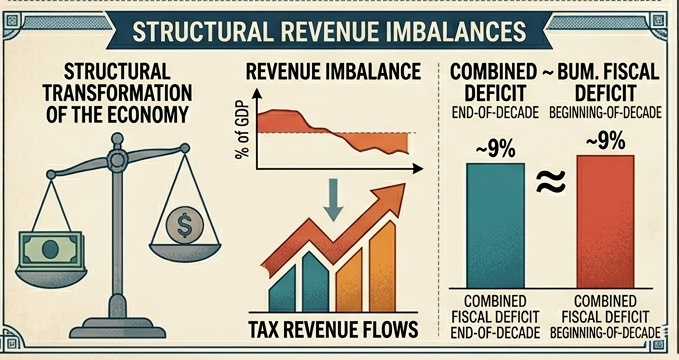
The very nature of the economy was changing, and with it, the flow of capital. The structural transformation of the economy during the 1990s fundamentally altered tax revenue flows, resulting in a persistent revenue imbalance that proved difficult to correct.
Despite years of policy adjustments, the structural gap meant that by the end of the decade, the combined fiscal deficit remained at approximately the same level as at the beginning, hovering around 9% of GDP.

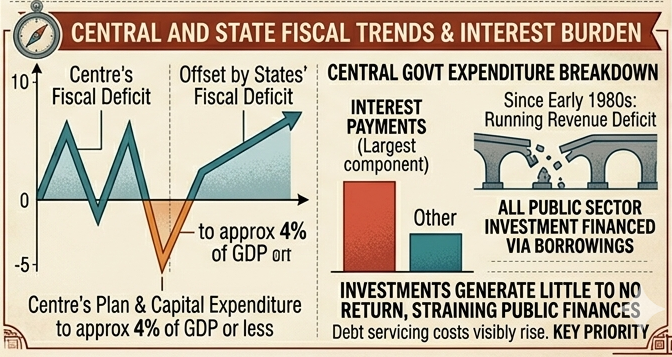
A closer look at the balance of power reveals a complex relationship between different levels of government. While there was some marginal reduction in the Centre’s fiscal deficit, it did not follow a steady decline.

The reduction followed a non-linear, zig-zag path and was ultimately offset by a rise in the States’ fiscal deficits. This internal shift meant the overall national debt remained high, even as the Centre attempted to tighten its belt.
The most significant shadow over the budget was the growing cost of past choices. Interest payments eventually rose to become the largest single component of central government expenditure.
The root of this issue can be traced back to the early 1980s, since which India has been running a revenue deficit. This long-standing gap means that all public sector investment must be financed through borrowings by the central government.
In summary, the fiscal landscape of the 1990s and early 2000s in India was a tale of two halves: a promising start of consolidation followed by a structural decline. The era highlighted the deep-seated challenge of managing interest burdens and state-level deficits, illustrating that true fiscal health requires consistent revenue buoyancy and the productive use of borrowed capital to avoid the trap of stagnant returns and rising debt servicing.
Please login to comment and rate.
No comments yet. Be the first!
Learning Directive: You are about to enter in Adaptive Learning Mode setup. Here you will get :
• Daily: 4-5 curated topics per subject, per day.
• Gated Progression: Next-day access remains locked until all current topics are marked finished.
• 24 hours rule: Unlock cycle gets triggered on your first visit to a subject.
If you disagree you will be redirected to UPSC digital library to learn as a freelancers