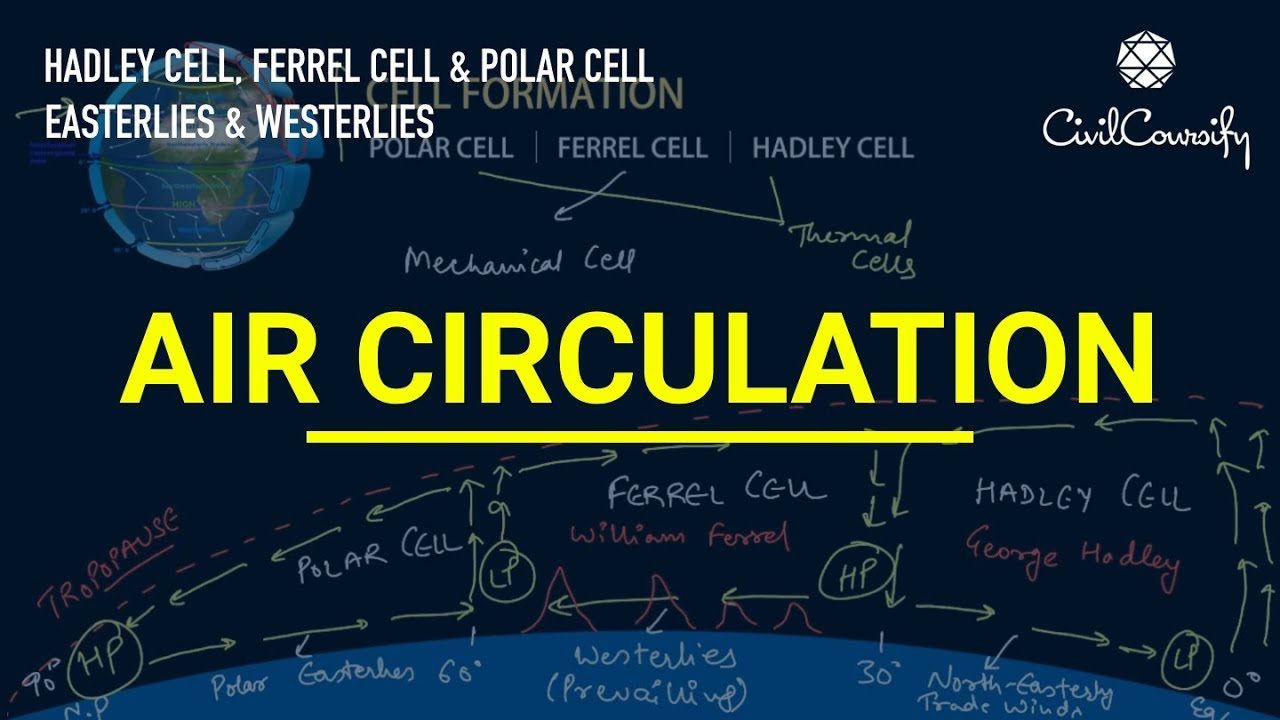
Atmospheric circulation is the large-scale movement of air across our entire planet. Working hand in hand with ocean circulation, it acts like a giant giant engine that spreads heat around the Earth. Because the sun heats the equator much more than the freezing poles, this system moves extra heat toward the cold ends of the Earth, keeping our planet's temperature balanced so life can thrive everywhere.
🎯 In this chapter, you will understand:
- How warm air and cold air move globally to balance Earth's temperature.
- The workings of the three giant air loops: the Hadley Cell, Ferrel Cell, and Polar Cell.
- How East-West winds over the ocean cause upwelling and global weather changes like El Niño.
- Why global pressure belts shift north and south as the seasons change throughout the year.
💡 Why this topic matters: Global wind patterns create our weather, guide ocean currents, and determine where lush rainforests or dry deserts exist on Earth.
🧠 Core Idea: Uneven solar heating fuels giant loops of moving air that shift heat from the equator to the poles and from east to west.
The Narrative of Thermal Redistribution: Defining Atmospheric Circulation
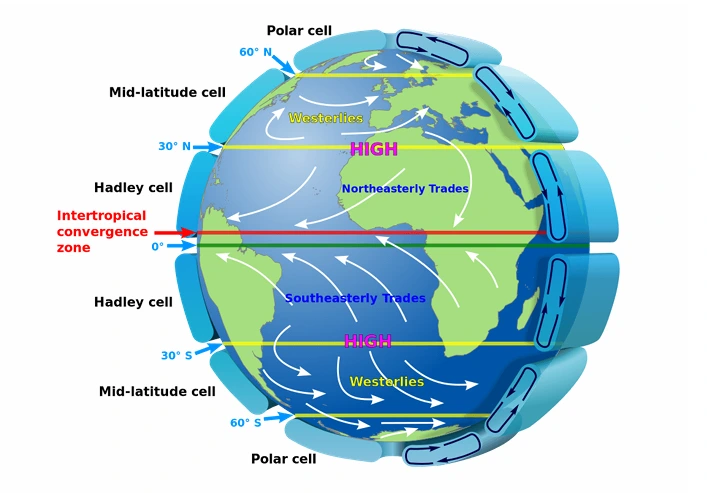
Global winds move in two main directions: north-south loops and east-west loops. North-south air paths form repeating loops across latitudes, while east-west air paths, such as the Walker Circulation, form because of where land and oceans sit. Together, these moving air currents explain why lush rainforests grow in some places while vast deserts form in others.
Analyze the Mechanics of Latitudinal and Longitudinal Belts
Air moves in north-south patterns (latitudinal circulation) because the sun shines directly on the equator, delivering strong solar radiation, while very little solar heat reaches the poles. Air moves in east-west patterns (longitudinal circulation) because land and water warm up differently. Land heats up and cools down very fast, while water holds heat longer without changing temperature quickly. This difference creates steady winds blowing between continents and oceans.
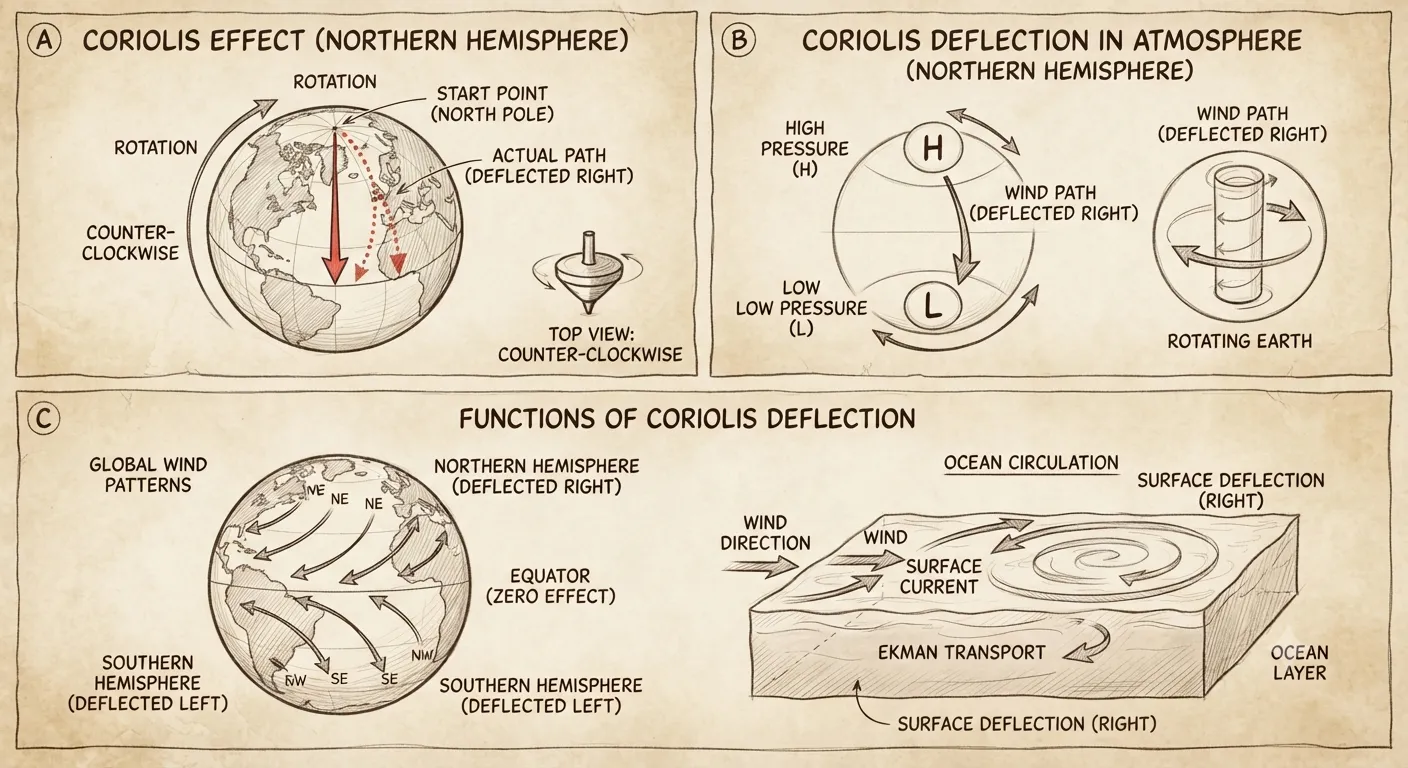
Functions of Coriolis Deflection - (i) Latitudinal air movement is powered by strong solar energy at the equator decreasing toward the poles.
- (ii) Longitudinal air movement is created by temperature differences between landmasses and surrounding oceans.
Explore the Mechanics of the Hadley Cell
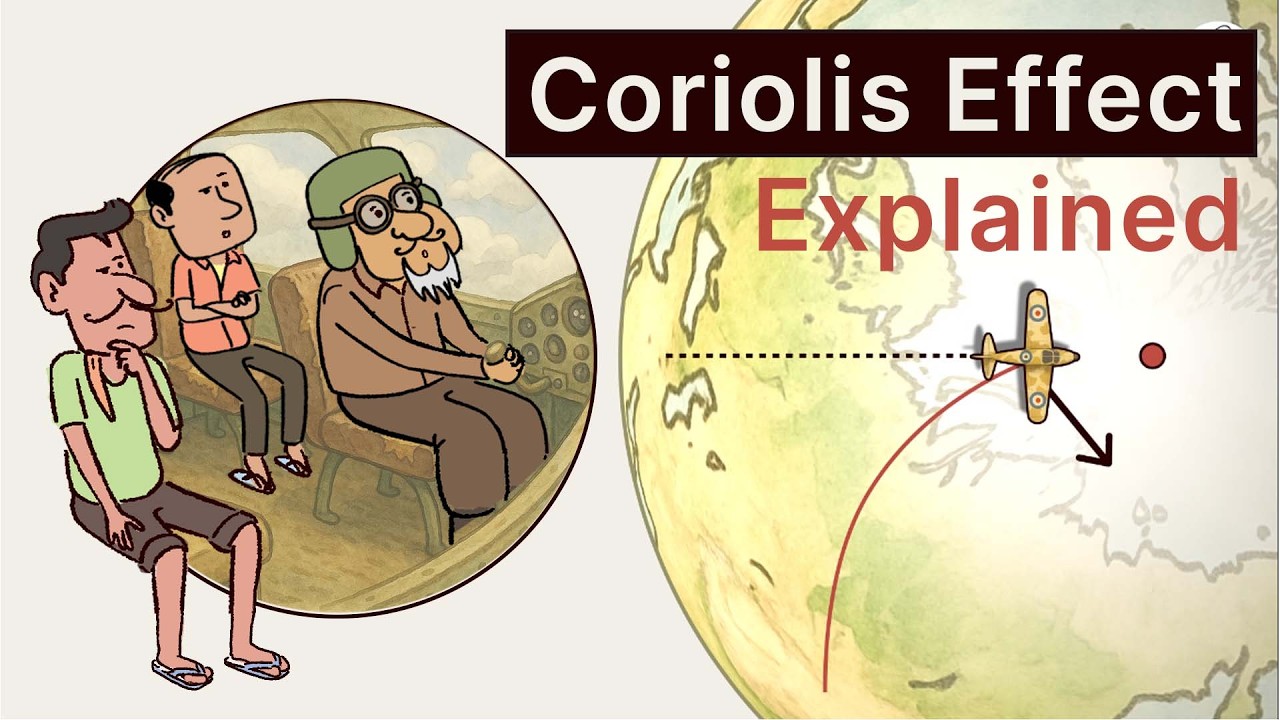
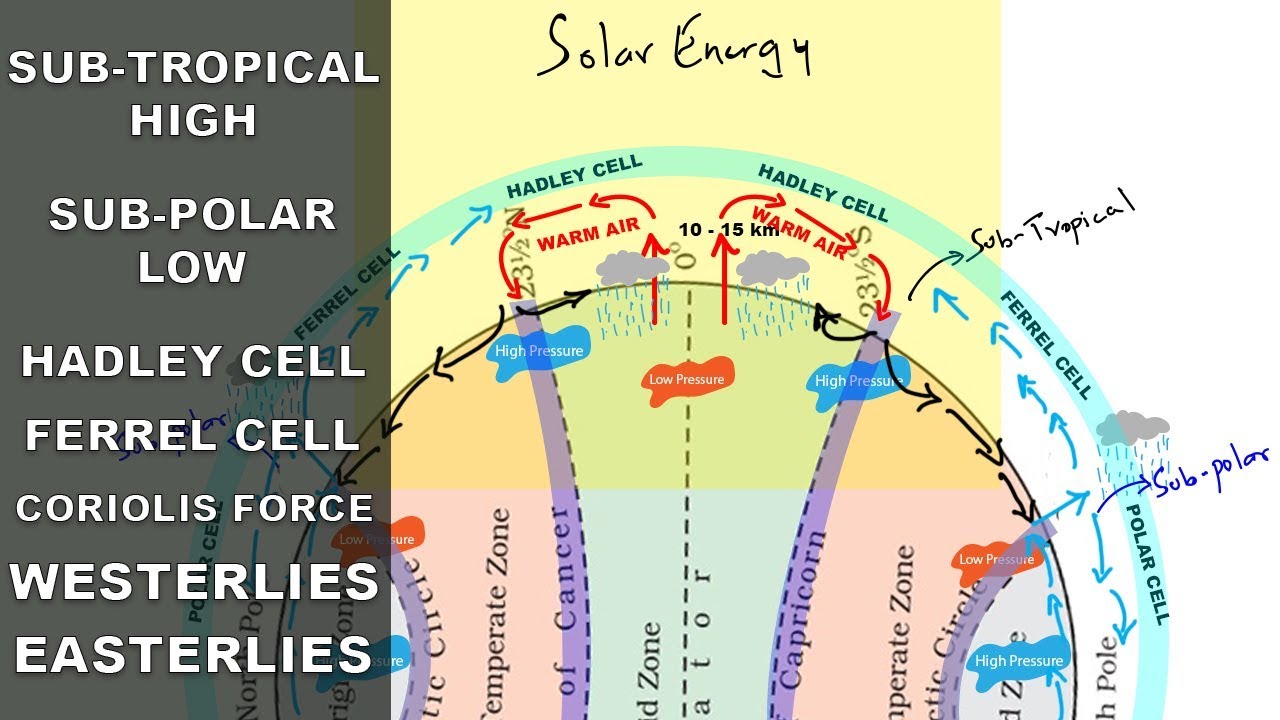
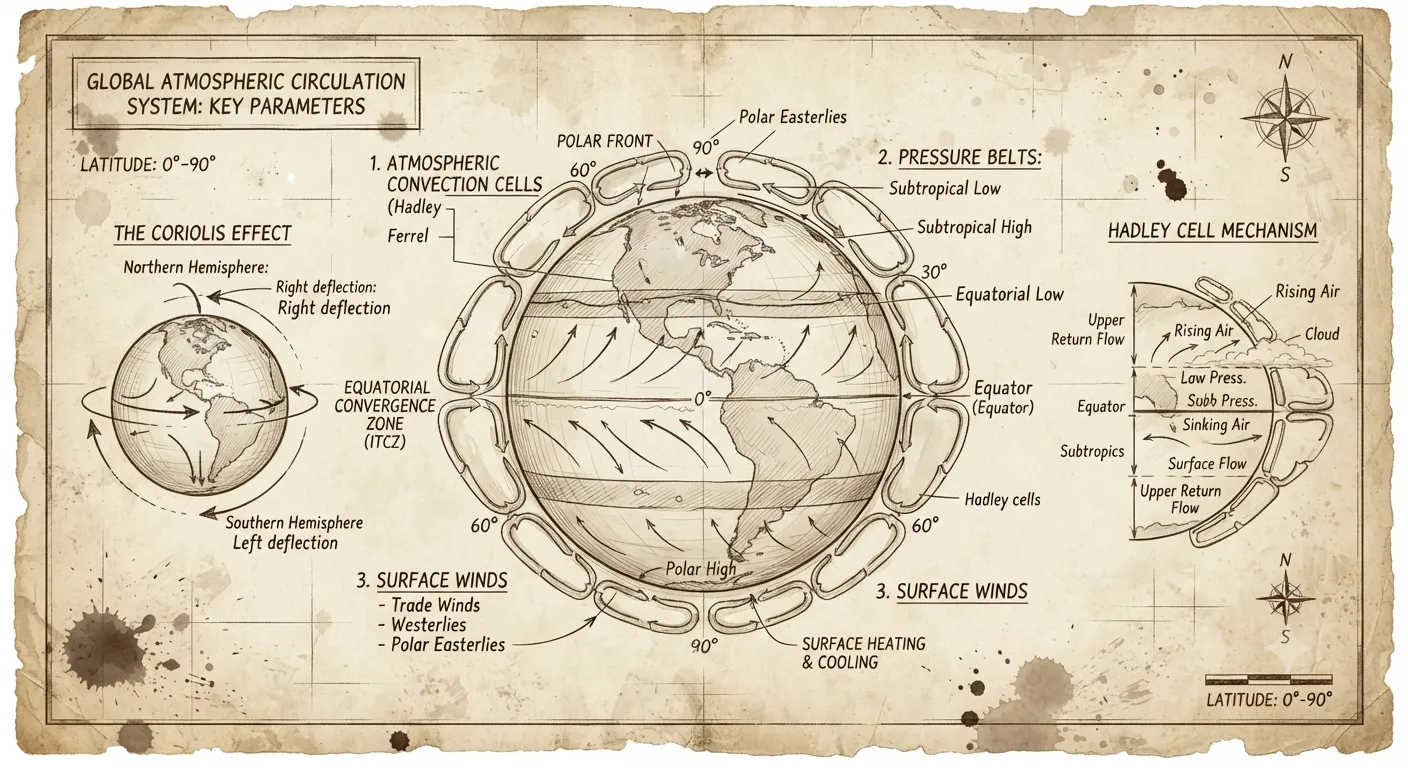
The Hadley Cell is the main air loop near the equator. Strong sunshine heats the air at the equator, causing warm, moist air to rise up to the top of the lower atmosphere, known as the tropopause. As this air travels north and south toward the poles, Earth's rotation creates the Coriolis force, which bends the wind to the east. By the time the air reaches , it sinks back down to the ground. This dry, heavy air spreads out at the surface, with part of it blowing back to the equator as the steady Trade Winds.
- (a) Strong solar heat at the equator pushes warm, moist air high into the sky.
- (b) Sinking dry air around builds high-pressure zones with clear, dry weather.
Atmospheric Circulation Framework Deep Dive into Mid-Latitudes and the Ferrel Cell
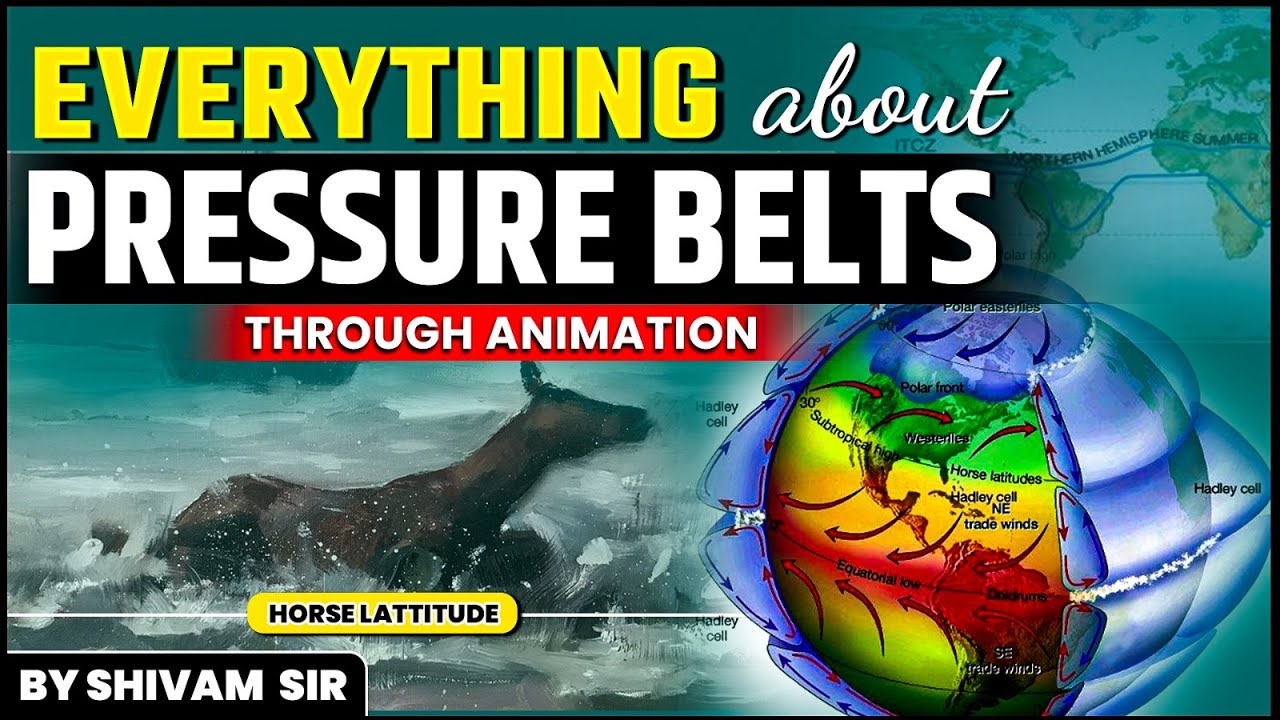
The Ferrel Cell sits in the middle latitudes between the equator and the poles. Air rises around and travels backward toward the equator, where it meets air moving from the Hadley Cell. These air flows collide and sink down near . This region of sinking air is called the Horse Latitudes, where famous dry deserts like the Sahara and Mojave exist. Near the surface, the air moving back toward the poles gets pushed eastward, creating warm winds called the Westerlies.
- (a) The primary global air loops are driven by heat at the equator and extreme cold at the poles.
- (b) Fast-moving air streams, called the polar jet stream and tropical jet stream, guide weather systems in this zone.
- (c) Wavy shifts in these jet streams push warm and cold weather fronts back and forth across middle latitudes.
Chronicle of the Polar Cell and High-Latitude Deserts
The Polar Cell is the simplest wind loop. Air rises around and moves toward the North and South poles. High above the poles, the air grows extremely cold and heavy, causing it to sink straight down to Earth's surface. This constant downpour of dry, freezing air forms hyper-arid cold deserts across the polar regions.

Aspects of Planetary Pressure Belts
Evaluate the Walker Circulation and the ENSO Phenomenon
Unlike north-south wind loops, the Walker Circulation is an east-west loop of moving air across the tropical Pacific Ocean. It is driven by temperature and air pressure differences between the eastern ocean (near South America) and the western ocean (near Australia).
- The Walker Circulation shapes weather patterns across the entire Southern Hemisphere.
Assessing Upwelling, Marine Ecosystems, and El Niño Disruptions
During normal weather conditions, trade winds blow warm surface ocean water westward toward Australia. As warm water moves west, deep, cold, nutrient-rich ocean water rises to the surface along the coast of Peru in a process called upwelling. This cold water feeds tiny sea organisms called phytoplankton, which feed fish and sea birds. The sea birds produce rich fertilizer called guano, supporting a large fishing industry. This wind pattern also brings heavy rain to Asia and Australia.
When the trade winds weaken, warm surface water flows backward toward South America. This warm ocean shift off the coast of Peru is called El Niño. Combined with changes in atmospheric pressure, this combined cycle is known as the El Niño-Southern Oscillation (ENSO). It alters weather worldwide, bringing severe storms and floods to dry areas in South America while triggering harsh droughts in Australia and India.
Analyze Seasonal Shifts in Global Pressure Belts
Earth's pressure belts do not stay in one fixed spot; they move north and south throughout the year as our planet tilts toward or away from the sun.
- Global high-pressure and low-pressure bands migrate following the seasonal movement of the sun.
July and January Thermal Deviations across Hemispheres
In , during the Northern Hemisphere summer, intense sunshine pulls the warmest atmospheric band north of the equator. As a result, all global pressure belts shift slightly northward. In , winter in the north causes these pressure belts to shift southward. Because the Southern Hemisphere has far more ocean water than land, seasonal pressure shifts are much milder there. Large continents cool rapidly in winter (forming high-pressure areas) and heat rapidly in summer (forming low-pressure areas), while oceans maintain steady temperatures.
⚡ Quick Revision Capsule: Global Air Circulation Systems
This quick summary table compares the three major global wind cells and key ocean-air interactions driving world climate.
| Circulation Feature | Geographic Location | Key Operational Mechanism |
|---|---|---|
| Hadley Cell | Equator to | Warm air rises at equator, sinks at creating Trade Winds. |
| Ferrel Cell | to | Intermediate loop producing the Westerlies and arid Horse Latitudes. |
| Polar Cell | to Poles | Freezing air sinks over poles, forming hyper-arid polar cold deserts. |
| Walker Circulation | Tropical Pacific Ocean | East-West atmospheric ocean loop driving normal trade winds and ocean upwelling. |
| ENSO (El Niño) | Global ocean-atmosphere system | Weakened trade winds allow warm water to drift east, altering global rain and weather patterns. |
📝 Summary
Global atmospheric circulation acts as an interconnected machine that redistributes thermal heat across the planet. Through three main pairs of latitudinal loops—the Hadley Cell, Ferrel Cell, and Polar Cell—and longitudinal patterns like the Walker Circulation, air movements drive everything from tropical monsoons to dry deserts. Understanding these natural air currents and climate cycles like ENSO helps scientists predict weather shifts and safeguard agriculture around the world.
🚀 Quick Revision Points
Essential facts to review before examinations:
- (i) The Hadley Cell is powered by equatorial solar heat, creating rising moist air and sinking dry air at .
- (ii) The Ferrel Cell creates the surface Westerlies, while the Polar Cell creates freezing, dry polar deserts.
- (iii) The Walker Circulation is an East-West ocean-air loop over the Pacific Ocean; its breakdown creates El Niño.
- (iv) Pressure belts shift northward in and southward in following the sun's path.
- 💡 Exam Tip: Remember that sinking air always creates dry high-pressure zones (like deserts at 30 degrees latitude and poles), whereas rising air creates wet low-pressure zones (like tropical rainforests at the equator)!
❓ Frequently Asked Questions (FAQ)
Q1: Why are major deserts located around 30 degrees latitude in both hemispheres?
A1: At , dry air sinking down from atmospheric loops warms up as it drops. Sinking air prevents clouds from forming, resulting in hot, sunny, dry climates.Q2: How does Walker Circulation benefit marine life and fisheries in South America?
A2: Strong trade winds push warm surface water west, allowing cool water rich in nutrients to rise to the surface (upwelling). This cold water feeds microscopic phytoplankton, which feed fish and sea birds.Q3: Why are seasonal pressure belt shifts less noticeable in the Southern Hemisphere?
A3: The Southern Hemisphere is covered mostly by oceans. Water holds heat much longer than land, preventing extreme seasonal temperature changes and keeping pressure shifts small.