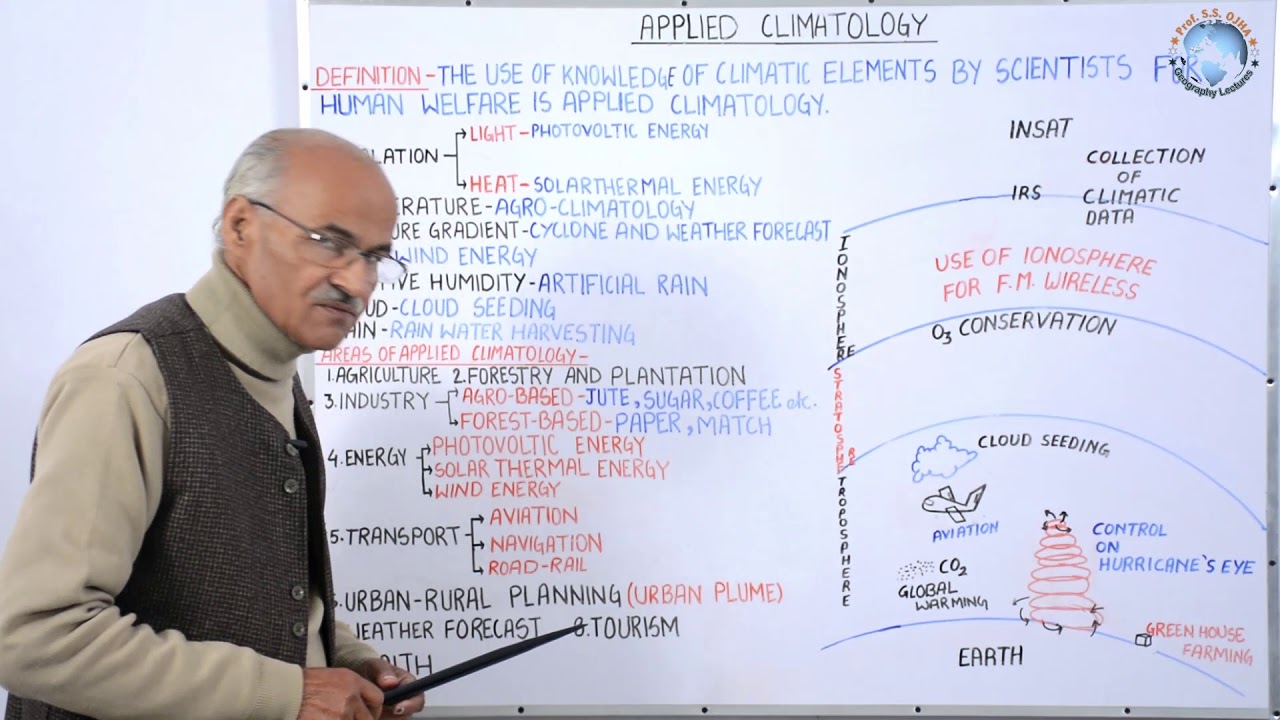
The field of Applied Climatology is a very important part of modern environmental science. It is a helpful tool used by weather scientists, city planners, and government leaders to keep our communities safe and strong. Over time, as our everyday weather changes more often, using this tool has become even more important. It works in two great ways: it manages operational risks by using old weather records to help with our daily activities today, while also helping us build a safe path for Sustainable Development in the future. When we make sure our big plans always match local weather conditions, this applied climatology setup gives our communities the strong stability they need to keep our money, homes, and nature safe for a very long time.
🎯 In this chapter, you will understand:
- How scientists use real weather records to solve everyday problems.
- How understanding weather helps us grow better crops and design cooler cities.
- How early weather warnings protect nature and keep people safe from big storms.
- Why planning for future weather saves money and keeps buildings strong.
💡 Why this topic matters: Weather affects everything we do every day. By using real weather history, we can build safer cities, protect our food supply, and stay safe during big storms.
🧠 Core Idea:Applied Climatology takes raw weather facts and turns them into simple, smart actions that make life safer and better for everyone.
The Narrative of Practical Science: Defining Applied Climatology
Inside the big world of Earth System Sciences, applied climatology acts like a helpful bridge that connects raw numbers to everyday life. Unlike theoretical climatology, which only studies how the physics of the atmosphere works, Applied Climatology asks scientists to focus on how good weather records can be used in our neighborhoods. This idea of careful planning and simple adjustments helps make sure that even when the weather turns bad, cities stay ready and prepared. It also helps leaders spend money wisely on important public buildings by using smart, weather-ready designs.

Analyze the Vital Fields of Applied Climatology
The helpful connection between past weather records and the daily choices made by leaders around the world is called Applied Climatology. It works like a safety valve that helps guide how we share resources and plan for the future across our whole economy.
Explore Practical Implementations in Agriculture and Urban Planning
Following this scientific helper guide, resource managers spend part of their time looking at past weather records. These everyday uses include helping farmers pick the right time for growing crops, lowering hot temperatures caused by the urban heat island effect in big cities, and doing flood safety checks. When planners follow these weather-smart rules, they lower the surprise damages faced by local businesses. This creates a helpful safety net. It also helps governments guide money toward building strong, long-lasting public structures.
- (i) Picking the best crops and planting them at the right time gives farmers a quick safety net.
- (ii) Studying extra heat in cities helps builders design cooler, nicer places for people to live.
Deep Dive into Disaster Management and Ecosystem Conservation
Our current era is a time of active environmental care. Nature protection agencies use applied climatology every day to help reach public safety goals without suffering huge money losses from sudden natural weather disasters.

Chronicle of Strategic Predictive Models and Resource Management
Using predictive models shows how modern world priorities are shifting toward a green and clean economy. By looking at clear weather numbers, emergency teams have stopped waiting for bad things to happen and now get ready far in advance. For example, early warning systems can watch for times of very low rain and changing cloud patterns, letting local communities get ready before trouble starts.
- (i) Predictive models help emergency workers prepare for big storms way ahead of time.
- (ii) Weather records guide how communities rebuild safely after a storm passes.
- (iii) Nature measurements help wildlife helpers protect plants and animals from quick temperature changes.
Finally, global agreements now ask for a shared weather check framework for all large structural projects. This fits perfectly with rules set by modern environmental policies. Today, using weather planning everywhere is a worldwide standard.
💡 Field Note: Please remember that older building rules which treated weather like it never changes are now out of date. Under modern planning ideas, these numbers are updated regularly to include new weather trends so our bridges and roads stay safe.
Evaluate the Strategic Objectives and Macroeconomic Impact
The main goal of applied climatology rules is to steadily drop the money losses caused by extreme weather. By studying local water and air records, scientists keep a firm grip on reducing danger.

Assessing Risk Control, Infrastructure Solvency, and Resource Stability
The big impact of applied climatology comes in three clear ways. First, it works as a safety tool for disaster control by stopping severe weather from doing huge damage. Second, it keeps public structures safe by forcing builders to use safe rules, like planning around 100-year flood lines. Third, it helps with community resource planning, making sure cities can spend money wisely through all seasons at fair and steady costs. During times of unusual weather patterns, planning groups increase safety limits to protect community money and stop big structural breakages.
⚡ Quick Revision Capsule: Applied Climatology Applications
Here is a simple look at how applied climatology helps different everyday areas stay safe and work well:
| Sector | Main Weather Tool Used | Everyday Benefit |
|---|---|---|
| Agriculture | Rainfall and temperature history | Helps farmers pick crop types and planting times |
| Urban Planning | Urban heat island mapping | Helps design cooler buildings and green parks |
| Disaster Management | Early warning predictive models | Gives communities time to prepare for storms |
| Wildlife Conservation | Ecosystem moisture metrics | Protects plants and animals from heat changes |
| Public Infrastructure | 100-year flood line records | Keeps roads, bridges, and money safe over time |
📝 Summary
The Applied Climatology framework remains a strong foundation for how we plan our world. From its beginnings in writing down simple daily weather notes to the smart modern forecast tools we use today, this science balances immediate safety needs with the goals of Environmental Conservation. While it takes a careful use of time and resources to gather weather facts, the result is a safe world for long-term community growth while keeping our public buildings safe against sudden weather changes.
🚀 Quick Revision Points
Essential facts to review before examinations:
- (i) Applied Climatology uses past weather records to solve real-world problems, unlike theoretical climatology which only studies air physics.
- (ii) This science helps in agriculture by matching crop types and planting days with reliable weather patterns.
- (iii) City builders use studies on the urban heat island effect to plan cooler spaces and plant trees.
- (iv) Modern emergency managers rely on early warning tools created with Predictive Climatology Models.
- 💡 Exam Tip: Always remember that theoretical climatology explains *how* the weather works, while applied climatology uses that information to *help* people and build safer communities!
❓ Frequently Asked Questions (FAQ)
Q1: What are the main areas that use applied climatology?
A1: The primary areas are farm management, city building, disaster preparation, and nature protection.Q2: How does applied climatology help during big natural disasters?
A2: It uses old weather records to create predictive models that forecast dangerous storms, giving communities time to send early warnings and stay safe.Q3: What is the main difference between applied climatology and standard theoretical meteorology?
A3: Theoretical meteorology and climatology study how atmospheric processes happen. On the other hand, applied climatology takes that information and turns it into practical steps to protect lives, crops, and buildings.