Embark on a geological journey to understand the geomorphic processes that constantly sculpt our planet, driven by powerful endogenic and exogenic forces. This detailed exploration is crucial for students preparing for geography and environmental science exams, providing a comprehensive view of weathering, erosion, mass movements, and soil formation, all of which define the Earth’s ever-changing surface configuration continuously over long periods of .
🎯 In this chapter, you will understand:
- How internal and external forces reshape the surface of our planet over long periods of time.
- The major difference between land-destroying forces and land-building forces.
- The critical impact of human activities on natural landforms and soil health.
- The active role of natural agents like water, wind, and gravity in shaping land.
💡 Why this topic matters: The land beneath our feet is constantly changing. Learning how natural forces shape mountains, valleys, and soils helps us protect our environment and prepare for geography examinations.
🧠 Core Idea: The Earth's surface is shaped by an ongoing tug-of-war between constructive internal processes that build land up and destructive external processes that wear land down.
🌐 Geomorphic Processes: Understanding Earth-Shaping Forces and Landform Evolution
The ground we walk on seems solid and still, but the Earth's crust is actually a very active place. It is constantly shifting and moving both vertically (up and down) and horizontally (side to side). Long ago in Earth's deep history, these movements happened much faster than they do in modern times, laying down the fundamental ground layout of our world.
The Earth's crust is constantly moving. The outer shell of our planet experiences both vertical lifting or dropping and horizontal drifting.
- (i) The outer layer of the planet undergoes steady shifts, showing both upward or downward moves and sideways motion.
- (ii) These fundamental movements are caused by powerful internal forces that come from deep within the Earth. They work continuously to push land upward and create varying heights on the surface.
⚡ Forces Shaping the Earth's Surface: The Dual Action of Endogenic and Exogenic Dynamics
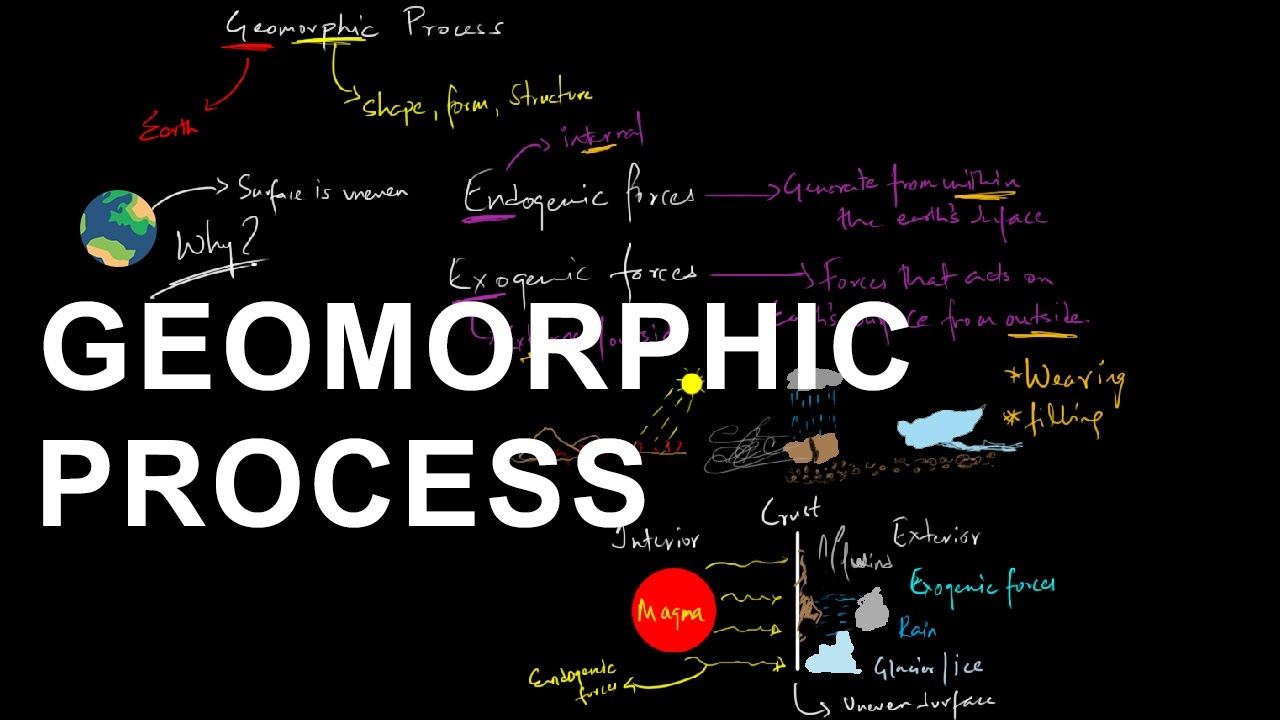
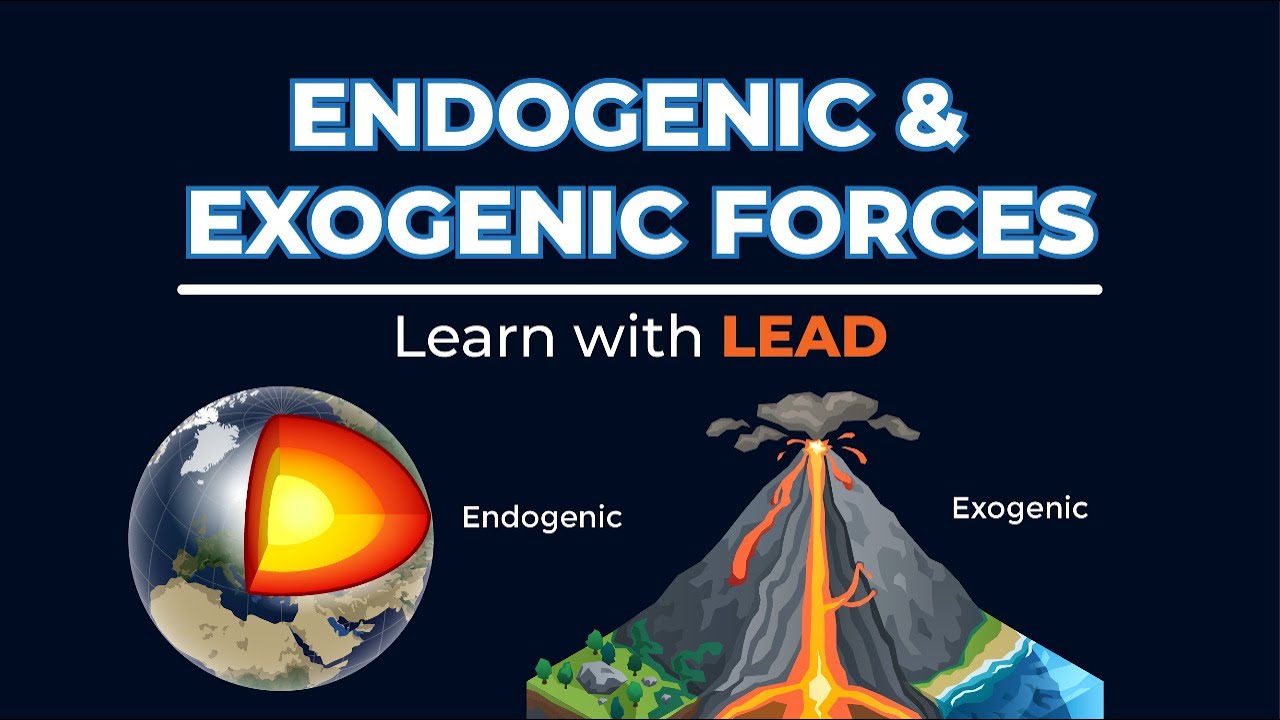
The varied land features across our planet are created by a continuous battle between two main kinds of forces: those working from deep inside the planet and those working on the outside surface.

🌊 External Forces (Exogenic Forces): The Agents of Degradation and Gradation
External forces, also known as exogenic forces, get most of their energy directly from the heat and light of the sun. Their main job is to constantly wear down high land and smooth out the surface of the Earth.
- (i) These forces drive degradation (the gradual wearing down of high landforms like hills) and aggradation (the filling up of low areas like valleys with sand and mud).
- (ii) The combined work of breaking down rock, moving it, and dropping it elsewhere leads to gradation—the process of smoothing out rough land until it becomes more level.
🌋 Internal Forces (Endogenic Forces): The Land-Building Architects
Unlike external forces that wear land down, internal forces, or endogenic forces, start deep inside the Earth. They act as natural builders, constantly pushing ground upward to create high landforms like mountains and plateaus.
- (a) Driven by internal heat and density variations deep underground, these forces push sections of the Earth's surface high into the air.
- (b) They are called land-building forces because their main work is making new surface features, including tall mountain ranges and high plateaus.
⚖️ Dynamic Balance Between Forces: The Maintenance of Relief Variations
The high mountains and low valleys on Earth exist because endogenic and exogenic forces work in opposite directions. This non-stop struggle keeps our landscape varied and interesting.
- (i) As long as surface-wearing forces and land-building internal forces keep working against each other, height differences on the land surface will remain.
- (ii) The landforms we see today are temporary features that show a momentary balance in this ongoing natural contest.
🌱 Human Impact on Geomorphic Systems: Minimizing Detrimental Effects
The surface of the Earth provides essential resources necessary for human life. However, modern human activities have greatly speeded up natural changes, often causing severe harm to the environment.
⚠️ Overuse of Resources and Extensive Environmental Damage
Using natural resources too quickly without giving them time to recover causes widespread environmental harm. This disrupts natural balances that took thousands of years to form.
- (i) Human actions such as cutting down forests, digging large mines, and intensive farming make erosion and soil movement happen much faster than normal.
- (ii) Land features that required hundreds or thousands of years to grow naturally are losing their ability to support plant and animal life due to human misuse.
🛡️ Precautions for Sustainable Use and Future Preservation
To keep our planet healthy for future generations, we must take careful precautions. Understanding how natural forces work is the best way to practice smart land care.
- (a) Careful planning and wise habits are necessary to reduce damage caused by human activities on the land.
- (b) A clearer understanding of these earth-shaping processes helps us protect the ground so it can continue supporting life for a very long time.
🔬 Defining Geomorphic Processes, Agents, and the Role of Gravity
A geomorphic process is not just an outcome; it is an active combination of forces and natural materials that steadily changes how the land looks.
⚙️ Geomorphic Processes: Actions of Stress and Reaction
Geomorphic processes are the physical pushes and chemical reactions caused by internal and external forces on rocks and soil, altering the shape of the Earth's surface over .
- (i) Endogenic Processes include deep internal movements like diastrophism (bending and breaking of the Earth's crust) and volcanism (movement of molten rock).
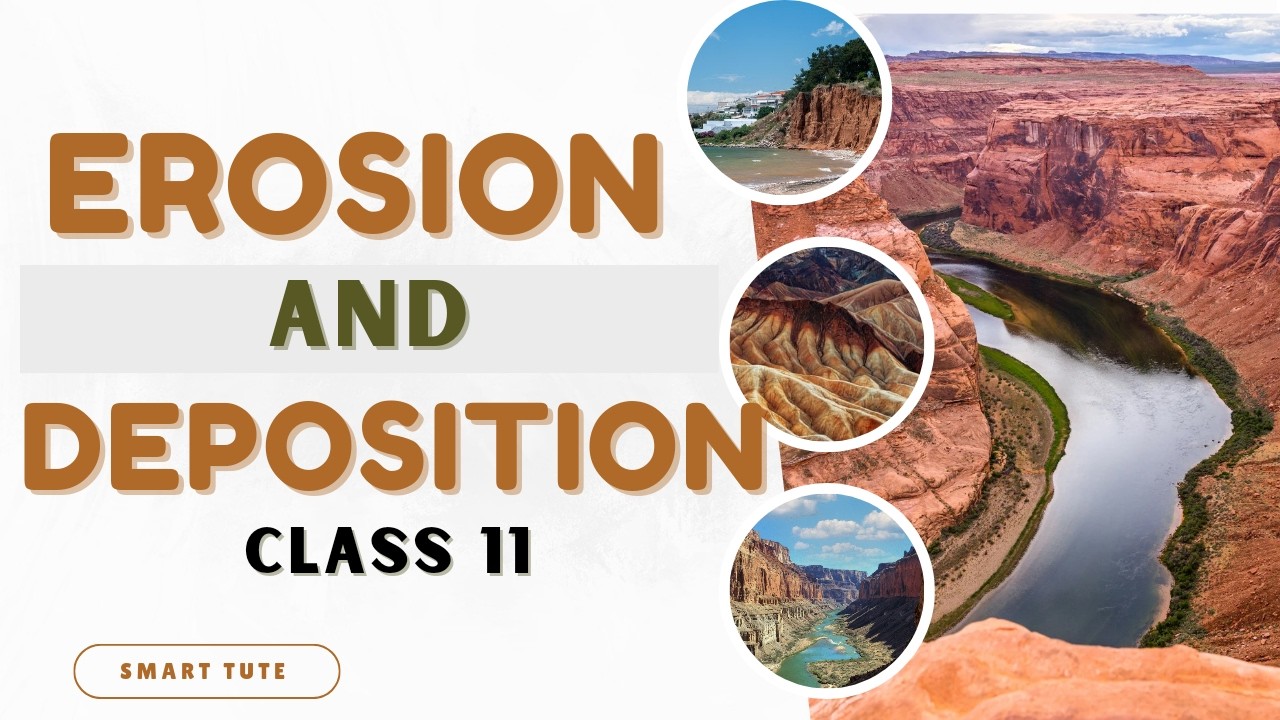
- (ii) Exogenic Processes happen on the surface and include weathering (breaking down rocks), mass wasting (downhill movement of soil and rock), erosion (carrying rock bits away), and deposition (dropping material in new places).
🌊 Geomorphic Agents: The Mobile Mediums of Transport
A geomorphic agent is any moving natural substance that can pick up earth materials and carry them from one location to another.
- (a) Examples of active agents include running water, flowing underground water, moving ice glaciers, blowing wind, sea waves, and ocean currents.
- (b) When these agents move down slopes due to gravity, they gather up loose rock material, move it along, and set it down in lower areas.
⚖️ Distinction Between Process and Agent and the Role of Gravity
It is helpful to know the difference: a process is the action taking place (such as erosion), while an agent is the physical moving object doing the work (such as a river). Gravity supplies the main power behind all downward movements.
🍏 Gravity: The Directional Force and Activator of Movement
- (i) Gravity is the constant downward pull that powers all movements down a slope, from giant landslides to river flow.
- (ii) It creates pressure on rocks and soil while helping drive wind and ocean currents through atmospheric and water pressure differences.
- (iii) The presence of slope angles (gradients) together with gravity is completely necessary; without them, no movement or erosion of land material can occur.
⚡ Quick Revision Capsule: Earth-Shaping Processes & Agents
A quick comparison of key geomorphic concepts for fast exam review:
| Category | Primary Energy Source / Force | Key Examples & Outcomes |
|---|---|---|
| Endogenic Processes | Internal heat and mantle convection inside Earth | Diastrophism, volcanism, mountain building, and uplift |
| Exogenic Processes | Sunlight, atmosphere, and climate energy | Weathering, mass wasting, erosion, and deposition |
| Geomorphic Agents | Gravity pulling fluids/solids down slope gradients | Running water, wind, glaciers, waves, and groundwater |
| Gradation Goal | Combined wearing down and filling up of land | Smooths surface through degradation and aggradation |
| Human Impact | Land misuse, mining, and deforestation | Accelerates erosion rates far beyond natural levels |
📝 Summary
The study of geomorphic processes explains the continuous balance between land-building internal forces and land-wearing external forces that together shape the surface of our planet over long spans of . While nature maintains height variations through this ongoing dynamic, human activities can disrupt soil stability and natural balances. Mastering concepts like weathering, erosion, and the role of natural agents gives students foundational knowledge essential for geography success and environmental care as described in physical geography literature like Fundamentals of Physical Geography.
🚀 Quick Revision Points
Essential facts to review before examinations:
- (i) Endogenic forces build land up (aggradation and uplift), while exogenic forces wear land down (degradation).
- (ii) Sunlight drives exogenic processes, whereas deep internal heat drives endogenic processes.
- (iii) Natural agents like rivers and wind require slopes and gravity to move materials down toward lower ground.
- (iv) Human actions like land clearing speed up soil loss, making sustainable land care necessary as discussed in Environmental Geography textbooks.
- 💡 Exam Tip: Always distinguish clearly between a process (the action, e.g., erosion) and an agent (the mobile medium, e.g., running water or wind) in your exam answers!
❓ Frequently Asked Questions (FAQ)
Q1: What is the main difference between endogenic and exogenic forces?
A1: Endogenic forces originate inside the Earth and build up land features, while exogenic forces originate on the surface and wear land features down.Q2: What is the difference between a geomorphic process and a geomorphic agent?
A2: A process is the physical or chemical action that changes the land (like erosion), while an agent is the moving physical carrier (like running water or wind) that performs the work.Q3: Why is gravity necessary for erosion and mass movement?
A3: Gravity acts as the essential downward force that pulls water, ice, rock, and soil down slopes. Without gravity and height differences, agents cannot move materials downslope as referenced in Physical Geography Principles.