The study of geomorphic processes is crucial for students of geography and competitive examinations such as UPSC, offering clear insights into how the Earth’s surface is continually shaped over . This fundamental concept divides Earth-shaping forces into two major categories: endogenic processes, powered by internal energy sources like radioactivity and trapped primordial heat, and exogenic processes, driven by solar energy and climatic factors. Understanding the mechanics of diastrophism, volcanism, and denudation is vital for thorough exam preparation.
🎯 In this chapter, you will understand:
- How internal and external forces work in constant opposition to build and reshape landforms.
- The underlying energy sources powering internal movements, including radioactive decay and primordial heat.
- The distinct operational differences between mountain-building (orogeny) and continent-building (epeirogeny).
- How climate, gravity, and rock structures drive surface-leveling processes like weathering and erosion.
💡 Why this topic matters: Earth's landscape is never static; every mountain, valley, and plateau is a living record of an ongoing tug-of-war between deep internal heat pushing land upward and surface climate elements grinding it back down.
🧠 Core Idea: Internal (endogenic) forces act as land builders that create high landforms, while external (exogenic) forces act as landscape sculptors that wear those structures down through denudation.
Endogenic and Exogenic Processes: The Dual Forces Shaping Earth's Crust and Geomorphology
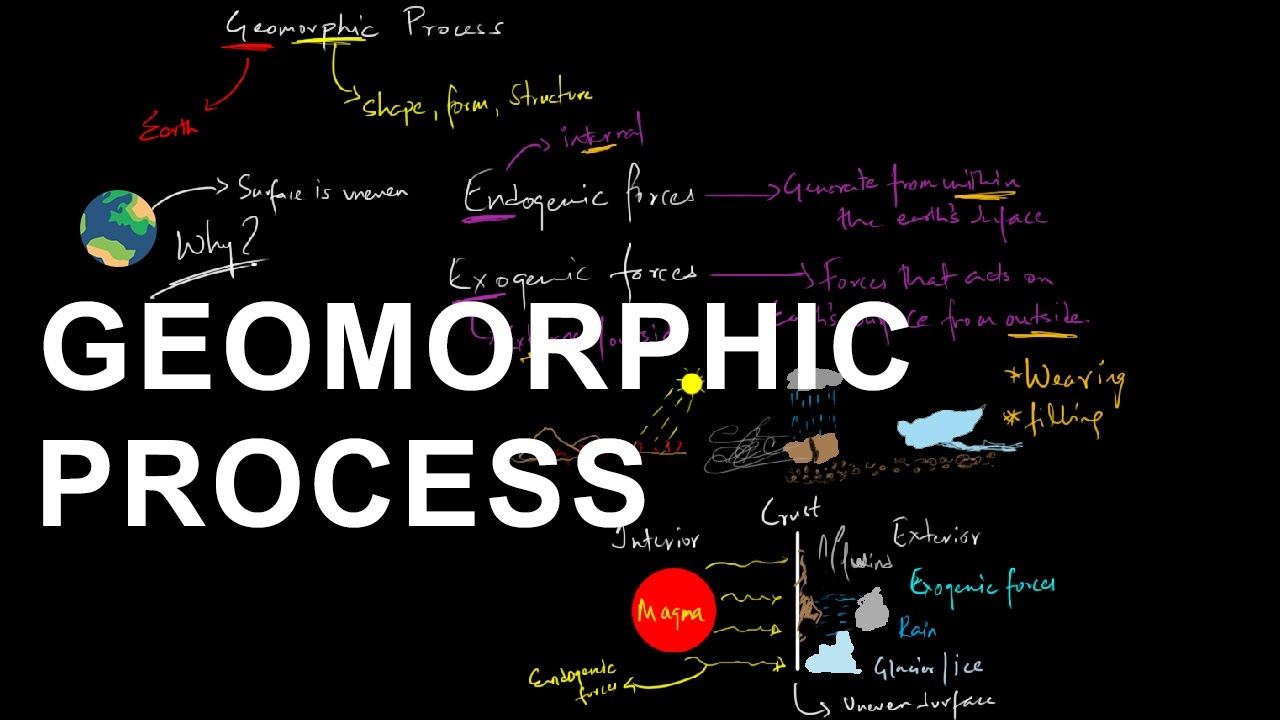
The surface relief of the Earth is the direct result of a continuous contest between internal and external energy systems working in opposite directions.
The ongoing evolution of our planet's landscape is guided by two opposing yet interconnected sets of natural forces. One force acts deep within the globe to push land upward and construct large physical structures, while the second force works relentlessly on the outer surface to break down high ground and level out elevated terrain.
- (i) The internal forces are responsible for constructing the initial major surface features on the crust—such as giant mountain chains and high plateaus—which make the Earth's surface uneven.
- (ii) The external forces then step in as natural sculptors, steadily reducing this high relief through continuous processes like erosion, carrying loose materials from high peaks down into low places.
Endogenic Processes: The Powerful Internal Forces of Earth Building
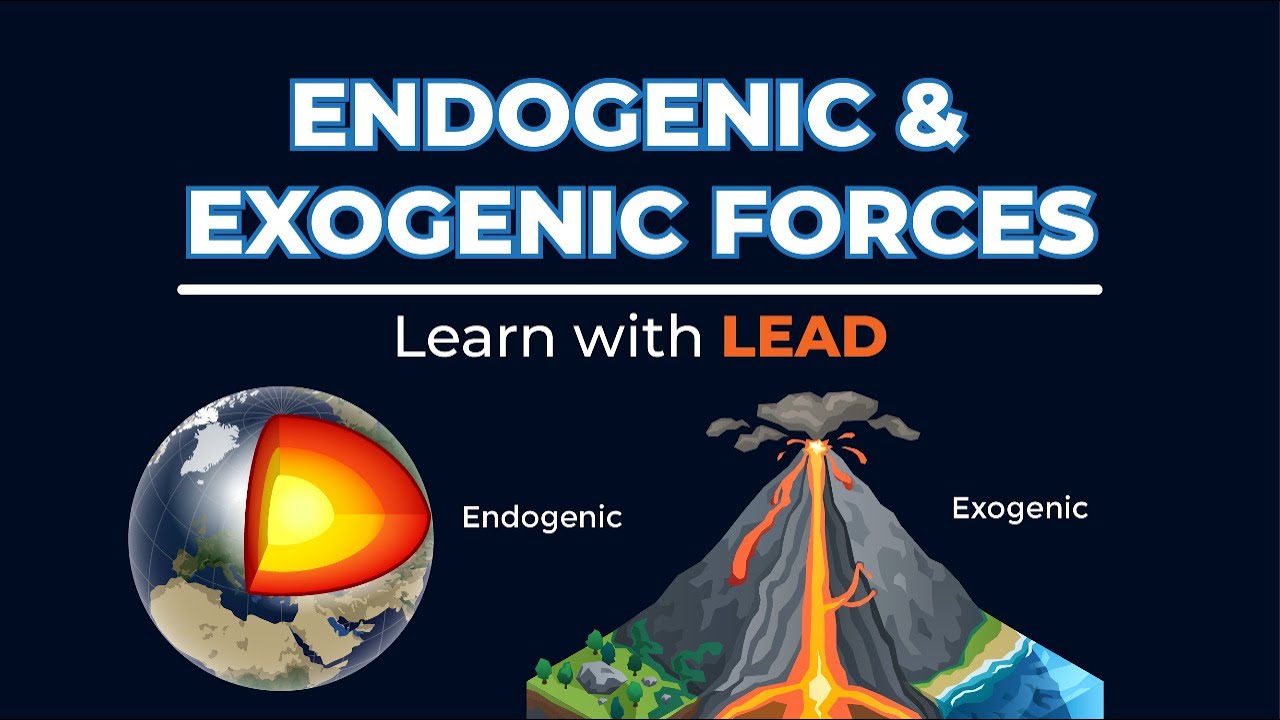
Endogenic processes represent the primary constructive or land-building forces of our planet. They draw immense energy from heat and material movements originating deep within the core and mantle of the Earth.

Definition and Energy Sources of Endogenic Processes
The term endogenic processes refers to all underground geological activities fueled by a mighty energy reservoir originating inside the Earth. This internal heat dictates how the planet's interior moves and how the surface reacts.
- (i) The main source of this deep energy is radioactivity, which happens as unstable chemical elements decay inside the Earth's mantle and core, releasing massive amounts of heat.
- (ii) Additional heat is generated by rotational and tidal friction, which releases mechanical thermal energy as Earth's interior layers rotate and interact gravitational-wise with space.
- (iii) Crucially, leftover primordial heat trapped deep inside since the planet's violent formation billions of years ago continues to keep internal temperatures exceptionally high.
- (iv) This persistent heat flow creates strong internal heat differences (geothermal gradients) that power major land-altering events like diastrophism (crustal movement) and volcanism (magma movement).
Diastrophism: Crustal Movement and Deformation
Diastrophism includes all geological processes that move, elevate, or build up substantial parts of the Earth's solid crust. It acts as the primary architectural engine for major landscape features.
- (a) Orogenic processes: These are classical mountain-building movements. They involve intense horizontal pushing, squeezing, bending (folding), and cracking (faulting) across long, narrow crustal belts, forming massive folded mountain ranges.
- (b) Epeirogenic processes: These are broad, gentle vertical movements involving the uplifting or warping of giant continental landmasses, driving continent formation and extensive plateau creation.
- (c) Earthquakes: Localized and sudden releases of energy caused by underground rock layers snapping or sliding along structural faults within the outer crust.
- (d) Plate tectonics: The overarching global framework involving the continuous, large-scale horizontal movement of lithospheric plates across the Earth's soft mantle layer.
Effects of Diastrophism: Folding, Faulting, and Metamorphism
Deep movements in the Earth alter solid rocks in several distinct physical ways:
- (i) Orogeny squeezes flat rock layers into wave-like arches and troughs, creating high-altitude mountain structures.
- (ii) Epeirogeny gently bends or lifts wide regions without crushing them, building vast flat-topped tablelands and stable continents.
- (iii) Severe crustal stress cracks hard rocks, producing deep faults, rift valleys, and block mountains with steep cliff edges.
- (iv) Extreme internal heat and crushing pressure cause radical pressure, volume, and temperature (PVT) changes that transform ordinary rocks through rock metamorphism.
Volcanism: Magma Movement and Extrusive Forms
Volcanism covers all dynamic processes related to the movement of superheated molten rock (magma) from the deep interior up toward or onto the Earth's outer surface.
- (i) It includes intrusive volcanic forms (such as batholiths, laccoliths, sills, and dykes) created when molten magma cools down and solidifies underground before reaching the open surface.
- (ii) It includes extrusive volcanic forms (such as lava sheets, volcanic cones, ash beds, and basalt plateaus) formed when magma bursts out as lava and hardens in the open air.
- (iii) Volcanism rapidly reshapes surface geography by depositing fresh igneous material and constructing entirely new physical landforms in short timeframes.
Orogeny vs. Epeirogeny: The Difference in Scale and Action
Though both are major divisions of diastrophism, their spatial scale, directional forces, and resulting physical forms differ completely:
- Orogeny (Mountain Building): Driven by horizontal compression forces operating on long, narrow belts. It severely bends, fractures, and lifts rocks into high mountain systems like the Himalayas.
- Epeirogeny (Continental Building): Driven by vertical forces operating across vast regional areas. It gently lifts or lowers stable continental interiors and high plateaus without intense crumpling.
Exogenic Processes: The External Forces of Denudation and Gradation
In direct contrast to constructive internal forces, exogenic processes act as destructive or leveling forces on Earth's surface. They continually aim for surface gradation by grinding down high peaks and filling up low basins.
Energy Source and Definition of Exogenic Processes
The operational energy for exogenic processes comes directly from atmospheric interactions, driven ultimately by solar radiation from the Sun. Sunshine powers wind patterns, rainfall cycles, and surface heat fluctuations.
- (i) These natural forces act right upon the outer crust, steadily breaking apart rock formations built by earlier underground endogenic activity.
- (ii) They work through an interconnected chain of events: weathering (breaking rock in place), mass wasting (downslope movement under gravity), erosion (wearing down and picking up rock fragments), and transportation (carrying debris away).
Role of Slopes, Gradients, and Gravitational Force
The presence of physical slopes or terrain inclines is absolutely necessary for exogenic processes to work, providing the slope gravity needs to drag material downhill.
- (a) Universal gravitational force continuously pulls on exposed surface rocks on tilted ground, forcing loose materials to slide, fall, or creep downhill.
- (b) Gravity applies relentless downward force per unit area—often as severe shear stress—which eventually snaps rock structures and causes slope failures.
- (c) Thermal expansion from daily heating, ice freezing inside rock cracks, and wetting-drying cycles add internal stress that makes surface rocks crumble easier under gravity.
Climatic Influence: Key Control on Exogenic Processes
The speed and variety of surface breakdown are governed directly by local climate factors, primarily prevailing temperature ranges and rainfall levels across regions.
- (i) Climatic variations create distinct temperature differences (thermal gradients) based on geographic latitude and distance from oceans, controlling how quickly rocks weather physically and chemically.
- (ii) Local weather regulates plant growth; dense forest roots hold soil tight and protect slopes from erosion, whereas dry deserts leave bare ground completely exposed to heavy winds and sudden rain.
- (iii) Mountain height differences, slope angles, and sun exposure further control local weathering speed and natural soil breakdown on individual hillsides.
Denudation: The Uncovering Process
The umbrella term denudation (meaning "to lay bare") includes all combined surface actions that strip away outer rock layers and systematically wear down land height over time.
Figure 2: The interconnected stages of the denudation process stripping away crustal layers. - Weathering: The physical breaking apart and chemical breakdown of solid rocks right where they stand, without immediate movement.
- Mass Wasting / Mass Movement: The downward movement of large masses of soil and rock debris under the direct pulling force of gravity.
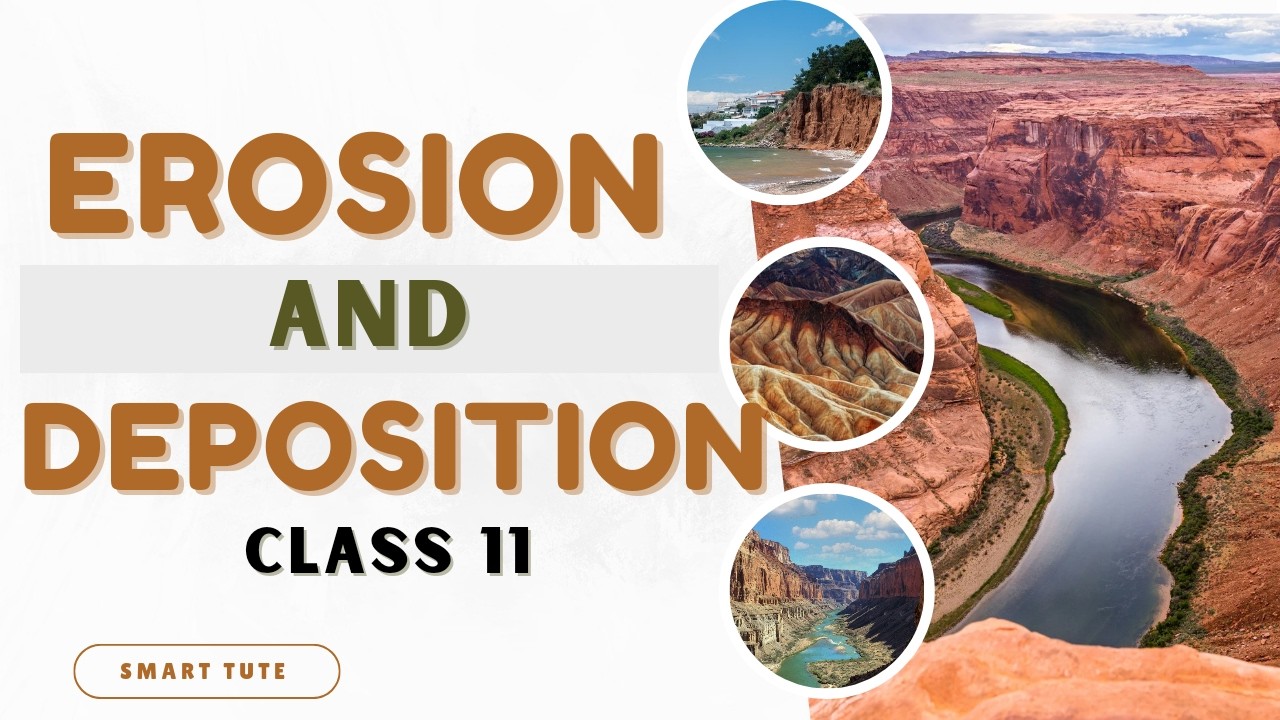
- Erosion: The active wearing down and picking up of loose rock fragments by mobile moving agents like rivers, wind, ocean waves, and moving glaciers.
- Transportation: The continuous movement of eroded sediment particles carried by wind, water, or ice to new resting locations.
Role of Rock Type and Structure in Erosion
Earth materials do not wear away at the same speed; their survival against surface erosion depends entirely on their physical composition and structural makeup.
- (a) Structural weakness points like geological folds, fault lines, joints, and natural bedding layers open up ideal entry pathways for water and ice to destroy rock from within.
- (b) Mineral properties—such as physical mineral hardness or chemical vulnerability to water and oxygen—determine how long a rock stands against weathering.
- (c) Rock permeability (how easily water flows through pores) determines whether water washes over the surface or soaks deep inside to dissolve chemical bonds.
- (d) These material differences cause differential erosion, where soft or fractured rock wears away rapidly into valleys while hard, solid rock stands tall as cliffs and ridges.
Key Observations: Long-Term Impact of Surface Processes
Even though surface weathering seems very slow in daily human life, endless environmental wear produces massive land changes over thousands and millions of years.
- (i) Every landscape seen today is a balanced middle-ground result of original internal crust-building forces (endogenic forces).
- (ii) The landform appearance is further shaped by the unique structural resistance and mineral hardness of regional rocks.
- (iii) The final landscape shape depends on the ongoing speed of surface wearing processes (exogenic forces) grinding the terrain over geological time.
⚡ Quick Revision Capsule: Endogenic vs. Exogenic Forces Comparison
This quick revision table summarizes the primary differences between internal land-building forces and external surface-sculpting processes for exam preparation.
| Feature Aspect | Endogenic Processes (Internal) | Exogenic Processes (External) |
|---|---|---|
| Primary Energy Source | Radioactivity, rotational friction, and trapped primordial heat inside Earth. | Solar radiation from the Sun and atmospheric energy cycles. |
| Primary Action & Goal | Constructive / Building up; creates ground relief, mountains, and plateaus. | Destructive / Leveling (denudation); reduces relief and smooths terrain. |
| Main Mechanics | Diastrophism (orogeny, epeirogeny) and active subterranean volcanism. | In-place weathering, mass wasting under gravity, active erosion, and sediment transport. |
| Operating Location | Deep within the Earth's mantle and outer mantle-crust boundary. | Directly on the outer solid surface of the Earth's crust. |
| Resulting Landforms | Folded mountains, rift valleys, volcanic cones, plateaus, and continents. | Valleys, gorges, cliffs, waterfalls, floodplains, sand dunes, and deltas. |
📝 Summary
The landscape of our planet is governed by a continuous dynamic balance between deep internal energy forces and surface atmospheric processes over millions of years. Internal processes powered by radioactive heat decay build broad continents and tall folded mountain chains through orogeny and epeirogeny. Simultaneously, external agents driven by solar warmth and gravity relentlessly strip away rock layers through denudation to level the land.
🚀 Quick Revision Points
Essential facts to review before examinations:
- (i) Endogenic processes draw power from internal radioactive decay, friction, and primordial heat.
- (ii) Diastrophism includes mountain-building (orogeny) and broad continent-building (epeirogeny).
- (iii) Exogenic processes rely on solar energy, atmosphere interactions, gravity, and climate factors.
- (iv) Denudation includes four connected steps: weathering, mass wasting, erosion, and sediment transport.
- 💡 Exam Tip: Always emphasize that endogenic forces create surface irregularities while exogenic forces work to level them down (gradation). Keep the clear distinction between horizontal mountain-building (orogeny) and vertical continent-building (epeirogeny) clear in essay answers!
❓ Frequently Asked Questions (FAQ)
Q1: What is the main difference between endogenic and exogenic processes?
A1: Endogenic processes originate inside the Earth and construct large landforms like mountains, whereas exogenic processes work on the Earth's surface using solar energy to wear down high land through weathering and erosion.Q2: What powers internal crustal movements inside the Earth?
A2: Internal crustal movements are driven mainly by heat energy released from radioactive decay of elements, heat from tidal and rotational friction, and leftover primordial heat trapped since Earth's formation.Q3: How do orogeny and epeirogeny differ in building landforms?
A3: Orogeny acts horizontally on narrow crust belts to squeeze and fold rock into mountain chains, while epeirogeny acts vertically across vast continental areas to gently lift wide plateaus and shield landmasses.