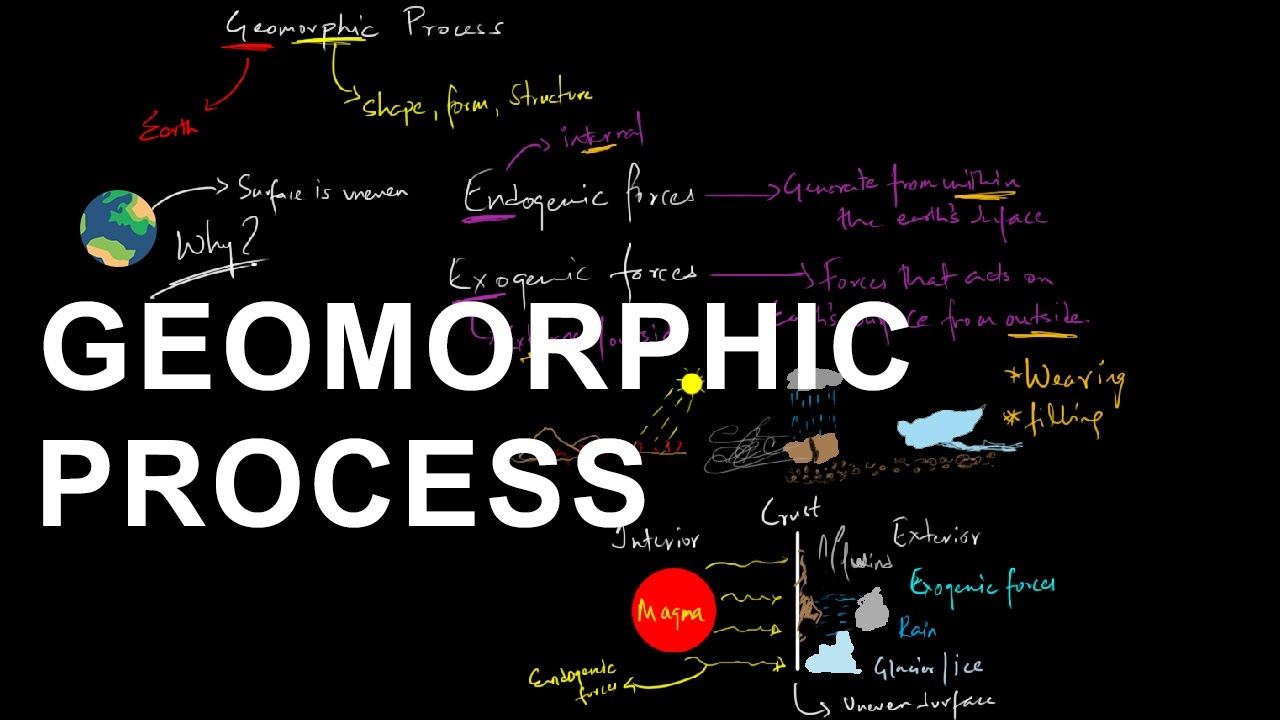
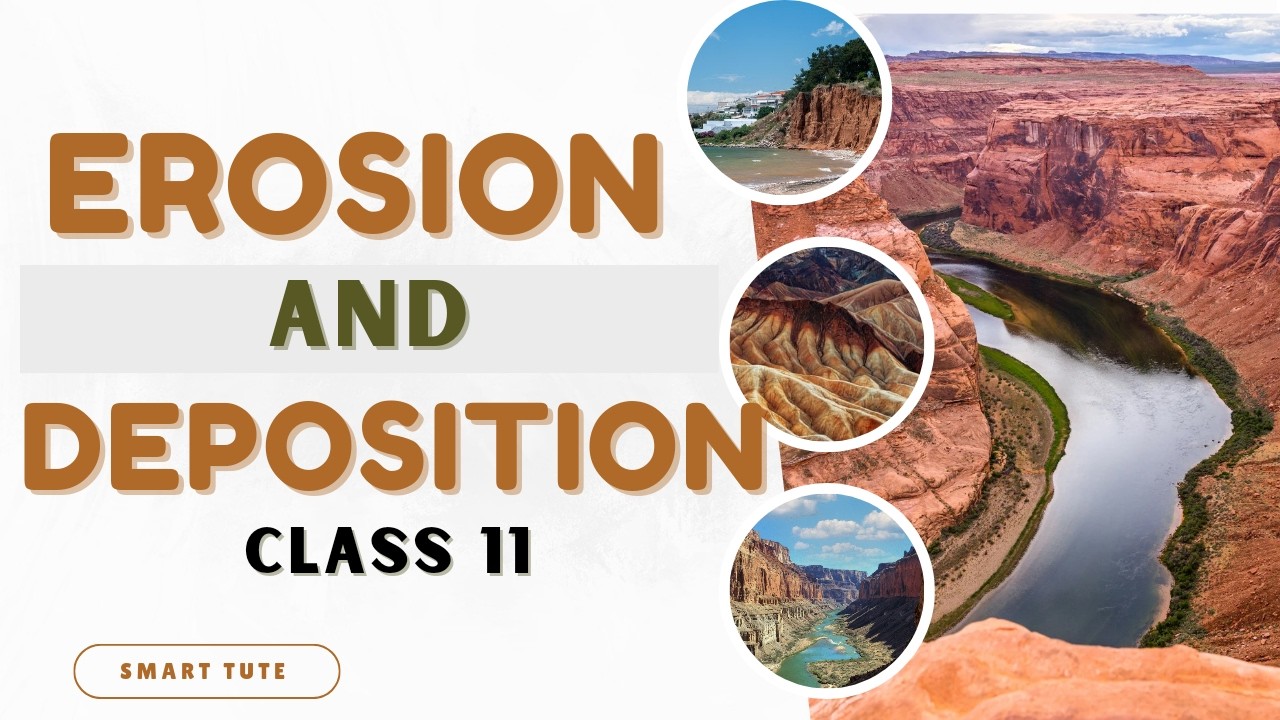
The surface of our planet is constantly changing due to natural forces. Over , huge mountains wear down into tiny soil particles through process called weathering, while gravity pulls loose rocks downhill in events known as mass movements. Understanding these natural actions helps us learn how fertile soils are created and why dangerous landslips happen on mountain slopes.
🎯 In this chapter, you will understand:
- How rocks break down physically, chemically, and through living organisms.
- Why weathering is an in-situ process that builds soil and enriches minerals.
- How gravity pulls rock debris and soil down hillsides without rivers or glaciers carrying them.
- Why mountainous regions in India like the Himalayas and Western Ghats face frequent landslides.
💡 Why this topic matters: Weathering turns hard solid rock into soft soil that grows our food, while mass movements shape our valleys and present major natural hazards in hill stations.
🧠 Core Idea: Weathering stays on-site to break rocks apart, whereas mass movements use direct gravity to slide that broken debris down slopes.
Weathering & Associated Processes
Weathering is the foundational step in shaping landforms. It works silently every day as sunlight, water, gases, and plants react with solid mountain rock.
Definition of Weathering
Weathering is the natural process where rocks crack, break into pieces, or rot away right where they stand.
- It includes two primary actions: mechanical disintegration (breaking into smaller rock bits physically) and chemical decomposition (changing the mineral nature of the rock through chemical reactions).
- Weathering is strictly an in-situ process (a Latin phrase meaning on-site), which means the broken material remains where it was broken, with little to no movement away from the spot.
Factors Influencing Weathering
The speed and style of rock breakdown depend on several natural surroundings.
- The process is controlled by local geology (rock strength and structure), climate, slope height (topography), and plant cover (vegetation).
- Climate is the most critical factor because it controls:
- The specific kind of weathering that takes place (such as freezing ice action vs warm rain chemical action).
- The total depth of weathering mantle (the thickness of the layer of loosened rock and soil lying above solid bedrock) across different climate zones on Earth.

Types of Weathering Processes
Rocks break down through three main pathways: chemical actions, physical forces, or biological activities.
Chemical Weathering
This process changes the minerals inside rocks into soft or dissolved forms through reactions with water, air, and naturally occurring acids.
- (a) Includes five major reactions: solution (dissolving minerals in water), carbonation (acidic rainwater dissolving rock like limestone), hydration (minerals absorbing water and swelling), oxidation (rusting caused by oxygen exposure), and reduction (loss of oxygen in oxygen-poor environments).
- (b) It acts through direct chemical contact with oxygen, water, and organic acids.
- (c) Rotting plants and soil animals increase the amount of carbon dioxide underground, which strengthens soil acids and speeds up chemical reactions.
Physical (Mechanical) Weathering
This breaks big rocks into smaller stones without changing the chemical minerals inside them.
- (a) It depends on applied physical forces such as:
- Gravitational forces like heavy overburden pressure, weight load, and shearing stress pushing down on rock layers.
- Expansion forces caused by hot-and-cold temperature swings, growing salt crystals inside rock pores, and animal activities.
- Water pressure from repeated wetting and drying cycles.
- (b) These forces cause rocks to fracture due to processes like thermal expansion (heat making rocks expand during the day and contract at night) and pressure release (cracking when heavy top layers wear off).
- (a) It depends on applied physical forces such as:
Biological Weathering
This happens when living organisms break or dissolve rocks.
- (a) Organisms extract or deposit minerals and chemical ions directly from rock surfaces.
- (b) Burrowing creatures like earthworms, ants, and termites dig underground, exposing fresh rock surfaces to air and rain.
- (c) Plant roots wedge into rock cracks to split them apart, while human actions like ploughing and farming mechanically break up earth materials.
Special Effects of Weathering
Weathering sometimes creates unique, smooth, and rounded landforms through distinct peeling actions.
- Exfoliation is a peeling process caused by pressure release (unloading), hot-and-cold temperature changes, or salt expansion inside rock pores.
- It makes curved sheets or outer shells of rock flake off, leaving behind smooth, rounded surfaces like peeling onion layers.
- This creates striking land features such as large, dome-shaped hills known as exfoliation domes and isolated, stacked rock towers called tors.
Significance of Weathering
Weathering is not just destructive; it is vital for sustaining life on Earth and concentrating useful resources.
Landform Development
It breaks hard rocks so that wind, rivers, and ice can scoop them up easily during erosion.
- (a) Prepares rock masses for erosion and gravity movements.
- (b) Creates loose dirt needed for soil formation, which supports whole forest ecosystems, crops, and global biodiversity.
Economic Importance
It helps form valuable mineral deposits that human industries rely upon daily.
- (a) Concentrates useful metals like iron, manganese, aluminum (bauxite), and copper through leaching (where rainwater washes away unwanted top chemicals, leaving rich metals behind).
- (b) Increases the concentration of economically valuable materials through natural enrichment.
Mass Movements
Once weathering breaks up mountain rocks, gravity steps in directly to haul the loose mud, soil, and boulders down slope toward lower ground.
Definition of Mass Movements
Mass movements are downhill transfers of soil, sand, and rock debris driven directly by the pulling force of gravity.
- Unlike regular erosion, standard geomorphic agents (moving forces like rivers, wind, ocean waves, or glaciers) do not carry the debris along; instead, the tumbling rock debris itself carries any trapped water, ice, or air down with it.
Characteristics of Mass Movements
Mass movements come in many forms, from ultra-slow soil shifting to sudden, deadly mountain collapses.
- Movement speeds range from barely noticeable creep over decades to lightning-fast rock falls.
- They are grouped into four main motion styles: creep (ultra-slow movement), flow (fluid-like sliding mud), slide (blocks slipping over a surface), and fall (free-falling through air).
- They happen mostly on heavily weathered slopes, but can also trigger suddenly on fresh, unweathered rock faces.
Conditions Favoring Mass Movements
Slopes become unstable and dangerous when specific natural and man-made conditions line up.
- Presence of weak, uncompacted soil materials or thinly layered rocks.
- Steeply sloped rock beds, vertical mountain cliffs, or sharp hill inclines.
- Heavy monsoon rains, cloudbursts, or sudden torrential downpours.
- Lack of trees, shrubs, and root systems to hold the soil tight.
- Triggering destabilization factors such as:
- Removal of support at the base of a slope by river cutting or highway road digging.
- Overloading from natural mud deposits, heavy rainfall soaking the soil, or building heavy structures on hilltops.
- Vibrations caused by earthquakes, blasting explosives, or heavy machinery construction.
- Natural water seepage or sudden drops in reservoir water levels (drawdown).
- Cutting down natural forest cover (deforestation).
Types of Mass Movements
Geologists group mass movements by how fast they move and whether the material is dry or wet.
Landslides
Rapid and easily visible movements of dry or damp soil and rock masses.
- (a) Slump: Slipping of rock debris over a curved line with a backward tilting motion.
- (b) Debris slide: Rapid sliding of loose earth down a flat plane without any backward tilting.
- (c) Debris fall: Free falling of loose earth and stones off a vertical or overhanging cliff face.
- (d) Rockslide: Fast sliding of solid bedrock masses along joints, bedding layers, or crack planes.
- (e) Rock fall: Free tumbling of individual rock blocks down a high cliff, differing from deeper, layered rockslides.
Heave
The slow upward lifting of surface soil caused by subsurface frost growth or ice expansion beneath the ground.
Flow
Movement where water-saturated mud and debris act like thick liquid or syrup sliding downhill.
- This includes solifluction (slow saturated soil creep over frozen subsoil), which is very common in cold polar or alpine zones experiencing freeze-thaw seasonal cycles.
Special Cases in India
Different mountain ranges in India suffer from landslides due to very distinct geological reasons.
The Himalayas
Experience frequent, catastrophic debris avalanches and landslides because they are young, rising mountains with fragile rock structures.
- (a) Tectonically active zone with intense earthquakes and extremely steep mountain slopes.
- (b) Made up mostly of soft, loose sedimentary rocks that break apart easily when wet.
Western Ghats and Nilgiris
Experience fewer total landslips than the Himalayas, yet remain very dangerous during monsoon months.
- (a) Steep plateaus and sharp vertical rock faces (escarpments).
- (b) Strong mechanical weathering driven by sharp temperature and moisture swings.
- (c) Short spells of torrential monsoon rainfall that quickly soak the soil mantle, triggering sudden rock falls and debris avalanches.
⚡ Quick Revision Capsule: Weathering vs Mass Movements
A simple side-by-side comparison to help you quickly review key differences before exams.
| Feature | Weathering | Mass Movements |
|---|---|---|
| Primary Driving Force | Sunlight, water, gases, temperature, and chemical reactions. | Direct gravitational pull (gravity). |
| Movement of Material | Strictly an in-situ process (no transportation away from the site). | Downhill transport over short or long slope distances. |
| Role of Moving Agents | Water and air participate chemically or mechanically on-site. | No geomorphic agents transport the debris; debris carries them instead. |
| Major Sub-Types | Physical, Chemical (like carbonation), and Biological. | Creep, Flow, Slide (including slumps), and Fall. |
| Key Outcome | Breaks rock into smaller bits, forms soil, enriches minerals by leaching. | Reshapes hill slopes, lowers relief, creates landslide hazards. |
📝 Summary
In summary, Earth's surface landforms are continuously eroded and remolded through weathering and gravitational shifting. Over , mechanical cracks, acid carbonation, and plant roots break down rock layers where they sit. Once these rocks weaken, gravity drives mass movements—ranging from slow soil solifluction to sudden Himalayan rockfalls. Understanding these dynamic actions helps us manage soil fertility and protect mountain roads from landslide disasters.
🚀 Quick Revision Points
Essential facts to review before examinations:
- (i) Weathering is an in-situ process that breaks rocks physically and decomposes them chemically without moving them away.
- (ii) Exfoliation causes outer rock layers to peel off like onion skins, forming rounded exfoliation domes and tors.
- (iii) Mass movements are powered directly by gravity, operating independent of transport agents like rivers or winds.
- (iv) A slump is a landslide where loose debris slips down with a distinct backward rotation.
- 💡 Exam Tip: Always remember that weathering is strictly an in-situ (stationary) process. If material gets moved down a hill purely by gravity, it is a mass movement; if moved away by running water or wind, it is erosion!
❓ Frequently Asked Questions (FAQ)
Q1: Why is weathering called an in-situ process?
A1: It is called an in-situ process because the disintegration and chemical decay of rocks happen right on the spot with minimal or no movement of the broken pieces.Q2: What is the main difference between a slump and a debris slide?
A2: In a slump, the sliding rock or earth rotates backwards as it slips down a curved surface. In a debris slide, the material slides rapidly down a flat slope without any backward tilting.Q3: Why are landslides more frequent in the Himalayas than in the Western Ghats?
A3: The Himalayas are tectonically active young mountains composed of soft, loose sedimentary rocks on extremely steep slopes, whereas the Western Ghats consist of older, stable hard rocks that mainly slide during heavy monsoon rain spells.