Over , the surface of our planet continuously transforms through powerful physical forces and chemical reactions, forming everything from deep valleys to towering mountain peaks through geomorphic processes.
🎯 In this chapter, you will understand:
- How internal and external forces shape the crust of the Earth.
- The main differences between endogenic processes and exogenic processes.
- The role of diastrophism, volcanism, and gravity in building and breaking landforms.
- How denudation and weathering wear down rocks over time.
💡 Why this topic matters: The Earth under our feet is not still. Understanding how natural forces shape landforms helps us build safer structures, protect delicate ecosystems, and manage natural resources sustainably.
🧠 Core Idea: Landforms are created by two opposing forces: internal forces that push the ground up, and external forces that wear it down.
Geomorphic Processes: Endogenic and Exogenic Forces, Weathering, Erosion, Mass Movements, and Soil Formation
The ground beneath us looks solid, but the outer shell of our planet is constantly moving and changing shape over time.
- The Earth's Crust is Dynamic:
- The crust moves both upwards and downwards (vertically) as well as side to side (horizontally). In ancient geological history, these movements happened much faster than they do today.
- Deep forces inside the Earth build up the outer crust, creating mountain ranges, plateaus, and uneven ground across the surface.
- Forces Shaping the Earth's Surface:
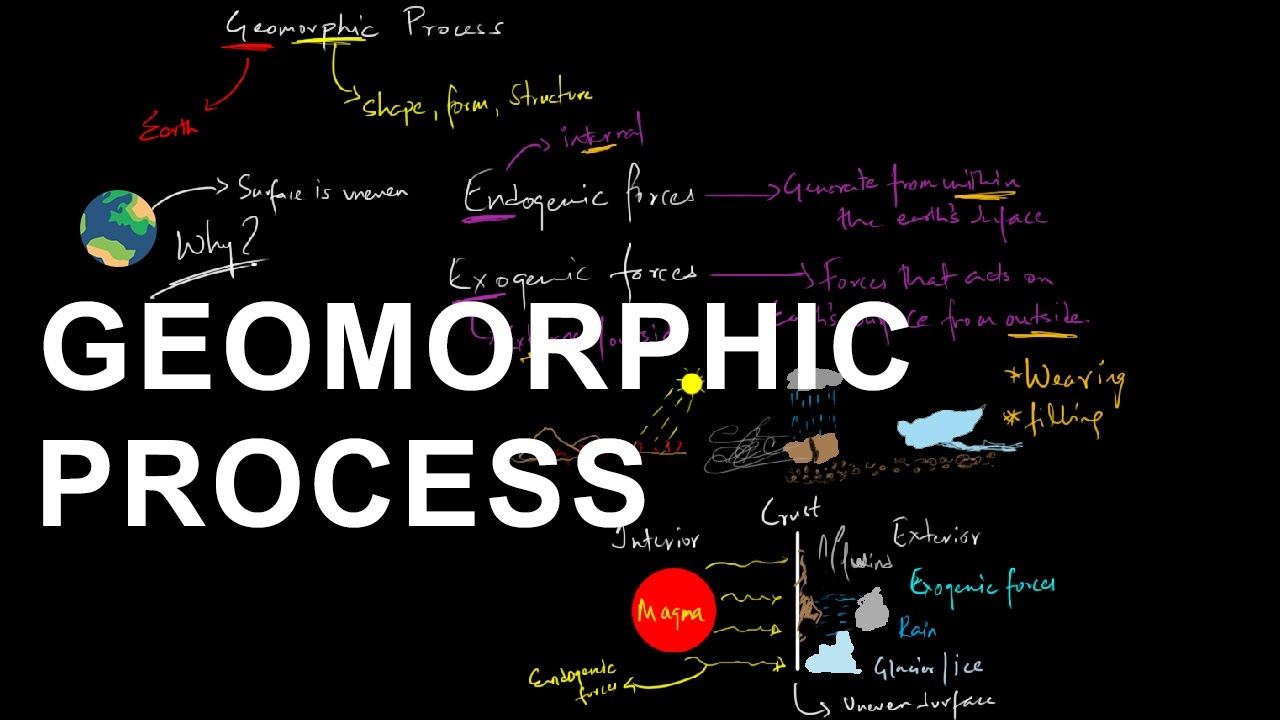
- External Forces (Exogenic Forces):
- These forces get their primary power from the heat of the sun.
- They cause degradation (wearing down high hills and mountains) and aggradation (filling up deep hollows and valleys with soil and sand).
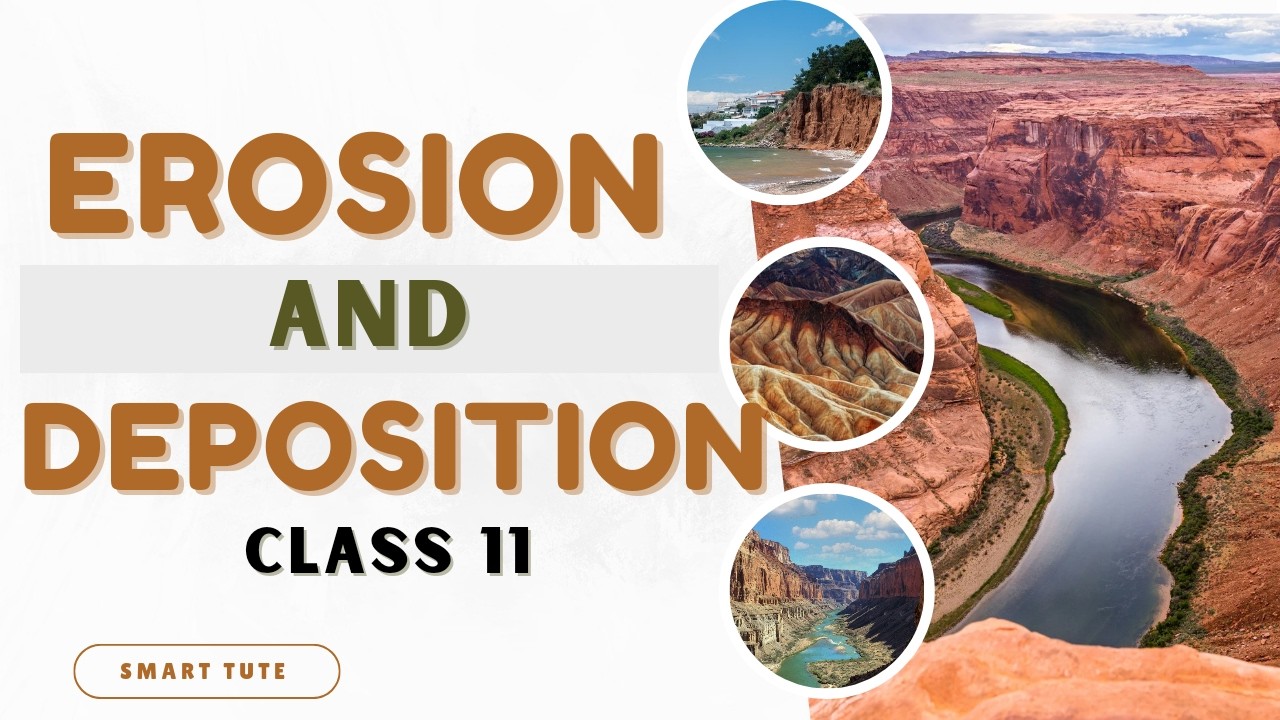
- They wash away rock particles through erosion, leading to gradation—the gradual leveling out of high and low landforms.
- Internal Forces (Endogenic Forces):
- These forces start deep inside the center of the Earth.
- They push land upward, forming new landforms on the surface.
- Because they build new features, they are known as land-building forces.
- External Forces (Exogenic Forces):
- Dynamic Balance Between Forces:
- Internal forces push land up, while external forces wear land down.
- Because both forces constantly work against each other, our planet keeps its rich variety of hills, valleys, and plains.
- Impact of Human Activity:
- The top layer of the planet is delicate, yet it provides food, water, and shelter for all human life.
- Careless use of natural resources has caused widespread environmental harm and soil damage.
- We must take careful steps to protect the soil and rocks so future generations can thrive.
- Long-Term Formation of Surface Features:
- Most natural landscapes took thousands or millions of years to form slow and steady layers.
- Misusing land speeds up damage, reducing the ability of the environment to support plants and animals.
- Learning how landscape forces work helps us use the land wisely without destroying it.
Definition of Geomorphic Processes
Every change on the landscape comes from specific physical pushes and chemical actions working together on rocks and soil.

- What Are Geomorphic Processes?
- A geomorphic process is any physical stress or chemical reaction caused by internal or external forces that changes the physical shape of the ground.
- These actions continuously redesign the outer surface of our world.
Types of Geomorphic Processes
Geomorphic processes are grouped into two major categories based on where their energy comes from.
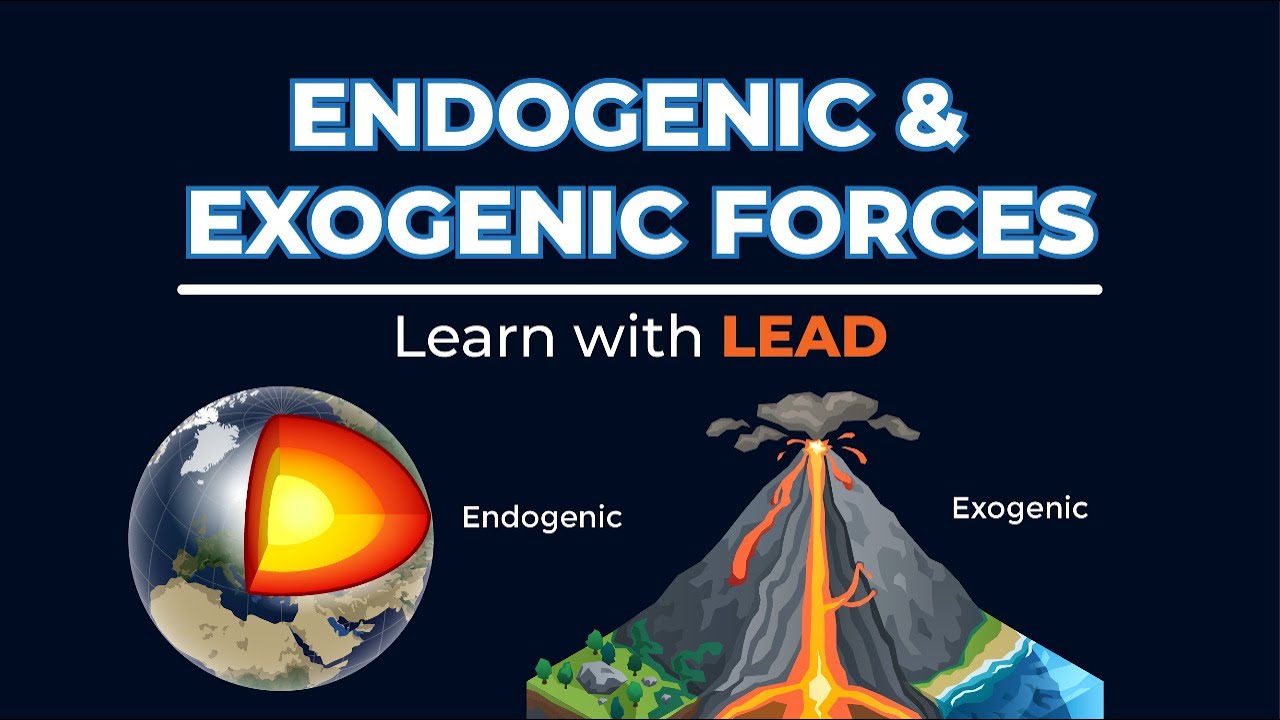
- (i) Endogenic Processes: Driven by energy inside the Earth, including diastrophism (crust movement) and volcanism (magma movement).
- (ii) Exogenic Processes: Driven by surface elements, including weathering (breaking rocks), mass wasting (downslope movement), erosion (wearing away material), and deposition (dropping material in new places).
- Geomorphic Agents:
- A geomorphic agent is any natural moving medium that picks up, carries, and drops soil and rock pieces.
- Examples include running water in rivers, underground water, moving ice in glaciers, blowing wind, ocean waves, and coastal currents.
- When gravity or slope steepness causes these agents to move, they strip away materials, transport them down slopes, and deposit them in lower areas.
- Difference Between Agents and Processes:
- A process is the actual force or reaction applied to rocks (like squeezing, scratching, or dissolving).
- An agent is the physical medium (like a river or wind) that does the carrying and moving.
- In everyday science, people often use both terms interchangeably when describing surface erosion.
- The Essential Role of Gravity:
- Gravity is a natural downward pull that makes all loose material move down slopes.
- It generates stress in rocks and powers ocean waves, tides, and atmospheric winds.
- Without gravity and sloping ground, water and wind could not erode, move, or drop soil particles.
- All movements inside and outside the planet happen because of slope or pressure differences moving from high to low.
Endogenic Processes
Deep beneath the ground, immense heat and energy build up power to lift entire continents and push up giant mountain ranges.
- Source of Internal Energy:
- Endogenic processes get their power from heat sources deep inside the core and mantle of the Earth.
- This heat comes from three main sources:
- Natural decay of radioactive elements (radioactivity).
- Friction generated by the rotation of the Earth and the gravitational pull of the moon and sun.
- Trapped heat left over from when the planet first formed billions of years ago.
- This internal heat creates temperature differences that move rocks and drive mountain-building and volcanic activity.
Diastrophism and Volcanism
Internal energy breaks and reshapes the crust through two main activities: land movement and volcanic eruptions.
- (i) Diastrophism: All internal movements that lift, fold, or tilt parts of the Earth's solid crust.
- (ii) Orogenic Processes: Mountain-building movements that squeeze narrow belts of the crust into large folds.
- (iii) Epeirogenic Processes: Broad uplift or warping forces that gently lift or lower large parts of continents without folding them tightly.
- (iv) Earthquakes and Plate Tectonics: Sudden shifts along cracks in the crust and slow horizontal drifting of massive crustal plates.
- (v) Volcanism: The movement of liquid rock (magma) pushing upward toward or breaking out onto the surface as molten lava.
Exogenic Processes
Once internal forces lift land features up into the air, surface climate elements immediately start wearing them down.
- Source of External Energy:
- Exogenic forces receive their energy from sunlight hitting our atmosphere, working alongside gravity and slope gradients created by internal land movement.
- These forces continuously weather, erode, and scrape away surface rocks.
Denudation and Rock Structure
External forces strip away rock layers through mechanical and chemical weathering.
Weathering and erosion wearing down exposed rock layers over time. - Denudation: A general term that means stripping bare or uncovering rock layers beneath the surface. It includes weathering, mass wasting, erosion, and transport.
- Role of Rock Structure: The speed at which rocks break down depends on rock hardness, presence of cracks or joints, mineral composition, and whether water can pass through (permeability).
- Climatic Influence: Temperature fluctuations and rainfall amounts determine how quickly rocks freeze, thaw, crumble, or dissolve chemically.
⚡ Quick Revision Capsule: Geomorphic Forces Comparison
This quick reference guide compares how internal and external forces shape the landscape of our planet.
| Feature | Endogenic Forces | Exogenic Forces |
|---|---|---|
| Primary Energy Source | Internal heat from radioactivity and rotation | Solar energy from the sun and gravity |
| Main Action | Builds landforms up (aggradation / uplift) | Wears landforms down (degradation / erosion) |
| Key Processes | Diastrophism, mountain folding, volcanism | Weathering, erosion, mass wasting, deposition |
| Major Agents | Magma movement and tectonic plate shifting | Running water, wind, moving ice, sea waves |
| Landform Result | Mountains, rifts, plateaus, volcano cones | Valleys, plains, cliffs, sand dunes, river deltas |
📝 Summary
The surface of Earth is under constant remodeling. Internal forces powered by subterranean heat push mountains and continents upward, while external forces driven by sun and rain strip away rock particles over . Together, these opposing forces maintain the dynamic landscapes we see today.
🚀 Quick Revision Points
Essential facts to review before examinations:
- (i) Endogenic processes originate inside the Earth and create landforms like mountains and volcanoes.
- (ii) Exogenic processes operate on the surface using sunlight, wind, and water to smooth out land features.
- (iii) Denudation combines weathering, erosion, mass movement, and transportation to wear down rocks.
- (iv) Gravity is the fundamental downward pull that allows rivers, glaciers, and landslides to transport rock debris.
- 💡 Exam Tip: Always distinguish clearly between a process (the force or action, like erosion) and an agent (the mobile carrier, like running water).
❓ Frequently Asked Questions (FAQ)
Q1: What is the main difference between endogenic and exogenic forces?
A1: Endogenic forces originate from deep inside the Earth and build landforms up, whereas exogenic forces work on the surface powered by sunlight and gravity to wear landforms down.Q2: What is the difference between orogeny and epeirogeny?
A2: Orogeny is a severe mountain-building process that folds long, narrow belts of crust, while epeirogeny is a gentle continental-building process that lifts or warps broad regions of the crust without intense folding.Q3: Why is gravity critical for exogenic processes?
A3: Gravity creates the downward pull needed for water, ice, and rocks to move down slopes, enabling erosion, transportation, and sediment deposition.