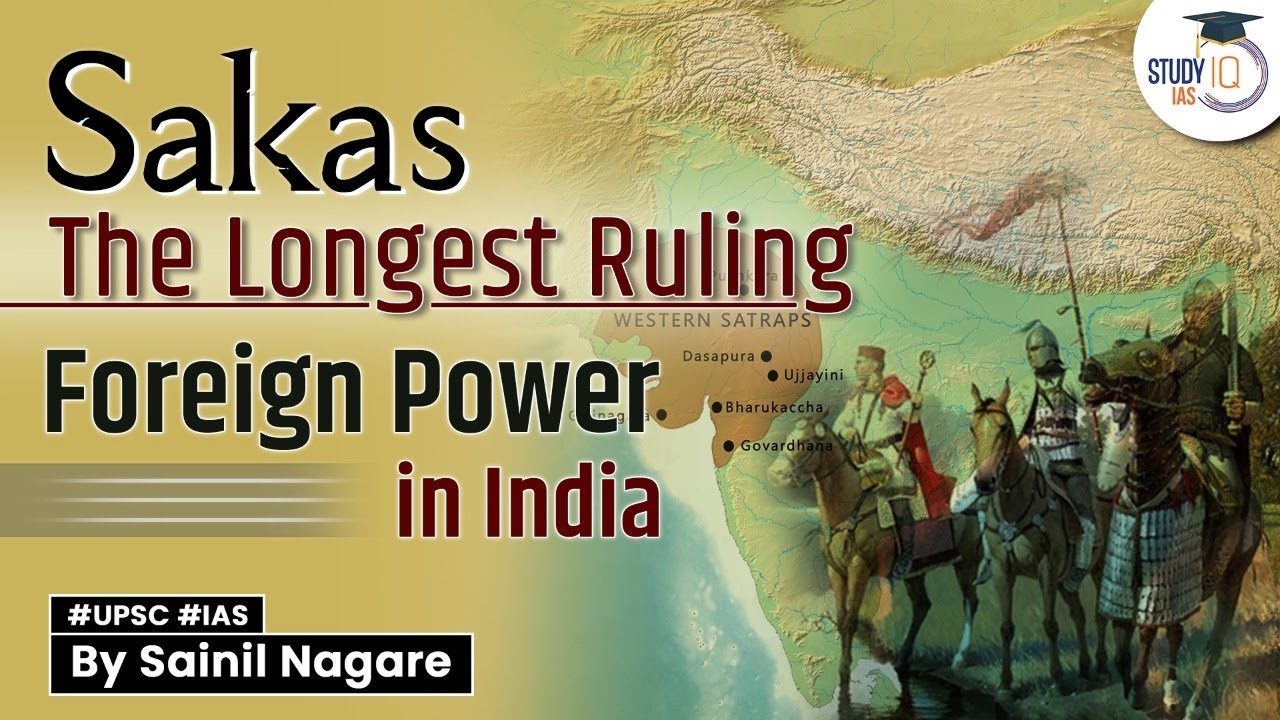
Embark on a captivating journey through ancient history to uncover the rise and fall of the Indo-Scythians, also known as the Shakas, a powerful group of nomadic Iranian-speaking tribes. This narrative explores their critical migration from Central Asia into Northwestern South Asia between the middle of the 2nd century BCE and the 4th century CE, highlighting key figures like Maues (Moga) and the establishment of the Saka era. Understanding this period is fundamental for students preparing for history and archaeology exams, as it details significant political and cultural shifts in the subcontinent, culminating in the reign of Rudrasimha III.
In this chapter, you will understand:
- The migration routes and steppe origins of the Shaka tribes.
- Establishment of regional satrapies in Gandhara, Mathura, and Gujarat.
- Cultural synthesis seen in Indo-Scythian coinage and Buddhist patronage.
- The ultimate clash with the Gupta Empire leading to the end of Saka rule.
Why this topic matters: Studying the Indo-Scythians reveals how migratory nomadic groups transformed the political geography, art, coinage, and calendar systems of ancient India, creating a rich cultural bridge between Central Asia and the Indian subcontinent.
Core Idea: Driven from Central Asia by rival nomadic shifts, the Iranian-speaking Shakas migrated south into Iran and North-Western India. They dismantled Indo-Greek territories, created decentralized satrapies, adopted Indian religious traditions like Buddhism, and left behind lasting legacies such as the Saka calendar before their integration into the Gupta Empire.
The Indo-Scythians or Shaka: A Story of Nomadic Migration and Conquest (2nd Century BCE to 4th Century CE)
The Indo-Scythians represent a major wave of Shaka tribes who reshaped the political landscape across Central Asia and Northwestern South Asia through large-scale migrations and territorial conquests.
Overview of Shaka Dominion and Political Scope
The term Indo-Scythians specifies the Scythian groups who settled across South Asia between and , building influential regional capitals.
- (i) These nomadic conquerors established dominion across vast territories, including Sogdiana, Bactria, Arachosia, Gandhara, Kashmir, Punjab, Haryana, Gujarat, and Rajasthan.
- (ii)
Maues (Moga) and Early Subcontinental Rule
The foundation of Saka rule in the subcontinent began with King Maues, who established early power with Gandhara as a main political base.
- (a) Maues asserted authority over former Indo-Greek stronghold regions.
- (b) His reign initiated the local minting of distinct hybrid coinage.
- (c) He established strategic administrative centers across the northwest.
- (d) His conquests opened routes for subsequent Saka migrations southward.
- (iii) Independent Indo-Scythian authority in India concluded with the defeat of Rudrasimha III around , ending a long era of nomadic statecraft.
Origins of the Scythians: Nomads of the Central Eurasian Steppe
The direct ancestors of the Indo-Scythians were dynamic, Iranian-speaking pastoralists originating from the vast Eurasian steppes.

- The ancestral Saka tribes belonged to a wider Eurasian cultural group known for advanced equestrian warfare and mobile pastoralism.
Sakas: The Iranian-Speaking Horse Nomads and Their Cultural Identity
Saka culture centered on horse breeding, specialized weaponry, and distinct burial traditions across the steppe regions.
- (i) As recorded by classical writers like Herodotus, these groups were skilled horsemen who used chariots and constructed massive burial mounds called kurgans containing horse sacrifices.
- (ii) Their westward displacement began around the 2nd century BCE after the Yuezhi were defeated by the Xiongnu confederation.
- (iii) Driven from their lands, the Yuezhi pushed the Sakas southward into Ferghana and Sogdiana, setting off a domino effect toward South Asia.
- (iv) This migratory cascade fundamentally disrupted the Greek and Parthian borderlands.
Scythian Clashes with Parthia: The Path to South Asia
Moving south, the Sakas encountered urbanized Hellenistic states and the powerful Parthian kingdom.
- (a) Saka forces sacked the Hellenistic city of Alexandria on the Oxus (Ai-Khanoum), ending Greek control in northern Bactria.
- (b) Saka tribes like the Massagetae and Sacaraucae fought Parthia, killing Parthian kings Phraates II and Artabanus I in battle.
- (c) Eventually repelled from the Parthian heartland, the Sakas redirected their focus southeast toward Afghanistan and India.
Sakastan: The Temporary Homeland in Eastern Iran
Before advancing into India, the Sakas settled in eastern Iran, establishing a territory called Sakastan (modern Sistan).
- This region served as an operational base where Saka traditions merged with Iranian administrative practices.
Settlement and Parthian Influence in Drangiana
Pushed out of Bactria by the Parthian monarch Mithridates II, a large branch of Sakas settled in Drangiana.
Scytho-Parthian cultural artifacts discovered in modern Sistan. - (i) Geographical texts by ancient writers like Isidore of Charax confirm a strong Saka presence in Sakastan during the 1st century BCE.
- (ii) From Sakastan, Saka chieftains marched through the Bolan Pass toward the Indus valley, evolving into the group recognized as the Indo-Scythians.
- (iii) This strategic position allowed them to control profitable overland trade routes between Iran and India.
- (iv) Administrative titles adopted here later formed the basis of their regional satrapy system.
Indo-Scythian Kingdoms: Early Power in Sindh and Gujarat
The first phase of Indo-Scythian expansion into India established power bases along the coastal and lower Indus regions.
Establishment in Abiria and Surastrene (Circa 110–80 BCE)
Between and , the early Indo-Scythian state consolidated power across Abiria (Sindh) and Surastrene (Gujarat).
- (i) Secure in the south, Saka armies advanced northward against weakening Indo-Greek rulers.
- (ii) Classical maritime guides like the Periplus of the Erythraean Sea document Saka control along the Sinthus (Indus) River, highlighting bustling port cities like Barbaricum and inland centers like Minnagara.
Rivalry with Indigenous Powers: The Vikrama and Saka Eras
Expanding Saka authority triggered long military rivalries with native Indian dynasties, leading to the creation of two historically famous calendar eras.
- (a) Around , King Vikramaditya of Ujjain repelled an early Saka invasion, an event commemorated by the founding of the Vikrama Era.
- (b) The Sakas later retook Ujjain and established the Western Satraps, an event tied to the inauguration of the Saka Era in .
- (c) Decentralized governance was maintained through regional governors known as satraps stationed in key centers like Mathura and Taxila.
Indo-Scythian Kingdoms: Gandhara and Punjab (Cultural Fusion in the Northwest)
In Gandhara and Punjab, Indo-Scythian rulers displaced the last Greek kings, fostering a unique fusion of Hellenistic, Iranian, and Indian culture.
Conquest of Taxila: Key Rulers Maues and Azes I
During the 1st century BCE, Saka armies systematically took control of major urban centers across the northwest.
- (i) King Maues captured Taxila and Gandhara around , though Indo-Greek rulers like Apollodotus II briefly contested control.
- (ii) King Azes I finalized the conquest around , ending Greek rule in northern India.
- (iii) Excavations at the ancient city of Sirkap reveal distinct Saka lifestyle items, including carved stone toilet trays and Greco-Roman style figurines.
Artistic and Religious Patronage: Buddhism and the Bimaran Casket
Saka kings in the northwest actively patronized Buddhism to legitimize their rule among local populations.
- (a) The famous gold Bimaran casket, crafted during the reign of Azes, features one of the earliest known human depictions of the Buddha.
- (b) Inscriptions on the Mathura lion capital detail extensive gifts and stupa foundations made by Saka nobles.
Indo-Scythian Kingdoms: Mathura and the Northern Satraps
Mathura emerged as a primary seat of power for the "Northern Satraps," serving as a vital strategic outpost along the Yamuna River.
The Mathura Satraps: Rajuvula and Queen Nadasi Kasa
Saka governors established control over Mathura around , ruling as semi-autonomous chieftains.
- (i) Prominent satraps included Hagamasha, Hagana, and Rajuvula, the latter defeating the last Indo-Greek ruler Strato II around .
- (ii) The sandstone Mathura lion capital records a sacred relic donation by Queen Nadasi Kasa, wife of satrap Rajuvula.
- (iii) Rajuvula's coinage exhibits metallic debasement, reflecting economic shifts during his reign.
Vassals to the Kushans: The End of Northern Saka Autonomy
The expansion of the Kushan Empire under Kanishka and his predecessors reduced the Northern Satraps to vassal status.
- (a) Inscriptions name satraps like Kharapallana and Vanaspara acting as local feudatories under Kushan overlordship.
- (b) Records link these rulers with neighboring groups, including the Kambojas and Yavanas (Greeks).
Indo-Scythian Kingdoms: The Invasion of Pataliputra
At the height of their military momentum, Saka forces advanced deep into the Gangetic heartland toward Magadha.
The Yuga Purana Account of Saka Incursion
The ancient astronomical text Yuga Purana preserves historical accounts of a major Saka assault on the imperial capital of Pataliputra during the 1st century BCE.
- (i) The text records that the Saka king captured the city after heavy fighting and widespread casualties.
- (ii) Saka rule in Pataliputra was short-lived; the invader was slain by a coalition led by King Shata of Kalinga and local Sabara tribes.
The Western Kshatrapas Legacy: Clash with the Guptas
The longest-lasting Saka dynasty in South Asia was the Western Kshatrapas, who held sway over Gujarat and Malwa for over three centuries.
Enduring Rule in Kathiawar and Gujarat
While Saka rule in Sakastan fell to the Sasanian king Bahram II (), the Western Kshatrapas remained strong in Kathiawar.
- (i) The Western Kshatrapas maintained monetary stability and regional trade networks until the end of the 4th century CE.
- (ii) The Gupta emperor Chandragupta II (Vikramaditya) launched a campaign that annexed the Kshatrapa territory around .
- (iii) Works like the Brihat-Katha-Manjari celebrate Chandragupta II's defeat of the Shaka king Rudrasimha III.
- (iv) The geographical text Kavyamimamsa classifies the Shakas as an established population group within the northern region (Uttarapatha).
Indo-Scythian Coinage: A Syncretic Artistic Statement
Coinage issued by Saka kings offers crucial evidence of their administrative structure, linguistic policies, and artistic influences.
Artistic Quality and Stylistic Evolution
Early Indo-Scythian silver coins showed fine Greek workmanship, likely created by native Hellenistic die-engravers.
- (i) Coin quality declined after under satraps like Rajuvula, showing simplified portraits and crude lettering.
- (ii) Western Satrap currency maintained a standardized portrait style and silver purity into the 4th century CE.
The Blend of Cultures: Language and Iconography
Saka coins featured bilingual legends and multi-religious symbols designed for diverse populations.
- (a) Coins displayed Greek legends on the front and Indian Kharoshthi script on the back.
- (b) Instead of standard Greek busts, Saka coins frequently portrayed the ruler on horseback, on a camel, or seated cross-legged.
- (c) Reverses combined Greek deities with Buddhist symbols like the triratna, vitarka mudra, and the sacred lion.
Depiction of Indo-Scythians in Art: Fashion and Military Dress
Sculptural reliefs from Gandhara and Mathura show how Indo-Scythian fashion differed from indigenous Indian and later Kushan attire.
Royal and Military Attire: The Contrast in Gandhara
Saka iconography highlights their origins as mounted warriors adapted to cold steppe environments.
- (i) Coin portraits show kings wearing heavy scale armor, while domestic issues show them in simple tunics.
- (ii) Gandharan reliefs depict Saka men in fitted tunics, trousers, and pointed felt caps, distinct from the bulky coats of the later Kushans.
Buner Reliefs and Stone Palettes: Cultural Details
Specific artistic finds illustrate how Greco-Iranian and Saka styles merged in everyday luxury items.
- (a) Buner Reliefs: Carved stone panels show Saka soldiers in tunics and pointed hoods making the Karana mudra hand gesture on Buddhist stupa bases.
- (b) Stone Palettes: Small toilet trays from Gandhara show banquet scenes and mythical figures, including a Saka rider mounted on a winged deer.
The Indo-Scythians and Buddhism: Patronage and Dedications
Indo-Scythian rulers actively funded Buddhist monastic complexes, leaving behind important inscriptions and architectural monuments.
Epigraphic Evidence of Buddhist Support: Taxila and Mathura
Major epigraphic finds record donations made by Saka royals to Buddhist communities.
- (i) The Taxila copper plate and the Mathura lion capital detail land grants, stupa foundations, and relic deposits.
- (ii) The Mathura capital explicitly records the entombment of a Buddha relic alongside customary Buddhist prayers.
Archaeological Finds at Butkara Stupa and Cultural Fusion
Excavations at the Butkara Stupa in Swat confirm continuous Saka artistic patronage.
- (a) Archaeologists discovered Indo-Corinthian capitals and Buddhist sculptures buried alongside silver coins of King Azes.
- (b) Reliefs show Saka donors in tunics standing next to figures of the Buddha and classical Greek deities like Dionysos and Ariadne.
Indo-Scythians in Literature: Shakas in Indian and Western Texts
The presence of the Shakas is well-documented in both Mediterranean geographic studies and ancient Indian literature.
Western Geographical Accounts and Trade Routes
Greco-Roman geographers noted the Saka presence along the Indus River delta, calling the territory Indo-Scythia.
- (i) Maps and texts like Ptolemy's Geography, the Periplus of the Erythraean Sea, and the Tabula Peutingeriana record major Saka trade centers.
- (ii) The Periplus identifies Minnagara as the capital of coastal Scythia, distinguishing it from neighboring Indian realms.
Indian Texts: The Shakas as Warlike Tribes
Sanskrit literature frequently mentions the Shakas alongside other northern frontier tribes.
- (a) The epics Mahabharata, Puranas, and Manusmriti contain numerous references to the Shaka people.
- (b) These texts describe the Shakas as fierce warrior clans originating from the northern borders (Uttarapatha).
Quick Revision Capsule: Major Indo-Scythian Rulers & Landmarks
Key historical milestones, rulers, and primary contributions of the Indo-Scythian era:
| Ruler / Era | Primary Region | Key Historical Contribution |
|---|---|---|
| Maues (Moga) | Gandhara & Taxila | First recognized Saka king in India; established Saka power in Northwestern South Asia. |
| Azes I | Punjab & Gandhara | Ended Greek rule in Northern India; associated with the Bimaran Casket and early Buddha art. |
| Rajuvula | Mathura | Prominent Northern Satrap; conquered remaining Greek territories under Strato II. |
| Western Satraps | Gujarat & Malwa | Longest-lasting Saka dynasty; established the Saka Era in . |
| Rudrasimha III | Western India | Final Saka ruler; defeated by Gupta Emperor Chandragupta II around . |
Summary
The history of the Indo-Scythians (Shakas) illustrates the dynamic movement of nomadic tribes, military conquest, and cultural adaptation in ancient South Asia. Driven from the Central Asian steppes by Yuezhi movements, the Shakas migrated through Iran into northwestern India between the 2nd century BCE and 4th century CE. Rulers like Maues and Azes I established powerful satrapies, effectively ending Greek political rule in India. Through their support of Buddhism, distinct coinage, and creation of the Saka Era, the Indo-Scythians left a lasting mark on Indian history before their final integration into the Gupta Empire under Chandragupta II.
Quick Revision Notes
Core Facts for History & Archaeology Exams:
- (i) The migration of the Shakas was initiated by conflicts with the Xiongnu and Yuezhi in Central Asia.
- (ii) The defeat of the Sakas at Ujjain in led to the creation of the Vikrama Era.
- (iii) The establishment of the Western Satraps in Ujjain in marked the start of the Saka Era.
- (iv) Chandragupta II (Vikramaditya) ended Saka rule around by defeating Rudrasimha III.
- Exam Tip: Remember the distinction between the two calendar systems: the Vikrama Era () marks the repelling of the Shakas from Ujjain, while the Saka Era () marks the rise of the Western Satraps under Chastana/Kanishka. Questions frequently ask about the inscription on the Mathura Lion Capital, which records donations by Queen Nadasi Kasa.
Frequently Asked Questions (FAQ)
Q1: Who were the Indo-Scythians?
A1: The Indo-Scythians, or Shakas, were a group of Iranian-speaking nomadic tribes from Central Asia who migrated into Northwestern South Asia between the 2nd century BCE and the 4th century CE, establishing regional kingdoms across Gandhara, Mathura, and Western India.Q2: What is the significance of the Saka Era?
A2: The Saka Era, founded in , marks the consolidation of Western Satrap power in Western India. It remains an important historic calendar system and serves as the basis for the official Indian national calendar today.Q3: How did Indo-Scythian rule in India end?
A3: Indo-Scythian political authority came to an end around when the Gupta emperor Chandragupta II (Vikramaditya) defeated the last Western Satrap ruler, Rudrasimha III, annexing Gujarat and Kathiawar into the Gupta Empire.