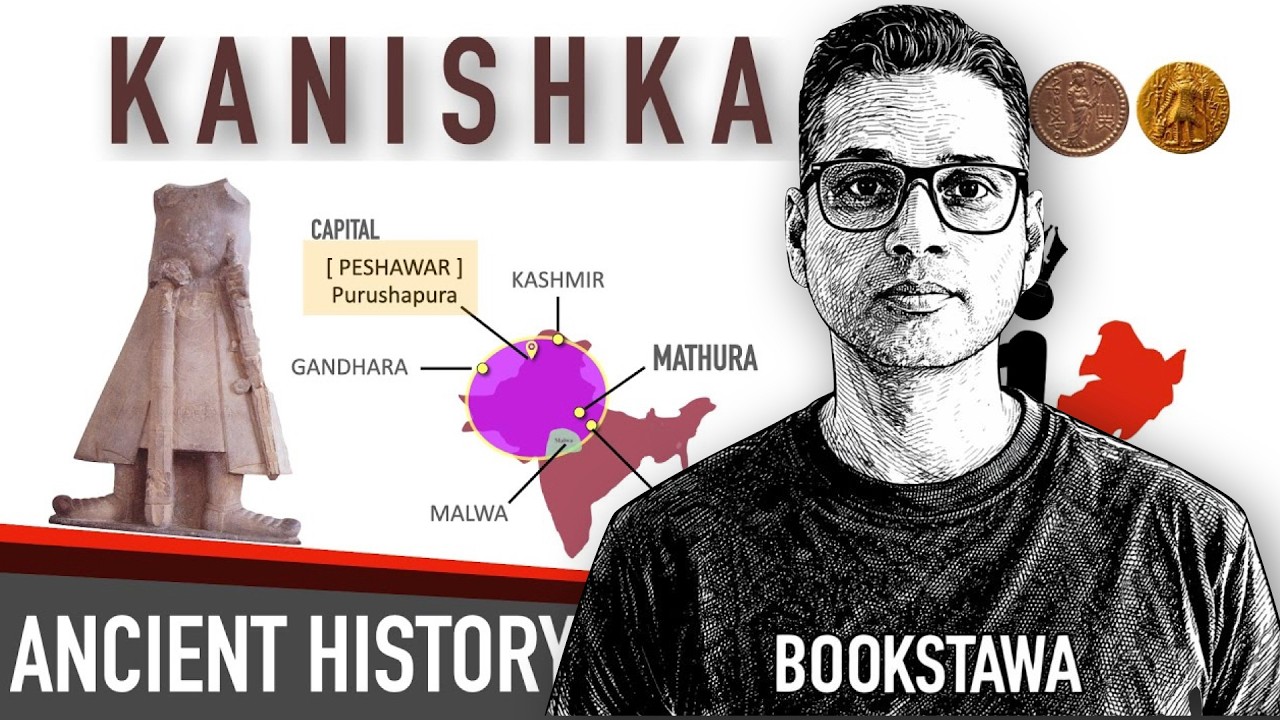
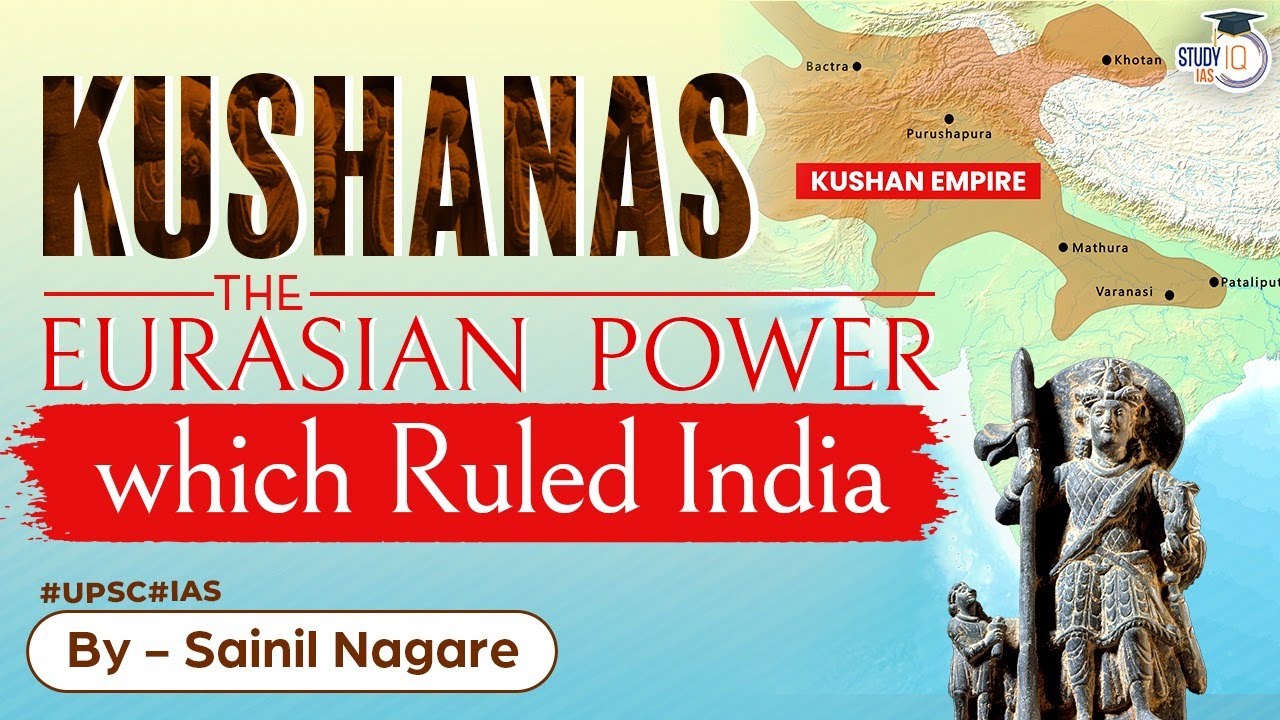
Take a fascinating look into the Kushan Empire, a grand state that flourished from the 1st to the 3rd Century C.E. across Central Asia and Northern India. Originating from the Yuezhi nomadic confederation, the empire built a vital geopolitical bridge connecting the Mediterranean world, South Asia, and East Asia. Under visionaries like Kanishka I, the Kushans controlled lucrative network branches of the Silk Route trade, promoting international diplomacy, urban expansion, and monetary reform. Their territory hosted a remarkable blending of cultures known as Greco-Buddhism, which transformed classical art forms and spiritual teachings. Studying this era offers scholars and students a deep look into early imperial governance and cross-border cultural exchange.
In this chapter, you will understand:
- The geopolitical expansion and administration of the Kushan Dynasty.
- The economic importance of the Silk Route networks and trade connections.
- Kanishka's patronage of Buddhism, Sanskrit literature, and the Fourth Council.
- The development of Greco-Buddhist art, coinage, and imperial deification.
Why this topic matters: This period marks a major turning point in ancient history when trade networks connected distant empires, laying the groundwork for international commerce, Buddhist expansion, and unique artistic traditions across Asia.
Core Idea: The Kushan Empire successfully united diverse territories stretching from Central Asia through Northern India. By maintaining control over vital Silk Route trade lanes, sponsoring diverse religious faiths, and adopting grand royal titles, the Kushans fostered an enduring era of political stability and cultural integration.
Comprehensive History of the Kushan Empire: Kanishka's Expansion and Silk Route Trade
The establishment of the Kushan Empire by the Yuezhi confederation altered the political landscape of ancient Eurasia, creating a unified power that bridged India with Central Asia.
Geopolitical Origins and Territorial Reach
Rising from nomadic roots in the eastern Tarim Basin, the ruling clan organized nomadic groups into a strong imperial state that spanned multiple modern nations.
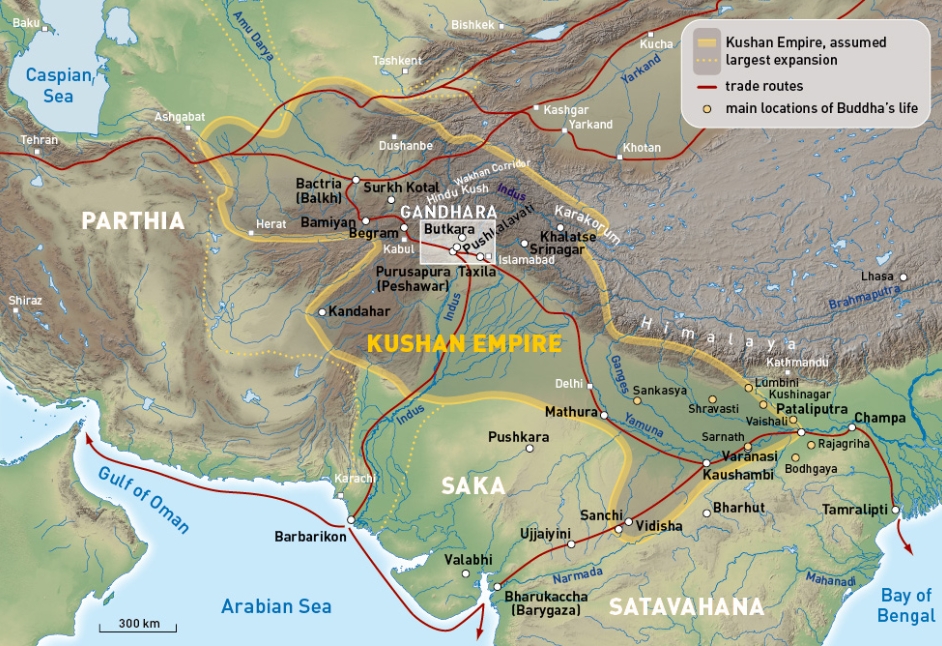
Expansion timeline of Kushana empire across Central Asia and the Indian subcontinent. - (i) Dominating from approximately the 1st to the 3rd Century C.E., the realm reached its political and cultural height between , spanning Tajikistan, Afghanistan, Pakistan, and deep into the Ganges River valley of Northern India.
- (ii) The ruling family belonged to an Indo-European lineage from the Yuezhi confederation, migrating westward from China with ties to the Tocharians before establishing their capital bases.
- (iii) Unifying regions across Central Asia and South Asia enabled nearly two centuries of uninterrupted long-distance commerce and intellectual exchange.
Ancient Silk Route Connectivity and Its Impact on the Indian Subcontinent
Controlling vital positions along the overland trade routes allowed the Kushan rulers to collect trade duties while facilitating transfers of military technology and cultural practices.
Historical Significance of the Karakorum Highway Routes
Mountain passes in the north provided pathways that connected Indian merchant centers to global trade markets.
- (i) These ancient high-altitude roads, central to the Silk Route network, were actively traveled near the beginning of the Christian era, linking India to key commercial hubs like Samarkand and Yarkand.
Epigraphic Records and Multi-Script Inscriptions
Merchant travelers left behind rock inscriptions that record their passage through challenging terrain.
- (a) Inscriptions carved in Kharoshthi, Brahmi, and Bactrian scripts demonstrate the diverse linguistic backgrounds of traders on these roads.
- (b) These commercial pathways supported continuous diplomatic contacts between South Asia, China, and the Western world.
Central Asian Trade Contributions to Indian Culture and Military
Trade along these routes imported essential resources and equipment that modernized Indian military structure and introduced new cultural elements.
- [a] Superior breeds of war horses and improved riding equipment strengthened mobile cavalry units across the subcontinent.
- [b] New religious ideas, artistic styles, and administrative traditions moved along the trade networks, enriching local culture.
Kushana Royal Patronage: Religion and Cultural Synthesis
The Kushans adopted an open-minded approach to religion, honoring diverse traditions and incorporating deities from different cultures onto their official coinage and royal monuments.
Kanishka's Support for Diverse Religions and the Buddhist Council
The emperor Kanishka I is well known for sponsoring several religious faiths and funding intellectual assemblies.
- (i) The monarchy supported several major traditions, including Buddhism, Jainism, and the Zoroastrianism native to their Central Asian homeland.
The Fourth Buddhist Council and Scriptural Standardization
A key landmark during Kanishka's rule was assembling Buddhist scholars to organize and standardize religious doctrines.
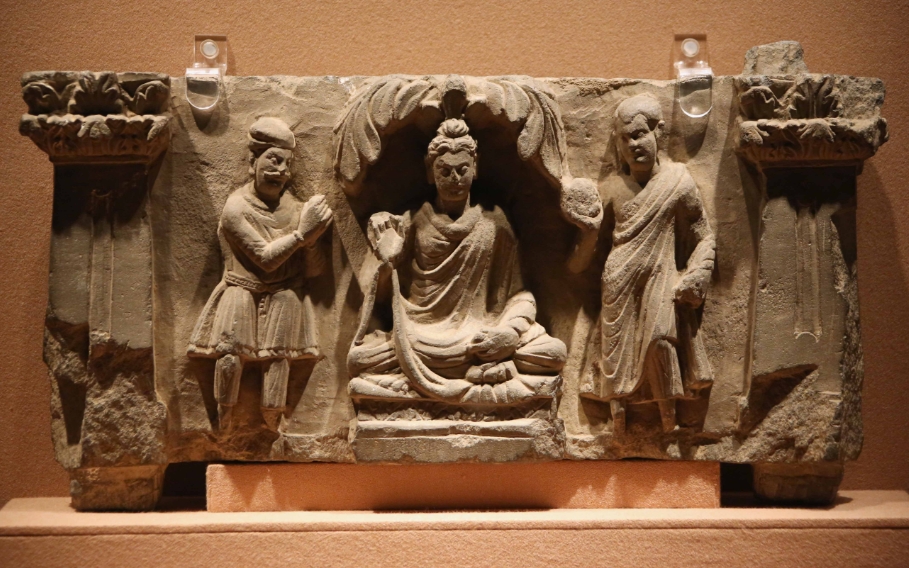
The syncretic religion during the Kushana empire, combining elements of Buddhism, Jainism, and local cults. - (i) Held in Kashmir around , the Fourth Buddhist Council brought together scholars to resolve doctrinal differences, serving a similar function to Ashoka's earlier assembly at Pataliputra.
- (ii) Under imperial sponsorship, monks translated traditional Gandhari Prakrit texts into formal Sanskrit, broadening their reach across Asia.
- (iii) This scriptural organization encouraged the growth and spread of Mahayana Buddhism along northern trade routes.
Divine Monarchy, Exalted Titles, and Imperial Propaganda
To unite their varied subjects, Kushan leaders used elevated titles and royal deification concepts influenced by neighboring empires.
- [a] The title daivaputra (meaning "son of heaven") drew upon Chinese royal concepts and paralleled Roman expressions like diva filius.
- [b] Imperial shrines called devakula were constructed after a ruler's death to honor deceased kings as divine figures, an uncommon practice in traditional Indian politics.
- [c] Borrowing from Indo-Greek traditions, rulers adopted titles like maharajati-raja ("king of kings") and soter ("savior"), displaying royal halos on their coins to project divine authority.
Quick Revision Capsule: Kushan Empire Overview
Key highlights of the Kushan Empire's administration, economy, culture, and key rulers:
| Historical Parameter | Core Mechanism & Features | Key Impact & Legacy |
|---|---|---|
| Territorial Extent | Stretched from Tajikistan and Bactria down through Punjab into the Ganges Basin. | Unified Central Asian and North Indian trade channels under a single administration. |
| Trade & Economy | Monopolized major routes of the overland Silk Route; introduced gold coinage. | Promoted long-distance commerce with the Roman Empire and Han China. |
| Religious Policy | Patronized Buddhism, Jainism, and Zoroastrianism; hosted the Fourth Buddhist Council. | Facilitated the expansion of Mahayana Buddhism across Central and East Asia. |
| Art & Architecture | Fused Greek, Persian, and Indian artistic traditions in Gandhara and Mathura. | Created the iconic human form of the Buddha in sculptural traditions. |
| Administrative System | Used a multi-tiered regional structure led by governors called satraps and mahakshatrapas. | Maintained regional stability over vast territories with varied ethnic populations. |
Kushana Governance, Administrative Structure, and Ultimate Decline
Managing an empire stretching from Central Asia to Bihar required an organized, flexible administrative network capable of governing diverse local communities.
Multi-Tiered Regional Administration and Satrapies
The central empire blended direct imperial rule in core areas with indirect administration in distant provinces.
- (i) Governance operated across central, provincial, and local levels, adapting administrative practices from earlier Indo-Greek and Parthian systems.
- (ii) Provincial governors held titles like ksatrapa and mahaksatrapa ("great satrap"), exercising military and administrative oversight in their assigned regions.
Factors Leading to the Kushana Dynasty's Weakening
External conflicts combined with internal pressures gradually eroded the empire's power base.
- [a] The expansion of the Sassanid Empire from Persia created persistent military pressures along the western frontier.
- [b] Local revolts led by autonomous tribal republics, such as the gana-sanghas in Punjab and Rajasthan, weakened imperial control over central territories.
- [c] Around , the Sassanid monarch Ardashir I overthrew Parthian power, securing control that reduced Kushan territory by the mid-3rd century.
- [d] Following the reign of Vasudeva I around , the empire split into eastern and western divisions, with the western half falling under Sassanid control.
Legacy of Kushana: Cross-Cultural Exchange and Integration
The Kushan era is recognized for its vibrant culture, especially the emergence of Greco-Buddhism, which combined Mediterranean art forms with Indian spiritual ideas.
Cross-Cultural Interaction and Religious Syncretism
Active commerce encouraged cultural exchange, leading to artistic and religious blending throughout the empire.
- (i) Foreign cultural elements influenced local iconography, seen in how figures like the Bactrian goddess Ardochsho influenced representations of the Indian deity Shri.
- (ii) Coins depicted diverse divine figures from Greek, Iranian, and Indian traditions, illustrating the open patronage of Kushan rulers.
Impact on the Shakas and the Art of Gandhara
Kushan political dominance shifted rival groups southward and supported regional artistic centers.
- [a] The expanding Kushan forces pushed earlier Shaka rulers into regions like Kutch, Kathiawar, and Malwa, where they maintained regional domains until the late 4th century.
- [b] Gandhara art developed at this geographical crossroads, producing stone sculptures that rendered Buddhist figures with classical Greek drapery and features.
- [c] Stone carvings show Kushan patrons dressed in long tunics, belts, and boots, kneeling in devotion before the Buddha, Bodhisattvas, and the future Buddha Maitreya.
Kushan Rulers, Coinage, Inscriptions, and External Contacts
Inscriptions, official currency, and foreign historical records provide concrete documentation of the dynasty's chronological succession and economic power.
Kushan Dynasty: Key Rulers and Achievements
A sequence of effective rulers expanded Kushan influence across North-Western India and Central Asia.
- Kujula Kadphises (): Unified the five Yuezhi tribes and established the foundation of the Kushan state.
- Vima Taktu (): Extended imperial control into the northwestern areas of the Indian subcontinent.
- Vima Kadphises (): Expanded territorial holdings and introduced gold coinage alongside existing silver and copper currencies.
- Kanishka I (): Led the empire to its height, maintained dual capitals at Purushapura (Peshawar) and Mathura, and established the Kushan era starting in
- Vasudeva I (): The last major emperor of the unified dynasty, whose reign faced rising external threats from the Sassanid power.
Sophisticated Coins and Epigraphic Records
Kushan currency and stone inscriptions offer vital historical insights into royal lineages, economy, and official languages.
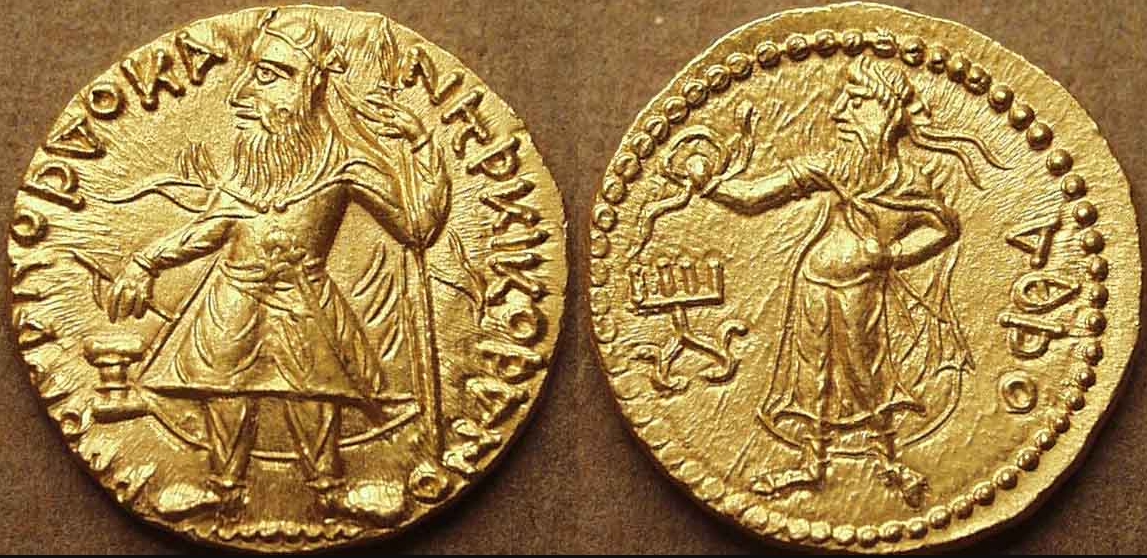
The gold and copper coins of the Kushana dynasty, featuring deities and the ruling king. - (i) Currency designs drew upon Greco-Bactrian styles, portraying the ruling monarch on one side and a revered deity on the reverse.
- (ii) Official inscriptions appear in Bactrian written with Greek letters, as well as Prakrit written in Brahmi or Kharoshthi scripts.
- (iii) The Rabatak Inscription discovered in Afghanistan confirms the royal lineage of Kanishka I, explicitly tracing his ancestry back through Vima Kadphises, Vima Taktu, and Kujula Kadphises.
International Relations with Rome and Han China
Historical accounts confirm active diplomatic contacts and thriving trade relations between the Kushan court and foreign powers.
- [a] Roman historians from the 2nd century note diplomatic envoys arriving from Bactrian and Indian kings, referring to Kushan leaders.
- [b] Chinese historical chronicles record trade exchanges moving through northwestern India, connecting Asian markets directly with the Roman Empire.
Summary
The Kushan Empire stands as a key example of cross-cultural integration, linking Central Asia and Northern India into a unified economic and cultural network. From the 1st to the 3rd Century C.E., Kushan rulers controlled key overland routes of the Silk Route trade, issued gold currency, and supported a tolerant religious policy that allowed Greco-Buddhism to flourish. The patronage of Kanishka I—marked by the Fourth Buddhist Council, advancement of Sanskrit literature, and iconic artistic developments in Gandhara and Mathura—left a lasting legacy across South Asia before regional divisions and Sassanid expansion led to the empire's decline.
Quick Revision Points for Students
Focus on these essential facts for examination preparation:
- (i) Origins & Extent: Rose from the Yuezhi confederation to rule territories spanning Central Asia down to the Ganges Basin.
- (ii) Economic Base: Maintained control over Silk Route branches and minted high-purity gold and copper coinage.
- (iii) Cultural Impact: Sponsored Greco-Buddhist art in Gandhara and hosted the Fourth Buddhist Council in Kashmir under Kanishka I.
- (iv) Administrative Structure: Managed provinces using regional governors titled ksatrapas and mahaksatrapas.
- Exam Tip: Pay special attention to the Rabatak Inscription for questions on Kanishka's lineage, remember that Vima Kadphises introduced gold coinage in India, and note Kashmir as the location of the Fourth Buddhist Council.
Frequently Asked Questions (FAQ)
Q1: Who was the most powerful ruler of the Kushan Empire, and what were his main achievements?
A1: Kanishka I was the most prominent Kushan emperor. He expanded the empire's borders, established capitals at Purushapura and Mathura, initiated the Kushan era in , convened the Fourth Buddhist Council in Kashmir, and promoted Greco-Buddhist art along with Sanskrit literature.Q2: What is the significance of the Rabatak Inscription?
A2: The Rabatak Inscription is a historical stone inscription written in the Bactrian language. It provides clear evidence of Kanishka's ancestry by listing his predecessors: his father Vima Kadphises, his grandfather Vima Taktu, and his great-grandfather Kujula Kadphises.Q3: How did the Kushan Empire benefit from the Silk Route?
A3: By controlling strategic mountain passes and overland trade routes connecting China, India, and the Western world, the Kushans collected duties on passing goods, established active commercial ties with the Roman Empire, and facilitated cultural and religious exchanges across Asia.