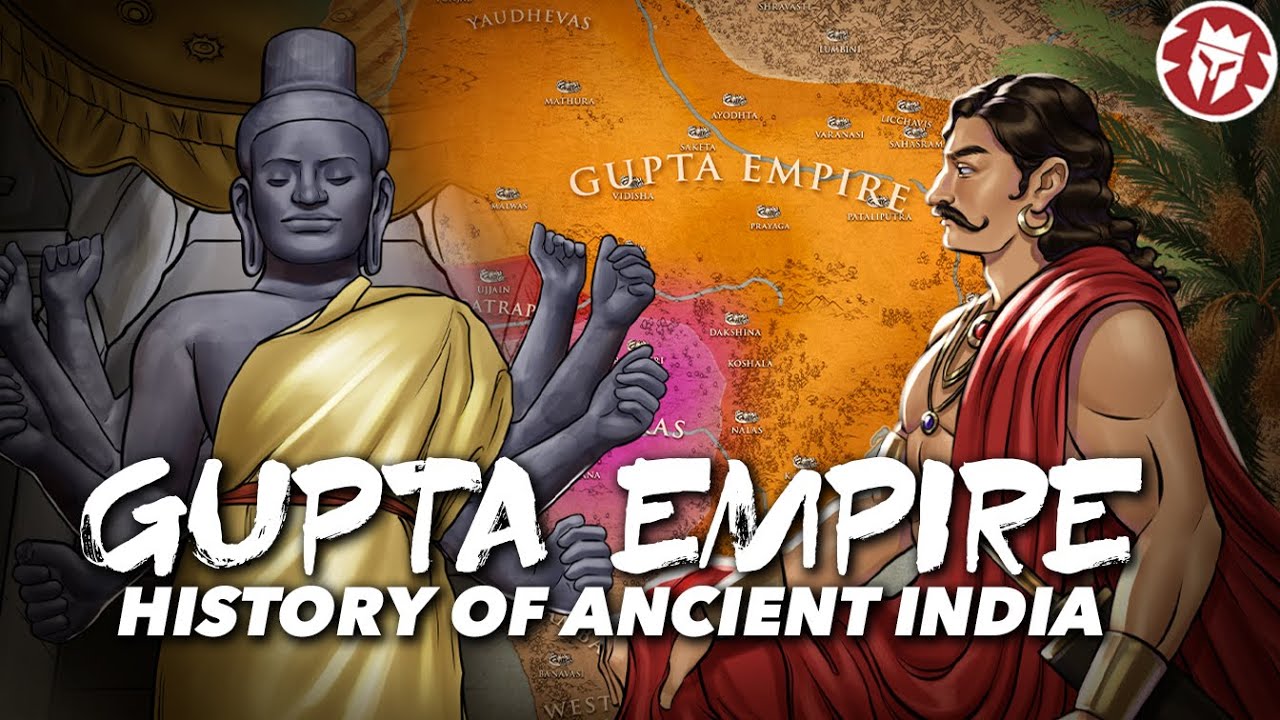
The Gupta Empire created a balanced system of governance while fostering unprecedented cultural and intellectual growth, defining India's classical period. This remarkable period successfully blended effective political centralization with essential regional autonomy, contributing profoundly to the sub-continent’s identity as a cultural and intellectual powerhouse. The rulers introduced and adopted powerful imperial titles, such as the lofty maharajadhiraja (King of Kings) and paramabhatraraka (Supreme Master), solidifying their supreme authority. Furthermore, the structure of administration saw a clear transition into well-defined hierarchical structures, including village, district (vishaya), and provincial (bhukti) governance, ensuring effective rule across the vast empire. The era witnessed a spectacular flourishing of art, science, and literature, which were significantly encouraged and patronized by the Gupta monarchs, leading to numerous enduring contributions that shaped Indian civilization for centuries.
In this chapter, you will understand:
- The administrative machinery and balance between central control and local autonomy.
- Economic shifts, foreign trade changes, and the rise of agrarian landed elites.
- Social dynamics, caste mobility, religious developments, and temple worship.
- Golden Age contributions to Sanskrit literature, mathematics, metallurgy, and arts.
Why this topic matters: Studying the Gupta era is essential for competitive examinations and historical analysis, as it provides foundational knowledge about ancient Indian statecraft, temple architecture, early Hindu traditions, and classic Sanskrit literature.
Core Idea: The Gupta Empire (4th–6th century CE) established an enduring model of decentralized administration while presiding over India's classical age. Through patronage of Sanskrit works, breakthroughs in science and metallurgy, and widespread architectural innovation, the Guptas laid down social, political, and cultural frameworks that influenced Indian society long after their political collapse.
Detailed System of Administration in the Gupta Empire: Balancing Central and Local Power
The Gupta rulers established a model based on hereditary kingship, strongly supported by Brahmanical religious ideology, while cleverly balancing central control with considerable local autonomy maintained through powerful feudatories and established guilds.
Imperial Authority, Divine Legitimacy, and Royal Titles
The Gupta monarchs placed significant emphasis on projecting absolute sovereignty, reinforced by adopting grand titles and drawing comparisons that suggested divine status to legitimize their rule.
- The system of kingship was essentially hereditary, passing down the royal lineage, though it was often not strictly based on primogeniture (the right of the eldest son), allowing for flexibility in succession.
Royal Titles and Religious Mandate
Kings asserted their dominance through imposing titles, including paramesvara (Supreme Lord), maharajadhiraja (Great King of Kings), and paramabhatraraka (Supreme Master).
- The powerful class of Brahmanas played a crucial role in legitimizing royal power by equating rulers with the revered deity, Vishnu.
- Royal ceremonies and public proclamations highlighted this divine link to maintain widespread public reverence.
- Subordinate rulers acknowledged this divine mandate when paying annual tributes to the central court.
- Imperial coins often depicted monarchs performing sacred sacrifices to emphasize their legitimate spiritual authority.
Military and Economic Administration: Shifting Taxation and Warfare
The Guptas meticulously maintained professional standing armies for imperial defense and derived their primary revenue from an efficient, though sometimes burdensome, system of land-based taxation.

- A significant shift in military strategy occurred with the widespread use of cavalry and expert horse archery, gradually replacing older, less mobile chariot warfare methods.
Land Revenue and Commercial Taxation Trends
Land revenue was identified as the predominant source of state income, typically demanding that farmers pay a tax amounting to between one-fourth and one-sixth of their total agricultural produce.
- Collection mechanisms were overseen by village assemblies and district officials.
- Farmers paid their dues either in cash or through physical produce depending on local regional customs.
- Commercial taxes saw a gradual decline, reflecting the increasing agrarian dominance within the empire's economic structure.
- Forced labor, known as visti, was occasionally extracted from the rural population for state construction projects.
Provincial and Local Governance Structure: Role of Administrators and Headmen
The empire’s administration was systematically organized into distinct territorial units, characterized by strong, essential participation from local governing bodies and communities.
- The Kumaramatyas, a class of high-ranking, versatile officials, served as key administrative functionaries, playing a pivotal role in maintaining the structure of central governance.
Urban Governance, Feudatories, and Land Grants
Powerful urban guilds, representing tradesmen and artisans, along with autonomous feudatory chiefs, were vital, integrated components of the overarching Gupta governmental machinery.
Hierarchical structure of Gupta provincial and district governance - Vast provinces were rationally divided into major administrative divisions known as bhukti, which were further subdivided into smaller districts called vishaya.
- At the grassroots level, local affairs, village lands, and disputes were effectively handled by village headmen and councils of respected elders.
- Influential guilds of artisans and merchants were formally integrated into city administration, showcasing high economic and political collaboration.
- Feudatory chiefs were granted extensive tracts of land by the crown and, in return, were obligated to fulfill critical fiscal and military duties.
The Economic Transformation: Decline of Trade and Empowerment of Landed Elites
The Gupta economy experienced a major structural shift where the profitability of international long-distance trade significantly declined, leading to the rapid expansion of the agrarian sector and, subsequently, the empowerment of landed aristocratic elites.
Trade Decline and Shifting Economic Focus
The primary factor contributing to this decline was the Roman Empire’s successful acquisition of silk production technology, which drastically reduced the demand for and profitability of India’s major silk exports.
- Overseas trade with the Western world suffered a major and sustained downturn during the Gupta period, impacting coastal port cities.
- The internal economy experienced a pivotal transition, becoming increasingly land-based and agrarian-focused rather than commercially oriented.
- This economic reorientation resulted in a substantial decline of merchant dominance in both the political sphere and the overall economic landscape.
Emergence of Landed Elites and Peasant Status
The policy of extensive land grants meant that a powerful class of priestly landlords emerged, gaining direct authority over local peasantry in granted territories.
- The period was marked by the vigorous growth of new agrarian settlements and the intensification of cultivation across previously underdeveloped regions.
- Through royal benefaction, Brahmanas and state officials were transformed into powerful, non-cultivating landlords commanding significant local influence.
- Under this new structure, the average peasantry lost much of its traditional autonomy and control over land within increasingly stratified rural structures.
Social Developments in Gupta Society: Mobility, Stratification, and Group Status
The Gupta period was characterized by noticeable upward social mobility for certain groups, the integration of foreign invaders into the caste system, and the simultaneous hardening of social stratification.
Varna Status and Dynamics of Social Mobility
The Guptas themselves successfully orchestrated their own rise from a presumed vaisya background to the esteemed kshatriya status, largely achieved through sustained support from the Brahmanical establishment.
- The large-scale use of land grants significantly elevated the status and economic power of Brahmanas, placing them at the apex of the social hierarchy.
- Foreign groups, such as the invading Hunas, were gradually assimilated into Indian society, often gaining status by being integrated into newly forming warrior clans.
- Various regional warrior groups and ambitious sub-castes successfully utilized the fluidity of the period to achieve higher social mobility.
Sudras, Women, and Untouchables: Opportunities and Growing Restrictions
Marginalized groups within society experienced a complex mix of limited new opportunities alongside a concurrent tightening of social and religious restrictions.
- The Sudras were granted greater access to certain sacred scriptures and played an increasingly central role in the foundational agrarian economy.
- Women experienced limited gains in religious life participation, though overall legal and social restrictions on their freedom began to intensify.
- The Chandalas and similar groups faced growing social exclusion and the formalization of untouchability, marking a significant stratification in the social order.
Religious Dynamics in the Gupta Period: Rise of Brahmanism and Continuity of Other Faiths
The Gupta period is most famously associated with the ascendancy of Brahmanism (early Hinduism), which received substantial royal patronage, although Buddhism and Jainism continued to thrive under regional support.
Decline of Royal Patronage for Buddhism
Despite a marked reduction in direct royal financial support from Gupta monarchs, Buddhism managed to survive and thrive regionally, maintaining a strong presence in key learning centers.
- The account of Chinese pilgrim Fa-hsien provides invaluable historical evidence, documenting the continued prosperity of various Buddhist communities.
- Important monasteries and centers of learning persisted, particularly in eastern India, serving as intellectual hubs for the Buddhist community.
- Critically, despite the rise of Brahmanism, Buddhism generally continued its existence without facing widespread persecution from the state.
Ascendancy and Formalization of Brahmanism (Hinduism)
Brahmanical religious practices, including elaborate rituals, grand temple construction, and formalized worship, gained immense prominence throughout the empire.
- The dedicated worship of Vishnu and Shiva became the central characteristic of the burgeoning Hindu tradition.
- The concept of temple-based idol worship expanded significantly, transforming religious practice into devotional worship focused on physical representations of the divine.
- Major religious festivals became increasingly systematized, aligning precisely with the rhythms of essential agrarian cycles.
Gupta Art, Literature, Science, and Economy: The Zenith of the Golden Age
The period often referred to as the Gupta Golden Age represents an incredible zenith of cultural and intellectual activity, characterized by breathtaking art, refined literature, groundbreaking scientific inquiry, and robust economic prosperity.
Art and Architecture: Defining the Classical Style
The arts reached classical perfection under the Guptas, establishing aesthetic standards that influenced the subcontinent for centuries.
- Exquisite Ajanta cave paintings and sophisticated bronze sculptures from sites like Sultanganj represent the pinnacle of artistic excellence.
- Innovative use of materials resulted in sturdy brick temples, such as the renowned structure at Bhitargaon, showcasing architectural progress.
- The establishment of Nalanda transformed it into an international hub of Mahayana Buddhist learning, attracting scholars from across Asia.
Literary Achievements and Sanskrit Patronage
The Gupta court patronized Sanskrit literature, leading to the creation of timeless classics studied globally.
- Masterpieces by literary giants like Kalidasa (author of Abhijnanasakuntalam) and Bhasa enriched the tradition of Sanskrit drama and poetry.
- Compiling and finalizing definitive versions of the great Indian epics, the Ramayana and the Mahabharata, was completed during this era.
- Works like the Amarakosa, a renowned Sanskrit thesaurus, demonstrated a commitment to profound scholarly Sanskrit traditions and lexicography.
Science and Technology: Innovations in Mathematics and Metallurgy
The era produced foundational works in science, mathematics, and astronomy that significantly contributed to global intellectual heritage.
- The mathematician and astronomer Aryabhata authored the seminal work Aryabhatiya, introducing concepts like zero and the value of π.
- The field of astronomy advanced, influenced by key Hellenistic works such as the Romaka Siddhanta.
- The Iron Pillar of Delhi, which remains rust-free centuries later, stands as a testament to the unparalleled sophistication of Gupta metallurgical brilliance.
Economy and Trade Networks
Despite the decline in long-distance Western trade, the overall economy remained robust, driven by agriculture and flourishing internal trade.
- The foundation of the economy was the agrarian sector, supported by actively flourishing internal and regional trade networks.
- Gupta coins discovered in distant regions, including Southeast Asia, indicate the sustained reach of commercial influence.
- Ancient urban centers like Pataliputra, Ujjain, and Varanasi continued to thrive as pivotal manufacturing and trade hubs.
The Decline of the Gupta Empire and the End of the Classical Age
The mighty Gupta Empire eventually succumbed to relentless foreign invasions, escalating internal political strife, and a weakening economic base, ultimately bringing the classical age of Ancient India to a close.
- Repeated and devastating invasions by nomadic Hunas severely destabilized northern and western territories, draining treasury resources.
- The emergence of weak successors and the rise of disloyal local chiefs led to widespread rebellions and fatal fragmentation of imperial unity.
- By to the mid-6th century, the empire had effectively dissolved, transitioning into a landscape dominated by independent regional kingdoms.
Quick Revision Capsule: Key Facets of the Gupta Empire
This revision capsule synthesizes the central pillars of the Gupta Golden Age for quick recall and exam preparation:
| Domain | Key Characteristic / Feature | Historical Impact & Legacy |
|---|---|---|
| Governance | Decentralized hereditary monarchy with bhukti and vishaya divisions | Balanced imperial oversight with local village and guild autonomy |
| Economy | Shift toward agrarian land grants; decline in Western silk trade | Empowered landed elites and established self-sufficient rural units |
| Society | Assimilation of foreign groups; rising status of Brahmanas | Hardened caste stratification while integrating regional warrior groups |
| Religion | Ascendancy of Vaishnavism and Shaivism; temple-based worship | Formalized Hindu devotional practices alongside Buddhist tolerance |
| Culture & Science | Flourishing of Sanskrit, Aryabhatiya, Ajanta art, and rust-free metallurgy | Defined India's classical aesthetic, mathematical, and technical standards |
Summary
The Gupta Empire (4th–6th CE) stands out historically as the quintessential Golden Age of Ancient India due to its successful model of balanced administration, unparalleled flourishing of art, literature, and science, and profound socio-religious transformations. Despite its eventual collapse under external stress and regional fragmentation, the era remains a timeless symbol of stability, high cultural creativity, and significant economic prosperity. For students and exam aspirants, studying the Guptas is essential, as it illuminates how effective governance, societal structure, and religious dynamics fundamentally shaped Indian civilization’s enduring classical legacy.
Quick Revision Points for Students
Essential facts to review before examinations:
- (i) Gupta administration balanced royal authority with local power through administrative units like bhukti (province) and vishaya (district).
- (ii) Land revenue formed the primary tax base (ranging from 1/4th to 1/6th of total agricultural produce).
- (iii) The era witnessed foundational scientific contributions, including Aryabhata's calculation of $\pi$ and zero in the Aryabhatiya.
- (iv) Sanskrit reached its literary height through the plays of Kalidasa and the completion of the major Indian epics.
- Exam Tip: Pay special attention to administrative terminology (such as Kumaramatyas, bhukti, and vishaya) and the economic shift toward land grants, as these are frequently tested in competitive historical analysis exams.
Frequently Asked Questions (FAQ)
Q1: Why is the Gupta period referred to as the Golden Age of Ancient India?
A1: It is called the Golden Age due to immense advancements in science, mathematics (such as the concept of zero), Sanskrit literature (works of Kalidasa), temple architecture, and metalwork like the Iron Pillar of Delhi.Q2: How was the Gupta administration structured at local levels?
A2: The empire was divided into provinces called bhukti governed by Uparikas, which were further divided into vishaya (districts) managed by Vishayapatis alongside local village headmen and urban craft guilds.Q3: What caused the decline of the Gupta Empire?
A3: The primary causes included repeated invasions by the nomadic Hunas, weak imperial successors after Skandagupta, and increasing independence asserted by local feudatory chiefs.