
The history of craft trade, towns, and urbanization in Ancient India highlights an impressive era of skilled artisanship and active commerce that stretched across centuries. Long before modern industries existed, Indian craftspeople created goods that were famous across continents. From simple everyday pottery to detailed metalwork and woven textiles, these products reached major trade centers in Rome, Egypt, and Southeast Asia. Understanding how these local craft traditions grew into large-scale commercial networks offers a clear view into India's economic foundations and its influential position in early global trade.
In this chapter, you will understand:
- How skilled artisans created the foundation for Ancient India's craft economy.
- The role of specialized guilds (Shreni) in maintaining quality and passing down skills.
- Major trade routes and key international destinations for Indian exports.
- How thriving commerce transformed small market settlements into bustling urban hubs.
Why this topic matters: It explains how early manufacturing and organized trade shaped India's urban landscape, economic wealth, and international cultural ties during the ancient period.
Core Idea: Between and , Indian craftsmen developed advanced technical skills in textiles, metals, and ceramics. Organized into powerful guilds known as Shreni, they produced goods that fed both domestic markets and vibrant overseas trade networks. This high commercial activity drove the growth of major towns, maritime ports, and connected urban centers throughout the Indian subcontinent.
Craft Trade, Towns, and Urbanization in Ancient India: A Deep Dive into Craftsmanship and Commerce (c. 600 BCE – 600 CE)
At the center of Ancient India's economic growth was the sheer technical skill of its craftspeople. Artisans produced everything required for local daily survival, alongside high-end luxury products exported across the known world.
Technical Mastery Across Core Industries
Practical expertise across multiple trades established a steady foundation for long-distance commerce and town settlement growth.
- (i) Pottery: Production ranged from simple cooking pots to the fine, metallic-looking surfaces of Northern Black Polished Ware (NBPW).
- (ii) Weaving: Fine cottons and silks were dyed in vivid colors, becoming highly sought-after goods in long-distance market networks.
- (iii) Metalworking: Metalworkers forged durable iron tools and weapons alongside detailed bronze, copper, gold, and silver items.
- (iv) Jewelry Making: Craftsmen fashioned beads, gems, gold, and pearls into valuable ornaments used locally and traded abroad.
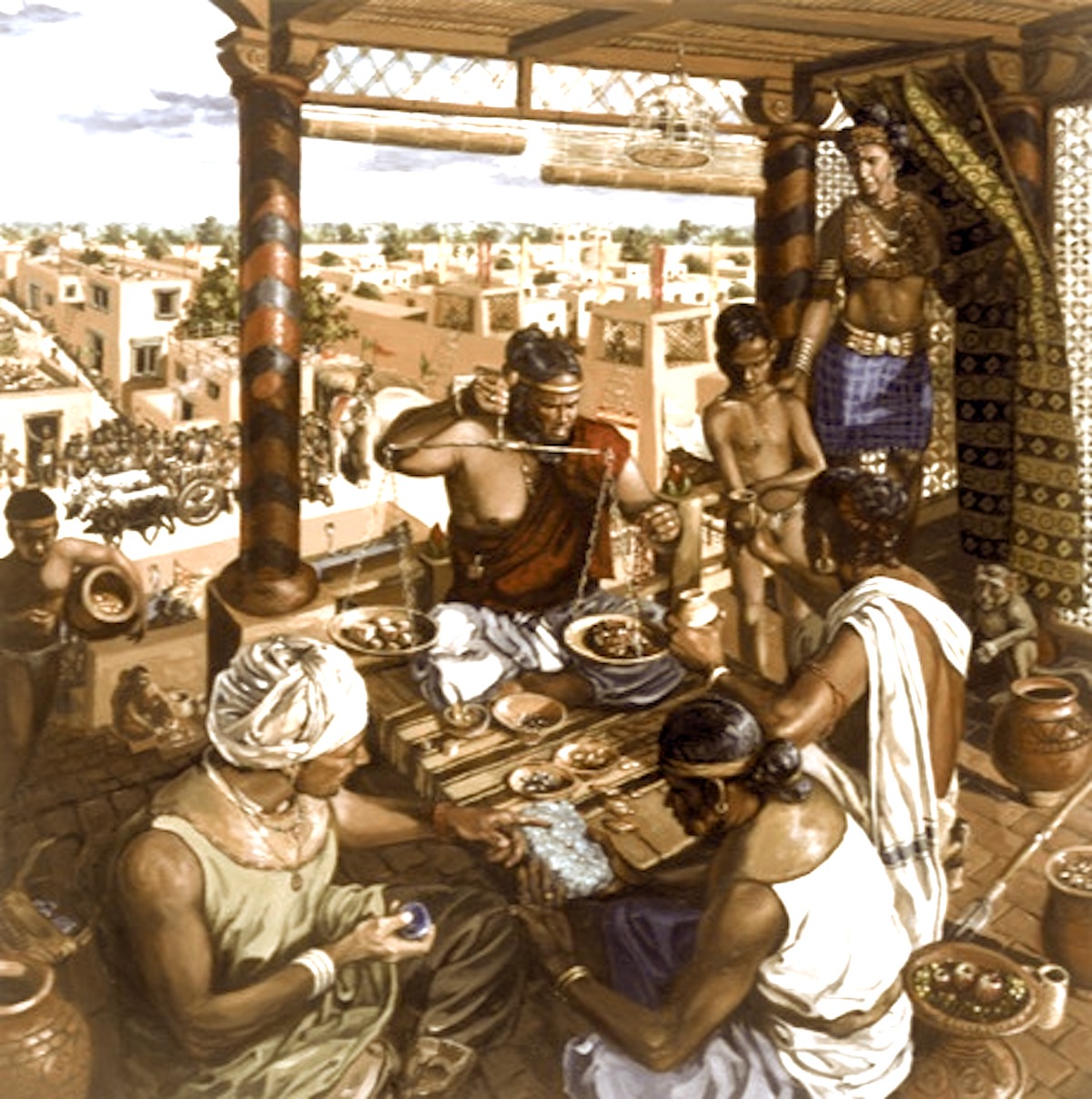
Illustration depicting the busy daily work of skilled Artisans in Ancient India
Global Demand and Far-Reaching Influence of Prized Indian Crafts
The consistent quality of Indian goods made them popular across foreign territories, building strong trade relationships and bringing wealth back into local manufacturing hubs.
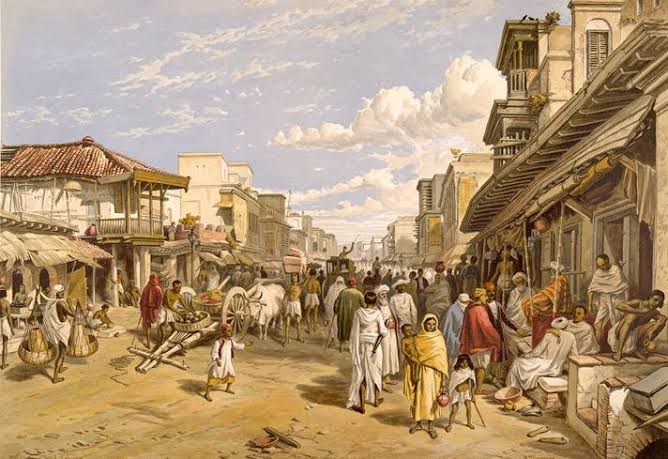
Key International Trade Destinations and Commercial Reach
Goods traveled along established land trails and ocean routes, connecting Indian towns with powerful empires near and far.
- (i) Western Markets (Rome and Egypt): Merchants exchanged spices, fine muslin, silk, steel, and gems for Roman gold and wine, keeping trade balances strong.
- (ii) Southeast Asia: Exports of textiles and metal goods established deep trade routes into regions like Java, Sumatra, and Cambodia.
Marketplaces and Sustained Commerce in Ancient Indian Towns
Efficient trade networks inside the country brought raw materials to workshops and moved finished items toward major urban markets.
- (a) Trade Routes: Well-traveled overland roads and riverways ensured goods moved smoothly between interior towns and coastal ports.
- (b) Merchants and Traders: Organized groups of merchant leaders, known as Sreshthins or Vaniks, managed trade financing, stockpiled supplies, and organized large merchant caravans.
Artisan Guilds (Shreni) and the Preservation of Craft Traditions
To protect their livelihoods and maintain product quality, craftsmen organized themselves into specialized professional bodies known as Shreni. These organizations acted much like modern trade associations and banks.
Systematic Craft Continuity Through Guild Organization
Guilds set output standards, determined fair prices, trained apprentices, provided financial loans, and supported members during difficult times.
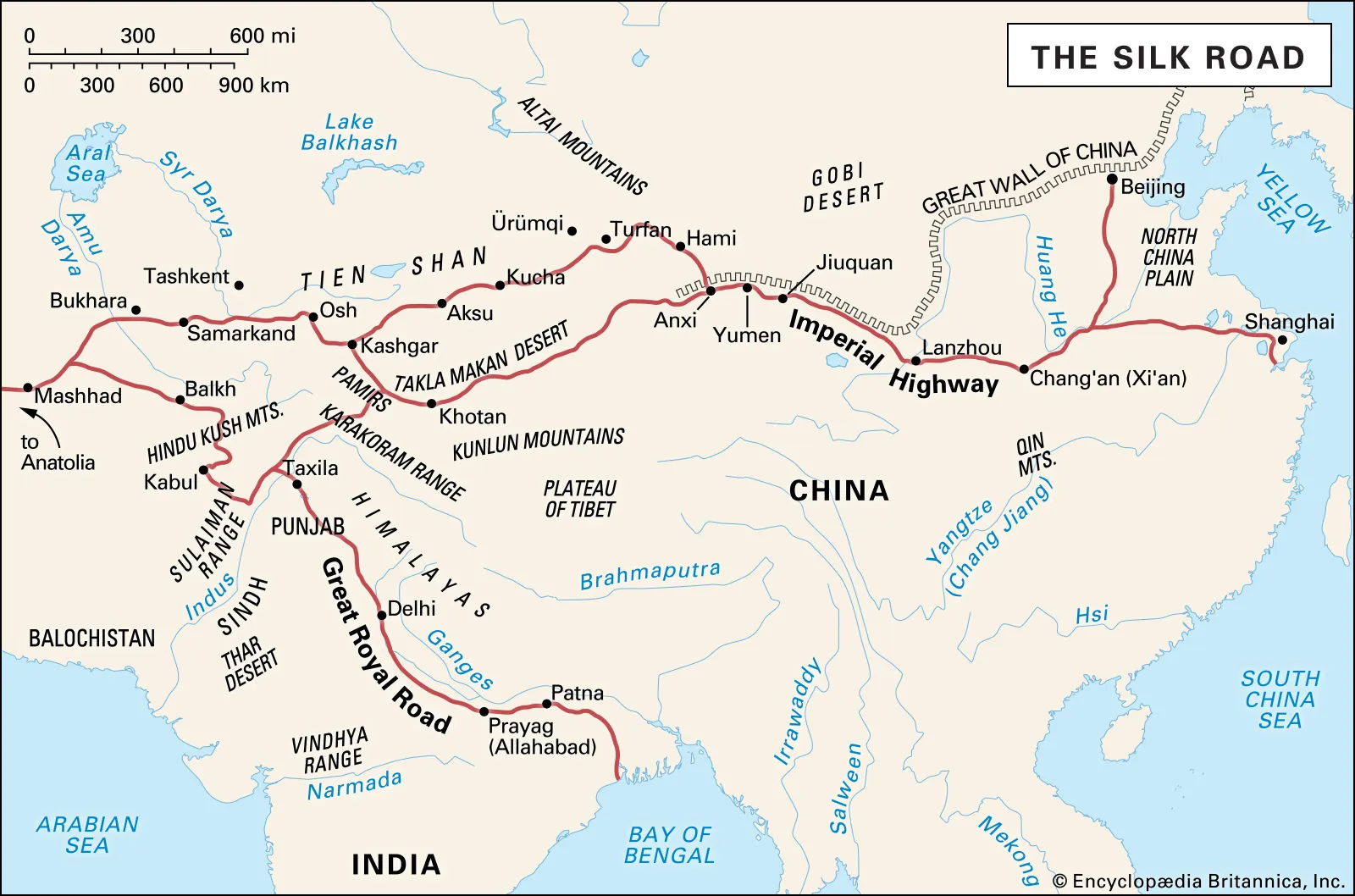
Map showing major long-distance Trade routes that connected ancient urban markets - (i) Systematic Skill Transfer: Craft knowledge passed down through generations within families and guild workshops, keeping technical methods alive.
- (ii) Quality Control: Strict internal rules kept production standards high, protecting the reputation of Indian trade items in foreign markets.
- (iii) Social and Professional Networks: Guilds provided a stable support system for workers, giving craftsmen social standing and economic protection within growing towns.
Quick Revision Capsule: Ancient Craft & Trade Overview
A quick summary of core craft industries, their primary materials, and key market destinations during this era:
| Craft / Sector | Key Materials & Goods | Primary Destinations & Significance |
|---|---|---|
| Pottery | Clay, Northern Black Polished Ware (NBPW) | Local household use and regional urban market centers. |
| Textiles | Fine cotton, muslin, silk, natural plant dyes | Roman Empire, Egypt, and Southeast Asian market centers. |
| Metalworking | Iron tools, bronze statues, copper wares, steel | Domestic agriculture, construction, and foreign trade. |
| Jewelry & Gems | Precious stones, gold, silver, carved pearls | High-value domestic use and international luxury trade. |
| Guilds (Shreni) | Financial backing, training rules, quality checks | Provided economic stability and organized urban manufacturing. |
Summary
The expansion of craft trade and urbanization in Ancient India highlights a well-organized economic system supported by master artisans, merchant groups, and structured guilds (Shreni). From to , Indian towns grew into busy centers of trade and culture. Connected by overland roads, river routes, and ocean channels, these market centers brought Indian cotton, metals, spices, and craftwork to the wider world, leaving a lasting legacy in global economic history.
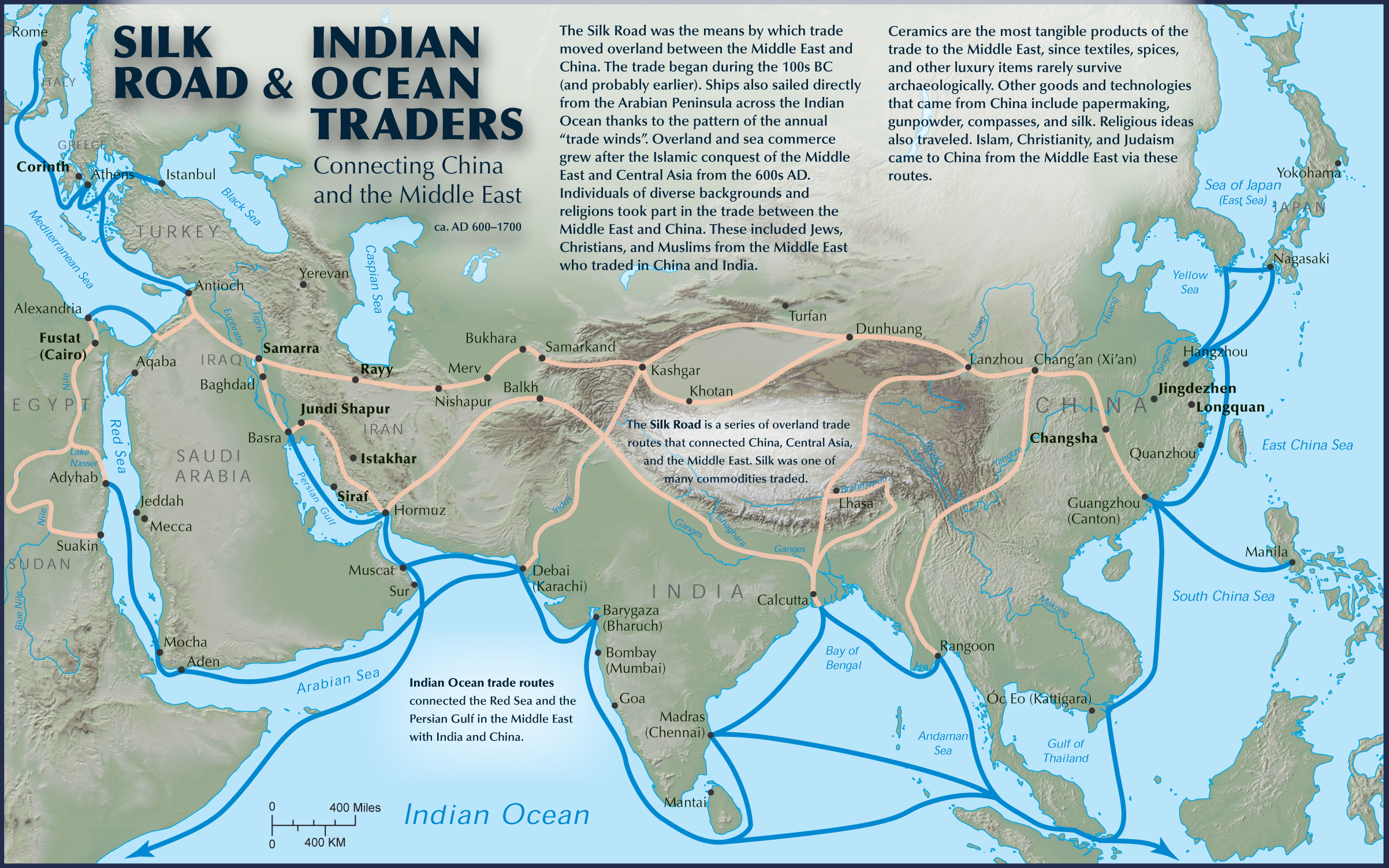
Quick Revision Points
Key facts to remember for fast study and review:
- (i) Pottery Milestones: The spread of Northern Black Polished Ware marked a major phase of town growth and trade across northern India.
- (ii) Guild Operations:Shreni acted as self-governing groups that managed production rules, trained workers, and functioned as early banks.
- (iii) Major Exports: Textiles, steel, pepper, spices, and precious gems were primary exports sent to Rome and Southeast Asia.
- (iv) Urban Centers: Strategic locations on trade routes allowed towns like Taxila, Mathura, Ujjain, Bharuch, and Muziris to become prosperous commercial hubs.
- Exam Tip: Pay special attention to the dual role of Shreni as both manufacturing regulators and early banking systems. Also, make sure you can identify key port cities like Bharuch (Barygaza) and Muziris on a map of ancient trade routes.
Frequently Asked Questions (FAQ)
Q1: What role did the Shreni play in Ancient India's craft economy?
A1: The Shreni were organized guilds of artisans and merchants. They regulated product standards, set prices, trained apprentices, provided social support, and functioned as banking institutions by taking deposits and lending money.Q2: Which goods were most frequently traded between Ancient India and the Roman Empire?
A2: India exported fine cotton textiles, silk, pepper, spices, steel, and gems to Rome, receiving Roman gold coins, wine, and pottery in return.Q3: How did craft trade contribute to the second urbanization of India?
A3: Craft production created centralized jobs and surplus goods. As trade expanded, simple market villages grew into busy urban centers with specialized artisan districts, bustling marketplaces, and strong infrastructure.