Around the , ancient India experienced a massive spiritual shift that moved people away from strict caste hierarchies and complex rituals. This movement was led by Siddhartha Gautama, who later became known as the Buddha. Instead of relying on priestly dominance and animal sacrifices, he introduced a clear, practical path based on non-violence, mindfulness, and deep empathy. This shift mattered greatly because it opened the doors of spiritual growth to everyone, regardless of their social standing. Today, the foundational principles he established continue to shape modern ethical thought, mindfulness practices, and global philosophy, making it an essential topic for anyone studying history, culture, or human development.
In this chapter, you will understand:
- The early life, renunciation, and enlightenment of Siddhartha Gautama.
- The fundamental principles of the Four Noble Truths and the Eightfold Path.
- The structure of monastic life and the formation of major Buddhist schools.
- How Buddhism spread globally and heavily influenced art and philosophy.
Why this topic matters: Understanding the origins and spread of Buddhism is crucial for grasping the cultural and ethical foundations of ancient India, making it a highly important subject for competitive examinations and historical studies.
Core Idea: This chapter breaks down the emergence of Buddhism as a social reform movement. It covers the life of the Buddha, his psychological approach to ending suffering, and how his teachings eventually expanded across Asia and the rest of the world.
Origins and Evolution of Buddhism
Buddhism started as a strong reform movement that offered a compassionate alternative to the rigid social structures of its time. The teachings provided a practical map for escaping the endless cycle of suffering, capturing the attention of people from all walks of life.
Key Milestones of the Spiritual Journey
The events of the Buddha's life are deeply symbolic and are often represented through specific visual markers in early art and literature rather than human portraits.
- The Lotus represents his birth, while the Bull stands for his youth and early royal life.
- The Horse marks his great departure from the palace, and the Bodhi tree signifies his ultimate awakening.
- The Wheel stands for his first major teaching, traditionally known as the Dharmachakra.
- The Stupa represents his final passing, known in ancient texts as Parinirvana.
Contemporaries and Early Philosophical Opponents
The Buddha did not teach in isolation. The era was filled with lively debate and competing intellectual ideas.
- Various schools of thought competed for followers during the .
- Prominent figures like Ajit Kesh Kamblin offered differing views on existence.
- Maskari Gosal founded the Ajivika sect, which focused heavily on fate.
- Thinkers like Puran Kasyap represented the diverse intellectual currents of the dynamic ancient landscape.
Life and Teachings of Gautama Buddha
Born into a wealthy royal family, the Buddha had access to every luxury, yet he chose to walk away from his palace to seek ultimate truth. His intense dedication led to a profound awakening, resulting in a philosophical system that places heavy emphasis on personal ethics and mental discipline.
The Journey to Enlightenment
The personal story of the Buddha is a classic narrative of sacrifice and intense meditation. After realizing the harsh realities of human aging and sickness, he dedicated his life to finding a permanent cure for suffering.
- He was born into the noble Shakya clan in Lumbini, experiencing a highly protected early life.
- His turning point occurred when he witnessed the four sights: an old man, a sick man, a corpse, and an ascetic, pushing him to abandon his royal status.
- After years of extreme fasting and deep meditation, he attained supreme knowledge under a tree at Bodh Gaya.
- He delivered his first public sermon at Sarnath and built a community of dedicated monks known as the Sangha.
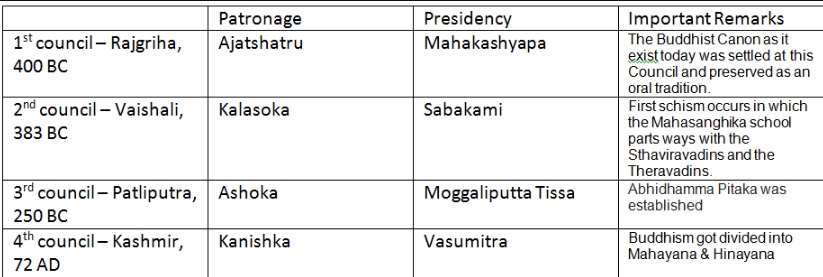
The Pivotal Councils of Buddhism Shaping Its History
The Four Noble Truths and Eightfold Path
At its core, Buddhist philosophy operates like a psychological diagnosis of human dissatisfaction, followed by a clear, actionable treatment plan.
- The Four Noble Truths establish the reality of suffering, its root causes, the possibility of ending it, and the path to achieve that peace.
- The Eightfold Path acts as the treatment plan, organized into three categories: wisdom, ethical behavior, and mental discipline.
- Core concepts include the idea that everything is impermanent and the complex doctrine of non-self.
- Practitioners are consistently encouraged to develop their mindfulness, maintain moral behavior, and cultivate deep insight.

The Wheels of Law (Dharmachakra) Symbolizing Buddha's Teachings 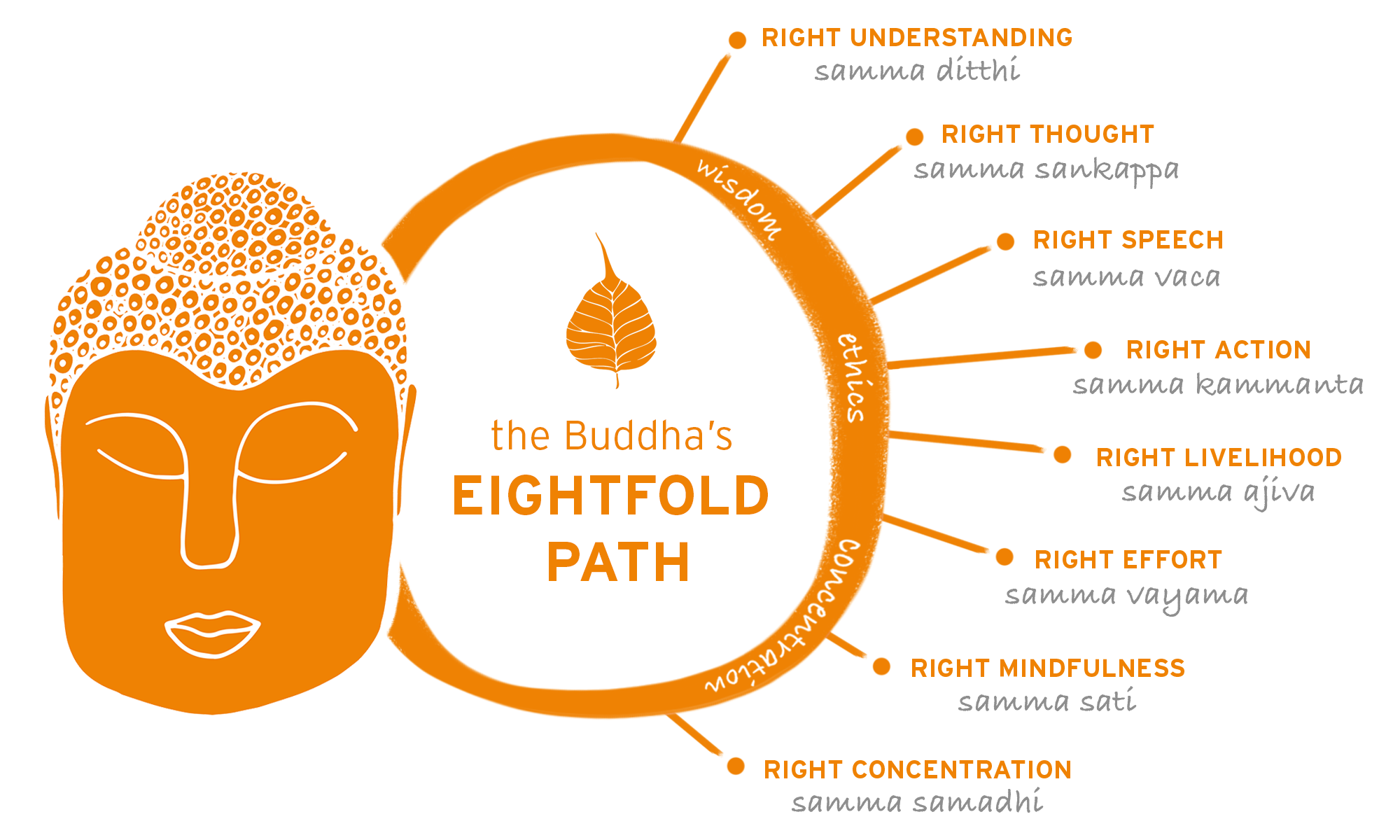
Detailed Illustration of the Eightfold Path in Buddhism
Buddhist Practice and Monastic Life
Walking the path requires strict personal discipline and a commitment to causing no harm. This lifestyle was preserved and passed down by highly organized communities of monks and nuns.
- Meditation is the primary method used to clear the mind and build sharp, unwavering focus.
- The rules of the monastic community were carefully recorded to guarantee the original teachings survived accurately across generations.
- Followers actively practice extending boundless compassion and loving-kindness to every living creature.
- Over centuries, the teachings naturally evolved into distinct branches, including Theravada, Mahayana, and Vajrayana, each with unique regional focuses.
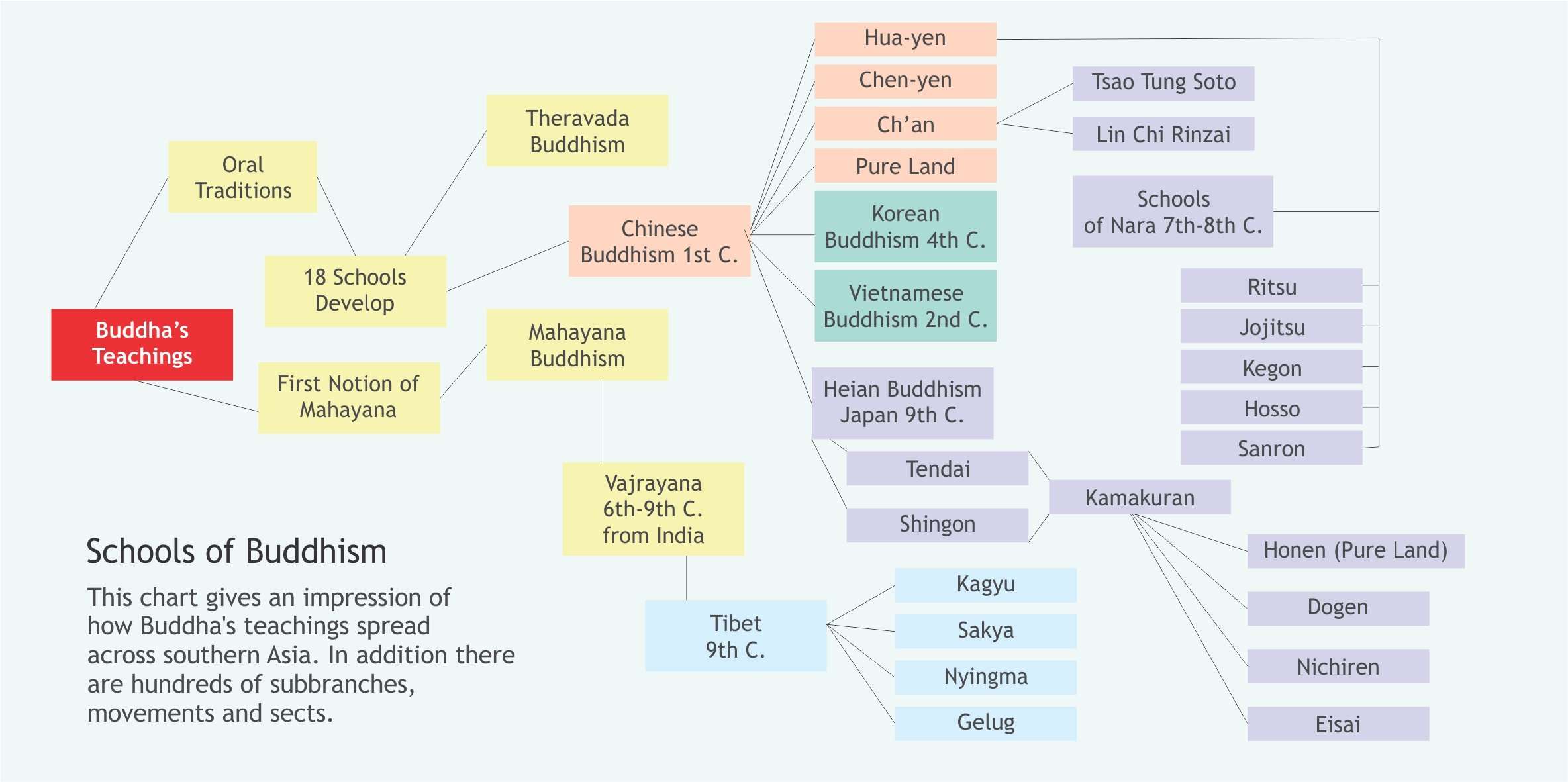
The Primary Schools of Buddhism: Theravada, Mahayana, and Vajrayana 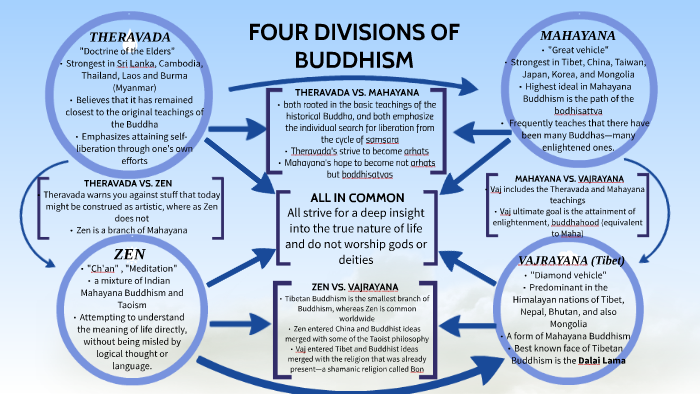
Divisions of Buddhism Across Different Regions
Global Expansion and Cultural Legacy
Because its message was highly practical and open to everyone, Buddhism quickly expanded far beyond its original home in India. With the financial and logistical support of kings and traveling merchants, the religion successfully adapted to diverse cultures around the world.
Missionary Activities and Trade Routes
The ability of the religion to cross rigid social and geographical borders made it incredibly appealing. Supported by powerful leaders, it flowed out of India and enriched societies near and far.
- Emperor Ashoka played a massive role by sending official missionaries to regions like Sri Lanka, the Middle East, and Southeast Asia.
- The famous Silk Road trade networks acted as major highways for sharing Buddhist ideas, translated texts, and unique art styles with Central Asia and China.
- The sacred texts, known collectively as the Tripitaka, ensured that the core teachings remained authentic as they traveled into new languages and cultures.
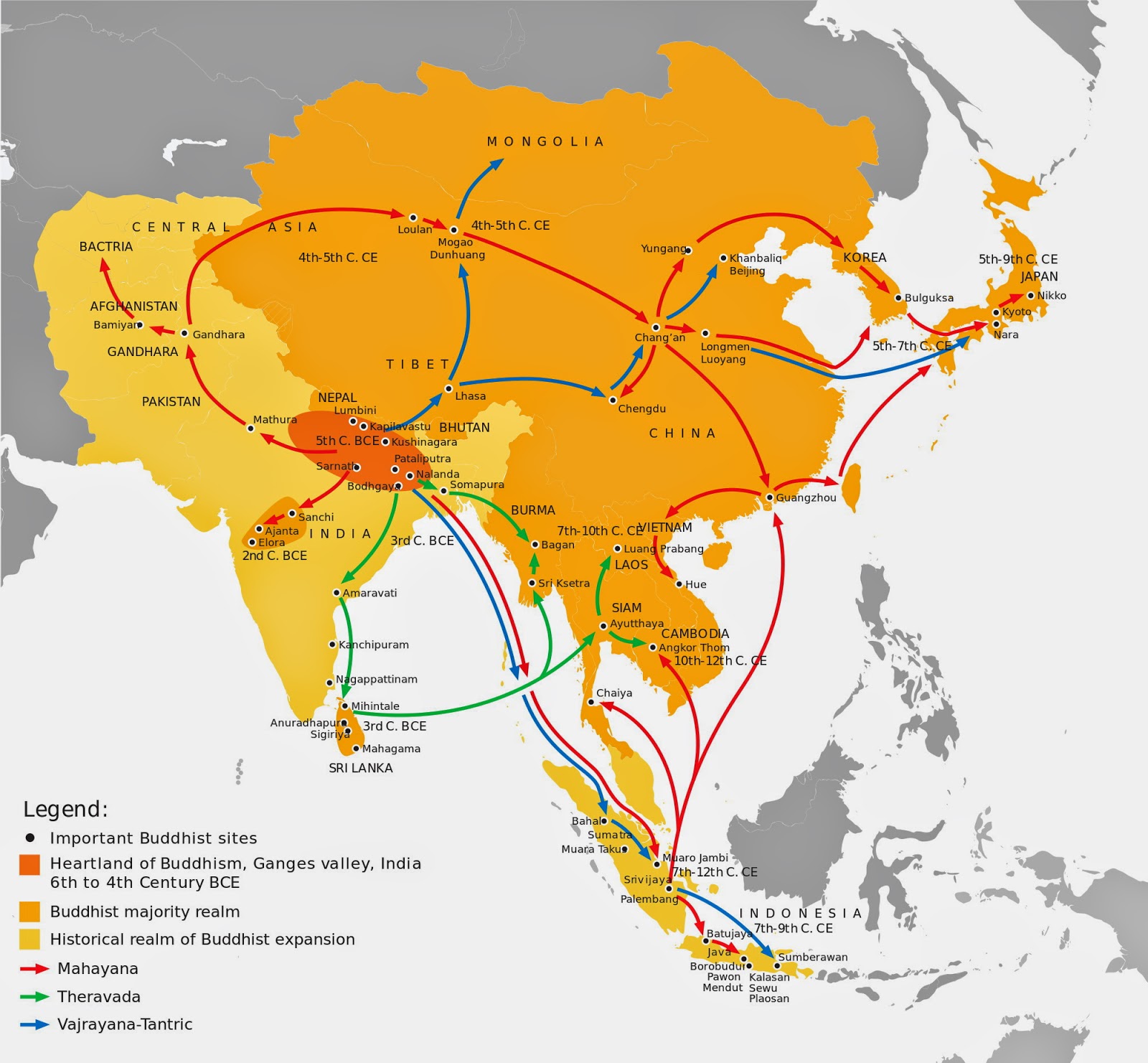
Historical Map Illustrating the Global Expansion of Buddhism 
Geographical Distribution of the Major Divisions of Buddhism Worldwide
Contributions to Art and Philosophy
Buddhism was never just a religious practice; it served as a major engine for education, artistic creation, and rigorous intellectual debate across the continent.
- Massive dome-shaped structures known as stupas and large residential monasteries became busy centers for community learning and art production.
- Locations like the Ajanta caves showcase breathtaking rock-cut architecture that heavily influenced artists and builders across the entirety of Asia.
- Brilliant Buddhist thinkers developed complex philosophical arguments regarding the nature of reality, consciousness, and emptiness, greatly impacting world philosophy.
- The monks played a vital daily role in copying sacred texts, preserving ancient literature, and running some of the earliest recognized university systems.
The Architectural Splendor of the Sanchi Stupa 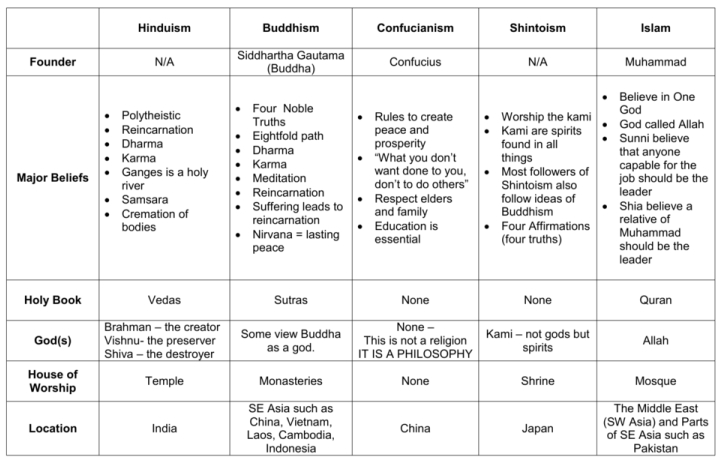
Comparison of Various Religions with Buddhist Doctrines
Quick Revision Capsule
Review this table for a rapid summary of the core concepts, texts, and structural pillars that define Buddhist practice and history:
| Core Element | Definition & Meaning | Primary Purpose |
|---|---|---|
| Four Noble Truths | The fundamental realities regarding human suffering and its causes. | To diagnose the human condition and map out a path to liberation. |
| Eightfold Path | The practical moral and mental guidelines for daily living. | To provide a step-by-step treatment plan to achieve enlightenment. |
| Sangha | The organized community of Buddhist monks and nuns. | To preserve the teachings, maintain discipline, and guide laypeople. |
| Tripitaka | The three baskets of sacred texts containing teachings and rules. | To officially record and protect the original words of the Buddha. |
| Bodhi Tree | The sacred fig tree located in Bodh Gaya. | To serve as the historical and symbolic site of ultimate awakening. |
Summary and FAQs
The life of Gautama Buddha and his practical doctrines fundamentally reshaped the social fabric of ancient India. By offering a clear path based on ethics and compassion rather than birthright and rituals, Buddhism appealed to a massive audience. Supported by rulers like Emperor Ashoka and carried along trade routes, it left a permanent mark on global art, literature, and philosophy, making it an essential subject for understanding human cultural evolution.
Key Takeaways for Revision
Review these essential facts before your examination:
- (i) The religion started in the as a direct reaction against strict ritualism and the caste system.
- (ii) The core teachings are built entirely upon the Four Noble Truths and the Eightfold Path.
- (iii) Important symbols include the Lotus (birth), Horse (departure), Bodhi tree (enlightenment), and Stupa (death).
- (iv) Emperor Ashoka and the Silk Road network were the primary drivers for the religion's massive global expansion.
- Exam Tip: Always remember to clearly distinguish between the three main texts of the Tripitaka: Sutta (discourses), Vinaya (monastic rules), and Abhidhamma (philosophy), as this is a frequent multiple-choice question.
Frequently Asked Questions (FAQ)
Q1: What were the four sights that changed Siddhartha Gautama's life?
A1: While traveling outside his palace, he saw an old man, a sick man, a dead body, and a wandering ascetic. These sights made him realize the unavoidable nature of suffering and inspired his search for truth.Q2: What is the main difference between Theravada and Mahayana Buddhism?
A2: Theravada focuses strictly on the original teachings and individual enlightenment, while Mahayana emphasizes the role of the Bodhisattva—a person who delays their own nirvana to help save all other beings.Q3: Why was the Sangha so important to the survival of Buddhism?
A3: The Sangha provided a highly disciplined, organized community that memorized, practiced, and safely transmitted the Buddha's teachings across generations and borders.