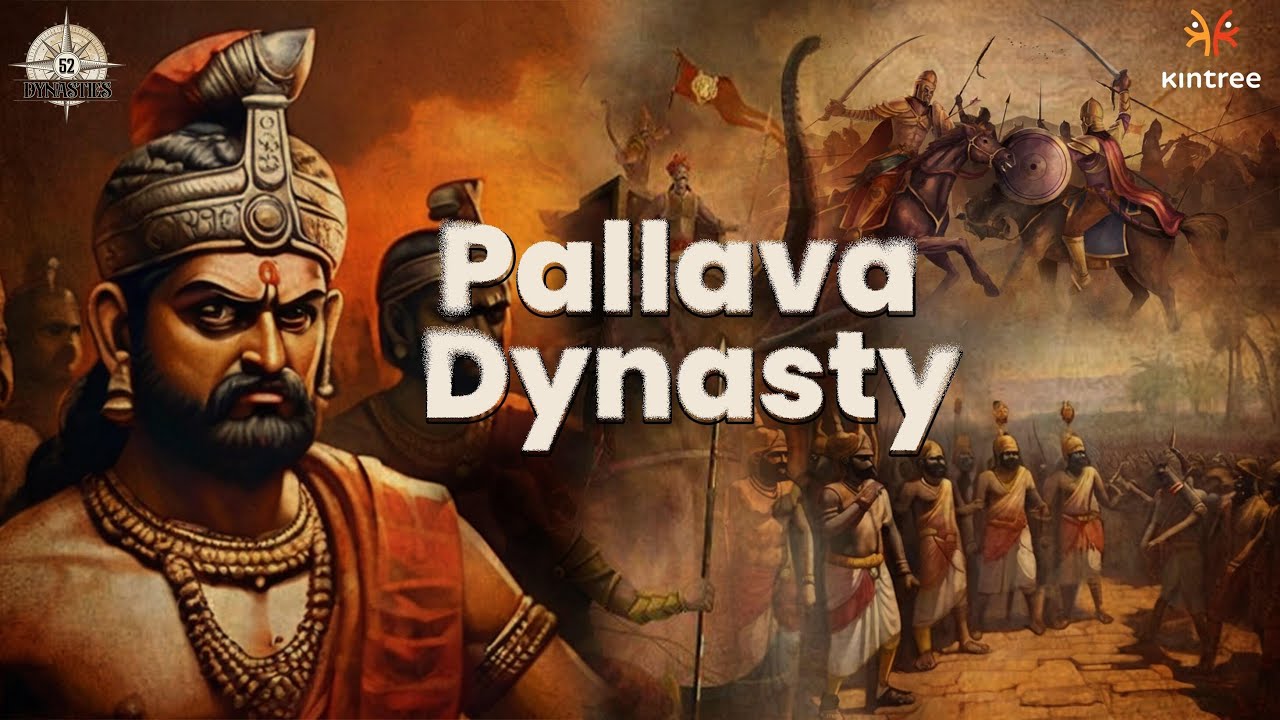
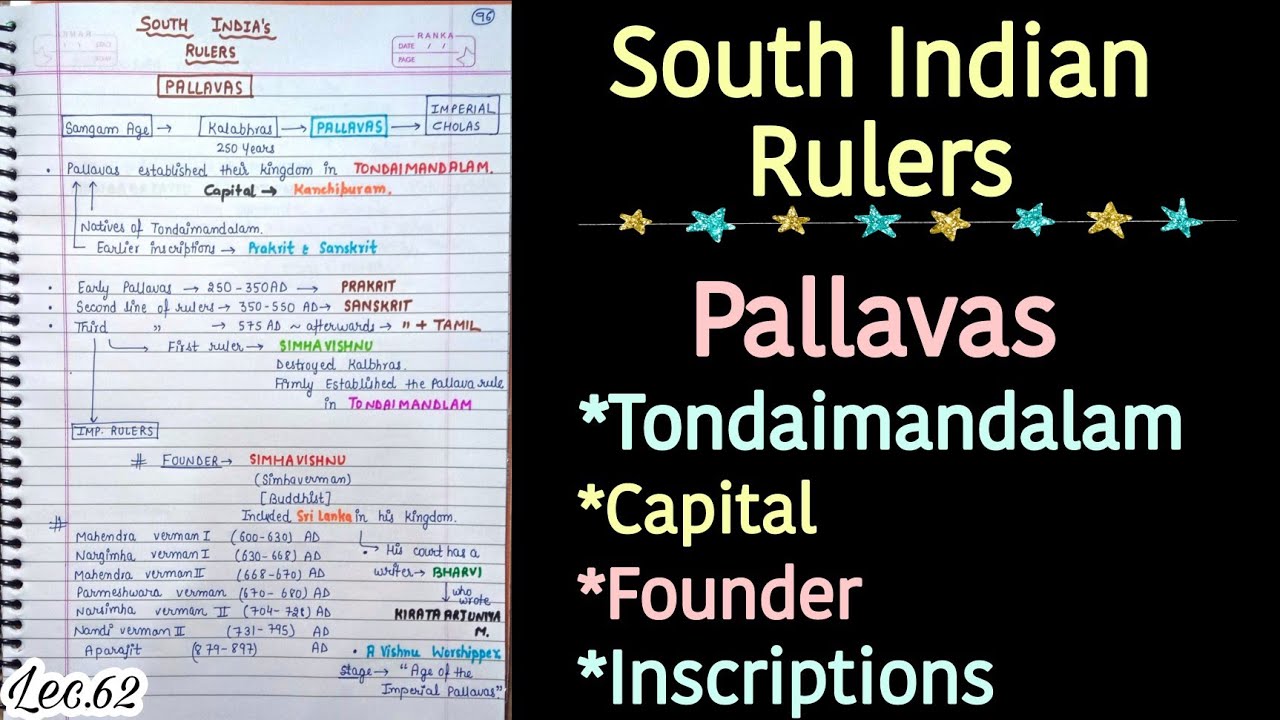
Step into the rich history of South India during the rise and rule of the Pallava Dynasty. For students preparing for civil service and history exams, understanding this two-century period from the mid-6th century onward is essential. Powerful monarchs like Simhavishnu Pallava and the creative visionary Mahendravarman I reshaped regional politics and built long-lasting cultural, artistic, and religious foundations. From groundbreaking rock-cut structures to iconic achievements like the Shore Temple, the Pallavas changed the face of South Indian heritage forever.
In this chapter, you will understand:
- The territorial expansion and geopolitical peak of the Pallava Kingdom under early rulers.
- The military and cultural shift during the long-standing Pallava–Chalukya conflict.
- The architectural evolution from rock-cut cave shrines to monolithic rathas and structural temples.
- The administrative factors and regional pressures that caused the gradual decline of the dynasty.
Why this topic matters: This period marks the foundational transformation of South Indian art, literature, and temple architecture, making it a critical focus area for competitive examinations and historical studies.
Core Idea: Between the mid-6th and 8th centuries A.D., the Pallavas established themselves as a premier power in South India. Despite constant conflict with the neighboring Chalukyas and Pandyas, they led a cultural movement that created legendary monuments, advanced literature, and established enduring religious traditions.
The Heydays of Pallava: Dominion, Conflicts, and Cultural Zenith (Mid-6th to 8th Century A.D.)
Starting in the mid-6th century, the Pallava rulers built an empire that led South India for nearly two centuries, overshadowing rival dynasties across the subcontinent.
This power shift pushed regional competitors—including the Pandyas, Cholas, and Cheras—into secondary roles. The foundation for this rise was set by Simhavishnu Pallava in the late 6th century when he defeated these southern competitors along with the ruler of Ceylon (Sri Lanka).
- (i) At its height, the Pallava Kingdom expanded across major regions, taking in areas that match modern-day Arcot, Chinglepet, Madras, Trichinapolly, and Tanjore.
- (ii) The kingdom reached from the Orissa frontier in the north down to the River Pennar in the south, bounded by the Bay of Bengal to the east and extending through Salem, Bangalore, and Berar in the west.
- (iii) While the 7th century was their peak of influence, the Pallavas suffered a major loss when the rising Chalukya Empire took control of the strategic Vengi province.
Mahendravarman I (600-630 A.D.): Pioneer of Pallava Art and Literature
The rule of Mahendravarman I is remembered for starting the major Pallava–Chalukya Conflict and for bringing forward innovative art, literature, and building techniques.
Military Engagements and Spiritual Transformation
The bitter rivalry between the Pallavas and Chalukyas began when Pulakesin II led an invasion that captured northern Pallava territories. Although Pallava records note a victory for Mahendravarman I at Pullalur, the lost lands could not be recovered.
- (i) A major shift occurred in his personal life when he left Jainism and embraced Saivism, guided by the revered Shaiva saint Thirunavukkarasar (also called Appar).
- (ii) To honor his new faith, he constructed a dedicated Siva temple at Tiruvadi, marking a fresh wave of Shaiva devotional growth in the region.
- (iii) Known for his wide array of talents, Mahendravarman I earned descriptive titles such as Gunabhara (bearer of virtues), Satyasandha (ever truthful), Chettakari (temple builder), Chitrakarapuli (tiger among artists), Vichitrachitta (curious-minded), and Mattavilasa (drunkard's sport).
Architectural Innovation and Literary Patronage
Mahendravarman I revolutionized regional construction by introducing rock-cut cave temples, establishing the early blueprint of Pallava design.
- (a) The famous Mandagappattu inscription credits him with creating a temple for the trinity (Brahma, Vishnu, and Siva) without using traditional materials like brick, wood, metal, or mortar, earning him the title Vichitrachitta.
- (b) His rock-cut cave temples remain visible today at sites including Vallam, Mahendravadi, Dalavanur, Pallavaram, Mandagappattu, and Tiruchirappalli.
- (c) He was also a talented writer, authoring the Sanskrit satire Mattavilasa Prahasanam. His title Chitrakarapuli reflects his skill in painting, while the musical inscriptions at Kudumianmalai highlight his musical expertise.
The Enduring Legacy of Mahendravarman I
Historical records consistently place Mahendravarman I among the most influential figures in South Indian history, as his work built the foundation for future regional development.
- (i) Military Leadership: He served as a firm defensive barrier against Chalukyan expansion into the Pallava heartland.
- (ii) Religious Shift: His conversion and support for Shaivism energized the faith across political and societal levels.
- (iii) Cultural Growth: As a scholar-king, his sponsorship elevated poetry, music, and painting throughout his kingdom.
- (iv) Architectural Impact: He introduced rock-cut cave designs from his ancestral home near the River Krishna to the Tamil South along the Palar and Kavery rivers, shaping the core identity of Pallava art.
Narasimhavarman I (630-668 A.D.): The Great Wrestler and Conqueror
Taking over after his father, Narasimhavarman I—known as Mamalla ('great wrestler')—set out to avenge past losses and expand his kingdom's military and cultural reach.

Avenging the Defeat and Capturing Vatapi
Determined to answer the earlier invasions by Chalukya king Pulakesin II, Narasimhavarman I mounted a strong campaign against his northern rival.
- (i) He won a major victory over Pulakesin II at the Battle of Manimangalam near Kanchi, as detailed in the historical Kuram copper plates.
- (ii) Under General Paranjothi, Pallava forces marched directly into Chalukya land, taking and destroying their capital city, Vatapi.
- (iii) This victory earned him the title Vatapikonda (Conqueror of Vatapi), allowing the Pallavas to reclaim their lost territories.
Naval Power and Foreign Visitors
The authority of Narasimhavarman I reached across the seas, showing the growing strength of the Pallava navy.
- (a) He sent a successful naval expedition to Sri Lanka to help his ally, Prince Manavarma, secure the throne.
- (b) During his reign, Chinese traveler Hiuen Tsang visited the capital city of Kanchipuram, describing it as an impressive city around six miles in circumference.
- (c) Hiuen Tsang recorded nearly 100 Buddhist monasteries housing 10,000 monks, highlighting the city's respect for learning and the role of the Ghatika at Kanchi as an educational center.
Founding of Mamallapuram and Architectural Marvels
The king's title Mamalla remains tied to the coastal town he developed, Mamallapuram (Mahabalipuram), which became a display of Pallava building skills.
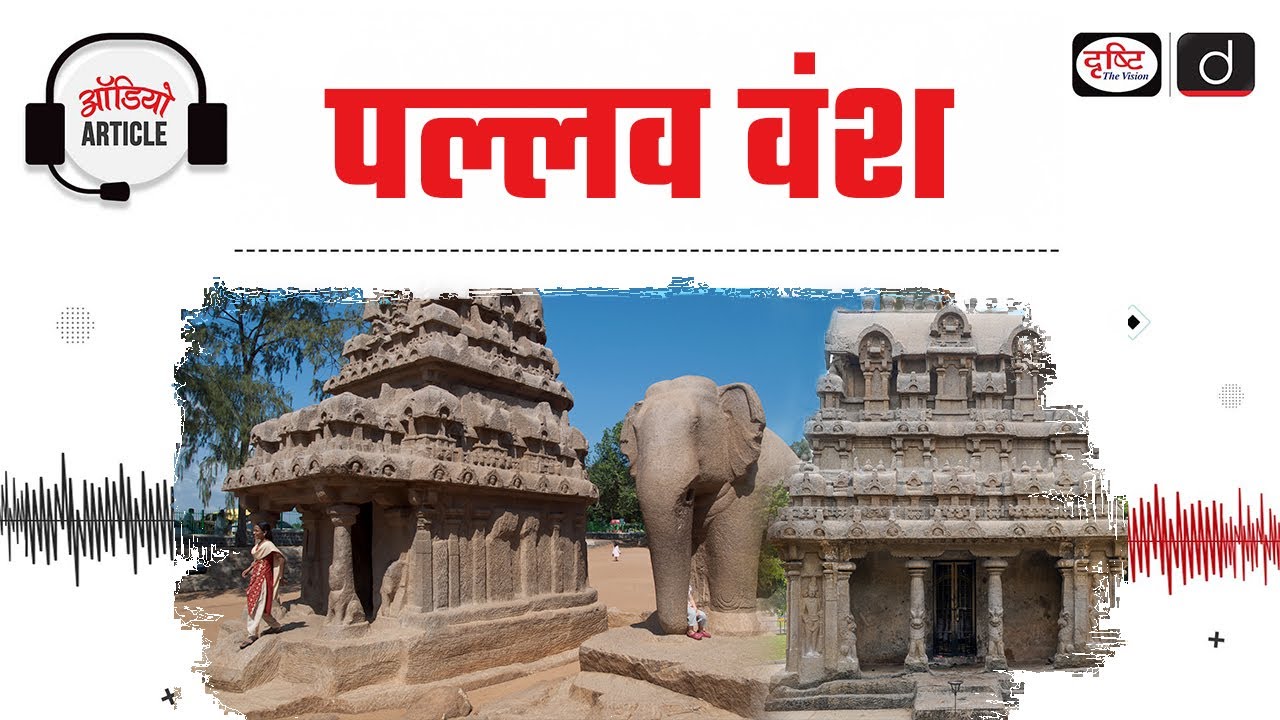
- (i) The famous monolithic rathas (temples carved from single rock formations) were constructed during his reign, representing early Dravidian architectural milestones.
Paramesvaravarman I (670-695 A.D.): Defending the Empire
Following the short two-year rule of Mahendravarman II, Paramesvaravarman I stepped into power and immediately faced fresh attacks from the Chalukyas.
The Chalukya’s Third Major Attack
Inscriptions on the Gadaval Plates show that Vikramaditya Chalukya Vallabha set up camp in the Chola kingdom to organize a third invasion into Pallava territory.
- (i) Severe fighting broke out in , leading to a Chalukyan victory that forced Paramesvaravarman to fall back north toward Andhra, the dynasty's early home region.
- (ii) Chalukya forces pushed into the Pallava heartland and captured the capital city of Kanchi.
- (iii) Vikramaditya documented his capture of Kanchi directly on the base of the famous Kailasanatha temple.
Victory at Peruvallanattar and Title Ugradanda
Despite early setbacks, Paramesvaravarman I reorganized his forces and turned the tide against the invaders.
Artistic illustration representing the strategic rally of Pallava forces during the Battle of Peruvallanattar. - (a) At the Battle of Peruvallanattar, Paramesvaravarman defeated Vikramaditya, forcing the Chalukya king to retreat.
- (b) Pallava records celebrated this triumph by giving him the title Ugradanda (fierce punisher), acknowledging him as the destroyer of Ranarasika's power.
- (c) Historical sources suggest this victory was aided by a Confederacy of Tamil kings brought together under the Pallava banner, with support from exiled Sri Lankan prince Manvamma.
Quick Revision Capsule: Major Pallava Rulers & Key Contributions
A quick summary table highlighting the prominent rulers, primary achievements, and key architectural milestones of the Pallava dynasty:
| Ruler & Reign Period | Primary Military & Political Achievements | Cultural & Architectural Milestones |
|---|---|---|
| Mahendravarman I (600–630 A.D.) | Fought Chalukya king Pulakesin II; converted from Jainism to Saivism under saint Appar. | Pioneered rock-cut cave temples; authored Mattavilasa Prahasanam; took title Vichitrachitta. |
| Narasimhavarman I (630–668 A.D.) | Defeated Pulakesin II at Manimangalam; captured Vatapi (Vatapikonda); naval trip to Sri Lanka. | Founded Mamallapuram; commissioned monolithic rathas; hosted Chinese pilgrim Hiuen Tsang. |
| Paramesvaravarman I (670–695 A.D.) | Rallied Tamil confederacy to defeat Chalukya forces at the Battle of Peruvallanattar. | Took the title Ugradanda; protected and rebuilt the kingdom after the temporary loss of Kanchi. |
| Narasimhavarman II (695–722 A.D.) | Maintained peace and international stability; sent diplomatic and trade missions to China. | Built the Shore Temple at Mamallapuram and Kailasanatha Temple at Kanchipuram; patronized scholar Dandin. |
| Nandivarman II (730–780 A.D.) | Took power as a minor; managed defense against sudden Chalukya and rising Pandya attacks. | Reclaimed the throne after the capture of Kanchi; managed the state through rising resource limits. |
Narasimhavarman II or Rajasimha (695-722 A.D.): The Builder of Temples
The reign of Narasimhavarman II—popularly known as Rajasimha—was an era of peace and stability that allowed artistic and structural projects to bloom across the kingdom.
Architectural Masterpieces and Cultural Flourishing
Free from large wars, Rajasimha focused on constructing permanent, freestanding structural temples.
- (i) His reign produced two famous landmarks: the Shore Temple at Mamallapuram and the grand Kailasanatha Temple at Kanchipuram.
- (ii) He actively supported literature, and tradition links the Sanskrit scholar Dandin to his royal court.
- (iii) He maintained trade and diplomatic links with China, strengthening maritime activity along the coast.
- (iv) He adopted religious titles including Sankarabhakta (devotee of Siva), Vadhyavidyadhara (expert in musical instruments), and Agamapriya (lover of sacred texts).
Succession of Parameswaravarman II
Rajasimha was succeeded by his son, Parameswaravarman II, who ruled briefly from around without major recorded developments.
Nandivarman II (A.D 730-780): The Beginning of Decline
Crowned at the age of 12, Nandivarman II faced constant military pressure that gradually wore down the empire's power and resources.
The Surprise Capture of Kanchi
When Nandivarman was 22, Chalukya forces launched a surprise invasion aimed at avenging earlier defeats, catching the young ruler without adequate support.
- (a) The invading army reached Kanchi quickly, forcing the king to retreat to a nearby fort.
- (b) Enemy forces entered the capital with little resistance, leaving the surrounding territory open to control.
- (c) Rather than keeping the area permanently, the Chalukyas took plunder and retreated, leaving a temporary puppet ruler named Chitramaya in position.
Reclaiming the Throne and the Rising Pandya Threat
While Nandivarman eventually removed the puppet ruler and took back his throne, the state's military strength was deeply depleted.
- (i) The kingdom lacked the funds and troops needed to organize a major campaign back into Chalukya lands.
- (ii) At the same time, the southern borders faced growing pressure from an expanding Pandya Kingdom.
- (iii) Stationing troops along the southern border consumed remaining state resources, marking the start of a slow decline for the Pallava state.
Summary
The story of the Pallava Dynasty from the mid-6th to the 8th century shows a balance of military strength and artistic achievement. Leaders like Mahendravarman I, Narasimhavarman I, and Rajasimha protected their territory against northern and southern rivals while building monuments that redefined South Indian art. From early rock-cut caves to monolithic rathas and freestanding stone temples, the Pallava period laid cultural foundations that influenced regional history for centuries.
Quick Revision Points for Students
Focus on these core facts for quick revision before exams:
- (i) Mahendravarman I introduced rock-cut cave temples and wrote the Sanskrit play Mattavilasa Prahasanam.
- (ii) Narasimhavarman I (Mamalla) destroyed Vatapi, earned the title Vatapikonda, and built the monolithic rathas at Mamallapuram.
- (iii) Narasimhavarman II (Rajasimha) built freestanding structural monuments, including the Shore Temple and Kailasanatha Temple.
- (iv) The ongoing Pallava–Chalukya rivalry combined with southern pressure from the Pandyas eventually drained Pallava resources.
- Exam Tip: Remember the transition in architectural styles: Mahendravarman group (rock-cut cave temples) → Mamalla group (monolithic rathas and open-air bas-reliefs) → Rajasimha group (structural stone temples like Shore Temple and Kailasanatha). Questions frequently focus on linking rulers to their exact architectural phase.
Frequently Asked Questions (FAQ)
Q1: Who was the founder of the Pallava line that established dominance in the mid-6th century?
A1: Simhavishnu Pallava established the dynasty's regional dominance in the late 6th century by defeating southern rivals including the Cholas, Pandyas, Cheras, and the ruler of Ceylon.Q2: Why did Narasimhavarman I adopt the title Vatapikonda?
A2: He earned the title Vatapikonda (Conqueror of Vatapi) after defeating Chalukya king Pulakesin II in the Battle of Manimangalam and capturing the Chalukya capital city of Vatapi.Q3: What are the main structural temples built during the reign of Rajasimha?
A3: Rajasimha (Narasimhavarman II) built the iconic Shore Temple at Mamallapuram and the Kailasanatha Temple at Kanchipuram.