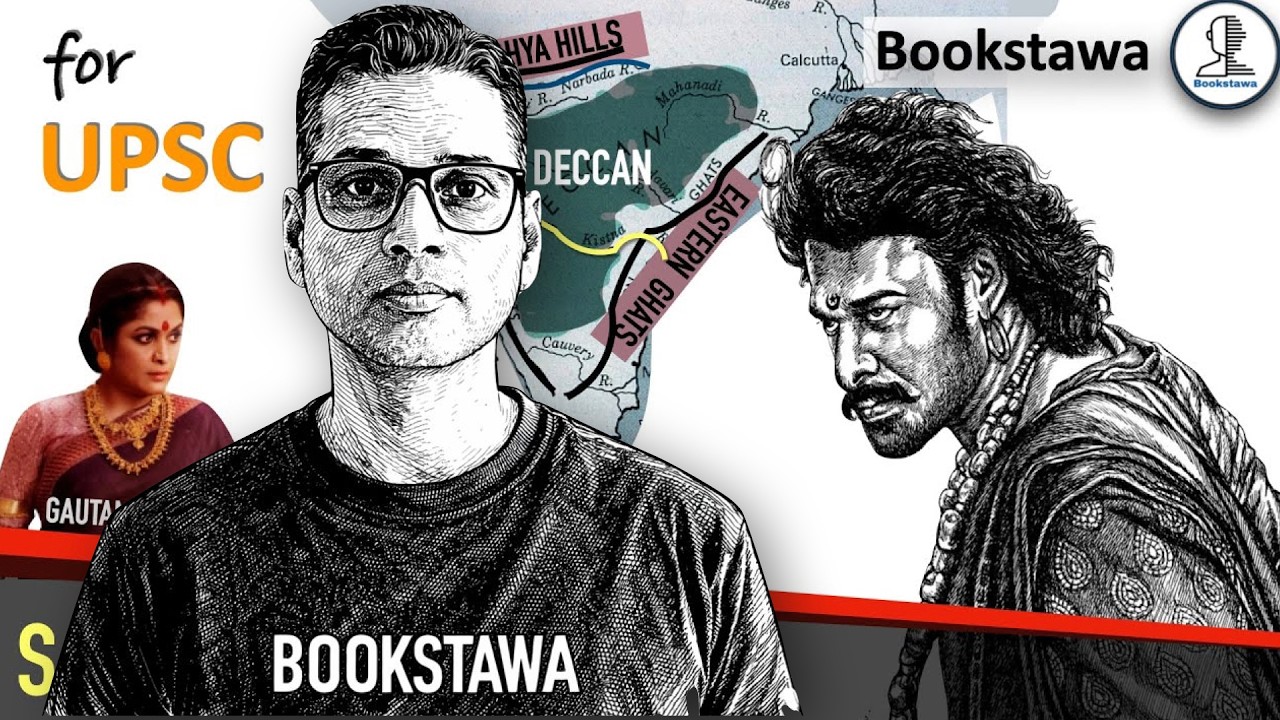
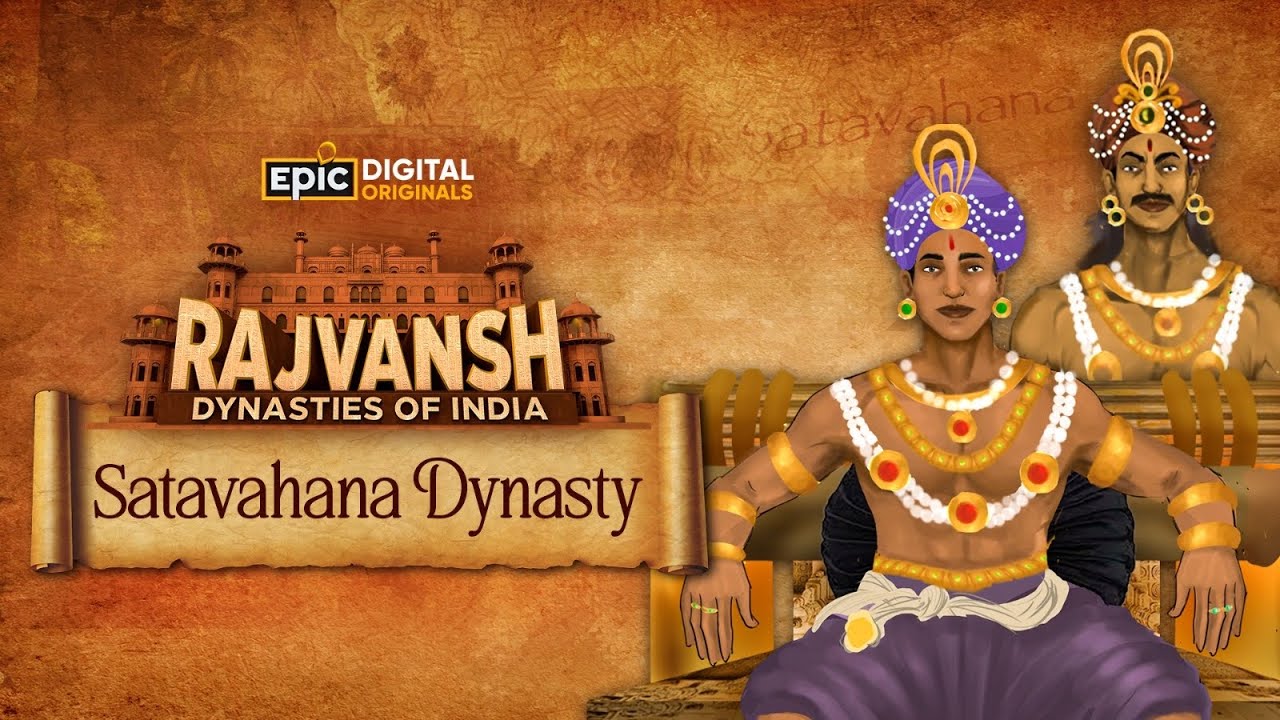
The Satavahana dynasty, frequently referred to in ancient texts as the Andhra dynasty, represents a pivotal era in the history of central India and the Deccan plateau. Ruling from roughly the , their reign filled the major power vacuum left behind by the collapse of the Mauryan Empire. The Satavahanas reshaped regional politics, expanded international ocean trade, and nurtured a diverse cultural landscape where Vedic Brahmanism and Mahayana Buddhism flourished side by side. For students, historians, and competitive exam aspirants, studying this period offers clear insights into how regional powers transitioned into massive empires through strategic warfare, matrimonial alliances, and administrative innovation across post-MauryanIndia.
In this chapter, you will understand:
- The geographic origins, early political expansion, and major rulers like Gautamiputra Satakarni.
- The administrative blending of Mauryan traditions with local military and feudal elements.
- Socio-economic developments, including unique matrilineal naming conventions and Roman trade.
- Architectural and artistic legacies across rock-cut caves, stupas, and Prakrit literature.
Why this topic matters: This period marks the political integration of Northern and Southern India, establishing the Deccan as a dominant commercial and artistic hub during classical antiquity.
Core Idea: Emerging in the western Deccan after the Mauryas, the Satavahanas established a resilient साम्राज्य (empire) through military prowess against the Shakas, tax-free land grants, global maritime trade, and exceptional rock-cut architecture.
The Satavahanas: Origin, Expansion, and Cultural Legacy in Deccan India (1st Century BCE to 3rd Century CE)
The Satavahanas established themselves as a formidable regional power in the western Deccan, quickly stepping in to stabilize central authority after the decline of the Mauryan Empire. Understanding their emergence requires looking at both textual legends and modern archaeological discoveries.
The precise origin of the dynasty has generated significant debate among scholars. Ancient literary sources like the Puranas refer to them as the Andhra line, which led early historians to place their roots in eastern coastal regions. However, contemporary archaeological finds tell a different story.
- (i) Early coin hoards and inscriptions confirming their earliest rule are concentrated heavily in the upper Godavari river valley within Maharashtra.
- (ii) Their political rise was made possible by the fragmentation that occurred when Mauryan central control dissolved across India.
- (iii) The dynasty legitimized its status by performing traditional Vedic rituals and sacrifices, elevating their standing from regional leaders to undisputed sovereigns.
Tracing the Roots and Rise to Power: The Genesis of the Satavahana Empire in Post-Mauryan Deccan
By leveraging their long-standing familiarity with earlier Mauryan administrative routines, the Satavahanas rapidly consolidated control across the Deccan terrain.

Geographic Origins and Early Consolidation in Western Deccan
The initial expansion of the realm saw local chiefdoms unified under a single centralized authority operating from the western Deccan.
- (i) The dynasty gradually transformed a collection of regional tribes into a unified administrative kingdom.
- (ii) Adapting proven Mauryan bureaucratic methods allowed early rulers to collect revenue efficiently and maintain standing armies.
Political History and Expansion: Navigating Conflicts and Territorial Growth
The political narrative of the Satavahana state involved fluctuating borders driven by persistent warfare against the Shakas (Western Kshatrapas).
Early Rulers: Simuka and Satakarni I
The foundational phase of the empire was defined by strategic territorial captures and royal ritual displays.
- (i) Simuka: Named in Puranic genealogies as the founder who initiated dynastic rule around .
- (ii) Satakarni I: The first major monarch who expanded borders significantly during his reign around .
- (a) Pushed territorial boundaries north of the Narmada river into Malwa.
- (b) Secured the fertile Godavari basin, earning the title Dakshinapatha Pati (Lord of the Southern Region).
- (c) Performed the Ashvamedha (horse sacrifice) to proclaim supreme authority.
- (d) Established Pratishthana (modern Paithan) as his official imperial capital.
The Resurgence under Gautamiputra Satakarni and Conflicts with Shakas
Following a period of severe losses to invading Shaka chieftains, the empire experienced a dramatic revival.
- (i) Gautamiputra Satakarni (): Restored dynastic pride by defeating the Shaka king Nahapana, a milestone confirmed by silver coins restruck with his own insignia.
- (a) Recaptured lost territories across Malwa and Kathiawar.
- (b) Adopted the title Eka-Brahmana (the unrivaled Brahmana) and pledged to uphold the four-fold varna system.
- (c) Extended rule from central India down into northern Karnataka.
- (ii) Vasisthiputra Pulumayi (): Expanded power eastward toward the Krishna river delta, establishing a major presence in Andhra.
- (iii) Rudradaman I: The formidable Shaka ruler () who defeated the Satavahanas twice in battle but formed dynastic matrimonial ties to secure peace.
- (iv) Yajna Sri Satakarni (): Recovered coastal districts from the Shakas and promoted maritime commerce, issuing rare coins stamped with two-masted ships.
- (i) Gautamiputra Satakarni (): Restored dynastic pride by defeating the Shaka king Nahapana, a milestone confirmed by silver coins restruck with his own insignia.
Decline: Factors Leading to the Gradual Fall of the Satavahana Empire
Despite reaching an enormous geographic size toward the close of the , internal pressures caused the empire to fragment.
- (i) Central authority weakened as royal successors failed to exert firm command over distant provinces.
- (ii) Regional governors and feudatories gradually stopped paying tribute and declared independence.
- (iii) By the mid-, the empire dissolved into smaller regional states like the Ikshvakus and Abhiras.
Administration and Governance: Blending Mauryan and Local Practices
The Satavahana state maintained stability by combining structured Mauryan civil administration with indigenous Deccan military management.
Central and Provincial Administration: Continuity and Military Elements
The monarch served as the supreme administrative authority, supported by a network of district governors and military officers.
- (i) District Division: Provinces were divided into administrative units called ahara, overseen by officers known as amatya and mahamatra.
- (ii) Military Governors: Senior military commanders, titled Senapati, frequently double-hatted as provincial governors.
- (iii) Rural Oversight: Local village clusters were managed by a gaulmika, a military commander in charge of nine chariots, nine elephants, twenty-five horses, and forty-five foot soldiers.
- (iv) Imperial Encampments: Military settlements known as kataka and skandhavara served as active administrative headquarters during army movements.

Map showing the territorial boundaries of the Satavahana Empire alongside contemporary neighbor states. Feudal Elements and Decentralization through Land Grants
A distinctive feature of their political organization was the emergence of landed feudatories and early feudal institutions.
- (a) Feudatory Hierarchy: Local governance operated across three tiers: the Raja (king), the Mahabhoja (landed noble), and the Senapati (military governor).
- (b) Land Grants: The Satavahanas pioneered the practice of issuing tax-free land grants (agrahara) to Brahmanas and Buddhist sanghas, transferring revenue collection rights to donees.
Satavahana Empire Quick Revision Capsule
A structured quick-reference breakdown of fundamental facts, rulers, and institutional developments under the Satavahanas:
| Historical Aspect | Key Details & Terminology | Core Significance |
|---|---|---|
| Primary Capital | Pratishthana (modern Paithan, Maharashtra) | Strategic trade center along the upper Godavari river route. |
| Greatest Ruler | Gautamiputra Satakarni () | Crushed the Shakas, restruck Nahapana's coins, and restored dynastic fortunes. |
| Administrative Unit | Ahara governed by an Amatya | Direct organizational continuation from earlier Mauryan systems. |
| Official Language | Prakrit written in Brahmi script | Promoted everyday vernacular over elite court Sanskrit for public edicts. |
| Key Architecture | Karle Chaitya, Amaravati Stupa, Ajanta Caves | Pioneered monumental rock-cut cave construction and narrative bas-relief art. |
Social Organization and Economic Prosperity: Tribal Origins and Global Trade
Society under the Satavahanas reflected a blend of traditional Brahmanical order, local Deccan customs, and wealth generated by international commerce.
Social Structure and Matrilineal Naming Tradition
While rulers actively promoted Brahmanical social order, indigenous lineage customs remained noticeably strong.
- (i) Matronymic Names: Kings prefixed their personal names with those of their mothers (e.g., Gautamiputra, Vasisthiputra), signaling respect for female lineage, though throne succession remained strictly patriarchal.
- (ii) Merchant Guilds: Organized guilds (shreni) of artisans and traders grew wealthy, financing religious caves, wells, and monasteries.
Economic Robustness: Agriculture, Trade, and Urbanization
The economy was fueled by advanced farming techniques alongside extensive Indian Ocean maritime trade routes.
- (a) Agricultural Yields: Widespread adoption of paddy transplantation in the Krishna-Godavari delta dramatically increased grain output.
- (b) Monetary System: Issued abundant coinage in lead, potin, copper, and bronze, facilitating daily urban commercial transactions.
- (c) Roman Maritime Trade: Coastal ports like Barygaza (Bharuch) and Kalyan handled high-value exports of textiles, spices, and iron to the Roman Empire in exchange for gold and silver bullion.
Culture, Religion, and Architectural Legacy: Patronage of Brahmanism and Buddhism
The Satavahana era generated artistic and literary achievements that established architectural standards for centuries across southern India.

Religious Patronage and Spiritual Diversity
Although the royal family performed traditional Vedic sacrifices, they extended generous state support to all religious sects.
- (i) Buddhist Monuments: Royal grants funded magnificent centers of learning and worship at Nagarjunakonda, Kondapur, and the famous marble-faced Amaravati Stupa.
- (ii) Literary Works: King Hala compiled the celebrated Gatha Saptashati (or Sattasai), an anthology of 700 erotic and pastoral poems composed in Maharashtri Prakrit.
Art, Architecture, and Language Innovation
Sculptors and architects refined rock-cut excavation techniques, leaving behind iconic monuments.
- (a) Rock-Cut Architecture: Excavated impressionistic prayer halls (chaitya) and residential monasteries (vihara) at Karle, Bhaja, Kanheri, and early phases of Ajanta.
- (b) Earliest Mural Paintings: Cave No. 9 and Cave No. 10 at Ajanta contain the earliest surviving Indian cave paintings, depicting Jataka tales.
- (c) Bilingual Currency: Issued specialized coins featuring Prakrit on one side and a regional Dravidian language (early Telugu or Tamil) on the reverse.
Summary
The Satavahana dynasty served as a crucial political and cultural bridge connecting Northern and Southern India during the post-Mauryan era. By defending the Deccan against foreign Shaka incursions, supporting flourishing agricultural and maritime economies, and fostering a unique synthesis of Vedic, Buddhist, and regional traditions, they laid the institutional foundations for subsequent southern empires like the Vakatakas, Chalukyas, and Pallavas.
Quick Revision Points for Students
Focus on these high-frequency exam facts when reviewing the Satavahanas:
- (i) The dynasty emerged in western Maharashtra around the , making Pratishthana (Paithan) their principal capital.
- (ii) Gautamiputra Satakarni defeated Shaka king Nahapana, claiming the title Eka-Brahmana.
- (iii) They were early pioneers of issuing tax-free royal land grants (agrahara) to priests and monasteries.
- (iv) Official business was recorded in Prakrit using the Brahmi script, alongside bilingual ship-type coins.
- Exam Tip: Pay special attention to the difference between royal succession (which was strictly patriarchal) and royal naming practices (which used matronymic titles like Gautamiputra). Questions regarding land grants, Prakrit literature (Gatha Saptashati), and rock-cut cave locations (Karle, Ajanta) appear frequently in historical examinations.
Frequently Asked Questions (FAQ)
Q1: Why were the Satavahanas referred to as the Andhra dynasty in the Puranas?
A1: Ancient texts like the Puranas compiled their records later when the Satavahanas had expanded their eastern capital deep into the Andhra region along the Krishna delta, leading chroniclers to associate the entire lineage with that territory.Q2: What is the historical importance of Gautamiputra Satakarni's coin restriking?
A2: Gautamiputra Satakarni overstruck the silver coins of the Shaka ruler Nahapana with his own dynastic emblem, providing conclusive physical proof of his military victory and re-conquest of western India.Q3: What role did guilds (shrenis) play during the Satavahana period?
A3: Merchant and artisan guilds acted as economic engines, acting as banks, regulating trade standards, issuing localized tokens, and directly financing large-scale Buddhist rock-cut excavations like Karle and Kanheri.