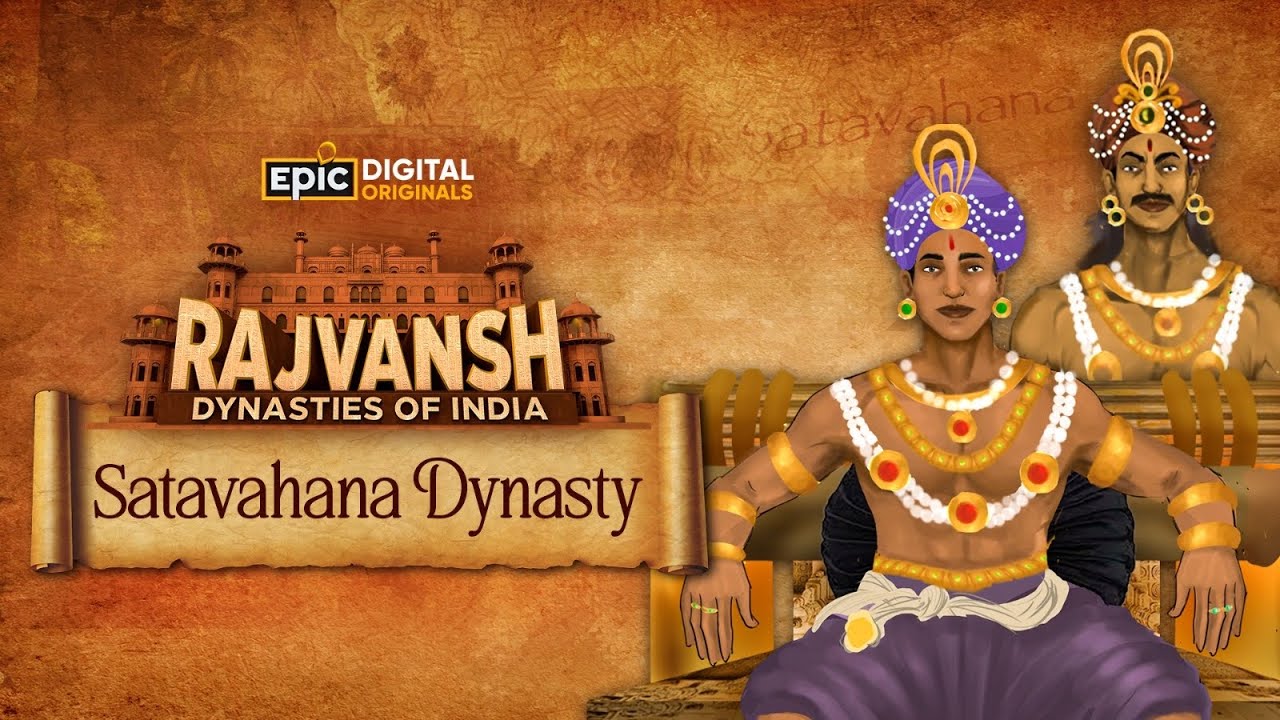
The Satavahana Dynasty flourished in the Deccan region between the and the This era marks an essential shift in regional governance, as local communities moved away from simple farming and tribal networks to form a centralized empire. Epigraphic records and the ancient Puranas show that the Satavahanas created strong trade connections, supported diverse religious traditions, and maintained long-term political authority. Understanding their origins, economic growth, and succession of kings provides crucial insights for anyone studying the history of early state building in Ancient India.
In this chapter, you will understand:
- The economic shift that powered Satavahana political expansion in the Deccan.
- How trade routes, agricultural expansion, and coastal ports enriched the region.
- Primary historical sources used to reconstruct Satavahana chronology and genealogy.
- Major contributions of influential kings from Simuka to King Hala.
Why this topic matters: It explains the historic transition of the Deccan from localized agrarian life into a major commercial and political hub following the decline of the Mauryan Empire.
Core Idea: Driven by paddy farming in the Krishna-Godavari valleys and profitable sea trade along the western coast, the Satavahana kings established a long-lasting empire governed by key figures like Simuka, Kanha, and the Satakarnis over nearly four centuries.
The Rise and Socio-Economic Context of the Satavahana Dynasty: Chronology and Key Rulers (c. 3rd Century B.C. - A.D. 3rd Century)
The emergence of the Satavahana state was closely tied to sweeping socio-economic changes across the Deccan landscape. As local societies grew more structured, new political institutions naturally developed to manage resources and trade.
Socio-Economic Transformation in the Deccan
During this period, simple rural settlements expanded into organized, stratified communities capable of supporting complex governance.
- (i) Paddy cultivation expanded rapidly along the Krishna-Godavari valleys by the , centered around major agricultural hubs such as Dhanyakataka.
- (ii) Strong crop yields encouraged specialized arts and crafts, expanded internal trading networks, sped up urban growth, and introduced distinct social classes.
- (iii) Early social relations mainly consisted of land-owning households known as gahapatis and working groups referred to as dasas and bhrtakas.
The Socio-Economic Foundation: Agrarian Prosperity and Trade Networks
The stability of the Satavahana state rested upon fertile river lands and growing commerce that connected inland production centers with bustling maritime ports.

Strategic Urban and Maritime Connections in the Deccan
Though large areas remained forested and inhabited by indigenous communities, key urban centers quickly developed into vital economic and political bases.
Urban Hubs and Mauryan Influences
The city of Paithan grew into a prominent commercial hub and strategic center for both Buddhist and Jain communities.
- (i) Local elites drew upon earlier administrative setups established during periods of Mauryan control to organize their state authority.
- (ii) Western coastal ports like Barygaza, Supara, and Kalyan connected interior trade goods directly to overseas routes.
- (iii) Differentiated economies and prosperous farming valleys enabled local leaders to transition into a powerful regional dynasty.
Sources, Chronology, and the Founding Dynasty: Simuka
Reconstructing the four-century rule of the Satavahana lineage requires analyzing archaeological, literary, and numismatic records gathered across India.
Historical Sources and Royal Lineage
Scholars utilize coins, inscriptions, and ancient texts to establish accurate timelines and understand royal successions.
Reconstructing the Satavahana History Through Key Evidence
A combination of material evidence and traditional legends helps verify historical events and administrative practices.
Ancient coinage and epigraphic inscriptions used to trace Satavahana history. - (i) Over twenty-four inscriptions provide direct evidence of governance, royal lineages, and religious grants.
- (ii) Extensive coin hoards recovered across the Deccan give clear insights into economic health and royal chronologies.
- (iii) Supplementary details come from historical Jain and Buddhist writings, along with genealogical records in the Puranas.
Timeline and the Challenges in Royal Genealogy
Around 30 kings ruled over a span of four and a half centuries, spanning from roughly to .
- (a) Gaps appear in the written royal lineages due to repeated foreign military incursions.
- (b) Invasions by outside forces like the Scythians, Greeks, and Parthians caused temporary disruptions to Satavahana control.
Simuka, the Founder of the Satavahana Lineage
The lineage was founded by Simuka, whose title gave the dynasty its name. Etymologically, Sata translates to "gift" and Vahana means "bearer."
- (i) Records state that Simuka ruled for , actively promoting religious projects throughout his kingdom.
- (ii) He funded the construction of Jain basati-s (monasteries) and Buddhist Caitya-s (prayer halls), demonstrating early religious patronship.
Quick Revision Capsule
Key highlights regarding Satavahana governance, socio-economic context, and prominent rulers:
| Historical Aspect | Core Features / Key Details | Significance to State Formation |
|---|---|---|
| Agricultural Base | Paddy farming expanded across the fertile Krishna-Godavari river valleys. | Supplied predictable food surpluses and steady revenue to support state institutions. |
| Trade Networks | Connected inland hubs like Paithan to major ports like Barygaza and Kalyan. | Generated wealth via maritime commerce and integrated rural areas into market systems. |
| Simuka | Founder of the lineage who ruled for . | Established the kingdom and sponsored early Jain and Buddhist structures. |
| King Kanha | Brother of Simuka who ruled for . | Expanded Satavahana territorial reach westward into the Nasik region. |
| Siri Satakani | Early prominent ruler mentioned alongside Kharavela of Kalinga. | Consolidated authority and established a royal title used by subsequent monarchs. |
Summary
The Satavahana Dynasty stands out as a pivotal power in early Deccan history. Emerged in the aftermath of the Mauryan decline, the state successfully harnessed rich river agriculture and coastal trade to build a prosperous regional empire. Supported by diverse archaeological records—including twenty-four primary inscriptions, widespread coin hoards, and literary references—the dynasty established long-term stability from to . Under leaders like Simuka, Kanha, and Siri Satakani, the Satavahanas constructed a durable administrative framework that influenced governance, religion, and commerce across central India for centuries.
Quick Revision Points
Essential takeaways for quick exam preparation:
- (i) The agricultural expansion in the Krishna-Godavari valleys formed the foundation of Satavahana economic growth.
- (ii) Ports such as Barygaza, Supara, and Kalyan linked internal trading routes directly to international sea commerce.
- (iii) The dynastic timeline spans nearly 450 years across roughly 30 kings, beginning with founder Simuka.
- (iv) Historical references in texts like the Hathigumpha inscription help confirm the chronology of early rulers like Satakarni I.
- Exam Tip: Remember that Simuka is recognized as the founder of the dynasty, and Paithan (Pratishthana) served as its primary political capital. Questions often focus on trade ports, river valley agriculture, and epigraphic sources like the Nasik and Hathigumpha inscriptions.
Frequently Asked Questions (FAQ)
Q1: What were the primary economic drivers of the Satavahana Empire?
A1: Deep-rooted paddy cultivation in the Krishna-Godavari valleys provided agricultural stability, while overland trade routes connected to western ports like Barygaza and Kalyan drove commercial wealth.Q2: Who was the founder of the Satavahana Dynasty, and what were his main contributions?
A2: Simuka founded the dynasty, ruling for . He established the family's political presence and built religious structures, including Jain basati-s and Buddhist Caitya-s.Q3: How do historians reconstruct Satavahana history despite missing records?
A3: Historians synthesize evidence from at least 24 inscriptions, extensive coin hoards, regional Jain and Buddhist literature, and genealogical records preserved in the Puranas.