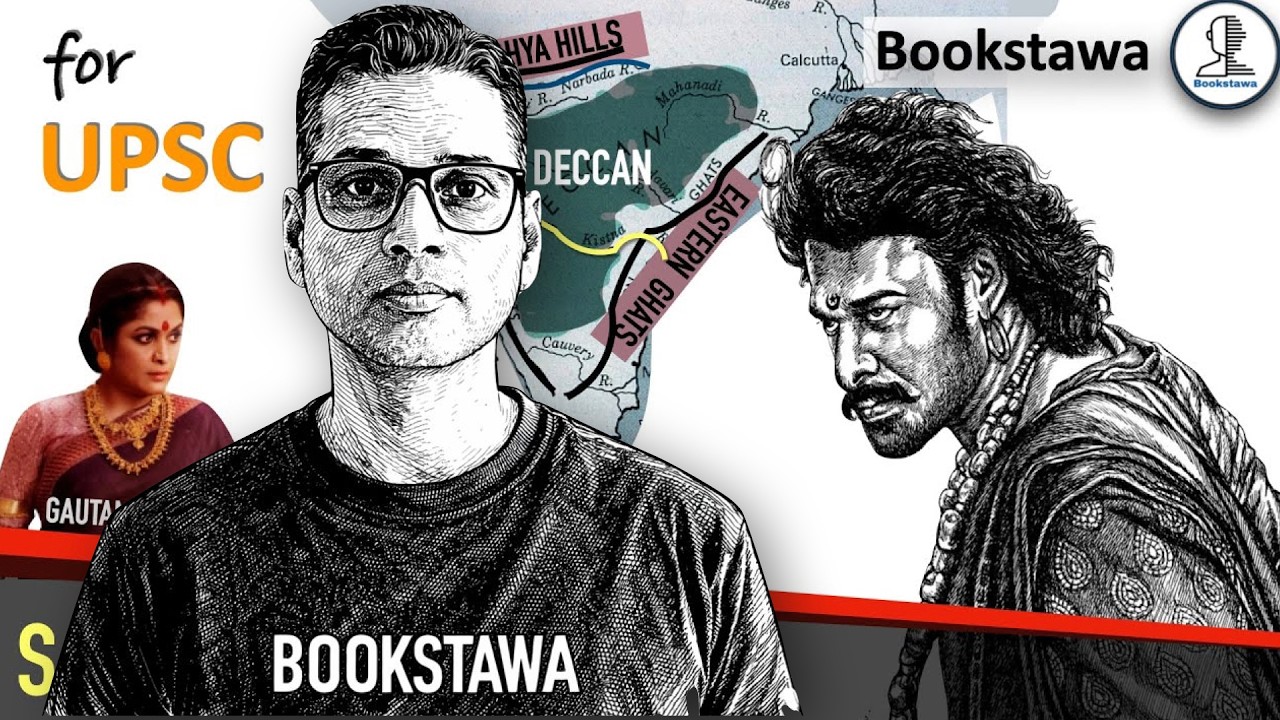
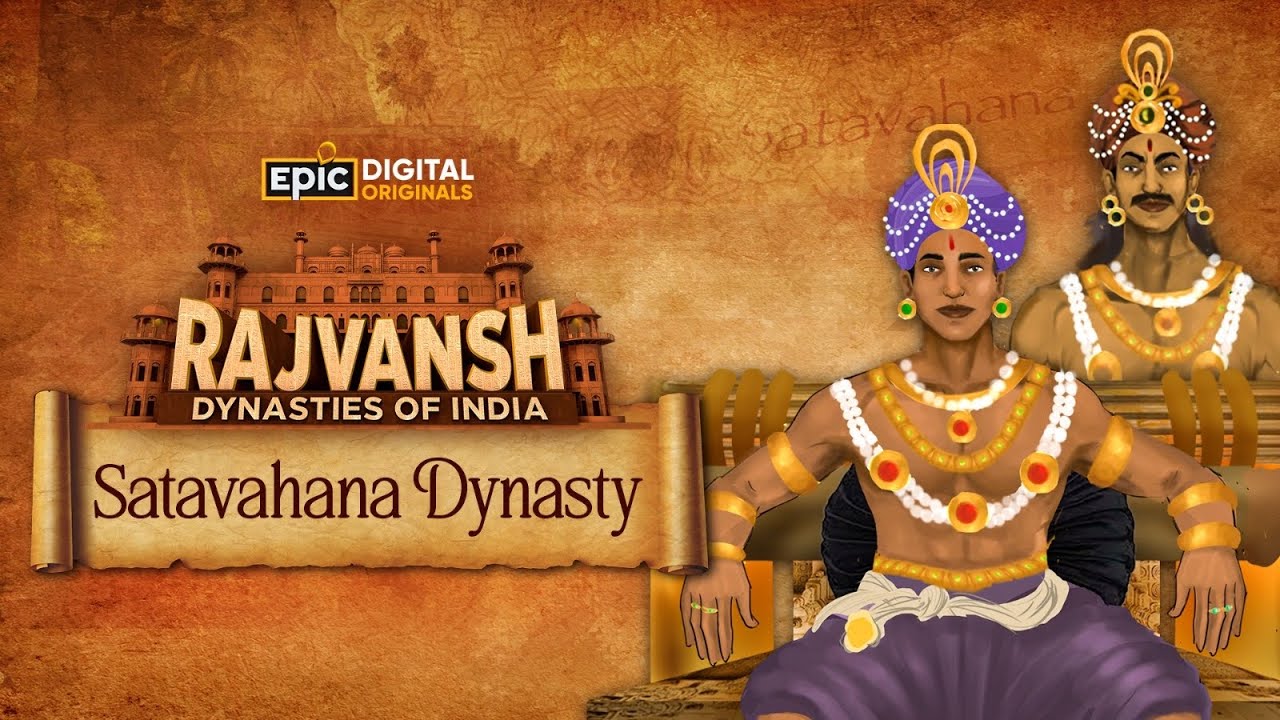
The Satavahana dynasty, also widely referred to in ancient texts as the Andhra dynasty, emerged prominently in the across the vast Deccan region of peninsular India. Their long reign marked a turning point in ancient Indian political history, as they gradually transformed decentralized tribal chiefdoms into a well-administered territorial kingdom. Led by notable monarchs such as Satakarni I and Gautamiputra Satakarni, the lineage secured control over the fertile land lying between the Krishna River and Godavari River. They fought sustained battles against the invading Shakas, built lucrative trade networks with the Roman Empire, and established resilient governance systems. Studying this dynastic power is essential for candidates preparing for competitive examinations, as it highlights the foundations of early peninsular politics, maritime economy, and cultural synthesis.
In this chapter, you will understand:
- The political rise of the Satavahanas in the post-Mauryan Deccan landscape.
- Military conquests under Satakarni I and the dramatic revival under Gautamiputra Satakarni.
- The administrative division, feudatory structure, and matrilineal naming practices.
- Economic growth, Roman trade, Prakrit literature, and rock-cut architectural achievements.
Why this topic matters: Questions about the Satavahanas appear frequently in history and civil services examinations, particularly regarding their coins, rock-cut architecture, trade routes, and post-Mauryan political fragmentation.
Core Idea: The Satavahana dynasty bridged the gap between northern and southern India after the Mauryans collapsed. They held power for nearly four centuries, maintaining regional peace, patronizing both Vedic and Buddhist institutions, and establishing major sea and land trade routes.
The Satavahana Dynasty: Comprehensive History, Territorial Expansion, Effective Administration, and Cultural Legacy (3rd Century BCE – 3rd Century CE)
The Satavahanas established their supremacy across the western Deccan right after the decline of the Mauryan Empire. While textual sources like the Puranas connect them with the Andhra region, physical evidence from coins and rock inscriptions shows that their early power base actually formed in the western Deccan around modern Maharashtra, later expanding eastward along the fertile river systems.
The earliest written reference to these people appears in Ashoka’s Inscriptions, where they are described as the Andhras living on the outer borders of the Mauryan realm.
- (i) The initial core of their domain formed along the banks of the Godavari River, which served as a major trade and travel route.
- (ii) The complete breakdown of Mauryan central rule during the gave local Satavahana leaders the opportunity to declare full independence.
- (iii) To legitimize their growing status, the rulers performed elaborate public Vedic ceremonies and built strong local military alliances.
Early Consolidation and Military Expansion under Satakarni I
Satakarni I was one of the earliest prominent rulers of the family. He expanded the kingdom through direct military campaigns and solidified his royal standing by conducting major rituals, including the Ashvamedha Yajna (horse sacrifice).
Conquests, Grand Rituals, and Impressive Titles of Satakarni I
The military campaigns of Satakarni I shifted the Satavahanas from a local kingdom into a recognized imperial power across central India.
- (i) He defeated nearby chieftains and pushed his territory north of the Narmada River, bringing parts of the wealthy Malwa region under his control.
- (ii) His northern and eastern expansion brought him into direct conflict with the powerful King Kharavela of Kalinga.
- (iii) Following these victories, he assumed high titles such as Lord of Pratishthana (his capital city, modern Paithan) and Lord of Dakshinapatha (ruler of the southern routes).
Historical Evidence from Numismatic and Epigraphic Records
Historians rely on surviving coins and inscriptions to build a clear timeline of the reign of Satakarni I.
- (a) Early coin discoveries indicate that his main period of rule occurred around .
- (b) An inscription at the gateway of the Sanchi Stupa explicitly mentions his name, referring to him as Rajan Shri Shatakarni.
- (c) The famous Naneghat Inscription, issued by his queen Nayanika, records his numerous royal sacrifices, gifts to priests, and major victories.
Clash with the Shakas and the Grand Revival by Gautamiputra Satakarni (AD 106–130)
During the , the Satavahanas suffered severe territorial losses due to frequent invasions by the Western Kshatrapas, commonly known as the Shakas. The invaders captured critical trade centers and sea ports along western India, nearly wiping out Satavahana rule until a major military leader emerged to reverse their fortunes.

Intense Conflict and Temporary Territorial Loss to the Shakas
The aggressive expansion of the Kshaharata clan of Shakas cut off the Satavahanas from their lucrative western coast trade ports.
- (i) The Shaka ruler Nahapana captured western Maharashtra, Konkan, and parts of Malwa, minting his own silver coins directly in the Nasik region.
- (ii) These losses forced the Satavahanas to retreat inward toward the eastern Deccan, severely damaging their revenues and political prestige.
Gautamiputra Satakarni: The Restorer of Satavahana Glory
The reign of Gautamiputra Satakarni () marked the full restoration of Satavahana supremacy. He systematically crushed the Shaka forces and reclaimed all lost provinces.
- (a) To celebrate his victory, he seized over 8,000 silver coins minted by Nahapana and restruck them with his own name and royal emblem, as demonstrated by the famous Jogalthambi Hoard.
- (b) He regained control over vital trade passes, ports, and agricultural districts extending from Malwa down to Karnataka and Andhra.
- (c) In the Nasik Prasasti issued by his mother Gautami Balashri, he is praised as the Ekabrahmana (unrivaled Brahmana) and the defender of the traditional four-fold social order (varna system).
Later Rulers, Renewed Shaka Clashes, and Matrimonial Diplomacy
The successors of Gautamiputra had to balance continuous military threats from the revived Kardamaka branch of Shakas through both warfare and marriage alliances.
- (i) Vasisthiputra Pulumayi () shifted the primary political center eastward toward Paithan and extended dominion over the Andhra coast.
- (ii) The famous Shaka King Rudradaman I defeated the Satavahanas twice in battle, as noted in the Junagadh Rock Inscription, but spared the kingdom because of a royal marriage alliance.
- (iii) The last major Satavahana ruler, Yajna Sri Satakarni (), successfully recovered parts of North Konkan and issued coins featuring dual-masted ships, highlighting a strong focus on maritime trade.
Decline of the Satavahanas and the Emergence of Successor States
Toward the close of the and into the , central authority began to crumble. Heavy reliance on autonomous regional governors and feudal military officers ultimately fragmented the empire into several smaller successor kingdoms.
Weakening Central Authority and the Assertion of Feudatory Autonomy
The vast extent of the realm made direct administrative oversight from Paithan difficult, allowing local leaders to accumulate independent power.
- (i) Local officials holding titles like amatya (civil minister), mahabhoja, and maharathi (grand chieftains) built local power bases and held hereditary land grants.
- (ii) Military officers known as gaulmikas governed countryside outposts, controlling both local revenue generation and armed troops.
- (iii) The later kings lost control over trade routes, causing central treasury revenues to dry up rapidly.
The End of the Dynasty and Transition to Independent Regional Kingdoms
By around , the Satavahana line completely collapsed as local governors stopped paying tribute and declared themselves sovereign kings.
Emergence of local successor kingdoms in the Deccan after the fall of the Satavahanas. - (a) Regional feudatories began issuing their own coinage, signifying total independence from the central throne.
- (b) Former generals married into smaller royal lines to legitimize their newly created dynasties.
- (c) The collapse left the Deccan divided among multiple local lines, ending nearly four centuries of unified rule.
Major Successor States in the Deccan and Southern India
The fall of the Satavahanas gave rise to new regional powers across the peninsula:
- Western & Central Deccan: The Abhiras and Traikutakas took power in northern Maharashtra and Konkan, while the powerful Vakatakas quickly rose to dominate central India. Later, the Kalachuris established their own calendar era starting in .
- Eastern & Southern Region: The Ikshvakus established a strong state in the fertile Krishna River valley around Vijayapuri (Nagarjunakonda). Other local groups like the Shalankayanas, Brihatpalayanas, and eventually the Kadambas and Pallavas took control of the far south and eastern coasts.
Administration, Governance, and Social Structure of the Satavahanas
The Satavahanas borrowed administrative concepts from the Mauryas but introduced significant decentralized and military features suited to the Deccan terrain. They were also among the earliest Indian dynasties to issue secular and religious land grants (Agraharas) exempt from royal taxes.
Administrative Structure and Key Units of Governance
The empire was divided into manageable territorial divisions overseen by royal appointees and hereditary chiefs.
- (i) The primary administrative districts were called aharas, each headed by an officer known as an amatya or mahamatra.
- (ii) Rural villages were managed by a gaulmika, who commanded a small military unit consisting of 9 chariots, 9 elephants, 25 horses, and 45 foot soldiers to maintain local peace and collect taxes.
- (iii) High military commanders called Senapatis were often appointed as provincial governors, combining civil authority with military command.
Society, Matrilineal Names, and the Revival of the Varna System
Satavahana society combined traditional Vedic social ideas with indigenous Deccan customs, creating unique family naming systems.
- (i) Kings used metronymics (names derived from the mother), such as Gautamiputra (son of Gautami) and Vasisthiputra (son of Vasisthi), reflecting the high status of women in royal households, though throne succession remained patriarchal (father to son).
- (ii) Merchant and artisan guilds (shrenis), such as the gandhikas (perfumers) and kularikas (potters), grew wealthy, acted as local banks, and donated generously to religious institutions.
- (iii) Although kings claimed to protect the four castes (varnas), rapid economic expansion encouraged social integration between native tribes, foreign settlers, and urban artisan guilds.
Flourishing Economy, Extensive Trade, and Rich Material Culture
The Satavahana era was a time of remarkable material prosperity. Advanced paddy cultivation in the river valleys provided solid tax revenues, while bustling ports along the Arabian Sea and Bay of Bengal drove profitable overseas commerce.
Agricultural Advancements and Industrial Expertise
Rich natural resources and improved farming techniques helped support growing urban centers across the Deccan.
- (i) Widespread adoption of wet-rice transplantation turned the Krishna-Godavari delta into a major agricultural center.
- (ii) Local iron mining and smelting in places like Karimnagar and Warangal produced superior iron tools, plowshares, and military weapons.
Commercial Dominance, Roman Trade, and Diverse Coinage
Control over key overland trade corridors and coastal ports placed the Satavahanas at the center of international commerce.
- (i) Ports like Kalyan, Bharuch (Barygaza), and Soparaba connected inland craft cities to Roman and Mediterranean trade routes.
- (ii) Indian cotton textiles, spices, ivory, and precious stones were traded in exchange for massive quantities of Roman gold and silver coins, as documented in the ancient merchant guide Periplus of the Erythraean Sea.
- (iii) The Satavahanas issued coins made primarily of lead, potin (an alloy of copper, zinc, and tin), copper, and bronze, along with rare silver coins carrying royal portraits.
Cultural and Religious Patronage, Rock-Cut Architecture, and Literature
The Satavahana monarchs followed a open religious policy. While they performed traditional Vedic rituals to confirm their royal authority, they also funded magnificent Buddhist monasteries, rock-cut cave temples, and artistic monuments.
Religious Practices and Dual Patronage
The state supported both orthodox Vedic institutions and heterodox monastic orders across the realm.
- (i) Rulers worshipped deities like Indra, Vasudeva, Siva, and Skanda, offering generous land grants and cattle to Brahmana priests.
- (ii) Simultaneously, royal women, merchants, and trade guilds provided extensive financial backing to Mahayana Buddhist centers.
Architectural Marvels: Stupas, Viharas, and Rock-Cut Caves
The period witnessed major advances in rock-cut architecture across the Western Ghats and monumental stupa construction in Andhra.
- (i) Artisans carved magnificent Chaityas (prayer halls) and Viharas (monasteries) into solid rock faces at sites like Karle, Bhaja, Kanheri, and Nasik. The Karle Chaitya is world-renowned for its grand scale and sculpted pillars.
- (ii) The great Amaravati Stupa was expanded and decorated with white marble relief panels depicting scenes from the life of the Buddha and the Jataka tales.
- (iii) Important monastic centers and universities developed at Nagarjunakonda under royal and guild patronage.
Prakrit Literature and the Earliest Indian Paintings
Rather than Sanskrit, the Satavahanas chose Prakrit as their official language for administrative records, inscriptions, and literature.
- (i) King Hala compiled the famous Prakrit literary work Gathasaptasati (Sattasai), an anthology of 700 poems focused on rural life, love, and human emotions.
- (ii) The earliest surviving wall paintings in India, found in Caves 9 and 10 at Ajanta, date back to the Satavahana period and illustrate Buddhist legends.
Satavahana Dynasty: Quick Revision Capsule
Key parameters and historical markers of the Satavahana Empire for quick review:
| Historical Parameter | Core Features & Specific Details | Significance for History Exams |
|---|---|---|
| Origin & Timeline | Western Deccan (expanded to Andhra); 3rd Century BCE to 3rd Century CE | Key post-Mauryan bridge dynasty in peninsular India |
| Prominent Rulers | Satakarni I, Gautamiputra Satakarni, Vasisthiputra Pulumayi, Yajna Sri Satakarni | Famous for defeating Shakas and restoring imperial glory |
| Key Inscriptions | Naneghat Inscription (Nayanika), Nasik Prasasti (Gautami Balashri), Sanchi Inscription | Essential epigraphic sources for ancient chronology and sacrifices |
| Coinage System | Lead, Potin, Copper, Bronze, and restruck Silver coins (Jogalthambi) | Demonstrates commercial reach, lead currency, and Shaka conflict |
| Art & Literature | Karle Chaitya, Amaravati Stupa, Ajanta (Caves 9 & 10), Gathasaptasati by Hala | Major architectural and Prakrit literary contributions |
Summary
The Satavahana dynasty played a pivotal role in shaping early South Indian history. By bridging northern and southern traditions, they fostered long-distance commerce, introduced administrative systems that outlasted their rule, and built lasting monuments. Their conflicts with the Shakas, economic partnerships with the Roman Empire, and generous patronage of Prakrit literature and rock-cut art make them a central topic in the study of ancient Indian civilization.
Quick Revision Points for Students
Focus on these critical factual checkpoints during last-minute revision:
- (i) Capital cities included Pratishthana (modern Paithan in Maharashtra) and later Amaravati (Dhanakataka) in Andhra Pradesh.
- (ii) The Satavahanas were the first Indian rulers to issue land grants with administrative tax immunities to Brahmanas and Buddhist monks.
- (iii) The language of all official inscriptions was Prakrit, written in the Brahmi script.
- (iv) Coins featuring ship motifs were issued by Yajna Sri Satakarni, reflecting active ocean trade.
- Exam Tip: Pay special attention to the difference between metronymics and succession rights. While Satavahana kings proudly carried their mother's clan name (e.g., Gautamiputra), the throne passed strictly from father to son (patrilineal succession). Do not confuse this with a matriarchal system.
Frequently Asked Questions (FAQ)
Q1: Who was the founder of the Satavahana Dynasty?
A1: According to Puranic traditions and historical consensus, Simuka is considered the founder of the Satavahana dynasty, establishing power in the late 3rd or early 2nd century BCE after Mauryan control weakened.Q2: What is the significance of the Jogalthambi Hoard?
A2: The Jogalthambi Hoard contained thousands of silver coins originally issued by the Shaka ruler Nahapana that were overstruck by Gautamiputra Satakarni. This discovery provides physical proof of Gautamiputra's decisive victory over the Shakas.Q3: Why did the Satavahanas issue lead coins?
A3: Lead was locally abundant in the Deccan mines, and lead coins met the high demand for everyday small-scale market transactions across the empire's vast trade network.