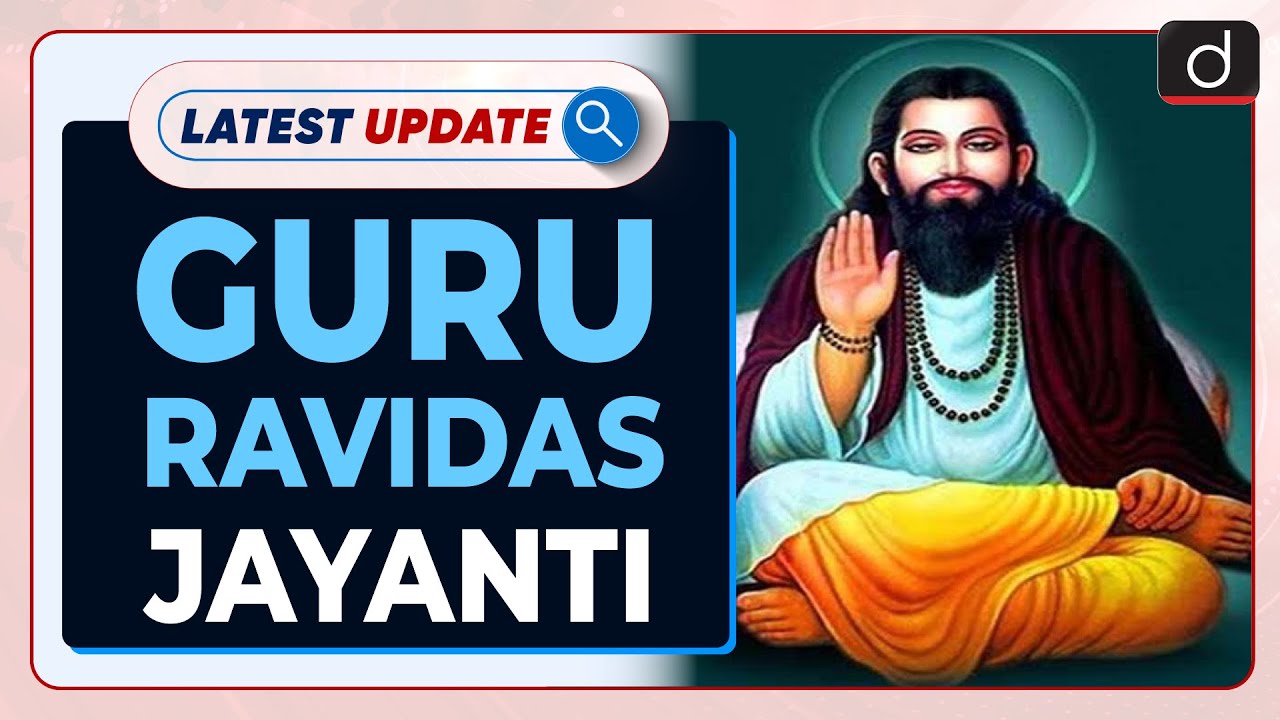
Ravidas (also known as Raidas) was a Bhakti movementsaint, poet, and social reformer whose teachings emphasized spiritual equality, social justice, and devotion to God. He rejected caste-based divisions and preached that all humans are equal in the eyes of the divine. His hymns, preserved in the Guru Granth Sahib, continue to inspire students and seekers preparing for history exams with their message of harmony, justice, and inner purity.
🎯 In this chapter, you will understand:
- The life and early upbringing of Saint Ravidas in Varanasi.
- His rejection of caste barriers and promotion of social equality.
- The core concepts of Nirguna Bhakti and spiritual devotion.
- His literary impact across the Guru Granth Sahib and other traditions.
💡 Why this topic matters: Understanding Ravidas provides vital insight into medieval social reform movements, the democratization of spirituality, and the foundation of key literary works in Indian history.
🧠 Core Idea: True devotion (nirguna bhakti) transcends ritual, birth, and social rank, placing moral purity and divine love above all caste distinctions.
Ravidas: Bhakti Movement Saint and Voice for Social Justice (15th–16th Century)
Ravidas was a pioneering Bhakti saint who combined poetry, devotion, and social reform to challenge rigid caste barriers. He devoted his life to spreading the ideals of equality, nirguna bhakti, and social harmony. His verses emphasized inner spirituality over ritual practices, inspiring generations across Hinduism and Sikhism.
- (i) Born into a marginalized community, yet rose as a revered spiritual leader.
- (ii) His poetic hymns entered the Guru Granth Sahib and influenced religious movements.
- (iii) He remains a symbol of social justice and spiritual liberation.
Early Life and Spiritual Journey of Ravidas
The humble origins of Ravidas in Uttar Pradesh shaped his vision of spiritual equality and reform.

Birth and Family Background
Ravidas was born in Sir Gobardhanpur near Varanasi into a Chamar community traditionally associated with leather work. Despite belonging to an “untouchable caste”, he pursued spiritual knowledge at the banks of the Ganges, laying the foundation for his life as a mystic and reformer.
- (i) His birthplace is honored today as Shri Guru Ravidass Janam Asthan.
- (ii) His birthday is celebrated as Ravidas Jayanti, marked by processions and devotional gatherings.
- (iii) Early texts like Anantadas Parcai describe his miraculous birth and rise as a saint.
Influence of Gurus and Saints
Ravidas was deeply influenced by Ramananda, a Brahmin bhakti-poet, and came into contact with Sufi saints, sadhus, and ascetics. His interactions shaped his belief in a universal divine beyond caste or sectarian labels.
- (a) Considered a younger contemporary of Kabir.
- (b) Associated with the Ramanandi Sampradaya tradition of Bhakti.
- (c) Legends say even Brahmins bowed before his wisdom.
Travels and Spread of Teachings
Ravidas traveled extensively to Hindu pilgrimage centers across Andhra Pradesh, Maharashtra, Rajasthan, and the Himalayas. His devotional hymns, composed in regional languages, attracted followers from diverse social and religious backgrounds.
- (i) Advocated for nirguna bhakti (devotion to the formless divine).
- (ii) Met Guru Nanak, with 41 of his hymns later preserved in the Adi Granth.
- (iii) Featured in Sikh hagiographies like the Premambodha and Bhaktamal.
Social and Religious Reforms by Ravidas
Ravidas championed equality and justice in a society divided by caste and untouchability.
Challenge to the Caste System
Ravidas openly rejected the caste hierarchy and spoke against untouchability. He envisioned a society where dignity was based on spiritual purity, not birth.
- (i) Advocated for equal treatment of all genders and communities.
- (ii) Promoted unity in spiritual pursuit beyond caste lines.
- (iii) Became a voice of the marginalized against oppressive structures.
Philosophical and Spiritual Beliefs of Ravidas
At the core of Ravidas’s teachings was the idea of nirguna bhakti, devotion to a formless divine beyond rituals and images.
Focus on Nirguna Bhakti
He emphasized that true bhakti is a personal, inner journey toward God. External rituals or caste restrictions, according to him, had no role in attaining liberation.
Visual overview of internal meditation versus external ritualism in Bhakti thought. - Spiritual Purity: Highlighted inner purity and love for God.
- Direct Connection: Advocated for a direct relationship with the divine.
- Universal Harmony: Stressed social harmony as part of spirituality.
- Sacred Legacy: Expressed key ideas recorded in historic works like the Guru Granth Sahib.
Literary Contributions of Ravidas
Through devotional poetry, Ravidas left a lasting literary legacy that transcended religious boundaries.
Hymns in Sikhism
His compositions, included in the Guru Granth Sahib, emphasized equality and devotion, inspiring generations of Sikhs.
- (i) 41 hymns attributed to Ravidas are part of Sikh scripture.
- (ii) Praised the oneness of God and spiritual democracy.
- (iii) Strengthened links between Bhakti and Sikhism.
Verses in Hindu Traditions
His poems also appear in the Panch Vani of the Dadu Panthi sect, showing his wide influence across Hinduism.
- (a) Spoke of universal brotherhood.
- (b) Critiqued ritualistic practices.
- (c) Advocated compassion as the highest virtue.
Legacy and Impact of Ravidas
The life and message of Ravidas left an enduring impact on Indian society, literature, and spirituality.
Modern Influence and Ravidassia Movement
He became the central figure of the Ravidassia movement, inspiring communities to assert dignity and equality. His ideas continue to shape movements for social reform and justice.
- (i) Revered as a guru and social reformer by millions.
- (ii) Influenced later figures like Mirabai.
- (iii) Honored globally, with temples and organizations in his name.
⚡ Quick Revision Capsule: Saint Ravidas
Key highlights summarizing the life, philosophy, and historical importance of Saint Ravidas:
| Category | Key Details | Historical Significance |
|---|---|---|
| Birth & Era | Born in Sir Gobardhanpur near Varanasi () | Emerged from a marginalized leather-working background to become a top mystic. |
| Philosophy | Centered on nirguna bhakti (formless divine) | Rejected caste supremacy, ritualistic purity, and temple-based exclusivity. |
| Literary Works | 41 hymns preserved in the Guru Granth Sahib | Formed an enduring scriptural bridge between the Bhakti movement and Sikhism. |
| Key Influences | Associated with Ramananda and contemporary with Kabir | Inspired prominent spiritual figures, including the poet-saint Mirabai. |
| Modern Impact | Central icon of the Ravidassia movement | Continues to inspire global social justice movements and equal rights advocacy. |
📝 Summary
During the , Saint Ravidas revolutionized social and religious thought across northern India. By rejecting caste hierarchies and preaching that divine grace is accessible to all, he laid the foundation for modern social reform. His poetic compositions in the Guru Granth Sahib and Panch Vani emphasize inner truth, compassion, and human dignity above empty rituals.
🚀 Quick Revision Points
Essential facts to review before examinations:
- (i) Known for promoting nirguna bhakti, which focuses on devotion to a formless God.
- (ii) Challenged untouchability and argued that moral character defines a person, not birth.
- (iii) Contributed 41 hymns to the Guru Granth Sahib, proving his profound scriptural status.
- (iv) Inspired the famous bhakti poet Mirabai, who regarded him as her spiritual guide.
- 💡 Exam Tip: When answering questions on the Bhakti movement, highlight how Saint Ravidas used everyday vernacular poetry to critique the caste system and promote social equality.
❓ Frequently Asked Questions (FAQ)
Q1: What was the core message of Saint Ravidas?
A1: His main message was that all human beings are equal in the eyes of God, and that devotion (bhakti) requires inner purity rather than caste status or external rituals.Q2: How are the writings of Ravidas preserved today?
A2: A total of 41 of his devotional hymns are preserved in the sacred Sikh scripture, the Guru Granth Sahib, as well as in the Panch Vani texts.Q3: Who were some historical figures influenced by Ravidas?
A3: He influenced many contemporary and later reformers, most notably the celebrated Bhakti poetess Mirabai, who accepted him as her guru.