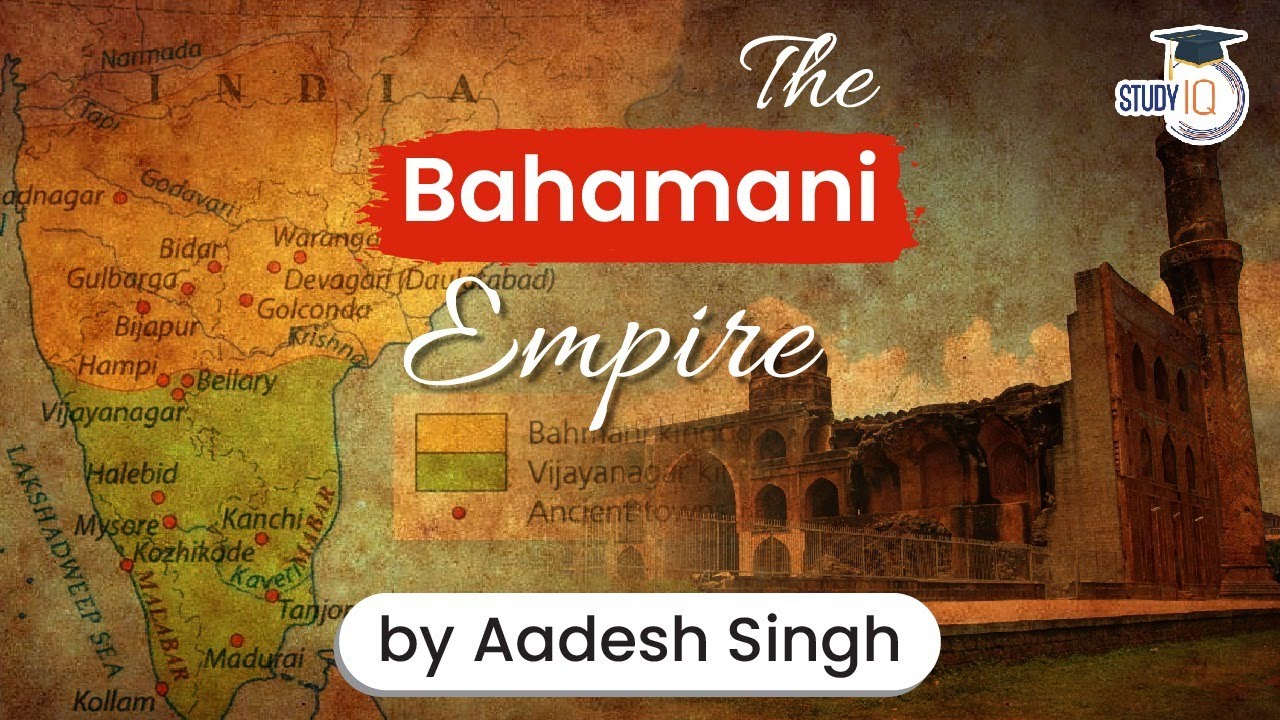
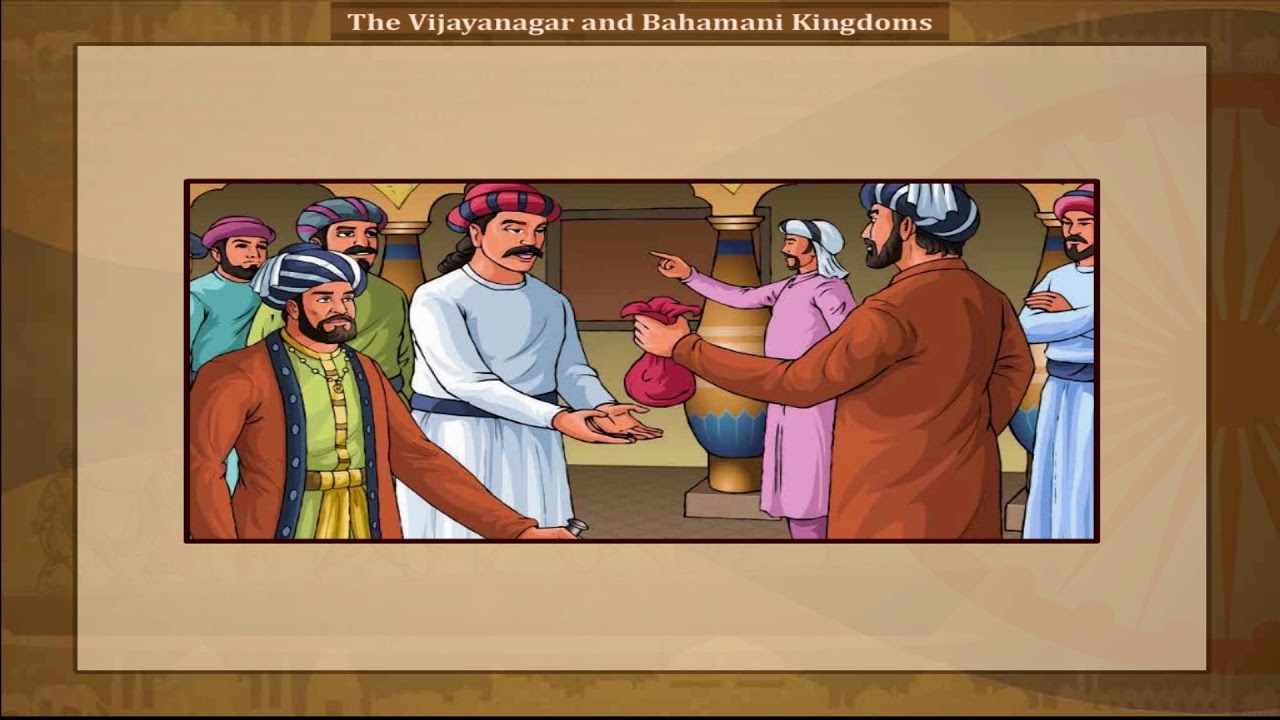
Mahmud Gawan was a talented Persian-born statesman who served the Bahmani Sultanate during the . He started as an Iranian merchant and rose to become the kingdom's powerful prime minister. His time in power brought strong military victories, deep administrative changes, and rich support for culture and education. For students learning about medieval Indian history, Gawan's life shows how statecraft worked, how court rivalries could destroy a kingdom, and how his reforms influenced later Deccan states.
🎯 In this chapter, you will understand:
- How an Iranian trader rose to become the prime minister (Peshwa) of the Bahmani kingdom.
- The military strategy behind capturing key coastal ports like Goa and Dabhol.
- How dividing the kingdom into eight provinces (tarafs) helped centralize royal power.
- Why noble rivalries led to Gawan's execution and the eventual split of the Bahmani Sultanate.
💡 Why this topic matters: Mahmud Gawan's career explains how the Bahmani kingdom reached its political peak and why internal noble conflicts eventually caused it to break apart into five separate Deccan Sultanates.
🧠 Core Idea: Strong administrative efficiency and military expansion can unify a kingdom, but unmanaged factional politics among nobles can swiftly destroy it from within.
Mahmud Gawan: Rise, Comprehensive Reforms, and Enduring Legacy in the Bahmani Sultanate
Mahmud Gawan's journey from a merchant to the top advisor in the Bahmani kingdom is a clear example of leadership based on practical skill and strategic thinking.
Arriving in the Deccan as an ambitious trader from Iran, Mahmud Gawan showed strong diplomatic skills. He gained trust in the Bahmani court, which helped him rise to the highest administrative positions.
- (i) Early in his career, he received the title of Malik-ut-Tujjar (Chief of Merchants) in recognition of his commercial expertise and value to the state.
- (ii) He was later appointed as Peshwa (prime minister), leading state administration with firm control for nearly .
- (iii) In this role, Mahmud Gawan became the key leader behind the Bahmani kingdom's organized government at the height of its power.
Decisive Military Campaigns and Strategic Territorial Expansion
The Bahmani kingdom expanded its borders and strengthened its position significantly under Gawan's military leadership.

Strategic Southern Expeditions Against Vijayanagara
Gawan led active military campaigns against the kingdom's major southern rival, the Vijayanagara Empire.
- (i) He planned and carried out deep military raids into Vijayanagara territory, advancing as far as the city of Kanchi (Kanchipuram).
- (ii) These campaigns helped protect Bahmani borders and kept rival forces from pushing north.
Crucial Western Coastal Expansion and Maritime Control
Securing trade routes along the Arabian Sea was a major goal of Gawan's military strategy.
- (a) The capture of vital port cities like Dabhol and Goa gave the kingdom strong control over sea routes.
- (b) Controlling the western coast opened direct routes for overseas trade.
- (c) Increased trade brought higher tax revenues and improved access to imported warhorses from the Middle East.
Visionary Administrative Reforms and Governance Efficiency
Gawan focused on improving government work, reducing the independent power of local nobles, and creating a clear system for collecting land taxes.
Comprehensive Provincial Division and Control over Tarafdars
To keep local governors accountable, Gawan reorganized the administrative divisions of the state.
- (i) He divided the Bahmani kingdom into eight smaller provinces (tarafs), replacing the older system of four large provinces.
- (ii) Provincial governors (tarafdars) received fixed salaries and clear duties for military and civil management.
- (iii) This change limited the power of local nobles, ensuring they remained subordinate to the central authority of the Sultan.
Crucial Revenue and Financial Reforms including Land Assessment
To secure state funds, Gawan introduced systematic rules for land measurement and taxation.
- (a) He ordered a systematic land survey to fix fair tax rates based on actual land measurement.
- (b) These steps made provincial administration more transparent and reduced unfair tax collection by local collectors.
- (c) The improved system kept the treasury stable and provided reliable resources for public works and defense.
Significant Cultural Patronage and Enduring Educational Contributions
Beyond his political and military duties, Mahmud Gawan supported learning and built cultural connections with scholars across Asia.
Establishment of the Grand Bidar Madarasa
His major contribution to education was a large learning center that became famous throughout the region.
The Mahmud Gawan Madarasa at Bidar, a iconic center of Islamic education. - Madarasa of Bidar: Gawan personally funded and built a magnificent three-story educational building in Bidar.
- International Scholars: The institution attracted thinkers, teachers, and students from regions like Iran and Iraq.
- Library & Research: It housed a massive library with thousands of manuscripts on mathematics, astronomy, law, and literature.
Lasting Cultural Influence and Indo-Persian Synthesis
Gawan's support helped blend Persian literary and architectural styles with local Deccan traditions.
- (a) Architecture and writing from this period reflect a blend of Deccani and Persian styles.
- (b) Bidar grew into a noted center for scholarly activity and artistic development.
- (c) This cultural mix left an influence that continued in the Deccan long after the Bahmani period.
⚡ Quick Revision Capsule: Mahmud Gawan's Administrative and Military Overview
Here is a quick overview of Gawan's main achievements and structural reforms for fast exam revision:
| Category | Key Action / Initiative | Historical Impact |
|---|---|---|
| Political Role | Promoted to Peshwa (Prime Minister) | Managed central administration for nearly . |
| Military Expansion | Captured coastal ports of Goa and Dabhol | Gained control over Arabian Sea trade and horse imports. |
| Provincial Reform | Split 4 large provinces into 8 tarafs | Reduced independent power of provincial governors (tarafdars). |
| Revenue System | Introduced systematic land survey and measurement | Standardized tax collection and boosted treasury funds. |
| Education & Culture | Built the Madarasa at Bidar | Created a renowned learning hub with global scholars and a vast library. |
Political Strife, Tragic Execution, and the Bahmani Fragmentation
Despite his achievements, Gawan's career ended tragically due to jealousy and court politics.
Tragic Execution and Political Downfall
Rising political tension between local Deccanis and foreign Afaqis (nobles from Iran and Central Asia, including Gawan) split the court.
- (i) Jealous rival nobles forged a fake treasonous letter to turn Sultan Muhammad Shah III against Gawan.
- (ii) Acting without a full check of the facts, the young Sultan ordered Gawan's execution in .
Immediate Aftermath and Kingdom Fragmentation
Without Gawan's firm leadership, the central authority of the Bahmani state collapsed quickly.
- (a) Gawan's death removed the main leader who kept provincial governors united under royal control.
- (b) Within a few decades, five independent regional states emerged: Bijapur, Golconda, Ahmadnagar, Bidar, and Berar (the Deccan Sultanates).
- (c) The loss of central leadership led to ongoing regional rivalries throughout the Deccan.
Enduring Legacy and Cultural Impact on Later Deccan States
Even after the Bahmani state fell, Gawan's governance ideas remained influential.
- (i) The succeeding Deccan Sultanates continued using his provincial tax and administrative methods.
- (ii) His cultural and architectural contributions remained visible across the region's monuments and academic traditions.
📝 Summary
Mahmud Gawan served as the prime minister of the Bahmani Sultanate during the . He built a strong legacy through administrative reforms, military expansion along the western coast, and educational projects like the Bidar Madarasa. His unfair execution in due to noble factionalism weakened the monarchy and led directly to the formation of five separate Deccan states. His structural and tax reforms remained standard practice across southern India for decades.
🚀 Quick Revision Points
Essential facts to review before examinations:
- (i) Mahmud Gawan arrived from Iran as a merchant and rose to become Peshwa (prime minister).
- (ii) He captured Goa and Dabhol, gaining control over coastal trade routes.
- (iii) He divided 4 large provinces into 8 smaller tarafs to keep provincial governors under central control.
- (iv) He constructed the famous three-story Madarasa in Bidar for higher learning.
- 💡 Exam Tip: Questions on medieval history frequently ask about the causes of the Bahmani Sultanate's decline. Always highlight Gawan's execution in and the Deccani vs. Afaqi noble conflict as primary triggers for its breakup into five Deccan Sultanates!
❓ Frequently Asked Questions (FAQ)
Q1: What title was given to Mahmud Gawan before he became Prime Minister?
A1: He was awarded the title Malik-ut-Tujjar, which means "Chief of Merchants," in recognition of his trade expertise and service.Q2: How did Mahmud Gawan reform the provincial structure of the Bahmani Sultanate?
A2: He split the original four large provinces into eight smaller tarafs, limiting the individual power of governors (tarafdars) and setting fixed salaries for administrative officers.Q3: What were the long-term political effects of Mahmud Gawan's execution?
A3: His execution in destroyed central stability, leading provincial governors to declare independence and break the Bahmani kingdom into five separate states: Bijapur, Golconda, Ahmadnagar, Bidar, and Berar.