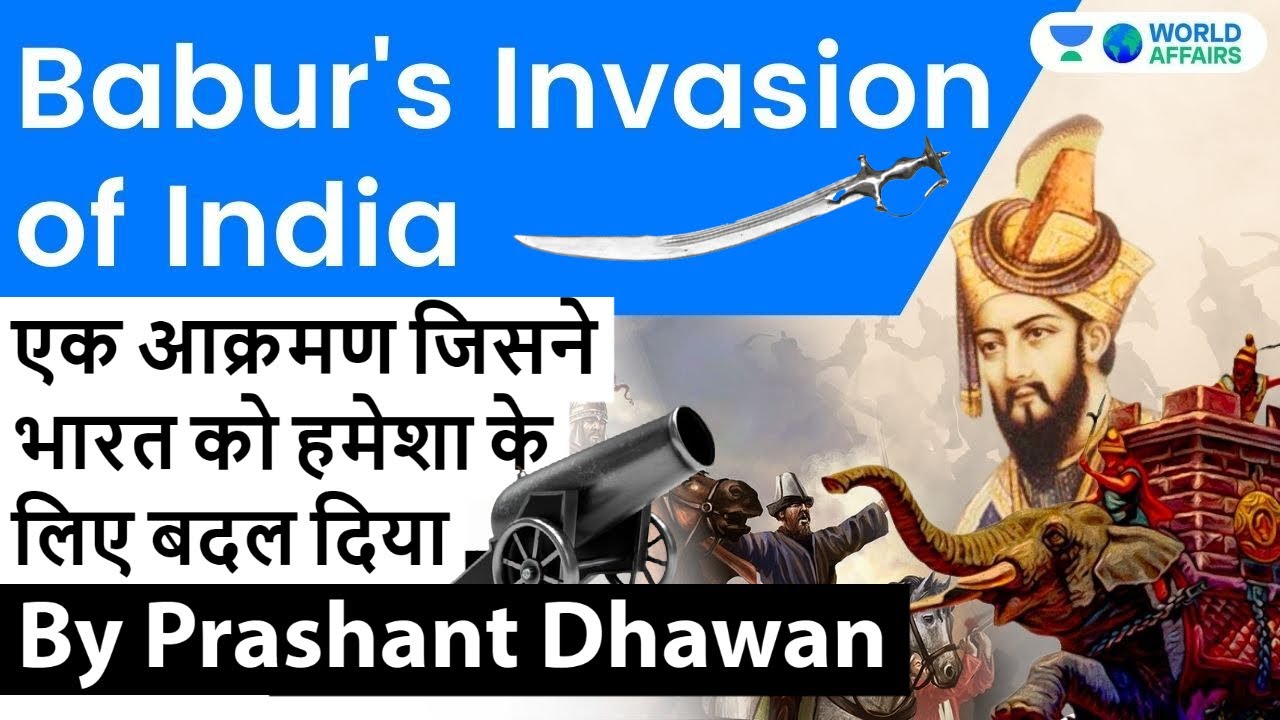
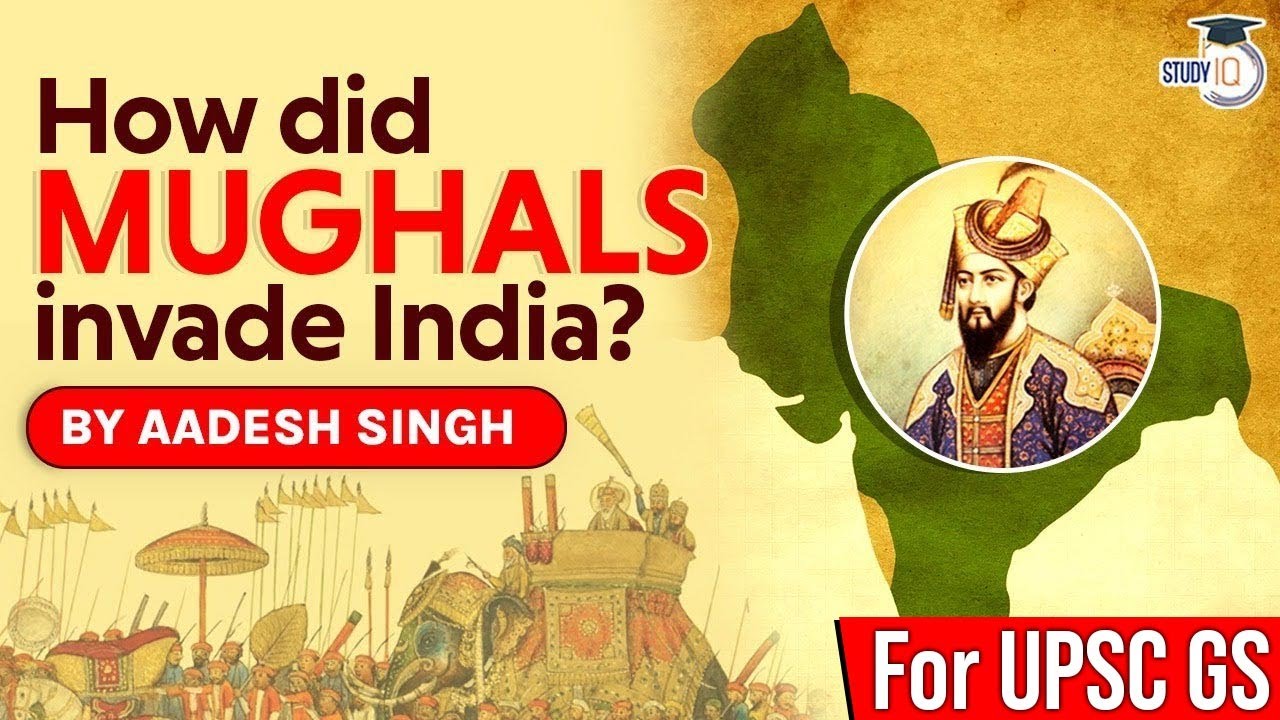
The story of Babur's ambition to conquer Hindustan is a fascinating narrative driven by interwoven political, economic, and strategic necessities that emerged after he successfully secured the dominion of Kabul in . His relentless focus on expanding into Punjab, aiming for the heartland of India, ultimately resulted in the establishment of the magnificent Mughal Empire. These foundational events and Babur’s initial campaigns and early conquests are essential study material for students preparing for medieval Indian history exams, offering critical insights into the dynamics of 16th-century warfare and state formation.
🎯 In this chapter, you will understand:
- The strategic factors driving Babur from Kabul to Hindustan between and .
- The economic deficits of Kabul that forced an expansion into fertile regions like Punjab.
- The political weakness of the Delhi Sultanate under Ibrahim Lodi.
- How early campaigns at Bhira, Sialkot, and Lahore paved the way for Mughal rule.
💡 Why this topic matters: It marks the transition from Central Asian invasions to the setup of the Mughal Empire in South Asia.
🧠 Core Idea: Financial shortages in Kabul combined with division among Indian rulers opened the door for Babur's invasion.
Babur's Strategic Ambition and Persistent Conquests in Hindustan (1504–1525)
Babur’s persistent ambition to conquer Hindustan was a main goal of his foreign policy. It started after he took Kabul and reached its peak with his victory at Panipat.
The journey from a regional ruler in Central Asia to the founder of a major Indian dynasty was filled with challenges, yet his vision for India remained firm.
- (i) Despite facing continuous opposition from his rebellious chiefs and brothers after taking Kabul in , Babur never gave up his plan to conquer India, viewing it as his rightful territory.
- (ii) Like many Central Asian invaders before him, Babur was drawn by India’s legendary wealth as a land of gold and vast riches.
- (iii) The history of his ancestor Timur (Tamerlane), who had conquered parts of Punjab and carried away great wealth, gave Babur a strong belief in his claim to these lands.
Economic Imperative: The Necessity for Babur's Campaign into India
The severe financial limits in Kabul and nearby lands made expansion into the richer plains of Punjab and India a necessity for the survival of his state.

Financial Deficit in Kabul and Inadequate Military Sustenance
The income from the mountainous region of Kabul was far too low to pay for Babur’s army. This created a ongoing financial shortage where military costs always exceeded government earnings.
- (i) Neighboring areas such as Badakhshan, Qandhar, and Kabul had too few resources and small populations to support a professional standing army.
- (ii) In contrast, India offered rich resources, a safe base, and a strong position to launch future actions against the Uzbeks in Central Asia.
Political Fragmentation: The Situation Favorable to Babur’s Invasion
The political division and instability in northwest India during the early 16th century created perfect conditions for Babur’s military campaigns.
Ibrahim Lodi's Centralization and Rise of Discontent
After Sultan Sikandar Lodi died in , his son Ibrahim Lodi took power. Ibrahim's harsh efforts to centralize control alarmed Afghan nobles and the Rajputs, causing widespread anger against the Delhi Sultanate.
- (i) The Afghan noble Daulat Khan Lodi, governor of Punjab, was an ambitious ruler who operated almost independently from Delhi.
- (ii) While trying to keep peace outwardly with Ibrahim Lodi, Daulat Khan was also taking bold actions like trying to capture frontier areas such as Bhira, showing deep splits inside the Lodi Empire.
Babur’s Initial Military Campaigns: Securing a Foothold in Punjab
A series of planned early military campaigns in Punjab helped build Babur’s military foothold in the northwestern part of the Indian subcontinent.
The Capture of Bhira and Initial Demand for Territories
During his campaign in , Babur captured the fort at Bhira. After this success, he demanded lands from Daulat Khan Lodi and Sultan Ibrahim Lodi, but both refused his demands.
- (i) Daulat Khan reacted with clear anger. He stopped Babur’s messenger at Lahore and took back Bhira, increasing tension between them.
- (ii) In , Babur launched another attack across the Indus River. He recaptured Bhira and took Sialkot, securing key entry points into India.
Conquest of Sialkot and Lahore, Followed by Temporary Retreat
The city of Lahore surrendered to Babur’s army, but he had to pause his advance and retreat temporarily due to an uprising in Qandhar.
- (i) He focused on securing his western border first. After winning back Qandhar, Babur directed his attention back toward conquering India.
The Strategic Invitation: Local Rulers Urge Babur to Intervene
Unpopular rule under Ibrahim Lodi reached a breaking point where key local leaders, including Afghan nobles and a prominent Rajput ruler, invited Babur to enter India and remove the Sultan.
Daulat Khan Lodi and Dilawar Khan’s Direct Appeal
The discontented governor Daulat Khan Lodi and his son Dilawar Khan formally asked Babur for help, urging him to invade and remove Sultan Ibrahim Lodi from power.
- (i) They pointed out the Sultan's harsh rule, cruelty, and the lack of support he had from the main Lodi nobility.
Rana Sanga’s Encouragement and Strategic Alignment
The Rajput ruler Rana Sanga of Mewar also sent a message inviting Babur to attack and take control of Punjab, hoping to weaken the Sultan of Delhi for his own goals.
The Decisive Campaign: Babur’s Final Conquest of Punjab
Through fast movement and political planning, Babur won decisive victories in Punjab, securing his base for a larger push into the Indian heartland.
The Betrayal of Daulat Khan and the Collapse of Afghan Opposition
When Babur reached Peshawar in , he learned that Daulat Khan had turned against him. Daulat Khan gathered 30,000 to 40,000 men, pushed Babur's garrisons out of Sialkot, and marched toward Lahore.
- (i) The campaign moved quickly. As Babur advanced with his organized forces, Daulat Khan’s army lost unity, broke apart, and Daulat Khan surrendered to the invading Mughal forces.
- (ii) Within three weeks of crossing the Indus River, Babur cleared out Afghan opposition and gained control over all of Punjab.
Conclusion: The Strategic Importance of Babur’s Conquest of Hindustan
The combination of Babur’s personal drive, planning, and early military wins created the foundation for the future Mughal Empire in India. His campaigns succeeded due to the economic needs of Kabul, political splits in northern India, and direct invitations from local leaders like Daulat Khan Lodi and Rana Sanga. For students studying medieval Indian history, understanding these events shows how Mughal rule began through military and political strategy.
⚡ Quick Revision Capsule: Babur's Conquest of Hindustan
Key summary of events, dates, and historical figures from Babur's early campaigns in India:
| Year / Event | Key Rulers & Figures | Strategic Outcome |
|---|---|---|
| Babur | Captured Kabul; established base for future Indian campaigns. | |
| Ibrahim Lodi, Sikandar Lodi | Sikandar Lodi died; Ibrahim Lodi took power, angering Afghan nobles. | |
| Babur, Daulat Khan Lodi | Captured fort at Bhira; first formal demand for territories in Punjab. | |
| Babur | Recaptured Bhira and took Sialkot; temporary pause due to revolt in Qandhar. | |
| Babur, Daulat Khan Lodi, Rana Sanga | Defeated Daulat Khan Lodi; secured complete control over Punjab. |
📝 Summary
Between and , Babur moved from being a regional ruler in Kabul to controlling Punjab, setting up his takeover of Northern India. Driven by financial needs, the memory of Timur's victories, and invitations from discontented local leaders like Daulat Khan Lodi and Rana Sanga, Babur systematically captured key positions including Bhira, Sialkot, and Lahore.
🚀 Quick Revision Points
Essential facts to review before examinations:
- (i) Kabul did not generate enough income to support Babur's standing army, making expansion into India an economic necessity.
- (ii) Timur's earlier invasions gave Babur a historical claim over the region of Punjab.
- (iii) Internal divisions under Ibrahim Lodi weakened the Delhi Sultanate from within.
- (iv) Invitations from Daulat Khan Lodi and Rana Sanga gave Babur a clear opening to intervene in Indian affairs.
- 💡 Exam Tip: Focus on the triple causes of Babur's invasion: economic shortages in Kabul, political division in Delhi, and strategic invitations from local governors.
❓ Frequently Asked Questions (FAQ)
Q1: Why did Babur leave Kabul to invade India?
A1: Kabul had low revenue that could not cover his military costs. India offered vast wealth, resources, and a strategic base.Q2: Who invited Babur to invade India?
A2: Daulat Khan Lodi (governor of Punjab), his son Dilawar Khan, and Rana Sanga of Mewar invited Babur to help remove Sultan Ibrahim Lodi.Q3: What was the result of Babur's campaign in 1525?
A3: Babur defeated Daulat Khan Lodi's forces within three weeks of crossing the Indus, gaining complete control over Punjab.