The Mughal period () brought a major cultural transformation to India. It combined local Indian traditions with Turko-Iranian culture. This mix created rich achievements in architecture, painting, literature, and music, inspired by the royal Timurid court at Samarqand. Studying these artistic and architectural innovations gives useful knowledge for students preparing for history exams who want to understand the Mughal contribution to India's rich cultural heritage.
🎯 In this chapter, you will understand:
- How the Mughals combined Indian and Turko-Iranian cultural elements.
- Key architectural features like Charbagh gardens, forts, and Pietra Dura inlay work.
- The growth of miniature painting, Persian and Urdu literature, and Hindustani classical music.
- How Mughal design patterns influenced later regional architecture in India.
💡 Why this topic matters: It explains how different artistic traditions merged to build famous Indian monuments and art styles.
🧠 Core Idea: Mughal patronage brought together Indian skills and Central Asian styles to form a unique imperial culture.
1. Mughal Cultural, Artistic, and Architectural Legacy in India ()
The Mughal period built a distinct imperial style by joining local and foreign art traditions together.
The rise of the Mughal dynasty set up a new political power and started a wide blending of artistic styles across India.
- (i) The main accomplishment of the Mughal period was joining local Indian traditions with Turko-Iranian culture across architecture, painting, literature, and music.
- (ii) The dynasty's founder, Babur, admired the Timurid court in Samarqand and brought these high cultural standards to India.
- (iii) This support allowed Indian artisans and Persian masters to work together and create new artistic styles.
2. Architectural Innovations and Monumental Legacies
The Mughal rulers built many structures that combined Indian construction techniques with symmetrical Persian architecture.

A. Imperial Forts, Palaces, and Principles of Urban Planning
Early Mughal emperors planned cities, defensive forts, and garden complexes with organized water systems.
- (i) Mughals built large forts, palaces, public buildings, mosques, and gardens with systems of running water to display their architectural marvels.
- (ii) Babur introduced the symmetrical charbagh garden style with four main sections in cities like Agra and Lahore.
- (iii) Under Akbar, workers built large red sandstone forts such as Agra Fort and the new capital city of Fatehpur Sikri, which mixed building styles from Gujarat and Bengal.
B. Persian Artistic Techniques, Pietra Dura, and Advanced Decorative Arts
During the reigns of Jahangir and Shah Jahan, building projects focused more on rich materials, fine details, and balance.
- (a) Early structures used a strong Persian influence, such as bright glazed blue tiles seen on the Buland Darwaza at Fatehpur Sikri.
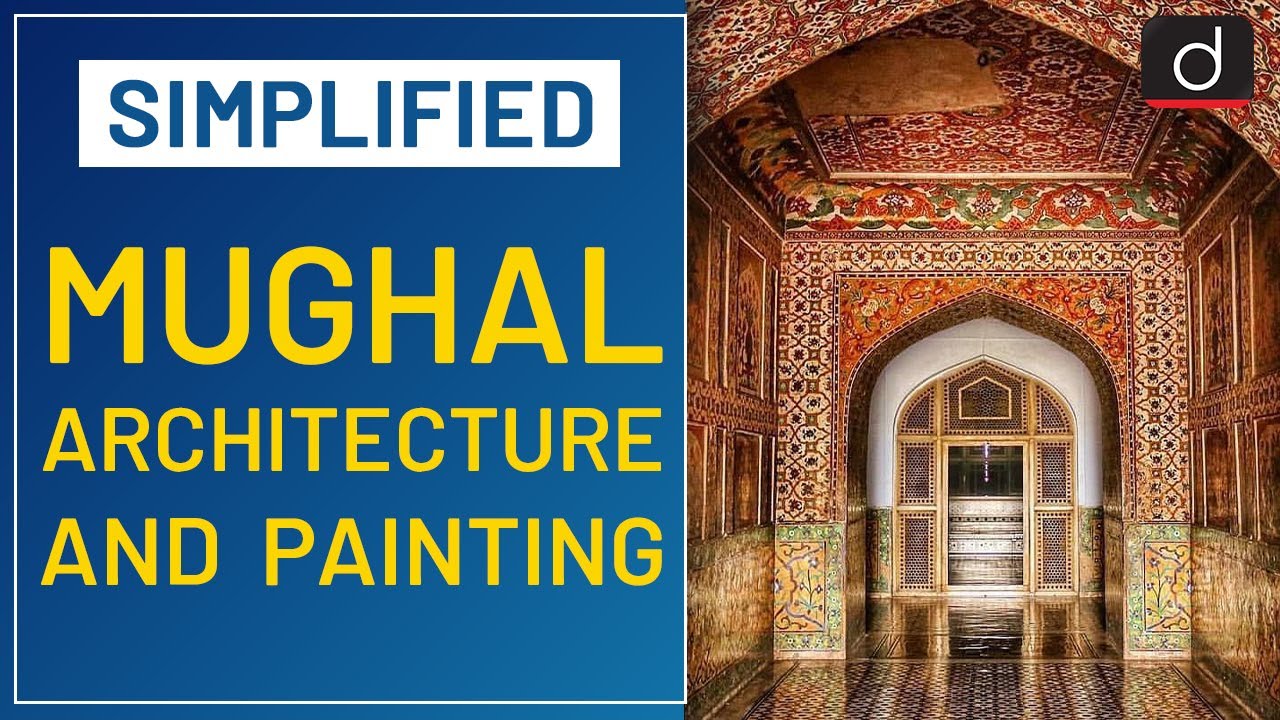
- (b) Jahangir and Shah Jahan encouraged the use of pietra dura, an inlay style using semi-precious stones found in the Taj Mahal and the Moti Masjid (Pearl Mosque).
- (c) The rule of Shah Jahan was the highest point of Mughal building design, shown in the Jama Masjid in Delhi with its large scale, tall minarets, and smooth marble domes.
C. Mughal Painting, Literature, and Music
Mughal court support helped miniature painting, historical writing, and classical music grow into distinct traditions.
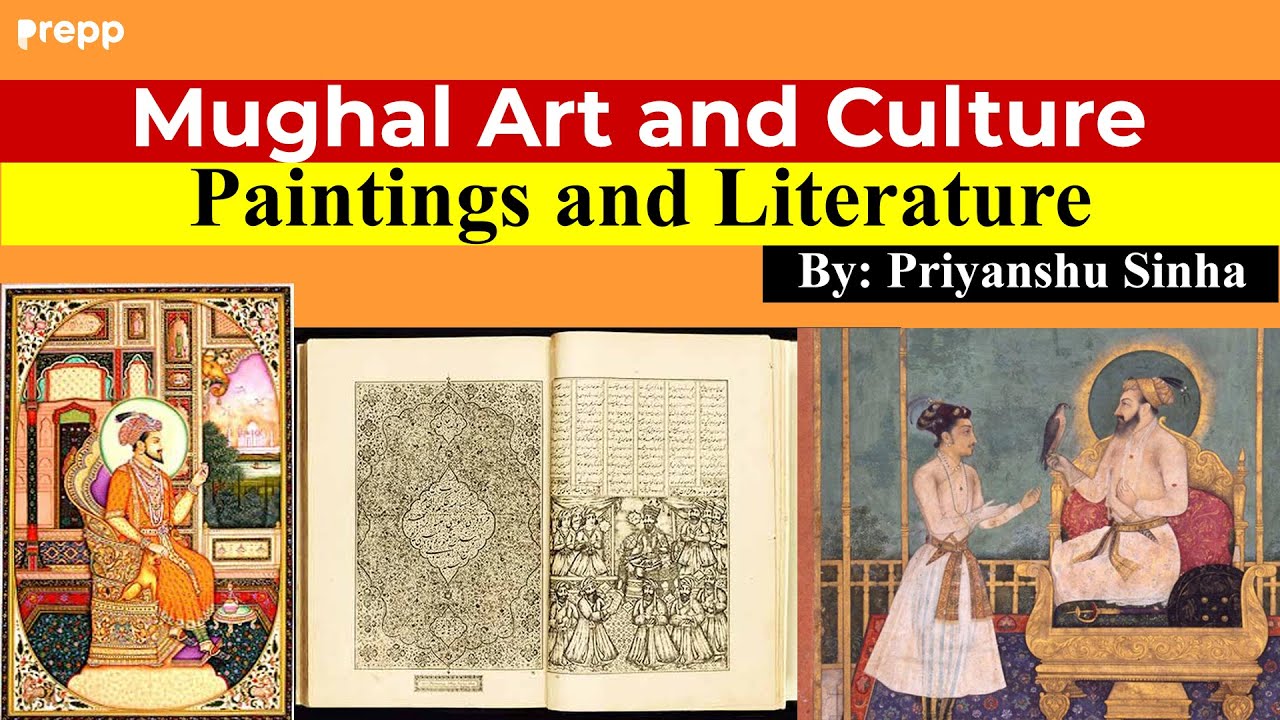
Mughal miniature paintings depicted royal life, history, and natural scenes with great detail. - Mughal Painting (Miniatures): Combined Persian miniature painting with local Indian art. These detailed paintings recorded court life, historic events in books like the Akbarnama, and nature scenes under Akbar and Jahangir.
- Literature: Persian served as the official court language for historical records, while writers translated Sanskrit works. During this time, Urdu developed into a major literary language.
- Music: Courts supported classical musicians who blended Turko-Persian styles into Hindustani classical music, including famous musicians like Tansen.
D. The Enduring Legacy of Mughal Architecture
Mughal design ideas outlasted the empire and influenced regional building styles across India.
- (i) Mughal architectural traditions continued into the and early within regional kingdoms.
- (ii) These styles influenced regional designs, including religious monuments like the Golden Temple (Harmandir Sahib) in Amritsar.
⚡ Quick Revision Capsule: Mughal Cultural Achievements
A simple overview of main artistic areas, features, and key examples from the Mughal period:
| Artistic Field | Key Elements & Techniques | Notable Examples / Figures |
|---|---|---|
| Architecture | Red sandstone, marble domes, charbagh layout, pietra dura stone inlay | Taj Mahal, Agra Fort, Fatehpur Sikri, Jama Masjid |
| Miniature Painting | Fusion of Persian and Indian styles, court scenes, nature studies | Illustrations in the Akbarnama, works under Jahangir |
| Literature | Court histories in Persian, translation of Sanskrit texts, growth of Urdu | Court chronicles, translated texts, Urdu poetry |
| Music | Synthesis of Turko-Persian styles with Hindustani classical music | Court performances by Tansen |
📝 Summary
The Mughal period () was an important era that reshaped the cultural, literary, and architectural traditions of India. Rulers like Babur, Akbar, Jahangir, and Shah Jahan built long-lasting styles in architecture, painting, literature, and music. These achievements are key topics for students preparing for competitive exams studying the fusion of Indian and Turko-Iranian traditions.
🚀 Quick Revision Points
Essential facts to review before examinations:
- (i) The charbagh four-part garden layout was introduced to India by Babur.
- (ii) Akbar built Fatehpur Sikri using architectural styles from Gujarat and Bengal.
- (iii) Pietra dura inlay work reached its peak under Shah Jahan in the Taj Mahal.
- (iv) Historical court events were documented in Persian texts like the Akbarnama.
- 💡 Exam Tip: Focus on linking each Mughal emperor to their specific artistic contribution (e.g., Akbar with Fatehpur Sikri, Jahangir with miniature painting, and Shah Jahan with Pietra Dura marble monuments).
❓ Frequently Asked Questions (FAQ)
Q1: What is the Charbagh style in Mughal architecture?
A1: It is a four-part symmetrical garden layout divided by water channels, introduced to India by Babur.Q2: What is Pietra Dura?
A2: Pietra dura is a decorative technique where cut, polished semi-precious stones are inlaid into marble to form patterns.Q3: Which court language was used by the Mughals for official documentation?
A3: Persian was used as the official court language for historical works like the Akbarnama, while Urdu developed as a popular literary language.