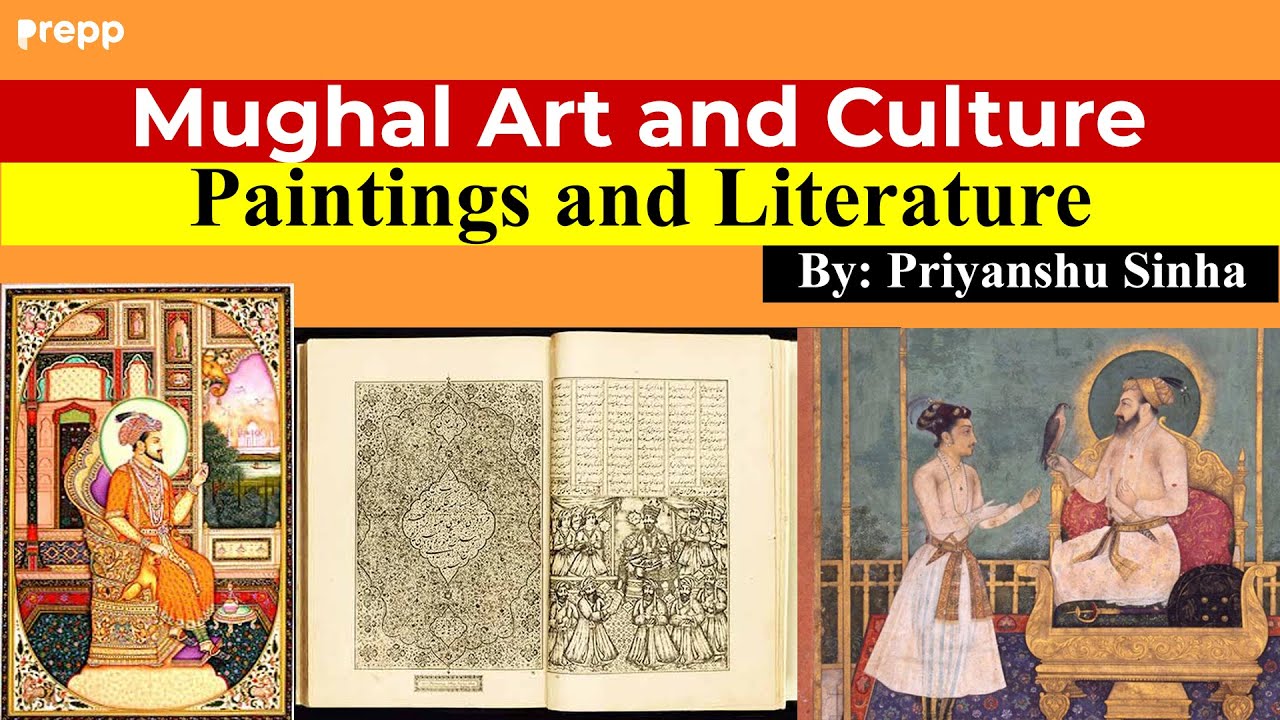
During the Mughal period, the fusion of Persian and Sanskrit deeply influenced governance, intellectual discourse, and literary traditions across the subcontinent. This vibrant era between the and also saw significant growth of regional languages, energized by the spiritual wave of the Bhakti Movement and consistent Mughal patronage. This combination led to timeless masterpieces in poetry, music, and literature. Understanding this cultural synthesis is essential for students preparing for competitive exams because it illustrates how language and culture served as instruments of societal integration.
🎯 In this chapter, you will understand:
- How Persian became the official language of administration and literature during the Mughal period.
- The continued resilience and vitality of Sanskrit scholarship in major intellectual centers like Banaras.
- How the Bhakti Movement and local court patronage fueled the development of regional languages.
- The evolution of Hindustani classical music under imperial support from Akbar to Muhammad Shah.
💡 Why this topic matters: It explains the foundational roots of modern Indian languages, administrative vocabulary, and classical music traditions that continue today.
🧠 Core Idea: The Mughal era was defined by a rich synthesis where Persian statecraft, Sanskrit scholarship, and popular regional movements enriched each other.
Language, Literature, and Music in Mughal India: The Grand Synthesis of Persian, Sanskrit, and Regional Influences ()
The Mughal period stands as a landmark era, characterized by an unprecedented synthesis of Persian administrative norms, Sanskrit scholarly tradition, and burgeoning regional vernaculars. Together, these streams shaped India’s enduring cultural and literary identity.
- (i) Persian rapidly ascended to become the official medium of administration, courtly communication, and high-level literary excellence throughout the empire.
- (ii) Sanskrit vigorously maintained its influential status in premier scholarly hubs like Banaras (Varanasi) and other intellectual centers, continuing classical traditions.
- (iii) The spontaneous flowering of Regional languages, including Hindi, Bengali, Marathi, and Punjabi, was significantly propelled both by the spiritual energy of Bhakti poetry and substantial court patronage from the Mughal nobility and provincial rulers.
Persian and Sanskrit: The Intellectual Cornerstones of Mughal Governance and Scholarship
The institutionalization and acceptance of both Persian and Sanskrit defined the intellectual and administrative framework of the Mughal era, serving as cornerstones of statecraft and philosophical thought.

The Dominant Role of Persian in Mughal Administration and Court Literature
The adoption of Persian went beyond simple communication; it became a core pillar of imperial organization and social distinction, especially following administrative reforms during Akbar’s reign.
- (i) It was adopted widely as the language of the court, official records, and elite communication, spreading rapidly across North India and linking distant administrative units.
- (ii) Persian was essential for precision in revenue record-keeping, such as administrative manuals like Dastur-ul-Amal, and all aspects of statecraft.
- (iii) The period saw an unprecedented flourishing of Persian prose and poetry, led by prominent figures like Shaikh Abul Fazl, author of the Ain-i-Akbari, and the eminent court poet Faizi.
Continuity and Resilience of Sanskrit Scholarship in Intellectual Hubs
Despite the rise of Persian as the language of state, Sanskrit maintained a strong, unbroken lineage, preserving classical intellectual traditions that thrived alongside the Mughal state.
- (a) Sanskrit remained vital and was actively practiced in major scholarly hubs, most notably Banaras (Varanasi), which served as a major center of learning.
- (b) Scholars continued to produce commentaries on classical Sanskrit works in law, philosophy, and religion, sustaining traditional academic systems.
- (c) Meaningful interactions with Persian scholarship occurred in fields like astronomy, medicine, and mathematics, leading to translations and collaborative intellectual work.
The Flourishing of Regional Languages: Catalyzed by Bhakti and Local Patronage
The widespread development of regional vernaculars was a major social and literary milestone. It drew strength from grassroots spiritual movements, particularly the Bhakti Movement, along with encouragement from regional leaders.
Bhakti Movement as the Spiritual Engine for Vernacular Literature
The Bhakti Movement emphasized direct personal devotion, which required simple and accessible local language, giving immense momentum to vernacular literature.
- (i) This movement encouraged rich poetic works in Bengali, Oriya, dialects of Hindi (Braj and Awadhi), Rajasthani, and Gujarati.
- (ii) Many lyrical compositions focused on personal devotion, especially themes centered on divine love involving Krishna, Radha, and devotional concepts known as Saguna Bhakti.
- (iii) Major classical epics and texts, including the Bhagawat Purana and the Ramayana (notably Tulsidas’sRamcharitmanas), were translated and reinterpreted into local languages.
Banaras: The Resilient Center of Sanskrit Intellectual Production
The city of Banaras (Varanasi) served as a principal citadel for classical learning, maintaining its status as the primary center for Sanskrit production during this era.
- (a) The city attracted leading scholarly minds, grammarians, and philosophers from across the subcontinent.
- (b) It was the center for composing, reviewing, and preserving important Sanskrit works on law, rituals, and philosophy.
- (c) Banaras maintained an important intellectual bridge between classical tradition and the realities of Mughal governance.
Literary Fusion at the Mughal Court: Blending Bhakti Poetry and Persian Aesthetics
The open environment of the Mughal court brought together the emotional depth of Bhakti poetry and the structured form of Persian aesthetics.
Prominence of Hindi Poets and the Reach of Court Patronage
This period saw the rise of prominent literary figures whose writings connected courtly audiences with everyday people.
- (i) The poet Tulsidas achieved great prominence through his masterpiece, the Ramcharitmanas, promoting devotion to Rama (Saguna form) using everyday Awadhi.
- (ii) Court-affiliated poets like Khan-i-Khanan Abdur Rahim (one of the imperial Navratnas) combined Persian forms like the ghazal and rubai with local Bhakti traditions.
- (iii) Beyond devotional themes, literature of this era also contained meaningful observations on social issues, including thoughtful critiques of the rigid caste system.
Maturation of Southern and Western Vernacular Literature
Literary expansion occurred right across India, with southern and western regional languages producing enduring classical works.
- (a) Languages such as Malayalam and Marathi reached technical maturity, highlighted by the philosophical writings of Maratha saints like Eknath and Tukaram.
- (b) Punjabi literature gained great vitality through the sacred hymns composed by the Sikh gurus, preserved in the Guru Granth Sahib.
- (c) This broad regional diversity created a rich, multi-faceted national literary fabric.
⚡ Quick Revision Capsule: Key Elements of Mughal Cultural Synthesis
This reference overview outlines how different languages and artistic forms contributed to Mughal culture:
| Domain | Key Languages / Styles | Major Figures & Works |
|---|---|---|
| Imperial Governance | Persian | Abul Fazl (Ain-i-Akbari), Dastur-ul-Amal administrative manuals |
| Classical Scholarship | Sanskrit | Scholars of Banaras, legal commentaries, astronomical translations |
| Devotional Literature | Awadhi, Braj, Bengali, Marathi, Punjabi | Tulsidas (Ramcharitmanas), Tukaram, Guru Granth Sahib |
| Courtly Poetry | Persian & Early Hindi Synthesis | Faizi, Abdur Rahim Khan-i-Khanan (Navratna) |
| Classical Music | Hindustani Classical (Dhrupad, Khayal) | Miyan Tansen, Muhammad Shah 'Rangeela' |
📝 Summary
The Mughal period between the and was a remarkable era of artistic and linguistic blending. Official Persian administration, ancient Sanskrit scholarship, and vibrant regional languages combined to enrich Indian literature, governance, and music. From the detailed chronicle of Ain-i-Akbari and the widespread devotional appeal of Ramcharitmanas to the classical musical ragas created by Tansen, this dynamic period laid the foundation for modern Indian heritage.
🚀 Quick Revision Points
Essential facts to review before examinations:
- (i) Persian was adopted as the official administrative language under Akbar, organizing revenue and imperial governance.
- (ii) Banaras served as the primary center for Sanskrit philosophical and legal scholarship.
- (iii) The Bhakti Movement popularized regional languages like Awadhi, Braj, Bengali, and Marathi through devotional poetry.
- (iv) Tansen elevated Hindustani classical music under Akbar's royal court, while Khayal singing developed under Muhammad Shah in the .
- 💡 Exam Tip: When writing exam answers on Mughal culture, highlight the connection between Persian administrative structures and local devotional movements to explain how both influenced regional languages.
❓ Frequently Asked Questions (FAQ)
Q1: Why did Persian become so prominent during the Mughal era?
A1: Akbar established Persian as the language of court records and government administration, helping connect different parts of the empire through a uniform medium.Q2: How did the Bhakti Movement help grow local regional languages?
A2: Bhakti saint-poets wrote in popular regional languages like Awadhi, Braj, and Marathi so that everyday people could understand devotional teachings without needing knowledge of Sanskrit.Q3: What was Emperor Aurangzeb's actual relationship with music?
A3: While Aurangzeb restricted public court vocal performances for religious reasons, he personally played the veena, supported instrumental music, and saw numerous detailed Persian books written on musical theory during his rule.