The Singphos Rebellion and various North-East Frontier Tribal Movements were key anti-colonial uprisings that took place across Assam and neighboring areas from the to the . These historical events show the strong resistance led by tribal communities against British colonial rules, land takeover, and official control. Learning about these revolts—their causes, leaders, and how they were ended—is very important for students preparing for history exams, helping them understand India's freedom struggles better.
🎯 In this chapter, you will understand:
- The causes, key leader Chief Nirang Phidu, and events of the Singphos Rebellion ().
- Early tribal revolts before , including the Ahoms' Revolt and Khasis' Revolt.
- Major uprisings after , such as the Kukis' Revolt, Tripura revolts, and Zeliangsong Movement.
- The Naga Movement, the Heraka Cult led by Gaidinliu, and smaller regional protests.
💡 Why this topic matters: It explains how indigenous tribes in North-East India fought to protect their land, freedom, and self-rule from British takeover.
🧠 Core Idea: Tribal communities maintained a continuous fight against British taxes, forced labor, and loss of local power between the and .
Singphos Rebellion and North-East Tribal Uprisings: History of Resistance Against British Rule (1830s-1940s)
The North-East Frontier saw a steady wave of organized tribal revolts that challenged both British authority and local exploiters.
This resistance was a set of connected movements where tribal groups protected their land and traditional ways of life from outside control.
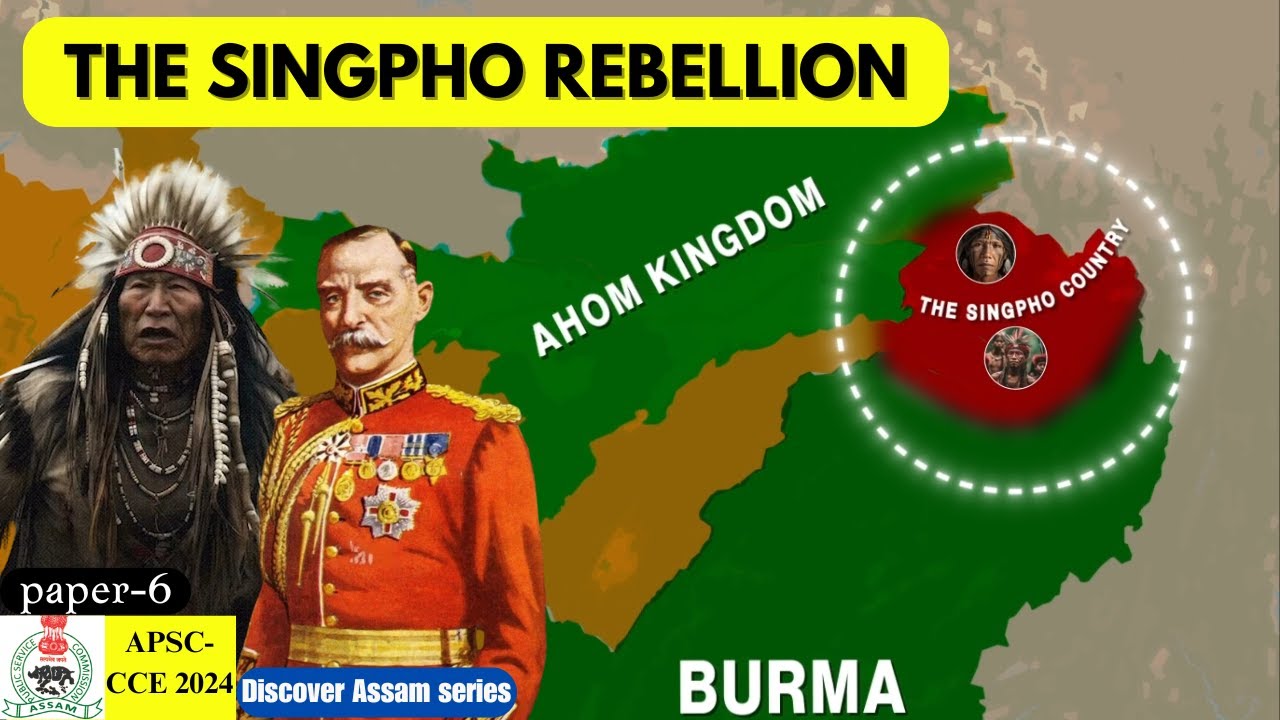
- (i) The earliest major fight was the Singphos Rebellion () in Assam, where rebels attacked British military posts under the guidance of Chief Nirang Phidu.
- (ii) Early tribal revolts before 1857, including the Ahoms' Revolt () and the Khasis' Revolt (), showed strong opposition to British expansion and rules.
- (iii) Fights continued after the revolt through the Kukis' Revolt (), the Naga Movement (), and the Heraka Cult ().
The Singphos Rebellion: Key Anti-British Uprising in Assam (1830s-1843)
The Singphos Rebellion was an important tribal protest in Assam caused by anger over British control, led directly by Chief Nirang Phidu.

Causes and Flashpoint of the Singphos Rebellion
Main problems started as British forces moved further into traditional tribal lands, threatening local self-rule.
- (i) The main cause was ongoing opposition to British political control and new laws forced on Assam.
- (ii) Tensions grew into full conflict after the murder of a British political agent in , bringing strong military action from colonial troops.
- (iii) The revolt was a clear statement of tribal independence to protect traditional ways of living.
Violent Clashes and Suppression of the Singphos Revolt
Although the Singphos fought hard, British troops used strong military force to end the revolt.
- (a) A major event was an attack on a British military post, causing losses to colonial soldiers.
- (b) British officers responded quickly with heavy military actions across the region.
- (c) The uprising ended with stronger British rule over Assam to stop future revolts.
Broader North-East Frontier Tribal Movements: Span, Region, and Core Causes of Resistance
Tribal protests took place across Assam, Manipur, and Tripura both before and after , opposing foreign control and high taxes.
Prominent Tribal Movements Before 1857
Early protests reacted against policies of the East India Company, broken agreements, and land takeover.
- (i) Ahoms' Revolt (): Based in Assam, this protest started when the Company broke its promise to leave after the Burmese War. The revolt was settled by returning parts of the kingdom to local rulers.
- (ii) Khasis' Revolt (): Occurred in the hills between the Jaintia and Garo Hills. Led by Tirath Singh, it opposed British road construction across trade paths.
- (iii) Singphos' Rebellion (): Reached its peak after the event before being stopped by British troops.
Key Tribal Movements After 1857
Later movements combined social changes with political demands against forced work and high taxes.
North-East Tribal Revolts () - Kukis' Revolt (): A major movement in Manipur against forced labor recruitment, known as the Coolie system, during First World War.
- Revolts in Tripura: Protests against high house taxes and outside settlers:
- (a) The protest led by Parikshit Jamatia in against high taxes.
- (b) The Reangs' revolt led by Ratnamani in during the Quit India Movement.
- (c) Protests led by Bharti Singh in the .
- Zeliangsong Movement (): Started in Manipur, bringing together Zemi, Liangmei, and Rongmei tribes against British failure to protect them during the Kuki violence.
- Naga Movement (): Led by Jadonang, aimed at forming an independent Naga raj.
Heraka Cult and Gaidinliu's Contribution
- (i) The Heraka Cult () was a social movement led by freedom fighter Gaidinliu, turning religious ideas into a protest against British rule.
- (ii) Even though stopped by British forces, it led to the creation of the Kabui Naga Association ().
- Other Regional Protests: Protests include the Syntengs () against taxes, Phulaguri peasants (), Saflas (), Kacha Nagas (), and the women's protest in Manipur ().
- Smaller Raids: Raids by Mishmis (), Khampti (), and Lushais () showed continuous local anger against colonial rule.
⚡ Quick Revision Capsule: North-East Tribal Movements (1828–1940s)
Summary table of key tribal uprisings, leaders, locations, and main causes:
| Movement Name | Region & Timeframe | Leader & Primary Cause |
|---|---|---|
| Ahoms' Revolt | Assam () | Gomdhar Konwar; against broken British promises to leave after the Burmese War. |
| Singphos Rebellion | Assam () | Chief Nirang Phidu; against British control; escalated after killing of agent in . |
| Khasis' Revolt | Khasi Hills () | Tirath Singh; opposed British road construction through tribal lands. |
| Kukis' Revolt | Manipur () | Against forced labor under the Coolie system during First World War. |
| Naga Movement & Heraka Cult | Manipur & Naga Hills () | Jadonang & Gaidinliu; demand for independent Naga raj and social reform. |
📝 Summary
The Singphos Rebellion and related North-East tribal uprisings from to form an important chapter of resistance against British rules and local unfairness. These events show strong local leadership, organized resistance, and the heavy military force used by the colonial government in North-East India.
🚀 Quick Revision Points
Essential facts to review before examinations:
- (i) The Singphos Rebellion () in Assam was led by Chief Nirang Phidu.
- (ii) The Ahoms' Revolt () and Khasis' Revolt led by Tirath Singh were key pre-1857 events.
- (iii) The Kukis' Revolt () fought against forced labor under the Coolie system.
- (iv) Rani Gaidinliu led the Heraka Cult in the , turning a religious group into anti-colonial resistance.
- 💡 Exam Tip: Remember the timeline split: early revolts (Ahoms, Khasis, Singphos) focused on British annexation; post-1857 revolts (Kukis, Naga, Heraka) opposed forced labor, land loss, and high taxes.
❓ Frequently Asked Questions (FAQ)
Q1: Who led the Singphos Rebellion in Assam?
A1: The rebellion was led by Chief Nirang Phidu during the to against British expansion.Q2: What caused the Kukis' Revolt (1917–19)?
A2: It was caused by British forced labor recruitment, known as the Coolie system, during the First World War.Q3: What was the role of Gaidinliu in the Heraka Cult?
A3: Rani Gaidinliu led the Heraka Cult in the , transforming it into an organized political movement against British rule in the Naga hills.