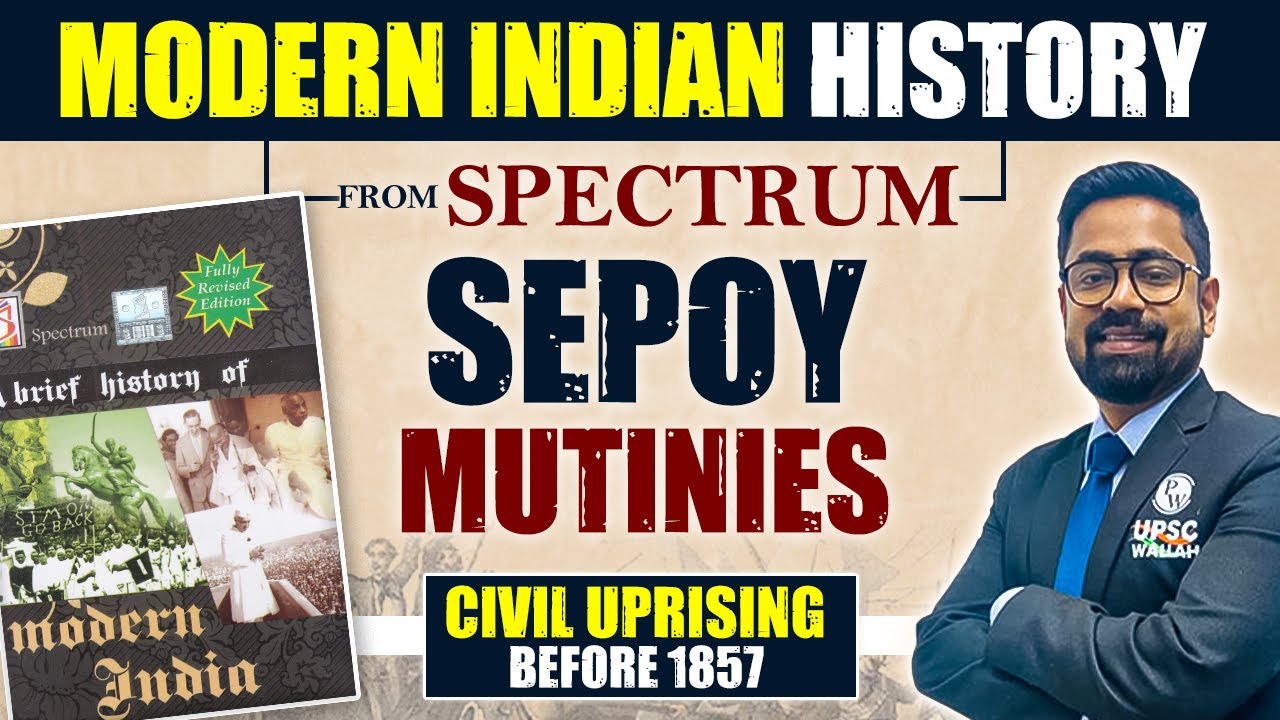
The Causes of Sepoy Mutinies record the deep-seated grievances and growing discontent among Indian soldiers against the British East India Company in the decades before the major milestone of the Great Revolt of 1857. These local rebellions show key problems like racial discrimination, deep religious conflicts, and unfair British exploitation inside the military, making them very useful for students learning history. Studying these early events helps us understand the true roots of India's first large armed freedom movement.
🎯 In this chapter, you will understand:
- The underlying military and social causes of early sepoy mutinies.
- The key timelines and major uprisings from to .
- How religious and cultural interference sparked conflict in the armed forces.
- The historical connection between early rebellions and the Revolt of 1857.
💡 Why this topic matters: It highlights how early localized resistance paved the way for a unified national revolt against foreign rule.
🧠 Core Idea: Systemic inequality, unfair pay, and cultural disrespect eroded the loyalty of Indian sepoys over decades.
📌 Catalysts and Important Sepoy Mutinies Chronicling Unrest Before the 1857 Revolt in India
The ongoing complaints of Indian sepoys formed the main foundation for early revolts against British rule.
In the years before the 1857 Revolt, sepoys faced constant racial bias, lower pay, restrictions on their faith, and harsh treatment, which gradually created anger across military camps in India.
- (i) Economic and Promotional Disparity: Sepoys faced clear discrimination in pay scales and promotions, which were saved mainly for British soldiers despite similar work.
- (ii) Mistreatment by Officials: Arrogant British officers frequently mistreated sepoys, hurting their morale and trust.
- (iii) Loss of Allowances: The military refused to pay the extra Foreign Service Allowance (or Bhatta) for hard campaigns in distant areas like Sindh and Punjab.
- (iv) The General Service Enlistment Act (): Enforced by Lord Canning, this law required new recruits to serve overseas if needed. High-caste Hindu sepoys strongly opposed sea travel, believing it violated their religious beliefs and caste purity.
- (v) Clash of Faith and Service: British rules on uniforms and grooming repeatedly interfered with the sepoys' religious beliefs, forcing a choice between duty and faith.
- (vi) Shared Civilian Distress: Sepoys were closely tied to common people, so they felt the same social, economic, and religious grievances caused by heavy British land taxes and policies.
📌 Key Sepoy Mutinies Timeline: Precursors to the Great Revolt of 1857
A chain of local revolts broke out between the late 18th century and mid-19th century under Company rule.

Mutiny in Bengal (): The Earliest Show of Resistance
The Mutiny in Bengal was one of the earliest recorded soldier revolts in the East India Company army, happening right after the Battle of Buxar in .
- (i) First Signs of Discontent: This event marked the first organized military pushback against the British East India Company.
- (ii) Sparked Resistance: It briefly challenged the rising power of British authority in Bengal.
- (iii) Inspiration for Later Revolts: Though crushed quickly, the courage shown here inspired later uprisings across India.
Vellore Mutiny (): Religious and Cultural Interference
The Vellore Mutiny of was a violent outbreak inside Vellore Fort, caused by British interference in religious and social practices.
- (a) The Dress Code Catalyst: The immediate cause was a new dress code that banned caste marks and earrings while introducing a European-style round hat, which violated sepoy traditions.
- (b) Symbol of Sovereignty: Defying the British, the soldiers raised the flag of the ruler of Mysore, the son of Tipu Sultan.
- (c) Brutal Retribution: British forces put down the rebellion with heavy force, leading to high casualties among Indian soldiers.
Barrackpore Mutiny of the 47th Native Infantry (): Overseas Service Issue
The revolt of the 47th Native Infantry at Barrackpore in started over forced overseas deployment during the First Anglo-Burmese War.
- (i) Religious Taboo Refusal: Soldiers refused to travel by sea due to social and religious taboos (Kala Pani), fearing they would lose their caste status.
- (ii) Harsh British Punishment: The Company disbanded the regiment and executed or jailed many soldiers.
- (iii) Highlighting Mistrust: The event showed growing mistrust between British officers and Indian troops regarding cultural practices.
Revolt of the Grenadier Company (): Continuing Unrest
The Grenadier Company revolted in Assam in , showing that dissatisfaction was spreading to far-off units.
- (i) Grievances Fueling Revolt: Bad weather, poor supplies, and service issues in Assam caused the uprising.
- (ii) Symbolic Resistance: Even though it was small, it showed that anger was present in many different army units.
- (iii) Swift Suppression: The British military suppressed the company quickly to prevent wider trouble.
Sholapur Mutiny (): Deep-Rooted Resentment
The uprising in Sholapur proved that anger among sepoys was widespread across different army regions.
- (a) Poor Treatment Catalyst: Delayed pay and poor treatment by officers sparked this conflict.
- (a) Resentment Against Policies: The revolt showed clear opposition to unfair army policies that favored British personnel.
- (b) Suppression and Executions: British forces crushed the rebellion and executed the main leaders.
Other Small-Scale Mutinies (): Rising Tide of Dissent
From to , several smaller sepoy mutinies took place across different regiments.
- 34th Native Infantry () – Protested against cuts to their Bhatta (allowance) when sent to Sindh.
- 22nd Native Infantry () – Opposed tough service rules in newly conquered Punjab territories.
- 66th Native Infantry () – Revolted due to anger over harsh treatment by British officers.
- 37th Native Infantry () – Crushed quickly by British forces, but showed continuing tension inside the army.
⚡ Quick Revision Capsule: Pre-1857 Sepoy Mutinies
A fast overview of early military revolts, their causes, and primary locations.
| Year & Event | Key Causes | Location & Impact |
|---|---|---|
| Bengal Mutiny () | Pay issues right after Battle of Buxar | Bengal; early sign of military resistance |
| Vellore Mutiny () | New dress code, removal of caste marks, and round hat | Vellore Fort; Mysorean flag raised |
| Barrackpore Mutiny () | Forced overseas travel (Kala Pani) in Burmese War | Barrackpore; 47th Native Infantry disbanded |
| Grenadier Revolt () | Harsh conditions and low supplies | Assam; early regional resistance |
| Sholapur Mutiny () | Delayed pay and poor officer treatment | Sholapur; leaders executed |
📝 Summary
Although early sepoy mutinies between and were localized and suppressed by the British East India Company, they revealed major military grievances and growing anti-British sentiment. Studying them helps students prepare for examinations by explaining the background of the Great Revolt of 1857.
🚀 Quick Revision Points
Essential facts to review before examinations:
- (i) Early revolts were triggered by pay gaps, bad treatment, and religious interference.
- (ii) The General Service Enlistment Act of made overseas service mandatory.
- (iii) The Vellore Mutiny () was caused by dress codes that violated sepoy traditions.
- (iv) The Barrackpore revolt () was tied to the fear of crossing the sea (Kala Pani).
- 💡 Exam Tip: Focus on the specific triggers for Vellore () and Barrackpore (), as exam questions often test religious dress codes and the Kala Pani taboo.
❓ Frequently Asked Questions (FAQ)
Q1: What was the main cause of the Vellore Mutiny in 1806?
A1: It was caused by new dress regulations that banned caste marks and required a European-style hat.Q2: Why did sepoys refuse overseas service in 1824?
A2: High-caste soldiers believed crossing the sea (Kala Pani) would cause them to lose their caste status.Q3: What was the General Service Enlistment Act of 1856?
A3: Passed by Lord Canning, it required all new recruits to serve overseas when directed by the British East India Company.