The defeat of the Maratha Empire against the British marked a major turning point in Indian History, shifting power from local rulers to a growing colonial state. Weak leaders, deep division among Maratha chiefs, and a failure to update military and administrative methods allowed the British East India Company to gain control. This historical study is important for students preparing for competitive exams, as it highlights the political, military, and economic factors that led to colonial rule in India during the and .
🎯 In this chapter, you will understand:
- The main political and administrative causes behind the fall of the Maratha Empire.
- How internal rivalries among Maratha chiefs weakened central authority in Pune.
- Military and technological gaps between Maratha armies and British forces.
- The role of British diplomacy, espionage, and economic strength in gaining control.
💡 Why this topic matters: It explains how the largest native empire in 18th-century India lost power to a foreign trading company, reshaping the political map of South Asia.
🧠 Core Idea: A decentralized state with outdated military and financial systems could not withstand a modern, organized, and financially strong colonial power.
📌 Comprehensive Reasons Behind the Maratha Empire's Defeat Against British Colonial Supremacy (–)
The fall of the Maratha Empire came from a mix of poor leadership, internal disunity, outdated military systems, and strong British diplomacy.
The Maratha Confederacy, which once aimed to build a nationwide Indian empire, gradually collapsed due to internal weaknesses and the steady growth of the English East India Company across the country.
- (i) Inept Leadership: A lack of unified and clear-headed leaders weakened governance and stopped quick decisions during major crises.
- (ii) Defective State Structure: The weak setup of the Maratha state lacked a strong central system, leading to its eventual breakdown.
- (iii) Political Disunity: Constant rivalries among Maratha chiefs broke their unity and created ongoing internal instability.
- (iv) Inferior Military System: Old warfare methods and a lack of modern weapons left Maratha forces unprepared against disciplined British troops.
- (v) Weak Economic Base: An unstable financial system could not support long, costly wars or fund government improvements, cutting off long-term resistance.
- (vi) Superior British Strategy: The British used clever diplomacy and detailed spy networks to keep an advantage in military and political moves.
- (vii) Embrace of Innovation: The English focused on modernization and structured administration, while Maratha leadership stayed tied to older ways.
📌 Critique of Inept Leadership and Decision Making in the Maratha Empire
The lack of strong, unified leaders after the early generations of Maratha rulers was a primary reason for their military defeat by the British.

Contrasting Leadership: Maratha Instability Versus British Administrative and Military Acumen
The British relied on organized governance and a steady supply of trained officers, while the Maratha region suffered under leaders who lacked shared goals and focused on short-term gains.
- (i) Visionary Vacuum: Rulers like Bajirao II (the last Peshwa), Daulatrao Sindhia, and Jaswantrao Holkar often fought among themselves, making it easy for outside powers to divide them.
- (ii) British Professionalism: In contrast, the British East India Company placed skilled leaders like Arthur Wellesley, John Malcolm, and Mountstuart Elphinstone in charge, who acted with systematic coordination.
- (iii) Despotic Fragility: The autocratic setup of the late Maratha system failed to adapt to the organized administrative and military methods of British colonial power.
📌 Analysis of the Defective Structure and Internal Weakness of the Maratha State
The internal Maratha administration lacked central cohesion, leaving it open to political pressure and influence from the British.
Institutional Weakness and the Failure to Build a Unified Administrative System
The Maratha Empire never became a single, centralized state. Instead, it stayed a loose grouping of rulers unable to build steady control across all regions—a weakness exploited by the British.
- (i) Absence of Uniformity: There was no single, nationwide system for laws, court systems, or land tax collection, causing regional confusion.
- (ii) Neglect of Development: Little attention was paid to public welfare, civic projects, or widespread education, which limited long-term social progress.
- (iii) Fragile National Identity: Without a shared administrative identity, regional loyalties mattered more than the empire as a whole, making the Maratha state easy to break apart.
📌 The Destructive Political Disunity and Fragmentation Among Maratha Chiefs
The Maratha Empire functioned like a loose coalition of regional leaders rather than a single nation, allowing the British to fuel local rivalries.
The Debilitating Role of Chiefs in Undermining Central Authority and Unity
The independence and individual goals of powerful family lines weakened central control from Pune, stopping any shared plan against the British East India Company.
- (i) Semi-Independent Rulers: Regional houses like the Holkars of Indore, the Sindhias of Gwalior, the Gaikwads of Baroda, and the Bhonsles of Nagpur acted independently, putting their own regional interests ahead of the empire.
- (ii) Erosion of Central Power: Fights over influence damaged the central standing of the Peshwa, blocking attempts to organize combined financial and military strength.
- (iii) British Strategic Advantage: These ongoing feuds allowed the British to isolate and defeat Maratha factions one at a time using their divide-and-rule policy.
📌 Inferior Military Strategy, Technology, and System of the Maratha Forces
Though Maratha armies had strong spirit and large numbers, they lacked modern training, steady discipline, and advanced equipment compared to British East India Company forces.
Critical Military Weaknesses and Failure to Adopt Modern Warfare Techniques
Relying on older battle techniques and delaying the use of updated military tech meant Maratha military units were often outmatched on the battlefield in both discipline and firepower.
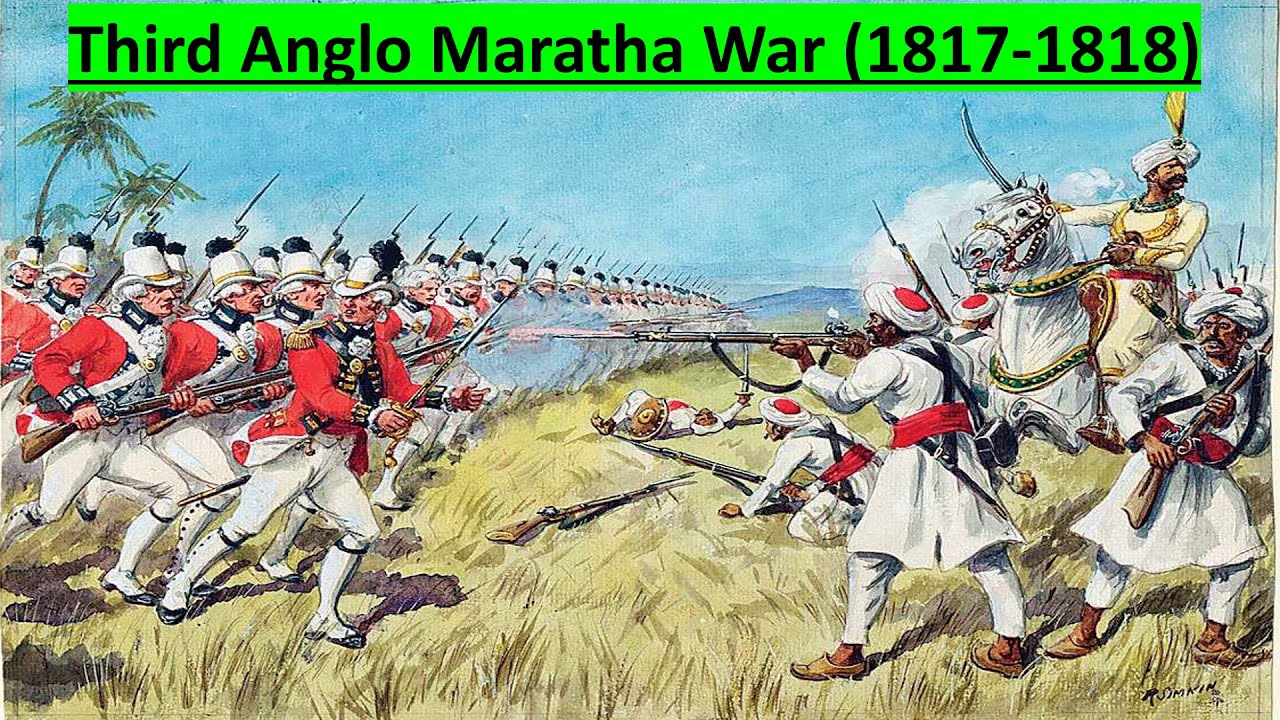
Comparison of 18th-century battlefield line formations and artillery setups. - Divided Command: A split leadership structure slowed down reaction times for Maratha forces during active battles.
- Artillery Gaps: The Marathas fell behind in modern cannon production and gunpowder methods compared to European technology.
- Outdated Tactics: Leaders failed to fully incorporate disciplined infantry drills and systematic siege techniques into their regular field strategies.
📌 Instability in Economic Policies and the Fragile Fiscal Management
Weak economic planning and irregular revenue sources limited the Maratha Empire from updating its military and funding prolonged resistance against the commercially backed British power.
Economic Failures: Industrial Stagnation and Weak International Trade
The Maratha state relied mainly on traditional land revenue and tax collections like Chauth and Sardeshmukhi, without building industry or trade networks matching the global reach of the British East India Company.
- (i) Industrial Stagnation: A lack of local arms manufacturing meant the Maratha economy relied on outside suppliers for weapons and supplies.
- (ii) Weak Trade Policy: No major overseas trade system was built, which reduced the steady growth of wealth and state resources compared to the English.
- (iii) Poor Fiscal Management: Irregular collection methods and a lack of long-term budgeting caused sudden money shortages during long campaigns.
📌 The Superiority of British Diplomacy, Espionage, and Strategic Exploitation
The British excelled at political moves, using negotiation, intelligence, and treaties to separate Maratha leaders before engaging in battles.
Diplomatic and Intelligence Advantage: Isolating and Weakening Maratha Resistance
The British East India Company used treaties and spy networks to gain an advantage before starting major military actions.
- (i) Isolation Tactics: British diplomats signed individual treaties like the Treaty of Bassein () with separate Maratha chiefs, keeping them from forming an alliance.
- (ii) Espionage Network: Detailed spy channels gave the British advance information about Maratha movements, plans, and inner disputes.
- (iii) Consistent Advantage: Gathering information combined with diplomatic pressure helped the British break down defense plans early on.
📌 English Embrace of Progress and Innovation Versus Maratha Stagnation
The gap between modern European administrative methods and the older political models of the Marathas created a big operational difference over time.
Impact of Enlightenment Thinking, Colonial Expansion, and Scientific Military Edge
Influenced by scientific developments in Europe, the British used structured record-keeping, detailed maps, and organized administration, which traditional Maratha leadership did not adopt.
- (i) Scientific Outlook: The British focused on mapmaking, organized transport, and disciplined logistics for campaign planning.
- (ii) Global Strategic Superiority: Worldwide trade routes provided the British with financial backup that a regional power could not match.
- (iii) Maratha Resistance to Reform: Hesitation to update political structures kept Maratha leadership tied to older practices.
⚡ Quick Revision Capsule: Key Factors in the Maratha Defeat
This table compares the major structural differences between the Maratha Empire and the British East India Company during the 18th and 19th centuries.
| Factor | Maratha Empire Position | British East India Company Position |
|---|---|---|
| Leadership Structure | Divided regional leaders with internal disputes (Peshwa vs Chiefs) | Centralized military command with trained administrators |
| State System | Loose Maratha Confederacy without uniform laws | Organized administrative system with standardized procedures |
| Military Tactics | Traditional cavalry with irregular artillery updates | Disciplined line infantry, modern artillery, and naval support |
| Economic Base | Relied on traditional taxes like Chauth and land revenue | Backed by global trade routes and growing industrial finance |
| Diplomacy & Spies | Regional alliances affected by local rivalries | Structured spy networks and targeted treaties like Bassein () |
📝 Summary
The fall of the Maratha Empire across the and was caused by internal flaws, including weak central leadership, regional disunity, limited industrial backing, and outdated military systems. The British East India Company used these weaknesses to expand its political authority. Understanding these events as described in History of Modern India helps students analyze how power shifted during this period of Indian history.
🚀 Quick Revision Points
Essential facts to review before examinations:
- (i) The Peshwa lost central control, allowing regional leaders like the Holkars and Sindhias to act independently.
- (ii) Lack of uniform legal and tax systems made long-term state planning difficult.
- (iii) The British used separate treaties to keep Maratha chiefs from uniting.
- (iv) Industrial gaps left Maratha forces dependent on imported weapons.
- 💡 Exam Tip: Focus on how the Treaty of Bassein () split the Maratha leadership and created direct British control over Pune's political affairs.
❓ Frequently Asked Questions (FAQ)
Q1: What was the primary reason for internal conflicts in the Maratha Empire?
A1: The growth of semi-independent power bases among chiefs like the Sindhias and Holkars weakened the central authority of the Peshwa in Pune.Q2: How did the Maratha economic model affect their war efforts?
A2: Reliance on traditional taxes like Chauth without building an industrial manufacturing base made it hard to finance long military campaigns.Q3: Why was British military strategy more effective during this period?
A3: As outlined in Modern Indian History, the British combined disciplined infantry lines, modern artillery, and structured intelligence networks with unified command.