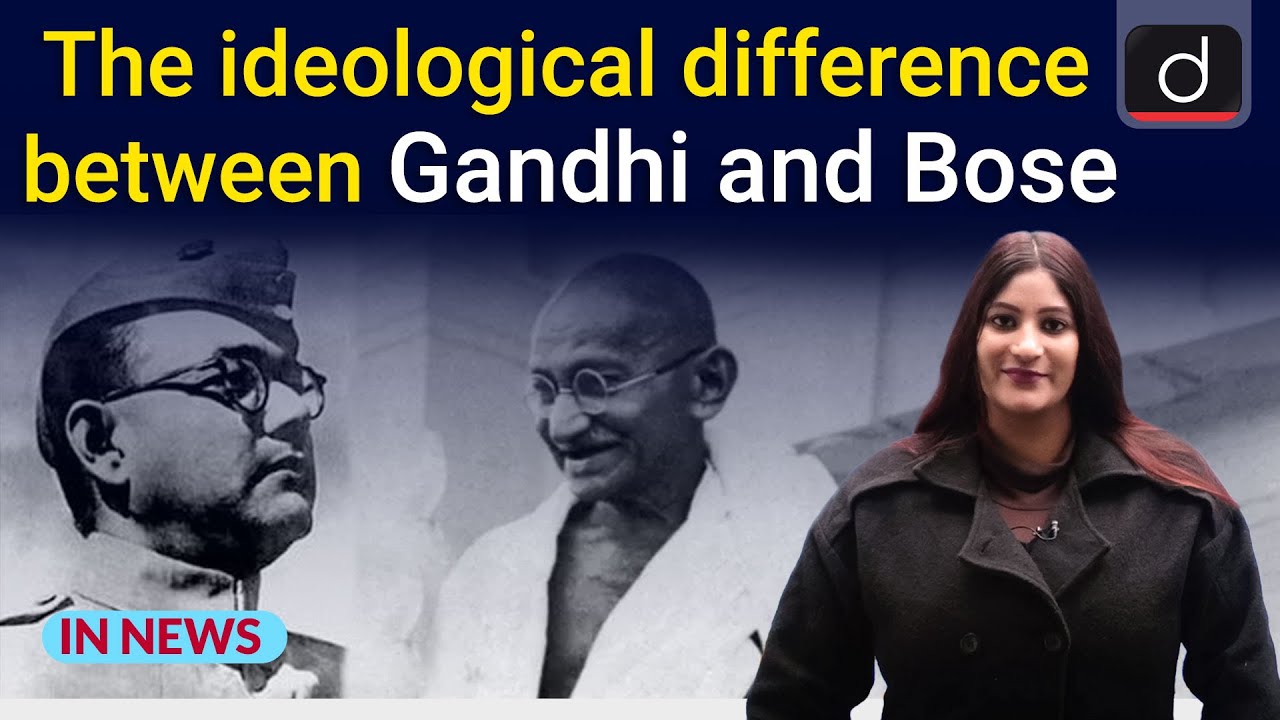
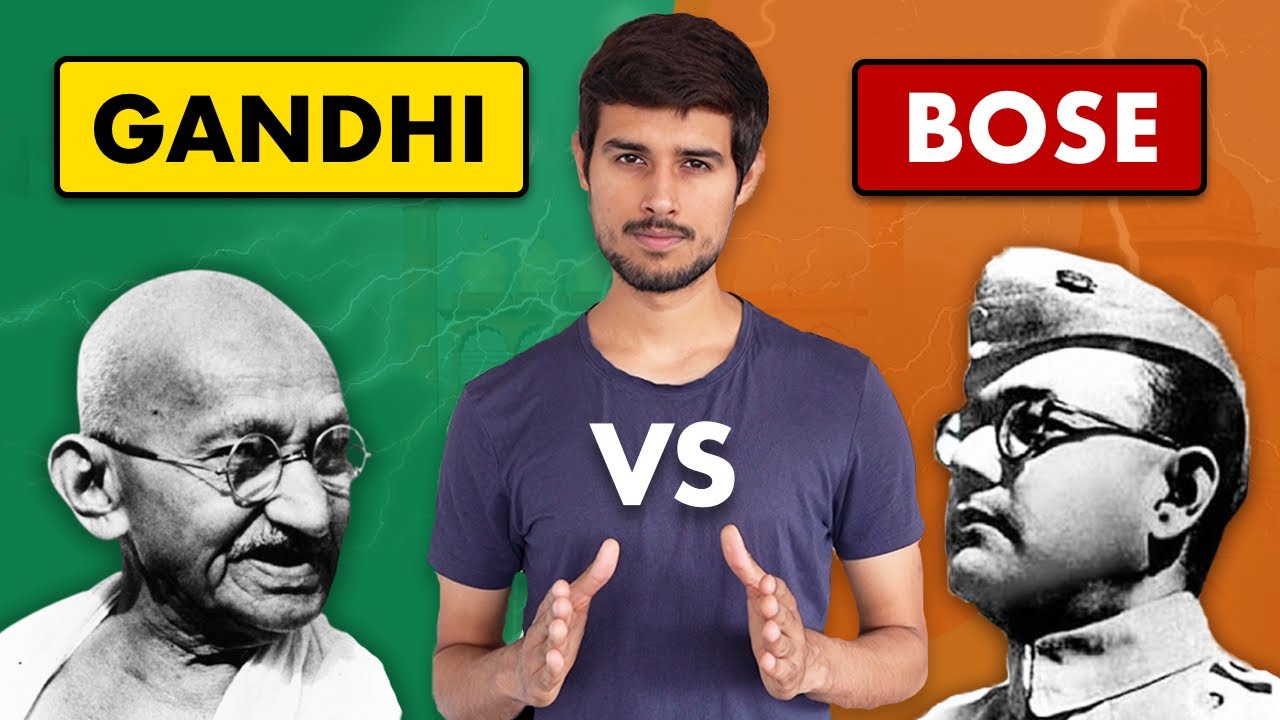
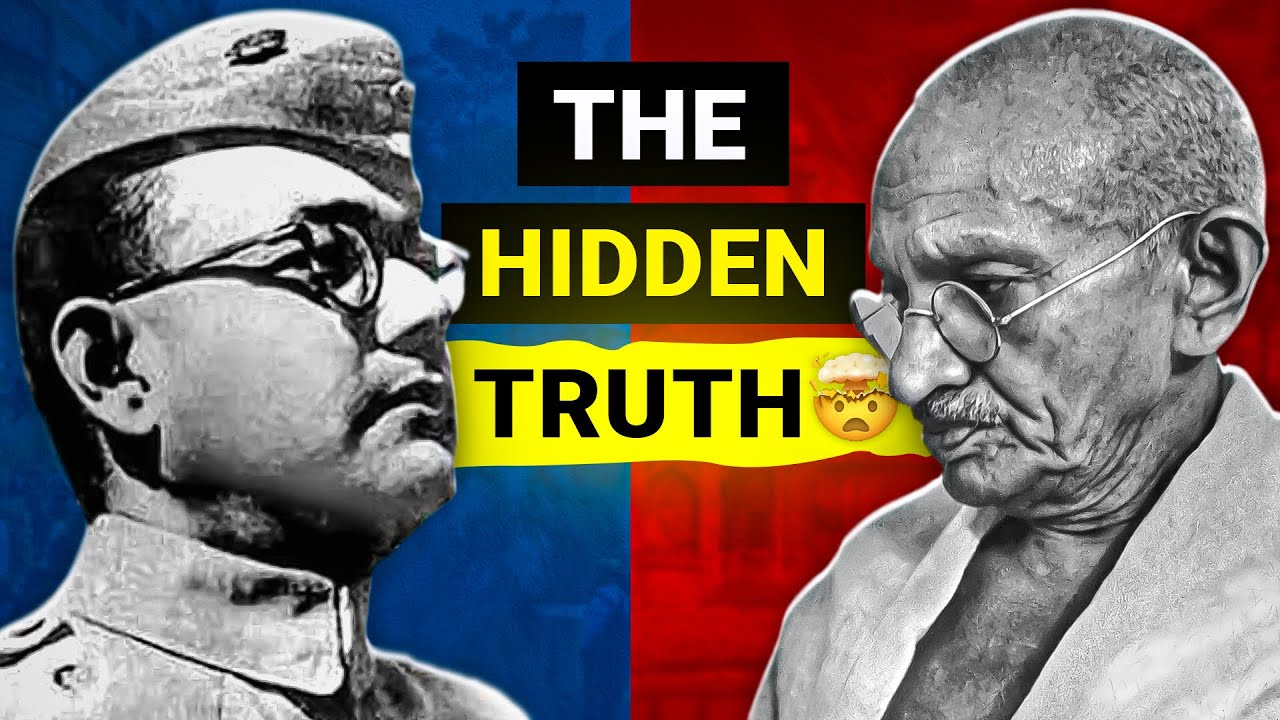
This detailed analysis explores the ideological conflict between Mahatma Gandhi and Subhas Chandra Bose, providing essential insights for civil services students and history enthusiasts. By examining the period, we uncover how non-violence and militant resistance shaped the Indian Independence Movement and political discourse under the Government of India Act era.
🎯 In this chapter, you will understand:
- The core philosophical debate between non-violent protest and armed struggle.
- How Gandhian village economics differed from Bose's industrial development plan.
- The ethical debate surrounding international alliances during World War II.
- Differing visions for India's social reform, caste system, and national education.
💡 Why this topic matters: Understanding the ideological dynamic between Gandhi and Bose shows how two distinct strategies worked toward the shared goal of Indian liberation.
🧠 Core Idea: While Gandhi relied on moral authority, non-violence, and village self-reliance, Bose advocated direct military action, state-led industrialization, and total social reorganization.
📌 Gandhi vs Bose: Ideological Differences and Historical Significance
The ideological journey of Gandhi and Bose represents the dual heartbeat of a nation seeking liberation.
The story of India's freedom struggle is incomplete without understanding the complex relationship between Mahatma Gandhi and Subhas Chandra Bose. While their methods differed significantly, both shared the single goal of establishing a free and independent nation. This narrative explores their mutual respect alongside the deep strategic differences that defined their legacies.
- (i) The saw the growth of these two separate approaches, creating a varied foundation for Indian political strategy.
- (ii) Historical accounts show that while they argued over methods, both were guided by deep patriotism.
- (iii) Their discussions offer a complete picture for exam preparation on the history of the Indian National Congress.
Divergent Paths to Independence: Methods, Respect, and Economic Vision
The core of their division centered on how each leader viewed socialist economics and the ethical approach to opposing British rule.
The Paradox of Mutual Respect and Personal Regard
Despite their public disagreements, a lasting personal regard existed between them, reflected in titles that remain famous today.
- (i) Gandhi's Praise: Gandhi famously called Bose a "Prince among Patriots," recognizing his outstanding bravery against foreign rule.
- (ii) Bose's Respect: It was Bose who first called Gandhi the "Father of the Nation" during a radio broadcast from Singapore, honoring his ability to unite the masses.
Socialist Ideals: Agrarian vs Industrial Modernity
Both leaders supported socialist ideas, but their economic plans for India's future contrasted sharply.
The Gandhian Village Model
- (i) Supported decentralized, village-based economic growth.
- (ii) Focused on self-reliance (Atmanirbhar) using Khadi and local village industries.
The Bose Industrial Strategy
- (i) Favored modern industrialization and central planning modeled after state-led growth.
- (ii) Believed modern technology was essential to eliminate poverty quickly.

⚡ A Clash of Strategies: Non-Violence versus Armed Resistance
The most widely debated difference was the ethical use of force and how to handle global relationships during .
Ahimsa versus The Sword: The Struggle for Liberty
The practical difference between Gandhi's moral strategy and Bose's military organization created two active paths toward independence.
- (i) Gandhi's Philosophy: Built on Ahimsa (non-violence) and Satyagraha (truth-force), holding that civil protest was a moral action that would persuade the oppressor.
- (ii) Bose's Militancy: Bose argued that non-violence alone could not overcome an armed empire. He led the Indian National Army (INA) to achieve freedom through military action.
Ethics of Alliances: The Means and the Ends
Their views on international relations during global conflicts highlighted a choice between pragmatic strategy and strict ethical principles.
- (i) Bose's Pragmatism: Followed the principle of seeking help from any power that opposed British rule, forming alliances during the war to weaken imperial control.
- (ii) Gandhi's Principles: Refused alliances with authoritarian or fascist regimes, maintaining that the methods used to gain freedom must remain morally clean.
🏛️ Visions of Society: Governance, Caste, and Education
In addition to political freedom, both leaders aimed to reform society, though their administrative frameworks differed.
Forms of Government: Democracy and Authority
The structure of government for free India ranged from complete village democracy to strong central control.
- (i) Gandhi's Ramrajya: A decentralized system where primary power rested in self-governing local villages (Gram Swaraj).
- (ii) Bose's Vision: Envisioned a period of firm national leadership to build discipline, unity, and rapid stability before transitioning fully.
Social Justice: Caste, Religion, and Women's Roles
Both leaders fought for social equality, addressing long-standing social issues from different angles.
- (a) The Caste Question: Gandhi focused on ending untouchability while reforming traditional social duties; Bose rejected the caste system entirely and promoted inter-caste marriage.
- (b) Women's Empowerment: Gandhi brought women into public mass movements; Bose created the Rani of Jhansi Regiment, an all-female combat unit within the INA.
Educational Philosophies: Spiritual vs Technical
Educating Indian youth was a priority for both, focusing either on practical crafts or advanced scientific study.
- (i) Nai Talim: Gandhi suggested holistic learning (Nai Talim) that combined practical work with character building in local languages.
- (ii) Technical Mastery: Bose prioritized higher technical training and international study to support rapid industrial development.
⚡ Quick Revision Capsule: Gandhi vs Bose Comparison
A side-by-side comparison of the core philosophies, methods, and visions of Mahatma Gandhi and Netaji Subhas Chandra Bose.
| Topic | Mahatma Gandhi | Subhas Chandra Bose |
|---|---|---|
| Primary Method | Non-violence (Ahimsa) & Truth-force (Satyagraha) | Armed resistance & Military organization (INA) |
| Economic Model | Decentralized village economies & local crafts | State-directed heavy industry & central planning |
| Foreign Diplomacy | Strict ethical standards; rejected fascist alliances | Pragmatic alliances with opposing world powers |
| Governance Goal | Decentralized local self-rule (Gram Swaraj) | Strong central leadership for quick nation-building |
| Educational Focus | Practical craft work & character building (Nai Talim) | Advanced science, technology, and industry training |
📝 Summary
The ideological debate between Mahatma Gandhi and Subhas Chandra Bose highlights the varied strategies that shaped the independence movement up to . Understanding this balance is central to studying modern Indian history. While Gandhi supplied moral direction and mass civil movement, Bose brought direct military pressure and an industrial plan. Together, their efforts helped secure the freedom of the nation.
🚀 Quick Revision Points
Key facts to review before examinations:
- (i) Gandhi emphasized Ahimsa and moral civil resistance through public movements.
- (ii) Bose created the Indian National Army to challenge British rule directly.
- (iii) Economic visions differed between village self-reliance and central industrial planning.
- (iv) Both leaders maintained high personal respect despite their strategic differences.
- 💡 Exam Tip: Focus on comparing their approaches to economic planning, foreign strategy, and social reform for essay and history questions.
❓ Frequently Asked Questions (FAQ)
Q1: What was the main strategic disagreement between Gandhi and Bose?
A1: Gandhi advocated non-violent civil disobedience (Satyagraha), while Bose believed armed struggle through the INA was necessary to end foreign rule.Q2: How did their economic plans for India differ?
A2: Gandhi favored self-sufficient village economies (Gram Swaraj) focused on spinning and local crafts, whereas Bose supported modern heavy industry and state planning.Q3: Did Gandhi and Bose respect each other personally?
A3: Yes. Bose called Gandhi the "Father of the Nation" in a radio broadcast, and Gandhi praised Bose as a "Prince among Patriots."