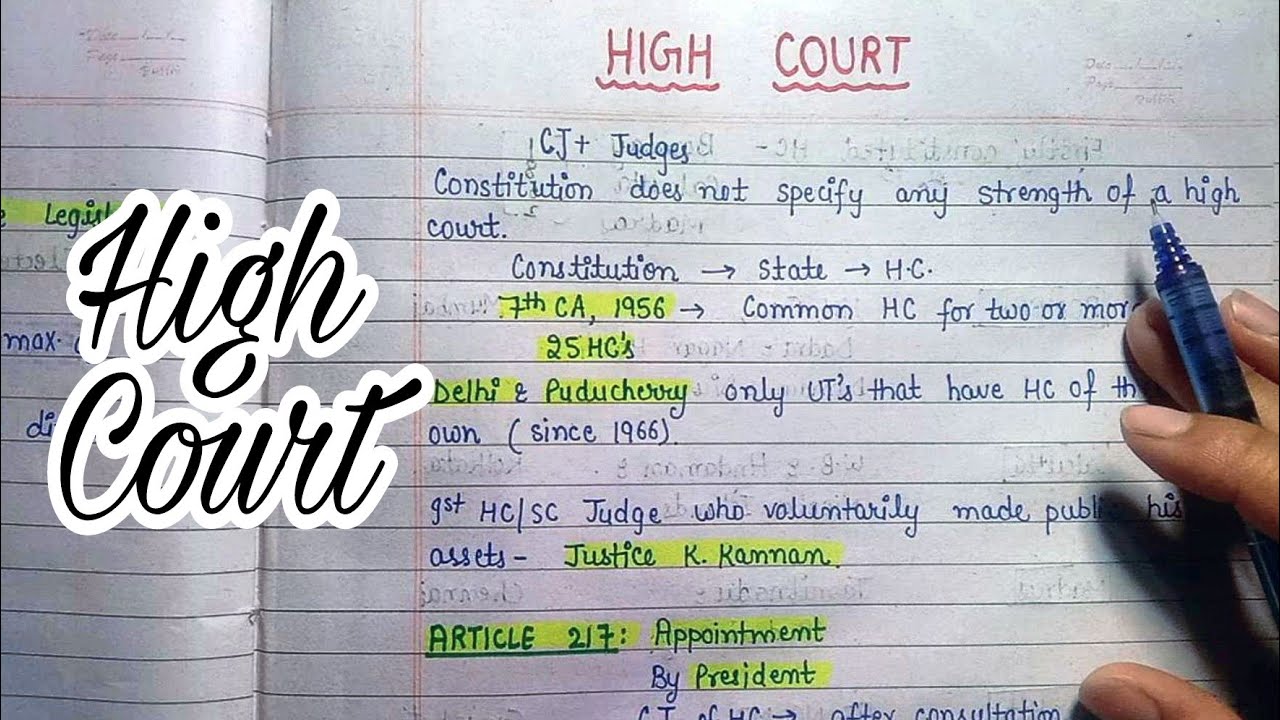
The independence of High Courts is one of the most important features of the Indian judicial system. High Courts are constitutional courts created under the Constitution of India, and their main duty is to deliver justice fairly, without fear, favour, or political pressure. This independence becomes especially important when a citizen challenges the actions of the government, because the court must be able to decide the case only according to law and the Constitution. For students preparing for competitive examinations, this topic explains how the judiciary remains protected from political interference and why these safeguards are necessary for democracy.
🎯 In this chapter, you will understand:
- Why the independence of High Courts is essential for fair justice and the rule of law.
- How judges are appointed and why their tenure is protected from arbitrary removal.
- How financial safeguards protect judges from pressure related to salary and allowances.
- How administrative freedom, contempt powers, and separation from the executive strengthen judicial autonomy.
💡 Why this topic matters: An independent High Court protects the rights of ordinary citizens. If judges could be removed, paid less, transferred, or pressured easily by the government, they might hesitate to give decisions against those in power. The Constitution therefore creates strong safeguards so that justice can be delivered boldly and impartially.
🧠 Core Idea: The independence of High Courts does not mean that judges are above the law. It means that judges must be free from improper outside influence while deciding cases. The Constitution protects their appointment, tenure, salary, service conditions, staff, jurisdiction, and dignity so that they can perform their judicial duties without fear.
Independence of High Courts: Constitutional Safeguards and Judicial Autonomy
The independence of a High Court is crucial for ensuring justice without fear, pressure, or political interference. It acts as a shield for the common citizen, especially when a person has to fight a case against a powerful government department, public official, or influential private party. A judge who feels safe in office can listen to both sides carefully, apply the law honestly, and give a decision based only on evidence and constitutional principles.
To safeguard impartial functioning and uphold the rule of law, the Constitution lays down several protective provisions that prevent the overreach of other branches of government. These mechanisms ensure that the judiciary remains the ultimate guardian of fundamental rights. They also help maintain public confidence in courts, because people must believe that a judge’s decision is based on law rather than on pressure from politicians, officials, or wealthy parties.
- (i) Provisions are designed to isolate judges from the whims of the executive and legislature, so that no government can easily control judicial decisions.
- (ii) These safeguards maintain the dignity and authority of the court system, making it clear that judicial orders deserve respect and obedience.
- (iii) The framework provides a stable environment for legal interpretation and constitutional protection, allowing courts to develop consistent and reliable principles of justice.
The Appointment Process and Security of Judicial Tenure
The strength of a court lies in how its members are selected and how securely they hold their positions against external threats. If appointments were made purely at the wish of the government, there would be a danger that only judges favourable to the ruling party would be chosen. Similarly, if judges could be dismissed whenever the government disliked their decisions, they might feel afraid to act independently. The Constitution therefore uses a careful appointment process and strong tenure protection to reduce these risks.
Mode of Appointment and Executive Limitation
Judges are appointed through a rigorous process by the President in consultation with the Chief Justice of India and the Chief Justice of the concerned High Court. This collaborative approach is vital for judicial independence because it prevents the appointment process from becoming a one-sided political decision. The involvement of senior judicial authorities helps ensure that persons appointed to the bench have the necessary legal knowledge, experience, integrity, and ability to handle complex cases.
- (i) This process limits executive discretion and prevents judicial appointments from being influenced by political or personal considerations.
- (ii) It ensures that only the most qualified legal minds reach the bench through a collegium-based understanding.
Security of Tenure and Removal Protocols
High Court judges enjoy security of tenure, meaning they cannot be removed arbitrarily by the President or the government of the day. This protection is important because it gives judges the freedom to rule against the state if necessary. For example, if a government action violates fundamental rights, a judge should be able to strike it down without worrying about losing the job. Security of tenure therefore encourages courage, fairness, and impartiality in judicial decision-making.
- (i) They may only be removed on the grounds and in the manner prescribed by the Constitution, involving a complex process in Parliament. This makes removal difficult and prevents it from being used as a tool of political revenge.
Historical Context of Impeachment
The removal process is intentionally strict because a judge should not face dismissal simply because a government disagrees with a judgment. At the same time, the process exists to deal with serious misconduct or incapacity, ensuring accountability without weakening judicial independence.
- (i) Notably, no High Court judge has ever been impeached to date.
- (ii) This record reflects the high standards of the Indian Judiciary and the difficulty of the removal process.
Financial Autonomy and Fixed Service Conditions
Economic independence is a prerequisite for moral independence, ensuring judges are not swayed by financial repercussions. If a government could reduce a judge’s salary or withdraw allowances whenever it was unhappy with a judgment, the judge might feel pressured. The Constitution therefore protects the financial conditions of judges so that they can perform their duties without anxiety about personal loss.

Fixed Service Conditions and Disadvantage Protection
The Parliament determines their salaries, allowances, leave, pensions, and privileges, ensuring a standardized and transparent compensation model. This arrangement prevents individual state governments from changing a judge’s pay or benefits according to their own convenience. Fixed service conditions give judges financial stability and help them focus fully on their judicial work.
- (i) These conditions cannot be altered to their disadvantage after appointment.
- (ii) The only exception to this rule occurs during a Financial Emergency under Article 360, when the country’s financial stability or credit is threatened.
Expenses Charged on the Consolidated Fund
The administrative costs and judicial salaries are insulated from the political debates of the state legislature to maintain functional autonomy. This means that the money needed to run the High Court is not treated like an ordinary expenditure that legislators can easily reduce or reject. The purpose is to ensure that the court can function smoothly without financial dependence on the government of the day.
- (i) The salaries and allowances of judges, pensions of staff, and administrative costs of the High Court are charged on the Consolidated Fund of the State.
- (ii) These expenses are non-votable by the legislature, though discussions may take place.
- (iii) The pension of a High Court judge, however, is drawn from the Consolidated Fund of India, further distancing it from state-level politics.
Professional Conduct, Contempt Powers, and Post-Retirement Rules
The Constitution regulates the behaviour and future prospects of judges to maintain the impartiality of the office. These rules are not meant to punish judges unfairly; rather, they protect the court from political attacks and prevent judges from having personal expectations that could affect their decisions. Together, these provisions preserve public trust in the judiciary.
Conduct of Judges and Legislative Restrictions
The Constitution prohibits any discussion on the conduct of High Court judges in Parliament or State legislatures to prevent character assassination or political bullying. If politicians could freely criticise a judge’s conduct, they might try to influence future judgments or damage the judge’s reputation. This restriction keeps the focus of legislatures on law-making and keeps judicial conduct matters within proper constitutional procedures.
- (i) An exception exists only when an impeachment motion is under consideration in Parliament.
- (ii) This ensures that judicial decisions are not debated by politicians for electoral gains.
Ban on Practice after Retirement
Permanent retired judges are prohibited from practicing in any court or before any authority in India, except the Supreme Court and other High Courts. This rule prevents a former judge from returning to the same court as a lawyer and arguing before former colleagues. Such a situation could create doubts about influence, favouritism, or improper access, even if no wrongdoing actually occurred.
- (a) This provision ensures judges act impartially without expecting future favours from private parties or the government.
- (b) It maintains the integrity of the judicial office post-tenure.
Power to Punish for Contempt
High Courts hold the authority to punish for contempt, thereby protecting their dignity, authority, and respect in the eyes of the public. Contempt power does not mean that a court can silence fair criticism. Its main purpose is to stop deliberate disobedience of court orders, obstruction of judicial proceedings, or acts that seriously interfere with the administration of justice.
- (i) This ensures that their orders cannot be disregarded or openly opposed by any individual or executive authority.
- (ii) It acts as a vital tool for the administration of justice.
Administrative Freedom and Separation from the Executive
Total independence requires control over the court’s internal staff and a clear boundary between judicial and executive functions. A High Court cannot work properly if its staff are appointed or controlled by the government, because administrative interference can indirectly affect judicial work. The Constitution therefore gives the court authority over its own administrative machinery.
Freedom to Appoint Staff and Define Service
The Chief Justice of a High Court can independently appoint staff and officers, ensuring the court is not used as a place for political appointees. This power helps the Chief Justice maintain discipline, efficiency, and neutrality within the court. It also prevents the executive from placing persons in court administration who may be loyal to political interests rather than to the justice system.
- (i) He also prescribes their conditions of service without interference from the executive branch.
- (ii) This maintains the neutrality of the court’s administrative machinery.
Jurisdiction Protections and Separation of Powers
The Constitution directs states to ensure separation of judiciary from the executive in public services, a vital Directive Principle. This means that officials who perform judicial functions should not be under the direct control of the executive. The idea is simple: the body that decides disputes should be separate from the body that enforces government policy, so that justice remains fair and unbiased.
- (i) The Constitutionally granted jurisdiction and powers of a High Court cannot be curtailed by either Parliament or State legislatures.
- (ii) Executive authorities cannot exercise judicial powers, ensuring impartial administration of justice.
- (iii) In areas not expressly covered by the Constitution, both Parliament and State legislatures may alter jurisdiction, but core powers remain sacrosanct.
⚡ Quick Revision Capsule: Independence of High Courts
The table below brings together the major constitutional safeguards that protect High Courts from political, financial, and administrative interference. It is useful for quick revision before examinations.
| Area of Independence | Constitutional Safeguard | Main Purpose |
|---|---|---|
| Appointment | Judges are appointed by the President after consultation with senior judicial authorities. | To limit executive discretion and ensure qualified appointments. |
| Security of Tenure | Judges cannot be removed arbitrarily; removal follows the constitutional process in Parliament. | To allow judges to decide cases without fear of dismissal. |
| Service Conditions | Salaries, allowances, leave, pensions, and privileges are fixed and cannot be reduced to a judge’s disadvantage after appointment. | To provide financial security and prevent pressure. |
| Financial Emergency | Service conditions may be affected only during a Financial Emergency under Article 360. | To define the limited exception to financial protection. |
| Court Expenses | High Court expenses are charged on the Consolidated Fund and are non-votable; pensions are drawn from the Consolidated Fund of India. | To protect the court from legislative financial control. |
| Conduct of Judges | Legislatures cannot discuss judicial conduct except during an impeachment motion. | To prevent political attacks and character assassination. |
| Post-Retirement Practice | Permanent retired judges cannot practice in any court or before any authority except the Supreme Court and other High Courts. | To prevent expectations of future favours. |
| Contempt Power | High Courts can punish for contempt of court. | To protect judicial authority and ensure obedience to court orders. |
| Staff and Administration | The Chief Justice appoints staff and prescribes their service conditions. | To keep court administration free from executive control. |
| Separation of Powers | The judiciary must be separated from the executive in public services. | To ensure impartial administration of justice. |
📝 Summary
The independence of High Courts is not a privilege for judges; it is a constitutional guarantee for citizens and for the healthy working of democracy. The Constitution of India protects judges through secure appointment procedures, security of tenure, fixed service conditions, financial autonomy, restrictions on legislative discussion, and separation from the executive. These safeguards ensure that judges can protect fundamental rights and check unlawful government action without fear of punishment, salary reduction, or political pressure. Articles relating to High Courts, including Article 217 on appointment and service conditions and Article 360 on Financial Emergency, form an important part of Indian Polity for examination preparation.
🚀 Quick Revision Points
Essential facts to review before examinations:
- (i) High Court judges are appointed by the President after consultation with the Chief Justice of India and the Chief Justice of the concerned High Court.
- (ii) Judges enjoy security of tenure and cannot be removed arbitrarily by the government.
- (iii) Their salaries, allowances, and pensions are protected, except during a Financial Emergency under Article 360.
- (iv) Permanent retired judges cannot practice in any court or before any authority except the Supreme Court and other High Courts, as provided under Article 220 of the Constitution of India.
- (v) High Courts can punish for contempt to protect their dignity and ensure obedience to judicial orders.
- (vi) The Chief Justice of a High Court appoints staff and prescribes their conditions of service independently.
- 💡 Exam Tip: Remember the safeguards in groups: appointment, tenure, money, conduct, retirement, contempt, staff, and jurisdiction. For objective questions, pay special attention to “non-votable expenses,” “Article 360 exception,” and the ban on practice after retirement.
❓ Frequently Asked Questions (FAQ)
Q1: Why is the independence of High Courts important?
A1: It is important because judges must be able to decide cases fairly, even when the case involves the government. Independence protects citizens from arbitrary action and upholds the rule of law.Q2: Can the government reduce the salary of a High Court judge?
A2: Normally, no. The service conditions of a judge cannot be changed to their disadvantage after appointment. The main exception is during a Financial Emergency declared under Article 360.Q3: Can a retired High Court judge practice as a lawyer in the same High Court?
A3: No. A permanent retired judge cannot practice in any court or before any authority in India except the Supreme Court and other High Courts, under Article 220 of the Constitution of India. This rule protects the integrity and impartiality of the judicial office.