This comprehensive guide explains the constitutional framework of Subordinate Courts in India, with special focus on Articles 233 to 237 of the Constitution of India. These Articles explain how district judges are appointed, how other judicial officers are recruited, and how the High Courts supervise the lower courts. Understanding these provisions is important for students and examination aspirants because they show how justice reaches ordinary citizens through the district-level judiciary.
🎯 In this chapter, you will understand:
- The meaning and importance of Subordinate Courts in the Indian judicial system.
- How District Judges are appointed under Article 233.
- How the High Court controls and supervises subordinate courts under Article 235.
- The meaning of District Judge and Judicial Service under Article 236.
💡 Why this topic matters: Subordinate Courts are the courts that most people visit for everyday legal matters, such as civil disputes, criminal cases, family matters, and local complaints. These Articles ensure that the judges who handle such cases are properly appointed, trained, and supervised, so that justice remains fair and independent.
🧠 Core Idea: The Constitution places the district judiciary under the guidance and control of the High Court. This arrangement helps keep the lower courts free from improper executive influence while allowing qualified judges to serve people at the grassroots level.
Articles Related to Subordinate Courts: A Judicial Overview
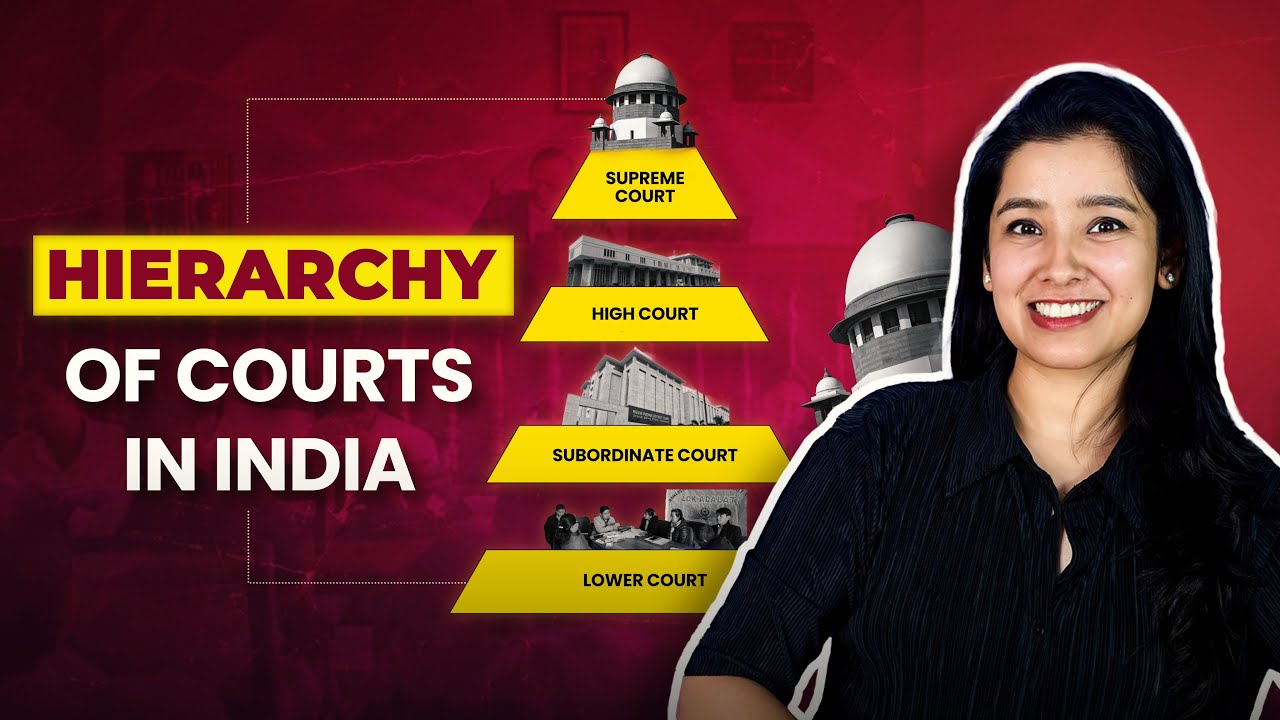
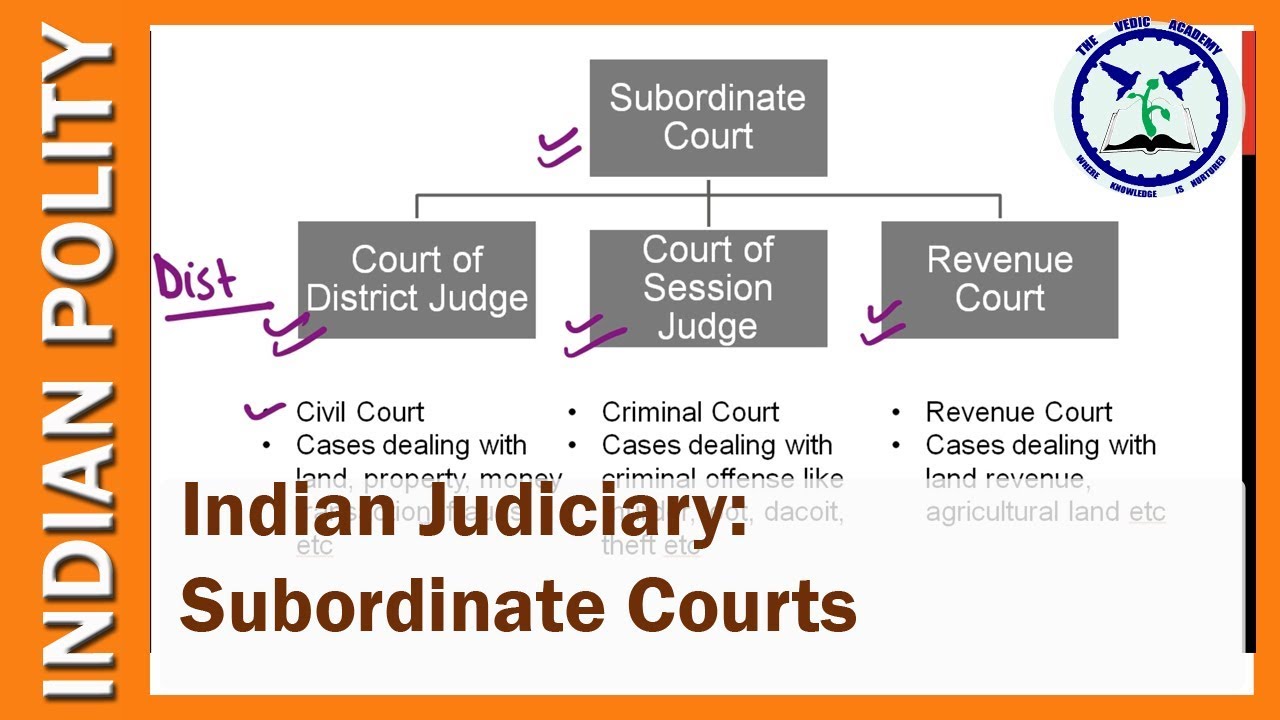
The Indian judicial system is arranged in a hierarchy so that justice can be delivered at every level, from the Supreme Court at the top to the courts operating in districts and local areas. The Subordinate Courts form the lower level of this system. They are called “subordinate” because they work below the High Courts and remain under their administrative and judicial supervision. These courts are often the first place where a citizen comes into direct contact with the justice system.
The constitutional provisions relating to Subordinate Courts are mainly found in Part VI of the Constitution of India. Part VI deals with the government of States, and the Articles from 233 to 237 specifically deal with the district judiciary. Together, these provisions create a clear system for appointing judges, recruiting judicial officers, defining important legal terms, and giving the High Court control over the lower courts.
The Subordinate Courts function under the administrative and judicial supervision of the High Courts. Their powers, recruitment, posting, promotion, and scope of authority are governed by constitutional mandates and rules made for different States.
- (i) The legal framework is primarily housed within Part VI of the Constitution.
- (ii) It ensures a bridge between the local citizenry and the higher judiciary.
- (iii) The provisions maintain the independence of the district judiciary from executive interference.
Appointment and Validation: Securing the District Bench
The appointment of judges is one of the most important parts of any judicial system. A judge must be properly qualified, impartial, and free from unfair political pressure. For this reason, the Constitution lays down special rules for appointing District Judges and also provides a method to validate certain past appointments that may have suffered from technical defects.
Article 233 – The Appointment of District Judges
In the Indian judiciary, the role of a District Judge is very important. A District Judge usually handles important cases at the district level and may also supervise other judicial officers working in the district. Article 233 states that the Governor of a State shall appoint and post District Judges in consultation with the High Court of that State. This means that the Governor performs the formal act of appointment, but the High Court’s consultation is a necessary part of the process.
To become eligible for appointment as a District Judge, a person must have been an Advocate or a Pleader for at least seven years. The person must also be recommended by the High Court. These conditions help ensure that only experienced legal professionals, who understand court procedures and legal principles, are appointed to this responsible position.
- (i) Consultation with the High Court is a mandatory constitutional requirement.
- (ii) Recruitment can be through promotion from the subordinate judicial service or direct recruitment.
- (iii) A candidate must have at least seven years of experience as an Advocate or Pleader.
- (iv) The High Court’s recommendation is essential for appointment as a District Judge.
Article 233A – Validation of Appointments and Judgments
Sometimes, appointments made in the past may not have followed every procedural rule strictly. If every such appointment were cancelled, many old cases and judgments could be reopened, creating confusion and uncertainty. Article 233A was introduced to validate certain appointments of District Judges that may not have strictly followed the prescribed rules. Its purpose is to protect the legitimacy of judicial decisions already delivered by such judges.
This provision is important because it maintains stability in the legal system. It prevents technical mistakes in past appointments from disturbing decisions that people have already accepted as final. In simple words, Article 233A helps the law move forward without constantly looking back at old procedural errors.
Impact of Validation
The validation provision has a practical impact on the justice system. It protects the finality of judgments and avoids unnecessary litigation about the validity of old appointments.
- (i) It prevents the reopening of countless closed cases due to technical appointment flaws.
- (ii) It provides constitutional protection to past judicial actions.
- (iii) It supports certainty and stability in the administration of justice.
Recruitment and Administrative Control Mechanisms
Beyond District Judges, the judicial system also needs many other officers, such as civil judges and other members of the judicial service. These officers handle a large number of cases and help the courts function smoothly. The Constitution therefore provides rules for their recruitment and gives the High Court the power to control their service conditions.

Article 234 – Recruitment into the Judicial Service
The recruitment of persons other than District Judges to the Judicial Service is a structured process. Under Article 234, the Governor of a State makes these appointments in accordance with rules made after consultation with the State Public Service Commission and the High Court. This process helps ensure that candidates enter the judicial service through a fair and merit-based system.
The involvement of both the State Public Service Commission and the High Court creates a balance. The Public Service Commission helps maintain proper recruitment standards, while the High Court provides judicial expertise and oversight. This arrangement is intended to select suitable candidates for the civil judge cadre and other judicial posts.
- (a) Ensures merit-based entry into the civil judge cadre.
- (b) Maintains a balance between State administrative bodies and the judiciary.
- (c) The Governor makes appointments according to rules made in consultation with the State Public Service Commission and the High Court.
- (d) The process applies to judicial officers other than District Judges.
Article 235 – Control of High Courts over Subordinate Courts
To uphold the integrity of the judiciary, Article 235 vests control over District Courts and courts subordinate to them in the High Court. This control includes important service matters such as posting, promotion, and the grant of leave to judicial officers. In simple terms, the High Court acts like the administrative head of the district judiciary.
This control is important because it helps protect judicial officers from unfair interference in their careers. If postings, promotions, or leave were controlled entirely by the executive government, there could be a risk of pressure on judges. By placing these powers with the High Court, the Constitution strengthens the independence of the lower judiciary.
- (i) The High Court acts as the guardian and administrator of the lower courts.
- (ii) This autonomy ensures that the executive branch does not influence judicial career paths.
- (iii) The High Court’s control covers posting, promotion, and leave of judicial officers.
- (iv) Article 235 applies to District Courts and courts subordinate to them.
Interpretation and Scope of Application
Legal provisions must be clear so that everyone understands who they apply to and what particular words mean. Articles 236 and 237 provide this clarity. Article 236 defines important terms, while Article 237 allows certain classes of Magistrates to be brought within the scope of the chapter on Subordinate Courts.
Article 236 – Interpretation of Judicial Provisions
Clarity in law comes through proper interpretation. Article 236 provides specific definitions for terms such as District Judge and Judicial Service. These definitions prevent confusion about which judicial officers and posts are covered by the constitutional provisions relating to Subordinate Courts.
Under Article 236, the expression “District Judge” includes not only the District Judge proper but also other judicial officers of similar rank, such as judges of City Civil Courts, Sessions Judges, and Additional Sessions Judges. The expression “Judicial Service” means a service consisting exclusively of persons intended to fill the post of District Judge and other civil judicial posts.
- (i) Defines “District Judge” to include judges of City Civil Courts, Sessions Judges, and Additional Sessions Judges.
- (ii) Clarifies that “Judicial Service” consists of persons intended to fill the post of District Judge and other civil judicial posts.
- (iii) The definitions help avoid ambiguity in the application of Articles 233 to 235.
- (iv) The term “District Judge” is used in a wider constitutional sense, not only for the officer holding that exact title.
Article 237 – Application to Certain Classes of Magistrates
The Governor possesses authority under Article 237 to issue a public notification directing that the provisions of this chapter shall apply to any class of Magistrates in the State. This provision helps connect the judicial framework with certain Magistrates whose functions may have both executive and judicial elements.
This Article is historically significant because it supports the separation of the judiciary from the executive at the magisterial level. By allowing the application of these provisions to specified classes of Magistrates, the State can move toward a more independent and properly supervised judicial system.
- (i) Allows for the separation of the judiciary from the executive at the magisterial level.
- (ii) Historically significant for implementing Directive Principles of State Policy.
- (iii) The Governor issues a public notification to apply the chapter’s provisions to a class of Magistrates.
- (iv) It helps bring certain Magistrates within the constitutional framework of Subordinate Courts.
Key Terms Related to Subordinate Courts
Some terms appear repeatedly in this chapter. Knowing their meaning makes it easier to understand how the district judiciary works.
Key terms help explain the structure and supervision of the subordinate judiciary. - Subordinate Courts: Courts functioning below the High Court, including District Courts and other lower courts that handle cases at the local level.
- District Judge: A senior judicial officer at the district level; under Article 236, the term also includes certain similar judicial officers such as Sessions Judges and judges of City Civil Courts.
- Judicial Service: A service consisting of persons intended to fill the post of District Judge and other civil judicial posts.
- High Court Control: The administrative and judicial supervision exercised by the High Court over District Courts and subordinate courts under Article 235.
⚡ Quick Revision Capsule: Articles 233 to 237
The following table gives a simple overview of the constitutional provisions relating to Subordinate Courts. It is useful for quick revision before examinations.
| Article | Main Subject | Key Point |
|---|---|---|
| Article 233 | Appointment of District Judges | The Governor appoints District Judges in consultation with the High Court; candidates need at least seven years as an Advocate or Pleader and High Court recommendation. |
| Article 233A | Validation of appointments and judgments | Validates certain past District Judge appointments and protects the finality of judgments already delivered. |
| Article 234 | Recruitment to Judicial Service | The Governor recruits persons other than District Judges according to rules made in consultation with the State Public Service Commission and the High Court. |
| Article 235 | Control over Subordinate Courts | The High Court controls District Courts and courts subordinate to them, including posting, promotion, and leave. |
| Articles 236 and 237 | Interpretation and application | Article 236 defines District Judge and Judicial Service; Article 237 allows the Governor to apply the chapter to certain classes of Magistrates. |
📝 Summary
The Articles relating to Subordinate Courts form the backbone of local justice in India. They are found in Part VI of the Constitution of India and mainly cover . These provisions explain how District Judges are appointed, how other judicial officers are recruited, and how the High Court supervises the lower judiciary. By keeping appointment and control largely connected to the High Court, the Constitution supports a merit-based and independent district judiciary.
🚀 Quick Revision Points
Essential facts to review before examinations:
- (i) Article 233 provides for the appointment of District Judges by the Governor in consultation with the High Court.
- (ii) Article 233A validates certain past judicial appointments and protects the finality of judgments.
- (iii) Article 234 deals with recruitment to the Judicial Service other than District Judges.
- (iv) Article 235 gives the High Court control over District Courts and subordinate courts; Articles 236 and 237 deal with interpretation and application to certain Magistrates under the Constitution of India.
- 💡 Exam Tip: Remember the sequence: Article 233 appoints District Judges, Article 233A validates past appointments, Article 234 recruits other judicial officers, Article 235 gives control to the High Court, and Articles 236–237 explain definitions and application to Magistrates.
❓ Frequently Asked Questions (FAQ)
Q1: Who appoints District Judges in India?
A1: Under Article 233, the Governor of a State appoints and posts District Judges in consultation with the High Court. The candidate must have been an Advocate or Pleader for at least seven years and must be recommended by the High Court.Q2: What is the importance of Article 235?
A2: Article 235 gives the High Court control over District Courts and courts subordinate to them. This control includes posting, promotion, and grant of leave, helping protect the independence of judicial officers from executive influence.Q3: What do Articles 236 and 237 explain?
A3: Article 236 defines District Judge and Judicial Service in the Constitution of India. Article 237 allows the Governor to issue a public notification applying the provisions of the chapter to any class of Magistrates in the State.