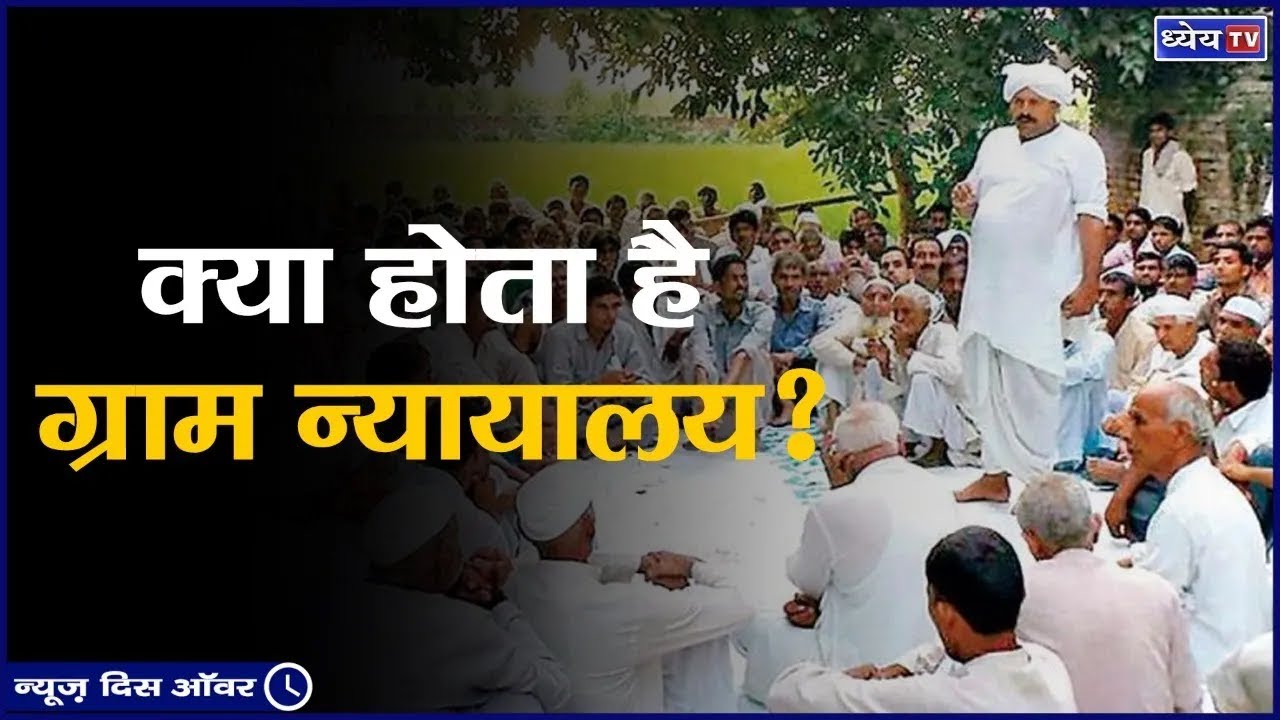
This detailed overview of the Gram Nyayalayas Act, 2008 explains India’s important move toward decentralized justice, meaning justice that is brought closer to villages instead of being available only in big towns and cities. The law highlights the role of Nyayadhikaris and mobile courts in helping people living at the grassroots level. For students and exam aspirants, understanding this Act is important for learning about legal reforms and the mandate of Article 39A of the Indian Constitution.
🎯 In this chapter, you will understand:
- Why the Gram Nyayalayas Act, 2008 was created to make justice affordable, accessible, and speedy for rural citizens.
- How Article 39A, free legal aid, and earlier judicial reforms led to the idea of Gram Nyayalayas.
- The role of the Nyayadhikari, the working of mobile courts, and the special procedures followed by these courts.
- The funding arrangements, practical challenges, and future steps needed to make Gram Nyayalayas effective.
💡 Why this topic matters: Many people in villages find it difficult to travel to distant courts, pay repeated expenses, or understand complicated legal procedures. The Gram Nyayalayas Act, 2008 matters because it tries to remove these barriers by taking justice directly to rural communities. It connects the constitutional promise of equal justice with practical village-level courts.
🧠 Core Idea: The central idea of the Act is simple: instead of asking every rural citizen to travel to a faraway court, the legal machinery should travel to the people. Gram Nyayalayas are village-level courts designed to provide quick, low-cost, and fair justice while reducing the difficulties caused by poverty, distance, and social disadvantages.
Gram Nyayalayas Act, 2008: Revolutionizing Justice at the Grassroots
The Gram Nyayalayas Act, 2008 is a landmark piece of legislation designed to bridge the gap between rural citizens and the judiciary. Before such a law, many people living in remote villages had to travel long distances to reach a court. They also had to spend money on travel, stay, lawyers, documents, and repeated hearings. For a poor family, these costs could make justice feel impossible. The Act therefore tries to make legal help a normal and reachable service, not a privilege available only to those who live near cities or can afford long legal battles.
By establishing village-level courts, the Act seeks to fulfil the promise of a welfare state where legal recourse is not a luxury but a fundamental right accessible to all. A welfare state is expected to protect the weaker sections of society and ensure that they are not left behind. In the field of justice, this means that a person’s poverty, lack of education, social background, or physical distance from a court should not stop them from getting a fair hearing. Gram Nyayalayas were imagined as friendly, local courts that could understand local problems and resolve disputes without unnecessary delay.
Primary Mission and Purpose
The main purpose of the Act is to make justice simple, nearby, and affordable for people living in rural areas. It recognizes that justice delayed or justice made too expensive can be almost as harmful as justice denied. A villager may have a genuine complaint, but if the court is too far away or the process takes years, the person may give up. The Act tries to prevent this by creating a system where disputes can be heard close to home.
- (i) The primary mission is to provide affordable, accessible, and speedy justice directly at the doorsteps of rural inhabitants.
- (ii) It targets the removal of barriers created by social or economic disabilities that often prevent the poor from seeking legal remedies.
- (iii) It envisions a system where the legal machinery travels to the people, rather than the people struggling to reach distant urban courts.
The Compelling Reasons for Establishing Village Courts
The journey toward the Gram Nyayalayas Act was driven by a constitutional mandate to democratize the Indian judicial system. This means that the law was not created suddenly or without thought. It grew out of a long-standing concern that ordinary citizens, especially the poor and those living in villages, should be able to approach courts without fear, confusion, or heavy expense. The Act is therefore part of a larger effort to make the justice system more people-friendly and responsive to everyday problems.
Constitutional Directives and Global Challenges
Providing access to justice for disadvantaged people remains a persistent challenge across the world. In many countries, people avoid courts because they cannot afford lawyers, do not understand legal language, or live too far from court buildings. India recognized this problem and made access to justice a constitutional duty. The idea is that justice should not depend on whether a person is rich, powerful, educated, or living in a city.
- (i) Under Article 39A of the Constitution, the State is directed to promote justice on the basis of equal opportunity.
- (ii) This article mandates the provision of free legal aid to ensure that no citizen is denied justice due to economic or other disabilities.
Evolution of Judicial Reforms
The establishment of Gram Nyayalayas was not an isolated event. It was the result of many years of discussion, reports, and experiments aimed at making the justice system faster and less costly. India had already tried methods such as arbitration, conciliation, and Lok Adalats, where disputes could be settled outside the usual lengthy court process. These methods showed that many disputes can be resolved through discussion and compromise rather than through long trials.
- (i) Previous reforms focused on alternative dispute resolution, including arbitration, conciliation, and the organization of Lok Adalats.
- (ii) The Law Commission of India, in its pivotal 114th Report, became the catalyst by strongly recommending Gram Nyayalayas.
- (iii) The goal was to create a mechanism for speedy, inexpensive, and effective justice specifically tailored for the common man.
Comprehensive Features of the Gram Nyayalayas Act
The Act outlines a unique structure that combines formal judicial power with informal procedural flexibility. In simple words, a Gram Nyayalaya is still a real court with legal authority, but it does not have to follow every rigid formality that can make regular court cases slow and confusing. This balance is important: the court must remain fair and lawful, but it should also be easy for villagers to approach and understand.

The Role and Status of the Nyayadhikari
At the heart of every Gram Nyayalaya is the presiding officer, known as the Nyayadhikari. This officer is responsible for hearing cases, maintaining discipline in the court, applying the law, and ensuring that both sides get a fair chance to present their case. The Act makes the Nyayadhikari a properly qualified judicial officer so that village-level justice does not become informal or unreliable.
- (i) Each court is presided over by a Judicial Magistrate of the First Class, appointed by the State Government in consultation with the High Court.
- (ii) These officers are regular members of the judiciary, enjoying the same powers, salary, and benefits as their counterparts in higher-level courts.
Jurisdiction and the Concept of Mobile Courts
One of the most innovative aspects of the Act is the mobile nature of these courts. Traditional courts usually work from fixed buildings, and people must come to them. Gram Nyayalayas were designed differently. Their headquarters may be at an intermediate Panchayat, but the Nyayadhikari can travel to different villages to hear cases. This helps elderly persons, women, daily-wage workers, and others who may find it difficult to leave their village for long periods.
- (i) Courts are established for intermediate-level Panchayats or groups of adjoining Panchayats to ensure localized jurisdiction.
- (ii) These are mobile courts that exercise jurisdiction over both civil and criminal matters as specified in the First and Second Schedules of the Act.
- (iii) While the headquarters are at the intermediate Panchayat, the Nyayadhikari is mandated to travel to villages to hear disputes.
Procedural Flexibility and Dispute Resolution
The Act gives importance to substantive justice rather than technical legalism. Substantive justice means focusing on what is fair and right in the actual dispute, instead of allowing small procedural mistakes or technical rules to defeat justice. The Act also encourages conciliation, which means helping both parties talk and reach a peaceful agreement. This approach can save time, reduce hostility, and preserve relationships between neighbours and family members.
Summary Procedures and Execution
The Act uses simpler procedures so that cases do not remain pending for years. In criminal matters, a summary procedure allows the court to deal with cases in a shorter and more direct manner. In civil matters, the court functions like a Civil Court but with modified procedures. Once a decision is given, it should not become difficult to enforce; therefore, execution is also kept simple.
- (i) For criminal trials, the courts follow a summary procedure to ensure rapid case disposal.
- (ii) For civil cases, they act as Civil Courts with modified procedures designed to prevent delays.
- (iii) All judgments are treated as decrees, and their execution is streamlined through summary processes.
Natural Justice and Conciliation
Gram Nyayalayas are not expected to behave like highly technical courts where every small rule of evidence decides the case. Instead, they are expected to listen carefully, act fairly, and follow the principles of natural justice. This means both parties should get a reasonable opportunity to speak, produce information, and respond to the other side. The law also encourages the court to try conciliation before making a final decision.
- (i) These courts are not strictly bound by the rigid rules of the Indian Evidence Act, 1872.
- (ii) Instead, they are guided by the principles of natural justice and specific rules framed by the High Court.
- (iii) There is a mandatory requirement to attempt conciliation between parties using appointed conciliators before proceeding to adjudication.
Appeals and Defendant Rights
Even though Gram Nyayalayas are meant to be quick and simple, the Act does not remove the right to appeal. An appeal is a request made to a higher court to examine whether the lower court’s decision was correct. This safeguard is important because it protects people from possible mistakes and keeps the village courts accountable. The Act also recognizes the rights of accused persons, including the option of plea bargaining in suitable cases.
- (i) Appeals in criminal matters go to the Court of Session, while civil appeals are heard by the District Court.
- (ii) A strict window is mandated for the disposal of all appeals to prevent pendency.
- (iii) Accused individuals also have the legal right to apply for plea bargaining under the provisions of the Act.
Infrastructure, Funding, and Implementation Strategy
Setting up village courts across India requires more than passing a law. Courts need buildings or suitable spaces, vehicles for mobile hearings, furniture, computers, stationery, staff, and proper coordination with local authorities. For this reason, the Act’s implementation depends heavily on financial support from both the Central and State Governments. Without adequate funds and administrative support, even a well-designed law may remain only on paper.
Central Government Financial Assistance
The Central Government takes the lead in providing initial non-recurring expenses. Non-recurring expenses are one-time costs needed to start a court, such as constructing a building, buying a vehicle, or purchasing office equipment. These costs are different from regular monthly expenses such as salaries, electricity, maintenance, and day-to-day administration, which remain the responsibility of the State Governments.
- (i) A ceiling of ₹18 lakhs is set for each court, covering construction (₹10 lakhs), vehicles (₹5 lakhs), and office equipment (₹3 lakhs).
- (ii) The total proposed plan involves establishing over 5000 Gram Nyayalayas with a budget of approximately ₹1400 crores.
- (iii) The State Governments hold the responsibility for the formal establishment and long-term operational maintenance in coordination with High Courts.
Operational Challenges and the Path Forward
Despite the noble intent of the Gram Nyayalayas Act, the transition from paper to practice has faced several systemic obstacles. A law can describe an ideal system, but making it work in real villages requires cooperation from police officers, lawyers, local officials, court staff, and the community. When these groups do not fully support the new system, its benefits may not reach the people who need them most.
Institutional and Procedural Bottlenecks
Several factors have led to a lukewarm implementation of the Act in various states across India. Some officials may be more familiar with the existing court system and may hesitate to send cases to a new village-level court. Lawyers may also be uncertain about practicing before these courts, especially if they believe the process is different from regular litigation. These practical problems can slow down the working of Gram Nyayalayas.
- (i) There is a noticeable reluctance of police officials and state functionaries to invoke the jurisdiction of these rural courts.
- (ii) The legal fraternity, or the Bar, has often shown a lack of enthusiasm in supporting grassroots litigation.
- (iii) Practical issues like the non-availability of stamp vendors and notaries in remote areas significantly hinder daily operations.
- (iv) Concurrent jurisdiction with existing regular courts has frequently led to confusion and administrative inefficiency.
High-Level Deliberations and Resolutions
The Conference of Chief Justices and Chief Ministers in addressed these critical operational difficulties. The discussion recognized that the same model may not work equally well in every state or district. Some areas may already have enough regular courts, while other remote areas may have very limited access to judicial services. Therefore, the location and functioning of Gram Nyayalayas should be decided according to local needs.
- (i) It was resolved that the feasibility of these courts must be determined based on local circumstances and specific regional constraints.
- (ii) A strategic shift was suggested to prioritize Gram Nyayalayas in Talukas where regular courts are currently absent.
- (iii) The ultimate focus remains on ensuring that socio-economic status never acts as a barrier to justice at the grassroots.
⚡ Quick Revision Capsule: Gram Nyayalayas Act, 2008
This quick revision table brings together the most important points from the Act. It is useful for last-minute revision before examinations because it connects the purpose, structure, procedure, funding, and challenges of Gram Nyayalayas in one place.
| Aspect | Key Provision | Simple Meaning |
|---|---|---|
| Main Objective | To provide affordable, accessible, and speedy justice at the grassroots level. | To bring justice closer to villagers and reduce the cost and delay of approaching courts. |
| Constitutional Basis | Article 39A directs the State to promote equal justice and provide free legal aid. | No citizen should be denied justice because of poverty or other disadvantages. |
| Presiding Officer | The Nyayadhikari is a Judicial Magistrate of the First Class appointed in consultation with the High Court. | A qualified judicial officer hears and decides cases in the Gram Nyayalaya. |
| Mobile Court System | The court has a headquarters at the intermediate Panchayat but travels to villages. | Justice reaches people in their own villages instead of requiring them to travel far. |
| Procedure | Courts use summary procedures, follow natural justice, and attempt conciliation; they are not strictly bound by the Indian Evidence Act, 1872. | Cases are handled simply, fairly, and quickly, with efforts made to settle disputes peacefully. |
📝 Summary
The Gram Nyayalayas Act, 2008 remains a cornerstone of judicial reform in India because it tries to bridge the gap between the Constitution and the common citizen. It was created to promote speedy and affordable justice for rural people and to uphold the spirit of Article 39A. By using Nyayadhikaris, mobile courts, simplified procedures, and conciliation, the Act seeks to make justice less distant and less frightening for ordinary citizens. For students, mastering the nuances of Nyayadhikaris and mobile courts is essential for understanding the evolving landscape of legal aid and grassroots governance.
🚀 Quick Revision Points
Essential facts to review before examinations:
- (i) The Gram Nyayalayas Act, 2008 establishes village-level courts to provide decentralized justice to rural citizens.
- (ii) The Act is linked to Article 39A, which promotes equal justice and free legal aid.
- (iii) Each Gram Nyayalaya is presided over by a Nyayadhikari, who is a Judicial Magistrate of the First Class.
- (iv) Gram Nyayalayas are mobile courts that handle civil and criminal matters listed in the First and Second Schedules of the Act.
- 💡 Exam Tip: Remember the sequence: Article 39A → free legal aid and equal justice → Law Commission’s 114th Report → Gram Nyayalayas Act, 2008 → Nyayadhikari and mobile courts. This chain helps you answer both short and long questions clearly.
❓ Frequently Asked Questions (FAQ)
Q1: What is the main purpose of the Gram Nyayalayas Act, 2008?
A1: Its main purpose is to provide affordable, accessible, and speedy justice to people living in rural areas by establishing village-level courts.Q2: Who is a Nyayadhikari?
A2: A Nyayadhikari is the presiding judicial officer of a Gram Nyayalaya. The officer is a Judicial Magistrate of the First Class, appointed by the State Government in consultation with the High Court.Q3: Why are Gram Nyayalayas called mobile courts?
A3: They are called mobile courts because, although their headquarters may be at an intermediate Panchayat, the Nyayadhikari travels to villages to hear disputes. This supports the Act’s goal of taking justice to the grassroots.