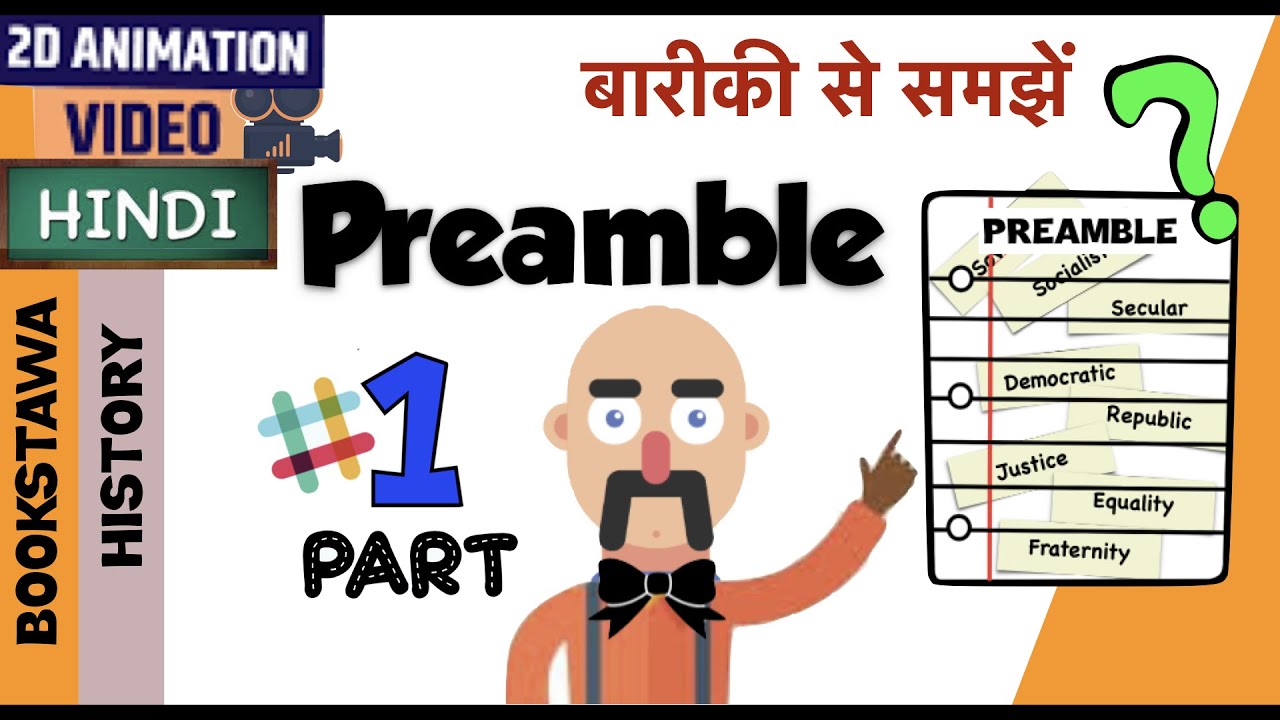
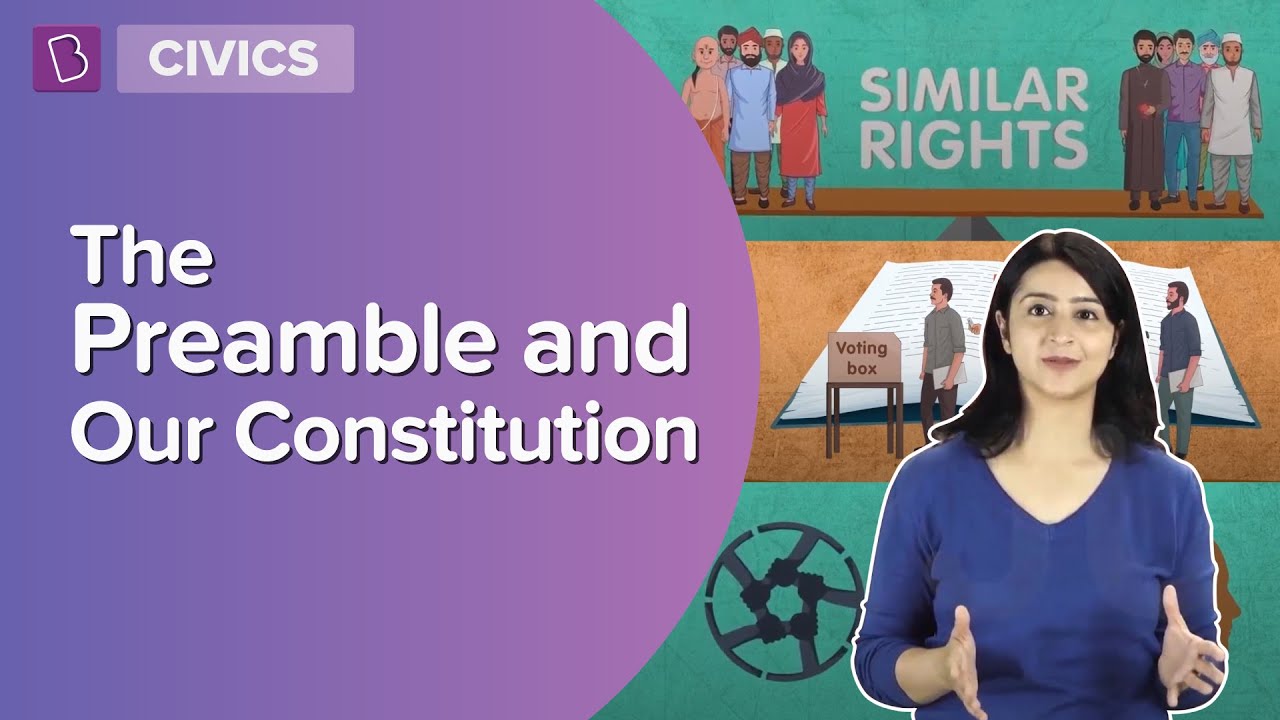
Every great book starts with a preface that tells you what the book is all about and why it was written. The Constitution of India, which is the supreme rulebook of our nation, also begins with a special opening page called the Preamble. On , our founding leaders adopted this document to declare the main goals, principles, and dreams of the country, making sure everyone understands the fundamental purpose of our democracy.
🎯 In this chapter, you will understand:
- How the concept of the Preamble originated and entered the Indian Constitution.
- The four core elements and foundational ideals that give authority to our supreme law.
- The exact meaning of essential pillars like sovereign, socialist, secular, democratic, and republic.
- The legal journey of whether the Preamble can be changed or modified by Parliament.
💡 Why this topic matters: It acts as a guiding compass for citizens, leaders, and courts to understand the core spirit and moral roadmap of Indian democracy.
🧠 Core Idea: The Preamble summarizes the main goals of the country—justice, freedom, equal opportunity, and nationwide togetherness—derived directly from the power of the Indian people.
📌 Introduction and Origin
The idea of having an introductory statement before a legal constitution first started in the country of the United States of America. When the American Constitution was written, it included a short opening section to explain its main goals. Later on, many other democratic countries across the globe, including India, thought this was a wonderful idea and decided to adopt it for their own rulebooks too.
In simple words, the term Preamble means an introductory statement or opening message that explains what a legal document is trying to achieve. It holds the core spirit, values, and big national goals of our Constitution. Because it neatly summarizes everything important about the nation's rules, the famous legal expert N. A. Palkhivala fondly called it the "identity card of the Constitution", just like a school ID card tells everyone who you are in a short glance.
In India, the story of this opening text began with a special promise called the Objectives Resolution. This landmark resolution was drafted and moved by Pandit Jawaharlal Nehru and was officially passed by the Constituent Assembly. Many years later, in , Parliament made changes through the 42nd Constitutional Amendment Act (1976) to add three crucial words: socialist, secular, and integrity.
Key Background Points
Understanding where our opening statement came from helps us appreciate its immense value and history:
- (i) Inspired by the American Constitution, which was the first in the world to begin with an opening preface.
- (ii) Based on the historical Objectives Resolution introduced in the Constituent Assembly by Pandit Jawaharlal Nehru.
The 1976 Amendment
Changes made to update the text during a crucial period in Indian political history:
- (a) Passed during the year as part of major constitutional updates.
- (b) Inserted the word socialist to focus on removing poverty and helping everyone prosper.
- (c) Inserted the word secular to guarantee that all religions get equal respect from the state.
- (d) Added the word integrity to make sure the nation stays united and strong.
📜 Text of the Preamble
The original words of the document lay down a firm promise made by every citizen to turn India into a grand, fair, and free democratic nation. It clearly states that the ultimate power to create these rules belongs to the people of India’s resolve to build a solid nation that is a Sovereign, Socialist, Secular, Democratic Republic.

It establishes clear targets for society to work toward every single day, assuring every citizen that they will be protected by the government and treated fairly under the law:
- Justice: Providing fair treatment across social status, money matters, and political rights.
Core Elements of the Preamble
When you break down the opening page into smaller pieces, you can see four core ingredients that make up its foundation:
- (i) Source of Authority: The document clearly says that the rules get their true power directly from the people of India, not from a king or foreign power.
- (ii) Nature of the State: It promises that India is an independent, fair, non-religious, popular, and elected state (sovereign, socialist, secular, democratic, and republican).
- (iii) Objectives: Its main targets are to deliver justice, liberty, equality, and fraternity to all citizens without exception.
- (iv) Date of Adoption: It officially records the historical date of as the day the nation accepted this rulebook.
🔍 Explanation of Key Terms
To really understand how our government works, we need to break down the important vocabulary terms used in this historic text. Each word was picked very carefully by our leaders to explain how the country should run daily:
- Every single concept works like a building block supporting the massive structure of our democratic nation.
Sovereign
Being sovereign means that India is a completely free and independent nation. No outside country, king, or foreign power can command us or tell our government what laws to make. We hold complete authority in both internal and external affairs.
- (i) Even though India decided to stay as a member of the group called the Commonwealth of Nations and accepted the British Crown as a symbolic leader of that group, this does not give Britain any control over our land.
- (ii) Joining international groups like the United Nations Organisation (UNO) does not reduce our national independence at all.
- (iii) Because India is fully free, it has the supreme legal power to purchase new land or give away part of its territory to another country if it chooses to do so.
Socialist
The term socialist means working hard to reduce the huge gap between rich and poor people so everyone gets a fair chance in life. Long before this word was officially added in , its main ideas were already present inside the Directive Principles of State Policy in our rulebook.
- (i) Back in at the Avadi session, the political group called the Indian National Congress promised to build a socialistic pattern of society.
- (ii) India practices a unique form called democratic socialism, where both private business owners and public government companies work side-by-side in a mixed economy.
- (iii) As stated clearly by the Supreme Court, the primary goal is to wipe out poverty, lack of schooling, sickness, and unfair chances in life.
- (iv) Our path combines ideas from thinkers like Karl Marx and Mahatma Gandhi, but it leans very heavily toward Gandhian values of peaceful community care.
- (v) During the year , new business reforms brought in liberalisation, privatisation, and globalisation, which made government controls softer while keeping social welfare goals alive.
Secular
Being secular means that the state or government does not have an official national religion. Added by the 42nd Constitutional Amendment Act (1976), this idea was already protected by Articles 25–28 which guarantee complete freedom of religion to everyone.
- (i) India practices a beautiful system called positive secularism, which means the government respects and gives equal support to all religions instead of ignoring them completely.
Democratic
A democratic government is built on popular sovereignty, which means the ultimate power to run the country stays in the hands of everyday citizens through voting.
- (i) Democracy comes in two main types:
- (a) Direct Democracy: Citizens vote directly on every single law, like in Switzerland, using tools like a referendum, initiative, recall, and plebiscite.
- (b) Indirect Democracy: Citizens elect leaders who meet in parliament to make laws on their behalf.
- (ii) India follows an indirect parliamentary representative democracy, where ministers must answer to the elected parliament.
- (iii) Key features include universal adult franchise (every adult gets one vote), regular national elections, rule of law, independent courts, and equal treatment.
- (iv) Our founding hero Dr. B. R. Ambedkar strongly taught that liberty, equality, and togetherness must go hand-in-hand for democracy to survive.
- (i) Democracy comes in two main types:
Republic
A republic is the exact opposite of a monarchy with kings and queens. In a republic, the top leader or head of state is always elected by the people for a fixed period of time rather than getting the position through family inheritance.
- (i) In India, our President is elected indirectly by our chosen representatives for a term of .
- (ii) It guarantees that power belongs to the public and that all government offices are open to every citizen without any special royal privileges.
Justice
The word justice means treating every person fairly and making sure no one is cheated or left behind. This great goal was inspired by the famous Russian Revolution (1917) and comes in three forms:
- (i) Social justice: Treating citizens equally without caring about their caste, religion, or gender, while giving special help to backward classes.
- (ii) Economic justice: Trying to remove huge gaps in wealth, property, and earnings so everyone can live comfortably.
- (iii) Political justice: Giving every citizen an equal voice and equal chance to participate in politics and elections.
Liberty
The word liberty means having the freedom to think, speak, worship, and grow as a person without unnecessary government rules blocking your way. Inspired by the French Revolution (1789–1799), these freedoms are protected through Fundamental Rights, though they must be used responsibly within reasonable limits.
Equality
The concept of equality means that no special group gets extra favors and every single person gets equal opportunities to succeed in life:
- (i) Civic equality: Protected under Articles 14–18 which stop discrimination, abolish untouchability, and ban artificial royal titles.
- (ii) Political equality: Protected under Articles 325–326 which make sure everyone can register to vote and run for office regardless of background.
- (iii) Economic equality: Guided by Article 39 which demands equal pay for equal work for both men and women.
Fraternity
The term fraternity means a warm sense of brotherhood, kindness, and unity among all citizens living across the country.
Brotherhood and single citizenship bring diverse cultures together into one united nation. - Single Citizenship: Promotes unity by giving every person one common national identity as an Indian rather than separate state citizenships.
- Fundamental Duties: Located in Article 51A, these duties remind us to live peacefully and respect different cultures and religions.
- Dignity of the Individual: Protects personal self-respect and places strong emphasis on respecting the dignity of women.
- Unity and Integrity: Reinforced under Article 1 which describes India as a Union of States, meaning no state has the right to break away or split the country.
💡 Philosophy and Core Values
The document reflects the fundamental political, moral, and spiritual ideals upon which our entire country rests. It represents the deep vision of the Constituent Assembly and captures the long-held dreams of our founding fathers:
- (i) Sir Alladi Krishnaswami Iyer said it expresses what India had dreamt and desired for long.
- (ii) K. M. Munshi described it as the “horoscope of our sovereign democratic republic”.
- (iii) Pandit Thakur Das Bhargava called it the soul, the jewel, and the key of the Constitution.
- (iv) Political expert Sir Ernest Barker called it the “key-note” of the whole document and quoted it in his book Principles of Social and Political Theory in .
- (v) Former Chief Justice M. Hidayatullah compared it to the American Declaration of Independence, calling it the soul of our political society’s framework.
🏛️ Preamble as a Part of the Constitution
For many years, top lawyers debated whether this introductory page was actually an official part of the rulebook itself:
- (i) In the Berubari Union case (1960), the Supreme Court said it was useful for understanding laws but not part of the Constitution.
- (ii) In the famous Kesavananda Bharati case (1973), the Court changed its mind and declared that it is an integral part of the Constitution.
- (iii) This ruling was confirmed again in the LIC of India case (1995).
- (iv) The Constituent Assembly intentionally voted to pass this opening text last, after finishing all other articles, to ensure complete consistency.
- (v) Two key legal rules to remember:
- (a) It does not give extra power to lawmakers, nor does it block them from creating legal rules.
- (b) It is non-justiciable, meaning courts cannot enforce its provisions directly on their own without backing statutory laws.
✍️ Amendability of the Preamble
Can Parliament change or update the opening page of our supreme rulebook?
- (i) This big question was answered in the historic Kesavananda Bharati case (1973).
- (ii) The court decided that because it is a part of the Constitution, it can be amended under Article 368.
- (iii) However, Parliament cannot change or destroy its basic structure or foundational principles.
- (iv) So far, it has been changed only once—by the 42nd Constitutional Amendment Act (1976)—to add socialist, secular, and integrity.
⚡ Quick Revision Capsule: Key Terms & Concepts
Here is a quick reference table to help students easily memorize the core terms, their meanings, and their historical origins before tests:
| Core Term | Simple Meaning | Key Source / Constitutional Article |
|---|---|---|
| Sovereign | Complete freedom with no foreign control over laws. | Independent national authority |
| Socialist | Reducing wealth gaps and curing poverty in a mixed economy. | Added in (Directive Principles) |
| Secular | Equal respect and protection for all religions by the state. | Articles 25–28 (Added in ) |
| Democratic | Government run by elected representatives of the people. | Universal Adult Franchise |
| Republic | The top leader is elected by voters, not born into royalty. | Elected President () |
| Justice | Fair treatment in social, economic, and political life. | Inspired by Russian Revolution (1917) |
| Liberty | Freedom of thought, speech, faith, and worship for all. | Inspired by French Revolution (1789–1799) |
| Equality | No special privileges; equal chances for every citizen. | Articles 14–18, 325–326, 39 |
| Fraternity | Feeling of brotherhood, national unity, and individual dignity. | Single Citizenship & Article 51A |
📝 Summary
In conclusion, the opening page of our supreme rulebook acts as a light guiding the path of Indian democracy. Drafted originally after the Objectives Resolution moved by Pandit Jawaharlal Nehru, it was adopted on . It outlines the promises made by the people of India to ensure that every citizen enjoys justice, freedom, equality, and brotherhood across every state in the nation.
🚀 Quick Revision Points
Essential facts to review before examinations:
- (i) The idea was borrowed from the American Constitution and shaped by Nehru's resolution.
- (ii) The supreme authority of the Constitution comes directly from the people of India.
- (iii) The three words added by the 42nd Amendment in are socialist, secular, and integrity.
- (iv) Ideas of liberty, equality, and fraternity were inspired by the historic French Revolution.
- 💡 Exam Tip: Always remember that while the opening statement helps judges interpret tricky laws, it is non-justiciable—meaning you cannot go directly to court just to enforce its preamble text alone!
❓ Frequently Asked Questions (FAQ)
Q1: Who called the Preamble the "identity card of the Constitution"?
A1: The famous legal expert N. A. Palkhivala gave it this famous nickname.Q2: Has the opening text ever been modified by Parliament?
A2: Yes, it was amended exactly once in by the 42nd Amendment Act to insert the words socialist, secular, and integrity.Q3: Is the Preamble an official part of the Indian Constitution?
A3: Yes! The Supreme Court ruled in the landmark Kesavananda Bharati case (1973) that it is an integral part of the Constitution, though it remains non-justiciable.