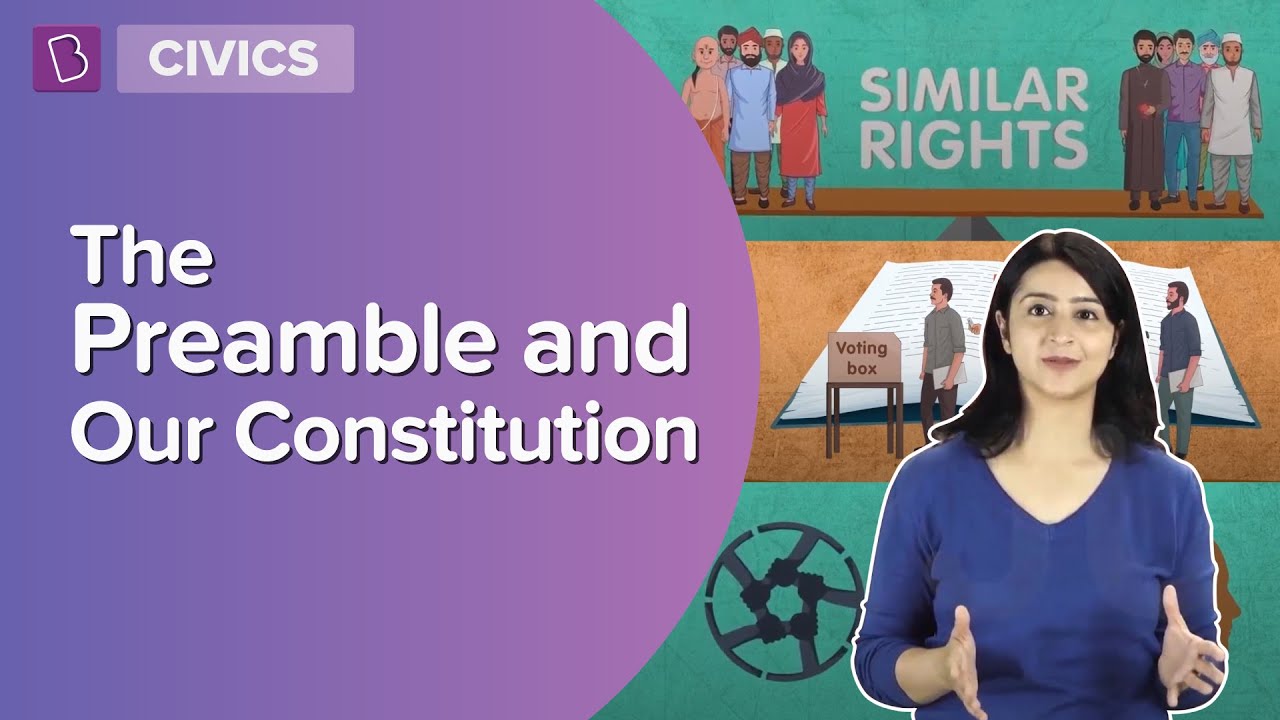
The Preamble of the Indian Constitution stands as a profound reflection of India’s fundamental philosophy, values, and democratic aspirations. It encapsulates the guiding principles envisioned by the Constituent Assembly during its debates between and , serving as the moral compass for the entire constitutional framework. For students and civil service aspirants preparing for competitive examinations like UPSC or State PCS, understanding the significance, nature, and amendability of the Preamble is essential to grasp the core spirit of Indian governance.
🎯 In this chapter, you will understand:
- The fundamental purpose and core governance principles defined by the Preamble.
- Philosophical perspectives and famous quotes by prominent legal scholars and leaders.
- Judicial evolution determining whether the Preamble is an integral part of the Constitution.
- The amendability of the Preamble under Article 368 and the impact of the 42nd Amendment Act.
💡 Why this topic matters: The Preamble is the key to reading and interpreting all provisions, articles, and laws of the Indian Constitution.
🧠 Core Idea: Think of the Preamble as the introductory preface of a book; it tells us who made the rulebook, where power comes from, and what goals our country wants to achieve for every citizen.
Significance of the Preamble in the Indian Constitution – Vision, Philosophy, and Amendability
The Preamble embodies the soul and moral vision of the Indian Constitution, clearly articulating our nation’s fundamental values and collective aspirations. It acts as the gateway to the Constitution, stating the precise intent, sources of power, and overarching goals behind its creation. It mirrors the vision of the Constituent Assembly to build a sovereign, democratic republic rooted in justice, liberty, equality, and fraternity.
- (i) It defines the core principles of governance and national identity.
- (ii) It sets forth the political, moral, and spiritual ideals that form the foundation of Indian democracy.
- (iii) It serves as a beacon of guidance for courts and legal scholars when interpreting complex constitutional provisions.
Philosophy and Core Values of the Preamble
The Preamble encapsulates the ideological vision of India’s founding fathers, portraying their dream of a just and inclusive nation. It integrates global democratic ideals with India's unique social reality to ensure every citizen enjoys equality and freedom.

Philosophical Foundation and Interpretations
The Preamble reflects India’s fundamental political, moral, and spiritual ideals, representing the true conscience of the Constitution. It draws inspiration from historical democratic charters, such as the French and American Revolutions, while carefully maintaining its unique Indian character and ethos.
- (i) It mirrors the vision of the Constituent Assembly and expresses the nation's collective democratic identity.
- (ii) Sir Alladi Krishnaswami Iyer described it as the expression of “what India had dreamt and desired for long.”
- (iii) K. M. Munshi famously called it the “horoscope of our sovereign democratic republic.”
Symbolic and Intellectual Interpretations
Various jurists, legal experts, and constitutional scholars have celebrated the Preamble’s enduring symbolism as the moral preface to the Constitution.
- (a) Pandit Thakur Das Bhargava regarded it as the “soul, the jewel, and the key of the Constitution.”
- (b) Sir Ernest Barker identified it as the “key-note of the Constitution” in his classic work Principles of Social and Political Theory ().
- (c) M. Hidayatullah, former Chief Justice of India, compared it to the American Declaration of Independence, emphasizing that it is the living soul of India’s political framework.
Preamble as a Part of the Constitution
The question of whether the Preamble forms an official part of the Constitution sparked significant legal debates and judicial interpretations over several decades in the Supreme Court of India.
Judicial Debates and Verdicts on the Preamble
Initially, the Supreme Court in the Berubari Union Case () held that while the Preamble helps us understand the minds of the framers, it is not an enforceable part of the Constitution. However, as constitutional understanding evolved, the court re-examined this view in later landmark decisions.
Judicial evolution regarding the constitutional status of the Preamble. - (i) The Berubari Union Case () acknowledged its value for clarification but denied it full constitutional status.
- (ii) In the landmark Kesavananda Bharati Case (), the court overturned its earlier stance and declared that the Preamble is an integral part of the Constitution.
- (iii) This ruling was reaffirmed in the LIC of India Case (), cementing its permanent legal relevance.
Nature and Importance of the Preamble
The Preamble provides the overall spirit and framework through which all laws must be read. Notably, it was voted on and enacted after finalizing the rest of the Constitution to ensure complete consistency with all articles.
- (a) It is neither a direct source of power for lawmakers nor a limitation on legislative authority.
- (b) It is non-justiciable, meaning citizens cannot directly ask a court to enforce Preamble statements by themselves.
- (c) It serves as an indispensable interpretative guide whenever an Article of the Constitution appears vague or ambiguous.
⚡ Quick Revision Capsule: Key Milestones & Interpretations of the Preamble
This table summarizes the major judicial decisions, scholarly descriptions, and constitutional amendments concerning the Preamble.
| Case / Authority | Year / Event | Key Ruling / Concept Established |
|---|---|---|
| Constituent Assembly | – | Framed the Preamble based on the Objectives Resolution moved by Jawaharlal Nehru. |
| Berubari Union Case | Held that the Preamble expresses general intent but is not a part of the Constitution. | |
| Kesavananda Bharati Case | Ruled that the Preamble is an integral part and can be amended without changing its basic structure. | |
| 42nd Amendment Act | Added three new key terms: Socialist, Secular, and Integrity. | |
| LIC of India Case | Reconfirmed that the Preamble is an integral internal component of the Constitution. |
📝 Summary
The Preamble of the Indian Constitution acts as the philosophical heart and guiding light of our entire legal system. Originating from historical debates between and , it embodies the supreme values of justice, liberty, equality, and fraternity. While non-justiciable in court, its constitutional status was firmly recognized by the Supreme Court in landmark decisions such as the Kesavananda Bharati Case (). For students and civil service aspirants, mastering the Preamble provides the crucial groundwork for understanding Indian polity and constitutional governance.
🚀 Quick Revision Points
Essential facts to review before examinations:
- (i) The Preamble is based on Jawaharlal Nehru's Objectives Resolution introduced in .
- (ii) It states that ultimate authority and political power derive directly from "We, the People of India."
- (iii) The Preamble has been amended only once through the 42nd Constitutional Amendment Act in .
- (iv) It is non-justiciable and non-enforceable in courts of law, yet vital for interpreting constitutional articles.
- 💡 Exam Tip: Remember the exact sequence of key terms defining India's nature: Sovereign, Socialist, Secular, Democratic, Republic, as well as the three words added by the 42nd Amendment (Socialist, Secular, Integrity).
❓ Frequently Asked Questions (FAQ)
Q1: Is the Preamble an enforceable part of the Indian Constitution?
A1: No, the Preamble is non-justiciable, meaning its provisions cannot be enforced in a court of law through direct lawsuits. However, courts use it to interpret ambiguous laws.Q2: Can Parliament amend the Preamble under Article 368?
A2: Yes. As held in the landmark Kesavananda Bharati Case (), Parliament can amend the Preamble provided the basic structure and core values are not altered or destroyed.Q3: How many times has the Preamble been amended so far?
A3: The Preamble has been amended only once by the 42nd Constitutional Amendment Act in , which added the words Socialist, Secular, and Integrity.