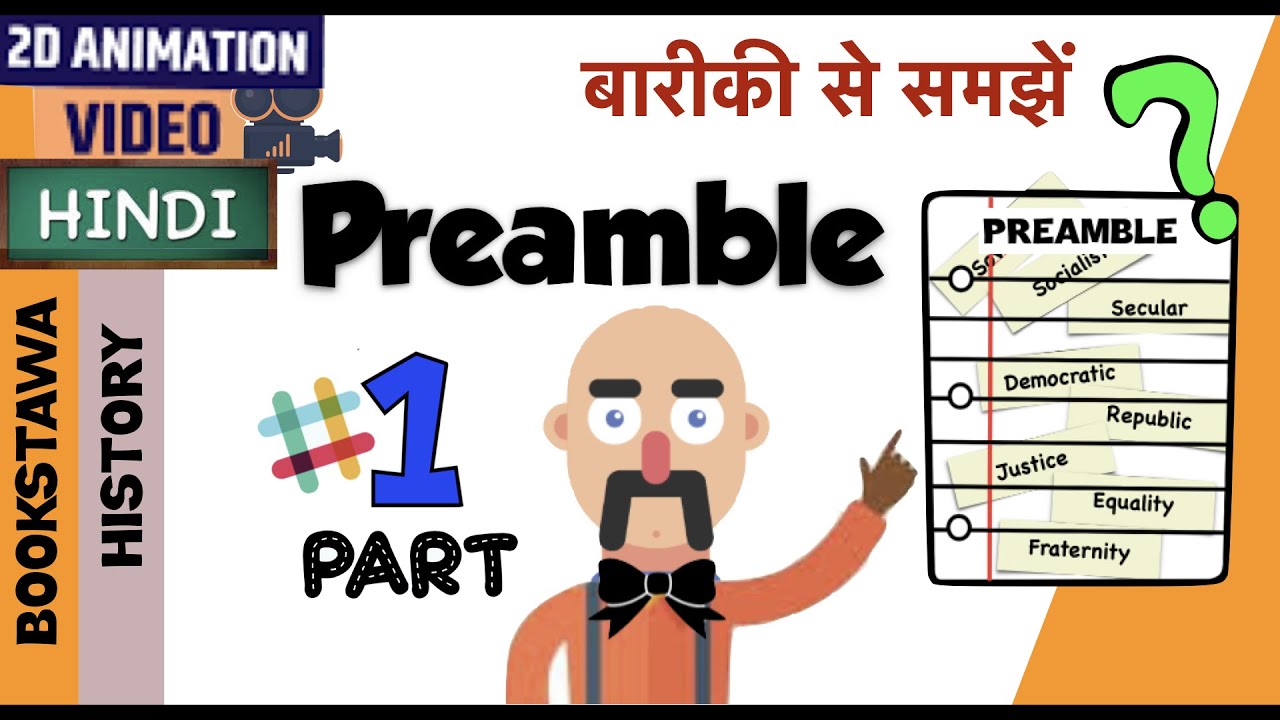
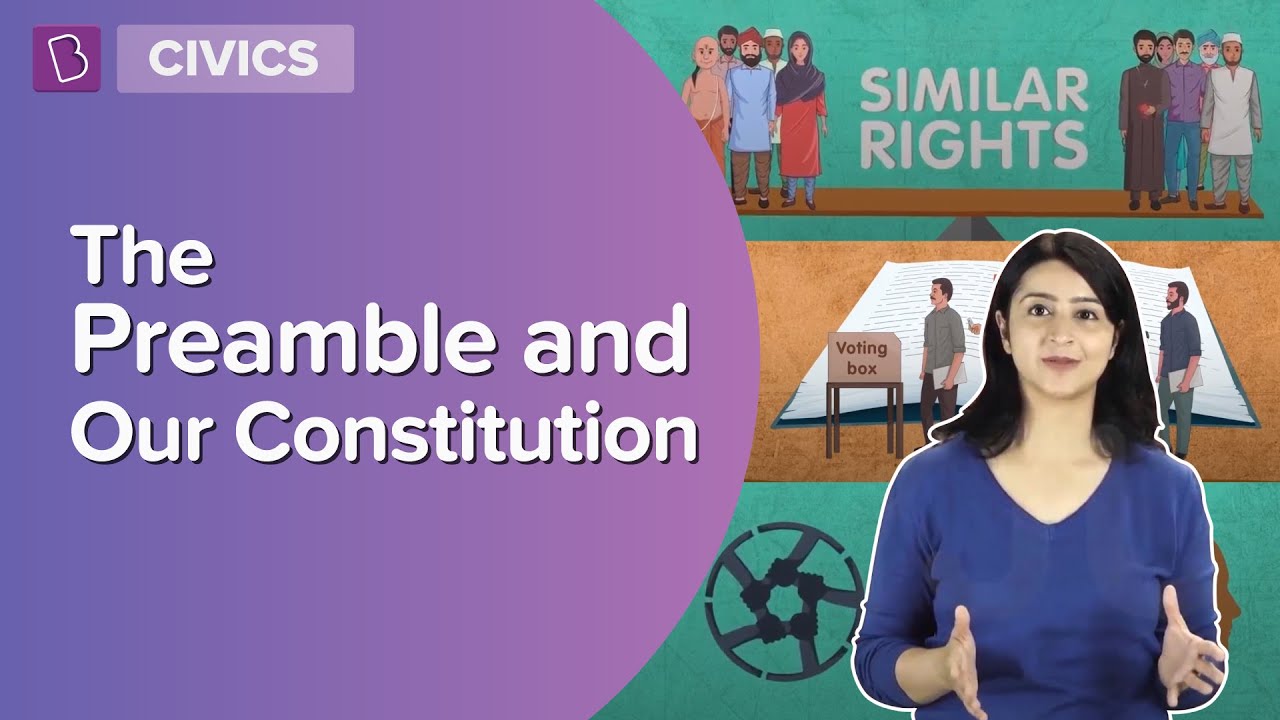
The Preamble of the Constitution of India acts like an introduction or opening chapter to the supreme law of our country. Think of it as a guide that explains the guiding principles, goals, and deep thoughts behind how India is governed. Inspired by the American Constitution and built upon Pandit Jawaharlal Nehru's Objectives Resolution introduced on , it clearly sets out the ideas of justice, freedom, equal opportunity, and togetherness. For students and anyone learning about our laws, reading this opening statement is key to understanding the real spirit of Indian democracy.
🎯 In this chapter, you will understand:
- How the Indian Preamble was created and where its main ideas came from.
- The key terms defining India: Sovereign, Socialist, Secular, Democratic, and Republic.
- The four major goals promised to every citizen: Justice, Liberty, Equality, and Fraternity.
- The historic adoption date of and its legal importance.
💡 Why this topic matters: The Preamble is the ultimate key to understanding why our laws exist. It serves as a moral guide for judges, lawmakers, and citizens to make sure India remains fair, free, and united.
🧠 Core Idea: All power in India comes directly from its people, and the government exists to protect every individual's dignity, freedom, and rights.
Preamble of the Constitution of India – Origin, Meaning & Key Elements (1949)
The Preamble serves as the guiding light of the Indian Constitution, summarizing its entire vision and core values in simple yet powerful words. It is not just a basic opening paragraph; it is a solemn promise made by the citizens of India to themselves. It sets out the main rules for how the country should be run and establishes the moral foundation that every law must follow.
Understanding the fundamental origins and core principles of the opening declaration:
- (i) It drew visual and structural ideas from the American Constitution and grew out of the famous Objectives Resolution moved by Pandit Jawaharlal Nehru.
- (ii) It shows that the ultimate power rests with the people and establishes the foundational tone for the entire Constitution of India.
- (iii) Through its values, it clearly explains what India strives to be: a Sovereign, Socialist, Secular, DemocraticRepublic.
Introduction and Historical Origin of the Preamble
The history of the Preamble links back to democratic movements around the world and India's own long fight for freedom. During the independence movement, Indian leaders envisioned a society where every person, rich or poor, would be treated fairly. These dreams were carefully collected and written into the Constitution's opening statement.

Global Inspirations Behind the Indian Preamble
The idea of writing a short opening statement before a long list of laws started with the American Constitution in . Many countries later copied this practice to state their goals clearly before detailing their specific rules. India took this good idea and customized it to reflect its unique culture and social needs.
- (i) The term Preamble refers to an introductory statement that explains where the Constitution gets its power, its basic principles, and its main purpose.
- (ii) The famous legal expert N. A. Palkhivala called the Preamble the
identity card of the Constitution
because it contains its essential summary. - (iii) India's Preamble was crafted from Pandit Jawaharlal Nehru'sObjectives Resolution, which was passed by the Constituent Assembly to guide independent India.
Evolution Through Constitutional Amendments
Even though the Preamble was carefully written at the beginning, it was updated once to reflect changing national goals. The 42nd Constitutional Amendment Act passed in added three vital new words to the text: Socialist, Secular, and Integrity. These additions emphasized that the nation cares for the poor, treats all religions equally, and remains undivided.
- (a) These new words underlined India's promise to reduce economic differences, protect freedom of worship, and keep the nation unified.
- (b) Even with these added words, the core meaning of the original Preamble stayed unchanged, continuing to protect justice, freedom, equality, and brotherhood.
- (c) In the landmark Kesavananda Bharati case of , the Supreme Court of India ruled that the Preamble is an actual part of the Constitution and forms its unchangeable Basic Structure.
Text and Meaning of the Preamble
The actual text of the Indian Preamble is a solemn declaration made by the people of India. It promises to build a strong nation that provides safety, fairness, and opportunity for everyone living in it, ensuring that no individual is left behind regardless of their background.
Objectives Stated in the Preamble
Every special term inside the Preamble has a big meaning that helps shape how laws are made and enforced across the country daily.
- (i) Justice – Fair treatment for all citizens in social, economic, and political matters, making sure nobody is discriminated against.
- (ii) Liberty – The freedom to think, speak, believe, follow any faith, and worship in whichever way one chooses.
- (iii) Equality – Giving every person the same status and equal opportunities to grow without unfair barriers.
- (iv) Fraternity – Building a feeling of brotherhood among all citizens to maintain individual self-respect and keep the country united.
Date of Adoption and Its Symbolism
The Constituent Assembly officially adopted the Preamble on . This special day marks the moment when Indian representatives finished drafting the supreme law and gave it to the citizens as their ultimate protection guide.
- (a) It represents a formal promise made by the nation to uphold fairness and truth for all future generations.
- (b) The date links the sacrifices of India's freedom fighters directly with the creation of a modern, law-abiding democracy.
- (c) Today, India celebrates every year as Constitution Day (or Samvidhan Divas) to honor this achievement.
⚡ Quick Revision Capsule: Key Words of the Preamble
Here is a quick breakdown of the core terms used in the Preamble and what they mean in simple everyday language:
| Preamble Term | Core Meaning | Real-World Application |
|---|---|---|
| Sovereign | Independent power without outside control. | India makes its own rules and foreign policy independently. |
| Socialist | Focus on social and economic fairness. | Government programs help reduce poverty and support those in need. |
| Secular | Equal treatment of all religions by the state. | The government does not pick a official state religion; all faiths are respected equally. |
| Democratic | Rule by the people through elected leaders. | Citizens vote in elections to choose their local and national representatives. |
| Republic | An elected head of state instead of a king or queen. | The President of India is elected by representatives, not through a royal family line. |
Core Elements and Interpretative Features of the Preamble
Legal scholars and judges look at the Preamble as a helpful flashlight when interpreting complex legal statutes. When the wording of a specific law seems confusing or unclear, judges read the Preamble to understand what the original law-makers were trying to achieve for the citizens.
Source of Authority
The very first words of the text say:
We, the People of India
. This means that the real power behind the Constitution does not come from a king, a foreign ruler, or a political party, but directly from the ordinary citizens living in the nation.- (i) Citizens hold the ultimate supreme authority in the democratic system.
- (ii) Government officials and leaders only exercise power given to them by the voters.
- (iii) It establishes the core legal idea known as Popular Sovereignty.
Nature of the Indian State
The Preamble uses five key words to describe the type of country India is built to be. Each of these five terms forms a main pillar holding up the structure of the nation's governance.
- (a) Sovereign – Free from any external control or foreign interference.
- (b) Socialist – Working toward removing welfare gaps and ensuring fair wealth distribution.
- (c) Secular – Giving equal safety, freedom, and respect to all religions without favoring any single one.
- (d) Democratic – Ensuring leaders are chosen by citizens through regular and fair elections.
- (e) Republic – Having a public office for the head of state rather than a hereditary monarch.
Objectives of the State
The text outlines four foundational promises that every government in India must work to protect. These goals guarantee that society stays fair, open, and friendly for everyone.
- (i) These pillars guide every new policy, court judgment, and legal act created in the country.
- (ii) They support both individual growth and the collective improvement of society.
- (iii) They capture the inspiring future envisioned by members of the Constituent Assembly.
📝 Summary
The Preamble to the Constitution of India remains the true heart and moral core of our nation's legal principles. It presents the core values of sovereignty, socialism, secularism, democracy, and republican governance in clear terms. For students and citizens alike, it works as a compass guiding our national decisions. The ideals of justice, liberty, equality, and brotherhood set down on continue to keep India strong, fair, and united today.
🚀 Quick Revision Points
Essential facts to review before examinations:
- (i) Derived from Pandit Jawaharlal Nehru's Objectives Resolution of .
- (ii) Updated once in by the 42nd Constitutional Amendment Act to add Socialist, Secular, and Integrity.
- (iii) Confirmed as an integral part of the Constitution's Basic Structure in the Kesavananda Bharati case ().
- (iv) Declares that the ultimate power of the nation comes from
We, the People of India
.
- 💡 Exam Tip: Remember the exact sequence of the five key descriptive terms in order: Sovereign, Socialist, Secular, Democratic, Republic (S-S-S-D-R). Also note that the Preamble has been amended only once in history ().
❓ Frequently Asked Questions (FAQ)
Q1: Can the Preamble be amended under Article 368?
A1: Yes, the Supreme Court ruled in the Kesavananda Bharati case (1973) that the Preamble can be amended, as long as the changes do not alter or destroy its Basic Structure.Q2: Which three new words were added to the Preamble in 1976?
A2: The words added were Socialist, Secular, and Integrity via the 42nd Constitutional Amendment Act.Q3: Is the Preamble directly enforceable in a court of law?
A3: No, the Preamble is non-justiciable, meaning citizens cannot file a court case based solely on the Preamble alone; however, courts use it to interpret other constitutional laws.