The Oath and Conditions of the President of India form an important constitutional safeguard. They ensure that the head of the Union upholds, protects and defends the Constitution while also receiving the institutional privileges, immunities and conditions needed to work freely and fairly. This is a high-value topic for Polity students and examination aspirants because it explains how India protects the dignity, neutrality and independence of its highest constitutional office.
🎯 In this chapter, you will understand:
- Why the President must take an oath before entering office.
- How the oath applies to a person acting as President or performing presidential functions.
- The constitutional conditions that keep the President independent and neutral.
- The privileges and immunities that protect the President during the term of office.
💡 Why this topic matters: The President is the constitutional head of India. The oath, conditions of office, and immunities together make sure that the President serves the nation according to the Constitution, rather than acting under personal, political, financial or legal pressure.
🧠 Core Idea: The Constitution gives the President important powers, but it also places clear duties and safeguards around the office. The President must promise loyalty to the Constitution, remain free from conflicting interests, and receive protection needed to perform official duties without fear or favour.
Oath and Conditions of the President of India — Constitutional Framework and Safeguards
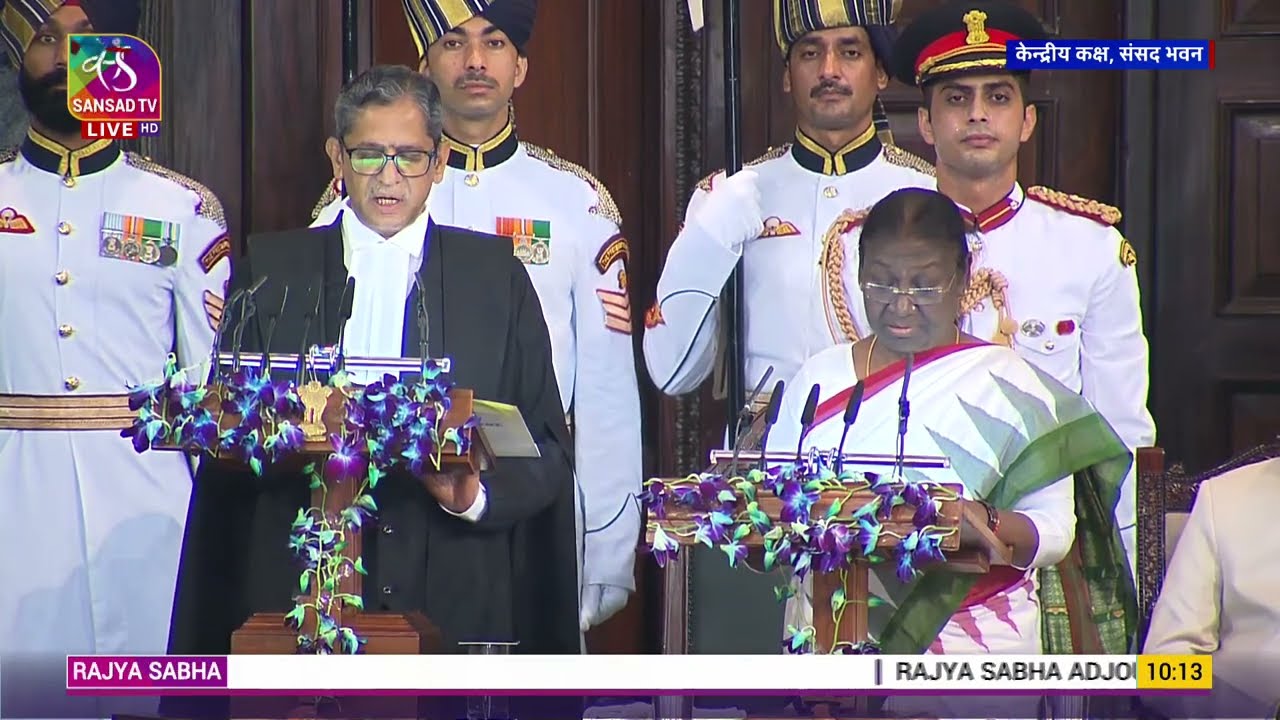
The President formally enters office only after taking a constitutionally mandated oath. This oath is not merely a ceremony; it is a public and legal promise that the President will work according to the Constitution. Before exercising any executive authority, the President must bind himself in public law to the faithful execution of duties and the protection of the Constitution. This deliberate ritual symbolises the lawful continuity of the Union and reminds everyone that presidential power comes from the Constitution, not from personal choice.
- (i) The President must first take and sign an oath or affirmation before assuming office. This means that the President cannot begin official work simply by being elected; the constitutional promise must be made first.
- (ii) The oath binds the President to faithfully discharge presidential duties, defend the Constitution and the law, and serve the welfare of the people of India. In simple words, the President promises to do the job honestly, follow the law, and work for the good of all citizens.
- (iii) The oath is administered by the Chief Justice of India, or, in the Chief Justice’s absence, by the senior-most judge of the Supreme Court available. This shows the seriousness of the occasion and connects the President’s entry into office with the authority of the Constitution and the judiciary.
Oath of Office — Applicability to Acting or Performing President
The constitutional discipline of the oath is not limited to the elected President alone. It travels with the function, not merely with the person. This means that whenever someone temporarily acts as President or performs the President’s duties, that person must also take the same kind of oath or affirmation. The rule ensures that the highest office of the Union never operates without a sworn commitment to the Constitution.
Oath for Acting or Performing Presidential Functions
Whenever any individual—by succession, vacancy or contingency—acts as President or temporarily performs the functions of the office, that person too must take a similar oath or affirmation before discharging authority. This ensures that no presidential power is ever exercised without a sworn constitutional pledge. The requirement protects the continuity of constitutional loyalty during transitions, such as when the President’s office becomes vacant or the President is unable to perform official duties.
- (i) Any person acting as President, or performing presidential duties, must take the same form of oath or affirmation.
- (ii) This ensures continuity of constitutional fidelity across transitions, so that temporary leadership does not weaken the constitutional character of the office.
- (iii) The safeguard prevents “unsworn power” from existing at the apex of the Union; no one can exercise presidential authority without first promising loyalty to the Constitution.
Conditions of the President’s Office — Constitutional Insulation
The Constitution deliberately insulates the presidency from conflicts of interest, financial influence and partisan control. These conditions help the President remain neutral and focus on constitutional responsibilities. They also prevent the President from using the office for personal gain or becoming dependent on any legislature, employer, or outside source of income.
Constitutional Conditions and Eligibility Discipline
To preserve neutrality, the President must remain institutionally detached from elective legislatures and pecuniary engagements. The President receives defined emoluments and privileges, and these are protected from reduction during the term of office. These rules create a clear boundary between the President’s public role and any personal or political interest.
- (i) The President cannot be a member of Parliament or any State Legislature. If a person holding such a seat is elected President, that seat is vacated when the person assumes office as President.
- (ii) The President cannot hold any other office of profit. This prevents the President from receiving income or benefits from another government position while serving as the head of the Union.
- (iii) The President receives a rent-free official residence, namely the Rashtrapati Bhavan. This official residence supports the dignity of the office and allows the President to perform official functions.
- (iv) The President receives emoluments, allowances and privileges as fixed by Parliament. Parliament therefore decides the financial provisions connected with the office through law.
- (v) The emoluments and allowances of the President are constitutionally non-reducible during the term of office. This protection prevents the government or legislature from pressurising the President by threatening to reduce salary or allowances.
Historical Financial Update — 2008 Revision of Emoluments
In , Parliament upgraded the financial arrangements of the Presidency to align with institutional dignity, post-tenure security and global parity. The revision improved the salary, pension and support facilities without altering the constitutional safeguards that protect the independence of the office.
- (a) The President’s salary was raised from Rs. 50,000 to Rs. 1.50 lakh per month. A pension equal to 50% of the salary was also provided.
- (b) Former Presidents receive a furnished residence, telephone, car, medical care, travel facilities, staff and office expenses up to Rs. 60,000 annually.
- (c) The spouse of a deceased President receives a pension equal to 50% of the President’s salary, along with a residence, telephone, car, medical care, travel facilities, staff and office expenses up to Rs. 12,000 annually.
Privileges and Immunities of the President
To prevent coercion, personal vendetta, or a chilling effect on sovereign decision-making, the President enjoys layered immunities. These protections shield official conduct and personal liberty during the term of office. They do not mean that the President is above the Constitution; rather, they ensure that the President can perform constitutional duties without improper pressure.
- (i) The President has absolute immunity from legal liability for official acts. This means the President cannot be taken to court for actions done while exercising the powers and duties of the office.
- (ii) The President has immunity from criminal proceedings during the term of office, even for personal acts. No criminal case can be started or continued against the President while the President remains in office.
- (iii) The President cannot be arrested or imprisoned while in office. This protection preserves the dignity and independent functioning of the highest constitutional office.
- (iv) Civil proceedings relating to personal acts require a two-month prior notice. Before such a case can be started, written notice must be given to the President, stating the nature of the proceedings, the cause of action, the details of the person bringing the case, and the relief claimed.

The President’s oath, office conditions and immunities work together to protect constitutional independence.
⚡ Quick Revision Capsule: Oath, Conditions and Immunities of the President
This quick revision capsule brings together the main points about the President’s oath, conditions of office, financial provisions and legal protections. Use it to revise the chapter quickly before an examination.
| Area | Constitutional Provision | Simple Meaning |
|---|---|---|
| Oath or affirmation | The President must take and subscribe to the oath before entering office. | The President promises to faithfully perform duties and defend the Constitution and law. |
| Who administers the oath | The Chief Justice of India, or the senior-most available Supreme Court judge in the Chief Justice’s absence. | The oath is administered by the highest judicial authority available. |
| Acting President | Every person acting as President or discharging presidential functions must take the same oath. | Temporary presidential authority also requires a sworn constitutional pledge. |
| Membership of legislature | The President cannot be a member of Parliament or a State Legislature. | The President remains separate from legislative membership to preserve neutrality. |
| Other office of profit | The President cannot hold any other office of profit. | The President cannot receive benefits from another profitable government position. |
| Official residence | The President is entitled to use the official residence without payment of rent. | The President receives the Rashtrapati Bhavan as a rent-free official residence. |
| Emoluments and allowances | Parliament determines the President’s emoluments, allowances and privileges; they cannot be reduced during the term. | The President’s salary and allowances are protected from reduction while in office. |
| Criminal protection | No criminal proceedings can be instituted or continued against the President during the term. | The President is protected from criminal cases while in office. |
| Arrest and imprisonment | No process for arrest or imprisonment can be issued against the President during the term. | The President cannot be arrested or imprisoned while in office. |
| Civil proceedings for personal acts | A two-month written notice is required before starting such proceedings. | Personal civil cases need advance notice to the President. |
📝 Summary
The oath requirement, conditions of office and immunities together ensure that the President of India functions with constitutional loyalty, financial independence and legal insulation. The President promises to preserve, protect and defend the Constitution and the law, while the conditions of office prevent conflicts of interest and financial pressure. The immunities protect the President from coercion during the term, thereby safeguarding the supremacy of the Constitution. This framework is doctrinally vital for students of Indian Polity and is high-yield for examinations.
🚀 Quick Revision Points
Essential facts to review before examinations:
- (i) The President must take an oath or affirmation before entering upon office.
- (ii) The Chief Justice of India administers the oath; in the Chief Justice’s absence, the senior-most available Supreme Court judge does so.
- (iii) A person acting as President, or discharging the President’s functions, must also take the same oath.
- (iv) The President cannot be a member of Parliament or a State Legislature and cannot hold any other office of profit.
- (v) The President receives a rent-free official residence, the Rashtrapati Bhavan, and emoluments and allowances determined by Parliament.
- (vi) The President’s emoluments and allowances cannot be diminished during the term of office.
- (vii) In , the President’s salary was raised from Rs. 50,000 to Rs. 1.50 lakh per month, with a pension of 50% of salary.
- (viii) The President enjoys immunity from criminal proceedings, arrest and imprisonment during the term, while civil proceedings for personal acts require two months’ prior notice.
- 💡 Exam Tip: Remember the three broad areas separately: Oath, Conditions of Office, and Privileges and Immunities. For the oath, focus on who takes it and who administers it. For conditions, remember legislative membership, office of profit, residence and salary protection. For immunities, remember official acts, criminal proceedings, arrest, and the two-month notice rule for personal civil proceedings.
❓ Frequently Asked Questions (FAQ)
Q1: Why must the President of India take an oath?
A1: The President must take an oath to promise faithful discharge of presidential duties, preservation and defence of the Constitution and law, and service to the well-being of the people of India. It makes constitutional loyalty a formal requirement before the President begins official work.Q2: Does a person acting as President also need to take the oath?
A2: Yes. Every person acting as President, or discharging the functions of the President, must take the same oath or affirmation before entering upon the office or performing its duties. This prevents any unsworn exercise of presidential authority.Q3: What immunities does the President enjoy during the term of office?
A3: The President is not answerable to a court for official acts, cannot face criminal proceedings during the term, cannot be arrested or imprisoned while in office, and receives two months’ prior written notice before civil proceedings concerning personal acts. These protections are designed to preserve the independent functioning of the office under the Constitution.