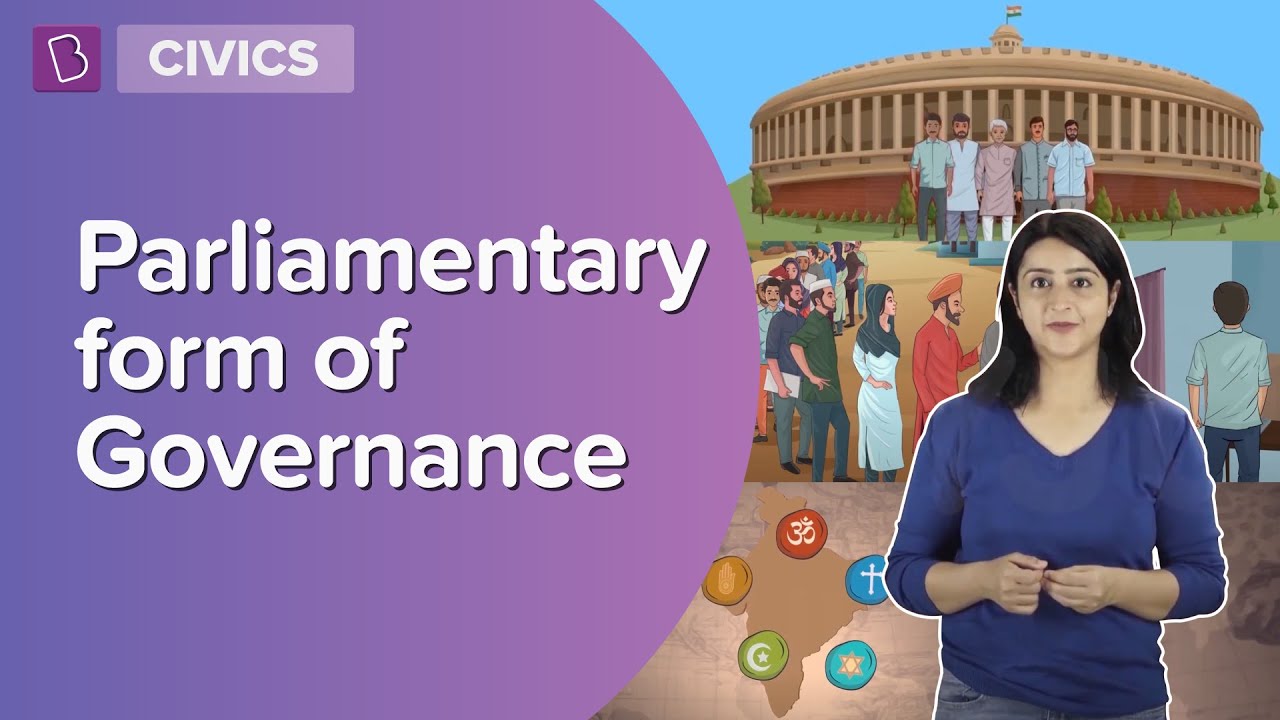
Explore the intricate workings of the Parliamentary System of Government in India, a cornerstone of Indian democracy. Understanding Articles 74, 75, 163, and 164 is essential for students preparing for competitive exams, as it defines the accountability and power dynamics within our nation’s political framework.
🎯 In this chapter, you will understand:
- How the parliamentary form of governance works at both the Union and State levels.
- The relationship between the President, Prime Minister, and Parliament under Articles 74 and 75.
- The duties of the Governor and Chief Minister under Articles 163 and 164.
- The difference between parliamentary and presidential systems of democracy.
💡 Why this topic matters: The parliamentary system ensures that the executive remains answerable to elected representatives, making it central to India’s democratic structure.
🧠 Core Idea: In India, the government must enjoy the confidence of the legislature. This keeps political power connected to the will of the people.
Parliamentary System of Government: Context, Features, and Evolution (2026)
A Deep Dive into the Constitutional Governance and Executive Accountability in the Indian Context.
The tale of Indian governance begins with the adoption of a framework that ensures the executive is never a power unto itself, but remains a servant of the people through their elected representatives.
- (i) The Constitution of India serves as the foundational script, establishing a parliamentary form of governance that operates harmoniously at both the central and state levels.
- (ii) At the heart of the Union, Articles 74 and 75 dictate the relationship between the President, the Prime Minister, and the Parliament.
- (iii) Mirroring this at the state level, Articles 163 and 164 outline the duties and responsibilities of the Governor and the Chief Minister.
Contrasting the Parliamentary vs Presidential Systems of Democracy
To truly appreciate the Indian system, one must understand how modern democracies are bifurcated based on the relationship between the executive and the legislature.
The Two Models of Democratic Governance
Democracies across the globe generally follow one of two paths: one defined by interdependence and the other by separation of powers.
- (i) The Parliamentary System: In this model, the executive is strictly accountable to the legislature for its policies and actions, creating a system of constant checks and balances.
- (ii) The Presidential System: Here, the executive remains independent of the legislature regarding its tenure and decision-making processes.
- (iii) Global Examples: The parliamentary model, often called cabinet government or the Westminster model, flourishes in Britain, Japan, Canada, and India. Conversely, the presidential or non-responsible government is observed in the USA, Brazil, Russia, and Sri Lanka.
The Origins and Conceptual Framework of Responsible Government
The nomenclature of our system is steeped in history, primarily drawing from the British legacy while evolving to meet modern needs.
The Cabinet System and the Essence of Responsibility
Scholars like Ivor Jennings have long described this framework as a ‘cabinet system’ because the cabinet acts as the core of political power, driving the national agenda.
- (a) The term ‘responsible government’ is vital for students to remember, as it signifies that the cabinet retains office only as long as it enjoys the confidence of the Parliament.
- (b) The ‘Westminster model’ is a geographical nod to Westminster in London, where the British Parliament resides.
The Evolution of the Prime Minister’s Stature
- (i) Early thinkers viewed the Prime Minister as primus inter pares (first among equals).
- (ii) Modern analysts such as Crossman and Mackintosh argue we have shifted toward a prime ministerial government.
- (iii) This increased influence of the PM is a defining characteristic of governance in India today.
Detailed Features of the Parliamentary Government in India
The Indian model is defined by specific features that ensure stability, transparency, and collective action.

Executive Dynamics: Nominal vs Real Heads
In the story of Indian democracy, the roles of the President and Prime Minister are distinct yet interconnected.
- (i) Nominal and Real Executives: The President is the nominal (de jure) head, while the Prime Minister is the real (de facto) executive. Under Article 74, the Council of Ministers provides advice that is binding on the President.
- (ii) Majority Party Rule: The party securing a majority in the Lok Sabha earns the right to lead. Their leader becomes the PM, and the President appoints other ministers based solely on the PM’s counsel.
The Doctrine of Collective Responsibility and Political Unity
For a government to function effectively, it must speak with one voice and remain answerable to the people’s house.
- (i) Collective Responsibility: Under Article 75, ministers are jointly answerable to the Parliament. A no-confidence motion in the Lok Sabha can bring down the entire ministry.
- (ii) Political Homogeneity: Members usually share a common ideology. Even in coalitions, consensus is the primary keyword for survival.
Legislative Links, Leadership, and House Dissolution
The unique overlap of the executive and legislative branches defines the Double Membership rule in India.
- (i) Double Membership: A minister must be a member of Parliament. If they are not, they have a window to get elected or they must resign.
- (ii) Leadership of the PM: The PM stands as the titan of the system, leading the Council of Ministers, the Parliament, and the ruling party.
- (iii) Dissolution of the Lower House: The President holds the power to dissolve the Lok Sabha and initiate fresh elections, but only upon the Prime Minister’s recommendation.
- (iv) The Oath of Secrecy: To protect national interests, ministers take an oath of secrecy administered by the President, ensuring government proceedings remain confidential.
⚡ Quick Revision Capsule: Parliamentary System of Government in India
Use this capsule to revise the central ideas of India’s parliamentary framework quickly before an examination.
| Concept | Meaning | Constitutional / Practical Link |
|---|---|---|
| Parliamentary System | The executive is accountable to the legislature. | Followed in India, Britain, Japan, and Canada. |
| Presidential System | The executive is independent of the legislature in tenure and decision-making. | Seen in the USA, Brazil, Russia, and Sri Lanka. |
| Article 74 | Provides a Council of Ministers headed by the Prime Minister to aid and advise the President. | The President acts according to the advice given. |
| Article 75 | Establishes ministerial responsibility and related provisions. | Ministers are jointly responsible to Parliament. |
| Articles 163 and 164 | Govern the Council of Ministers and Chief Minister at the State level. | Define the Governor–Chief Minister relationship. |
📝 Summary
The Parliamentary System is fundamental to ensuring a responsible and accountable executive in India. By adhering to Articles 74 and 75, the system balances power and maintains the democratic fabric through collective responsibility. For students, mastering these concepts is critical for understanding the Westminster model and the pivotal role of the Prime Minister in modern governance.
🚀 Quick Revision Points
Essential facts to review before examinations:
- (i) India follows a parliamentary system at both the Union and State levels.
- (ii) Articles 74 and 75 govern the President, Prime Minister, Council of Ministers, and Parliament.
- (iii) Articles 163 and 164 govern the Governor, Chief Minister, and State Council of Ministers.
- (iv) The parliamentary model is also called the cabinet government or Westminster model.
- 💡 Exam Tip: Remember the pairing: Articles 74–75 for the Union executive and Articles 163–164 for the State executive.
❓ Frequently Asked Questions (FAQ)
Q1: What is the parliamentary system of government?
A1: It is a system in which the executive is accountable to the legislature and remains in office only while it enjoys legislative confidence.Q2: Which Articles explain India’s Union executive?
A2: Articles 74 and 75 explain the roles of the President, Prime Minister, and Council of Ministers.Q3: Why is India’s system called the Westminster model?
A3: It is called the Westminster model because it draws from the British parliamentary tradition associated with Westminster, where the British Parliament is located.