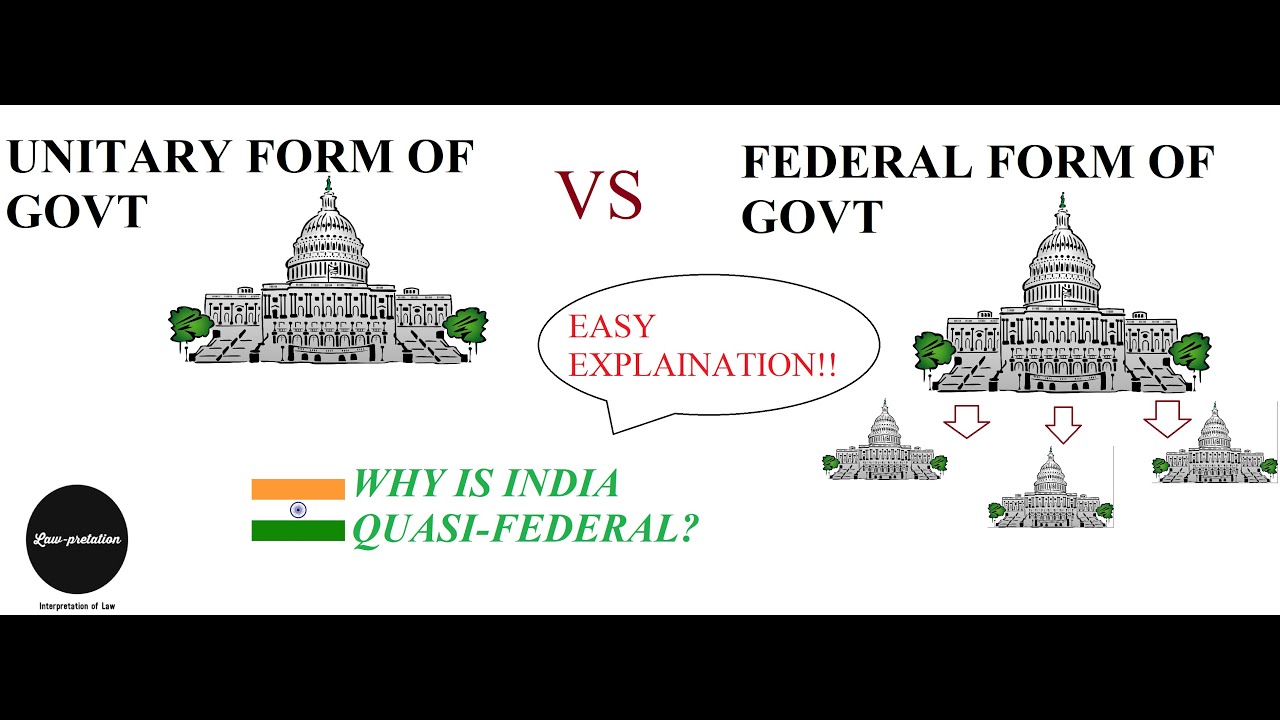
This comprehensive analysis explores the Federal Features of the Indian Constitution, examining the Constitutional Framework that balances power between the Centre and States, a topic of paramount importance for competitive exam aspirants and law students seeking to understand Indian Polity.
🎯 In this chapter, you will understand:
- The dual polity and the functional partnership between the Union and State Governments.
- Why India has a written and lengthiest Constitution, along with its historical growth.
- How legislative powers are divided through the Seventh Schedule.
- The role of constitutional supremacy, judicial review, an independent judiciary, and bicameralism.
💡 Why this topic matters: The federal features explain how India maintains national unity while allowing regional governments to manage local needs. This balance is essential for understanding Indian governance and competitive examinations.
🧠 Core Idea: The Constitution of India distributes powers between the Union and the States, sets limits on both, and provides institutions to resolve disputes while protecting the federal structure.
Federal Features of the Constitution and Centre-State Relations
The foundational architecture of the Indian state is built upon a sophisticated federal system that ensures a harmonious coexistence between different levels of governance.
By dissecting the legal and structural components of the Constitution of India, we can observe how it creates a resilient bond between the Union and the States through specific federal characteristics.
- (i) The system avoids a concentration of power by distributing it across varied geographical and political layers.
- (ii) It provides a mechanism for the resolution of conflicts while maintaining national integrity.
- (iii) The framework allows for regional aspirations to flourish within a unified national identity.
The Concept of Dual Polity in the Indian Federal System
At the heart of the Indian federal experiment lies the principle of a dual polity, which serves as the primary pillar of the nation's governance.
Organizational Structure of the Union and State Governments
The Constitution of India establishes a dual political structure, characterized by the Union Government operating at the national centre and the State Governments positioned at the periphery. This is not a hierarchical relationship of master and servant, but rather a functional partnership.
- (i) Each level of government possesses sovereign authority within its own constitutionally assigned domain, ensuring that neither encroaches upon the other's legal territory.
- (ii) The Union is entrusted with managing matters of national significance.
Specific National Portfolios
- (a) Management of National Defence and security.
- (b) Foreign Relations and international diplomacy.
- (c) Control over Currency and monetary policy.
- (d) Regulation of Communications across the country.
- (iii) Conversely, the States are empowered to handle regional and local issues.
Regional Jurisdictions
- (a) Development of Agriculture and irrigation.
- (b) Maintenance of Public Order and police forces.
- (c) Management of Public Health and sanitation.
- (d) Administration of Local Self-Government bodies.
The Significance of a Comprehensive Written Constitution
The clarity of the Indian federal system is derived from its status as a written document, providing a permanent reference for the division of powers.

Historical Evolution and Scope of the Document
India’s Constitution is not only written but also the lengthiest in the world, a testament to the meticulous planning of its framers to avoid any legal ambiguity between the Centre and the States.
- (i) Originally, it contained a Preamble, 395 Articles (organized into 22 Parts) and 8 Schedules.
- (ii) Over time, through various amendments necessitated by the country's growth, it expanded. By , it had grown to approximately 465 Articles (in 25 Parts) and 12 Schedules.
- (iii) The document clearly defines the organisation, powers, and functions of both levels of government, setting the limitations within which they must operate to minimise possible disputes.
The Elaborate Division of Legislative Powers
The functional distribution of power is meticulously codified within the schedules of the Constitution to ensure administrative efficiency.
The Three Lists of the Seventh Schedule
The Seventh Schedule acts as the definitive guide for law-making authority, dividing subjects into three distinct categories based on their nature and reach.
- (i) Union List: This list contains 100 subjects (originally 97) over which the Centre has exclusive legislative power.
- (ii) State List: This includes 61 subjects (originally 66) where the States generally hold the right to legislate.
- (iii) Concurrent List: This encompasses 52 subjects (originally 47) where both the Centre and States can make laws.
Conflict and Residuary Powers
- (a) In cases of conflict between a State law and a Central law on the Concurrent List, Union law prevails.
- (b) Residuary subjects—matters not mentioned in any of the three lists—are exclusively vested in the Centre.
⚡ Quick Revision Capsule: Federal Features of the Indian Constitution
This capsule brings together the major federal features and their constitutional roles for quick revision.
| Federal Feature | What It Means | Constitutional Importance |
|---|---|---|
| Dual Polity | The Union Government operates at the national level and State Governments operate at the regional level. | It creates a functional partnership rather than a master-servant relationship. |
| Written Constitution | A single written document defines the organisation, powers, functions, and limitations of both levels of government. | It reduces legal ambiguity and helps minimise disputes between the Centre and States. |
| Division of Powers | The Seventh Schedule divides subjects into the Union List, State List, and Concurrent List. | It provides a clear framework for law-making authority. |
| Supremacy of the Constitution | The Constitution stands above ordinary laws and executive orders. | Laws contrary to it can be declared null and void through judicial review. |
| Bicameralism | Parliament has two Houses: the Rajya Sabha represents the States, while the Lok Sabha represents the people. | It protects State interests and helps maintain the federal balance. |
📝 Summary
Understanding the Federal Features of the Constitution is essential for students as it clarifies the division of powers that governs the world's largest democracy. By analyzing the Seventh Schedule, Dual Polity, and the role of the Supreme Court, we see a system designed for stability and regional representation. These features, established since the inception of the Republic in 1950, remain the bedrock of Indian administration and a critical focus for all competitive examinations.
🚀 Quick Revision Points
Essential facts to review before examinations:
- (i) India follows a dual polity, with the Union at the centre and States at the periphery.
- (ii) The Constitution was originally written with 395 Articles, 22 Parts, and 8 Schedules.
- (iii) The Seventh Schedule contains the Union List, State List, and Concurrent List.
- (iv) The Supreme Court protects constitutional supremacy through judicial review and resolves Centre-State disputes.
- 💡 Exam Tip: Remember the present numbers of the three legislative lists—Union List: 100, State List: 61, and Concurrent List: 52—and that Union law prevails over State law in a Concurrent List conflict.
❓ Frequently Asked Questions (FAQ)
Q1: What is dual polity in the Indian Constitution?
A1: Dual polity means that India has two levels of government—the Union Government at the national level and State Governments at the regional level—each functioning within its constitutionally assigned domain.Q2: What happens when a State law conflicts with a Central law on the Concurrent List?
A2: Union law prevails. The Concurrent List allows both the Centre and States to legislate, but a Central law overrides a conflicting State law.Q3: Why is the judiciary important in India’s federal system?
A3: The Supreme Court acts as an independent arbiter. It uses judicial review to protect the supremacy of the Constitution and resolves disputes between the Centre and States or among States.