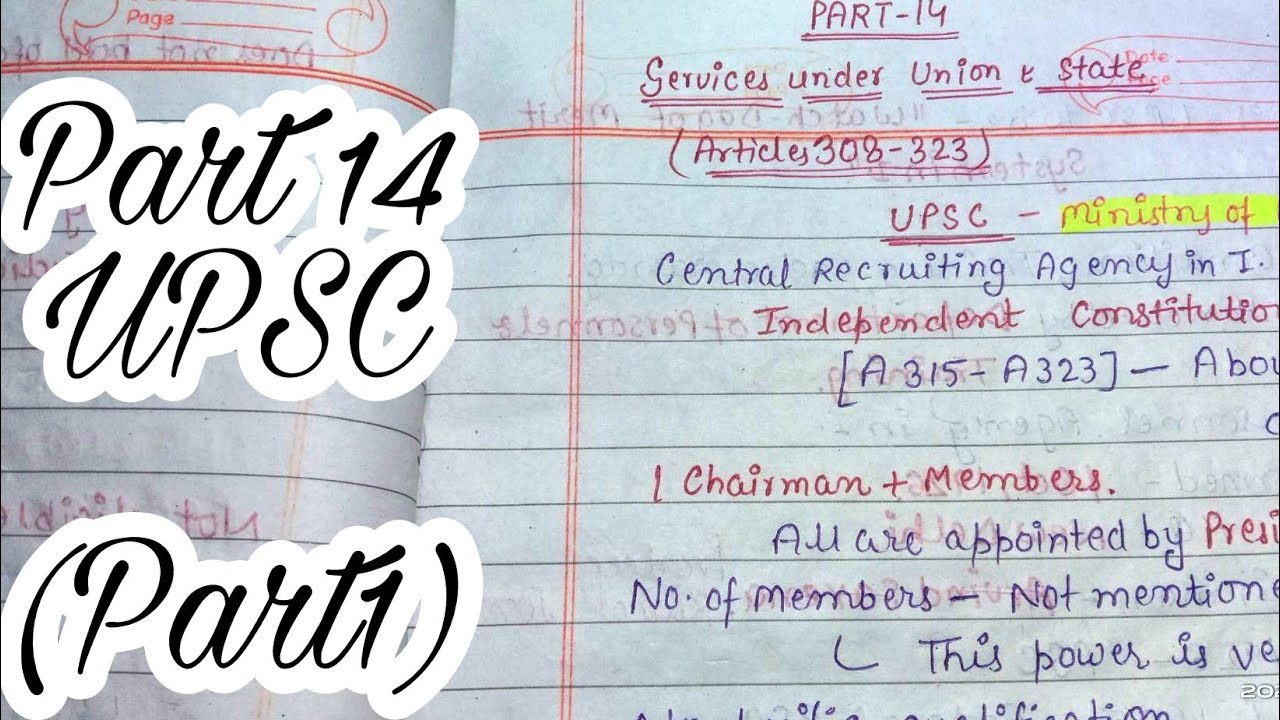
This comprehensive guide explains the pivotal role and functions of the Union Public Service Commission (UPSC), a constitutional body responsible for maintaining fairness and merit in India’s civil services. It also explains the Commission’s limitations, its relationship with the Government of India, and the way Parliament keeps a check on its working. Since , when the Constitution of India came into force, the UPSC has helped ensure that public appointments are made through a transparent and merit-based system. For students preparing for competitive examinations, understanding the UPSC is important because it shows how meritocracy is protected within India’s administrative framework.
🎯 In this chapter, you will understand:
- The meaning and constitutional role of the Union Public Service Commission.
- How the UPSC conducts recruitment examinations and assists in appointments.
- The matters on which the Government must consult the UPSC.
- The limitations of the UPSC and the safeguards that maintain accountability.
💡 Why this topic matters: The UPSC helps ensure that government jobs are given on the basis of ability, knowledge, and fair selection rather than favouritism. Learning about its functions and limitations helps students understand how India keeps its civil services independent, professional, and accountable.
🧠 Core Idea: The UPSC is the central recruiting and advisory body for civil services. It conducts examinations, advises the Government on service matters, and helps protect merit, but its advice is not always binding and its jurisdiction has important exceptions.
Role of the Union Public Service Commission
As the central recruiting agency in India, the UPSC serves as the watchdog of the merit system, ensuring the highest standards of administrative excellence. It was established to safeguard the independence of the civil services and to make sure that people selected for important government positions are chosen fairly. In simple words, the UPSC acts as a bridge between the government’s need for capable officers and the country’s pool of talented candidates.
Constitutional Position of the UPSC
The UPSC is not an ordinary government department. It is a constitutional body, which means its existence, powers, and duties come directly from the Constitution of India. This gives it a special position because it can work independently in matters of recruitment and advice. Its main purpose is to protect the civil services from political pressure and to ensure that appointments are based on merit.
- (i) The narrative of the UPSC begins with its primary responsibility to conduct rigorous recruitment examinations for prestigious roles.
- (ii) It acts as a consultative pillar for the Government of India, ensuring that personnel management follows established legal and ethical codes.
- (iii) The Commission’s reach extends beyond individual hiring to the very architecture of All-India Services.
Core Functions of UPSC and Recruitment Assistance
The operational heart of the UPSC lies in its diverse functional mandate, ranging from direct recruitment to providing strategic support to various state entities. Its work is not limited to conducting one famous examination. Instead, it helps the Union Government select suitable people for many civil posts, designs fair methods of recruitment, and supports states when they need help with specialized appointments. These functions make the UPSC an important part of India’s administrative system.

Organized Competitive Examinations for All-India Services
The Commission is the primary architect of the competitive examination process used to select officers for All-India Services and Central Services. This means that candidates must compete through a planned and transparent process. The aim is to make sure that appointments in centrally administered territories are based strictly on merit and transparency, rather than personal connections or unfair influence.
- (i) Systematic organization of civil service entrance tests.
- (ii) Implementation of selection criteria for diverse Group A and Group B posts.
Joint Recruitment Schemes and Specialized Qualifications
In cases where two or more states identify a need for shared talent, the UPSC steps in to facilitate joint recruitment schemes. This is particularly vital for technical or specialized positions that require unique expertise not easily sourced at the state level alone. For example, if several states need experts in a rare technical field, they may request the UPSC to help them create a common recruitment process. This saves effort, avoids repetition, and helps states find suitably qualified candidates.
- (a) Collaboration with state governments upon specific requests.
- (b) Designing assessment frameworks for niche professional qualifications.
State Government Support through Governor and President Approval
Beyond its federal duties, the Commission provides localized assistance to the Governor of a state. However, this support is contingent upon the formal approval of the President of India to maintain constitutional balance. This rule is important because it prevents the UPSC from automatically taking over state-level functions. The President’s approval ensures that any extension of the Commission’s work to a state follows proper constitutional procedure.
Matters Where UPSC Consultation is Mandatory
The Constitution mandates that the government must seek the advice of the Commission on several critical aspects of civil service management. These consultation requirements are meant to bring expert and impartial advice into decisions about recruitment, promotion, discipline, pensions, and legal claims. The UPSC does not replace the Government, but it provides an independent check so that important service-related decisions are made carefully and fairly.
Personnel Management Rules: Appointments and Promotions
The government is bound to consult the UPSC regarding the recruitment methods and the fundamental principles governing appointments, promotions, and transfers. This ensures a consistent standard across various civil services. For instance, before deciding how candidates should be selected for a service or how officers should be promoted, the Government can take the UPSC’s advice to ensure that the process remains fair and uniform.
- (i) Validation of candidates’ suitability for elevated roles.
- (ii) Verification of recommendations made by concerned departments for internal promotions.
Disciplinary Actions and Penalties for Civil Servants
One of the most critical safeguards is the Commission's role in disciplinary matters. Any major action against a civil servant under the Government of India must involve an advisory review by the UPSC to prevent arbitrary punishment. This means that before a serious penalty is imposed, the Government should seek the Commission’s advice. The purpose is to make sure that punishment is proportionate, based on evidence, and not influenced by personal dislike or political pressure.
Types of Disciplinary Penalties under Review
The UPSC may be consulted when the Government considers major disciplinary penalties against a civil servant. These penalties can affect an officer’s reputation, salary, rank, pension, or continued service. Therefore, independent advice becomes especially important in such cases.
- (i) Censure and severe disapproval.
- (ii) Withholding of increments or promotions.
- (iii) Recovery of pecuniary loss caused to the state.
- (iv) Demotion (reduction in rank) or Compulsory retirement.
- (v) Removal or Dismissal from the service.
Legal Claims, Pensions, and Injury Reimbursement
The Commission oversees the financial protection of officers who face legal challenges or sustain injuries while performing official duties. It assesses the fairness of pension claims and the quantum of compensation awarded for service-related injuries. This protection matters because civil servants may sometimes have to defend official actions in court or may suffer harm while carrying out their duties. The UPSC’s advice helps ensure that such claims are examined carefully and fairly.
Judicial Interpretation and Legal Status of UPSC Advice
The judiciary has frequently stepped in to define the exact nature of the relationship between the UPSC and the executive branch. Although the Constitution requires consultation in many matters, the courts have clarified that the UPSC’s advice does not always bind the Government. This balance allows the Commission to give independent advice while leaving the final administrative decision with the elected Government.
The Directory Nature of Constitutional Consultation
According to the Supreme Court of India, the requirement to consult the Commission is directory rather than mandatory. This means that a government decision is not automatically invalidated simply because the UPSC was not consulted, though it remains a procedural expectation. In simple language, consultation is strongly expected and should normally be followed, but failure to consult does not by itself make every government action illegal.
- (i) Selection by the UPSC does not grant an absolute legal right to appointment.
- (ii) The government maintains the right to final decision-making, provided it acts fairly and without malafide intention.
Parliamentary Oversight and the Annual Report Process
Accountability is maintained through a structured reporting system that culminates in the Parliament of India. The UPSC does not work completely outside public view. It reports its work every year, and Parliament can examine how the Commission’s advice was used. This system helps maintain transparency and allows elected representatives to keep track of important service-related decisions.
Additional Powers and Parliamentary Extension
The Parliament holds the power to expand the jurisdiction of the UPSC. This allows the Commission to oversee public authorities, corporate bodies, and other specialized institutions if a specific law is enacted. In other words, Parliament can decide that the UPSC should also look after recruitment or service matters in certain additional organisations. This flexibility helps the Commission’s role grow when the country’s administrative needs change.
Reporting to the President and Rejection of Advice
Every year, the UPSC submits an annual report to the President. This document is a critical tool for transparency, as it lists every instance where the government chose to reject the Commission's advice. The report is then placed before Parliament, along with an explanation of why the advice was not accepted. This ensures that the Government cannot quietly ignore the UPSC without giving reasons.
- (i) Reasons for non-acceptance must be clearly documented.
- (ii) Rejections must be cleared by the Appointments Committee of the Union Cabinet.
- (iii) Individual ministries are prohibited from unilaterally rejecting UPSC recommendations.
Limitations on Jurisdiction and Exclusion Regulations
While powerful, the Commission does not have authority over every aspect of government personnel management. Some matters are kept outside its jurisdiction because they require special constitutional treatment, diplomatic discretion, or quick administrative action. These limitations do not reduce the importance of the UPSC; rather, they show that its role is carefully defined by the Constitution and law.
Social Justice, Reservations, and SC/ST Claims
The UPSC is not consulted regarding reservation matters for backward classes or the consideration of claims by Scheduled Castes (SCs) and Scheduled Tribes (STs) for appointments, as these are handled through separate constitutional provisions. These provisions are designed to promote social justice and provide representation to communities that have historically faced discrimination. Therefore, reservation policy remains outside the UPSC’s ordinary advisory jurisdiction.
Excluded Posts: Diplomatic and Group C/D Services
Certain high-level and low-level positions fall outside the Commission's purview to ensure operational flexibility for the executive. Some posts require special political or diplomatic judgement, while others are filled through simpler departmental processes. Keeping such posts outside the UPSC’s normal jurisdiction helps the Government manage them efficiently.
Some diplomatic, tribunal, temporary, and lower-level posts remain outside the UPSC’s normal jurisdiction. - Chairmanship of tribunals and commissions: These positions may require specialized legal, technical, or administrative experience and are treated separately from ordinary civil-service recruitment.
- High-ranking diplomatic assignments: Senior posts abroad often require careful political and diplomatic consideration, so they are generally excluded from the Commission’s normal consultation process.
- Group C and Group D services: Recruitment for the majority of these services is usually handled through other suitable methods because these posts involve different levels of responsibility and skill.
- Temporary or officiating appointments: Appointments intended to last for less than one year are generally excluded so that urgent or short-term work can be managed without a lengthy recruitment process.
Presidential Powers of Exclusion and Parliamentary Review
The President has the authority to remove specific matters from the UPSC's jurisdiction. However, such regulations must be tabled before Parliament for 14 days, allowing the Legislature to amend or repeal them as they see fit. This rule ensures that the President’s power to exclude matters is not unlimited. Parliament can review the decision and change it if lawmakers believe it is not in the public interest.
⚡ Quick Revision Capsule: UPSC Functions and Limitations
The following table gives a simple overview of the UPSC’s major functions, advisory role, and important limitations. It is useful for quick revision before examinations.
| Area | UPSC’s Role | Important Point |
|---|---|---|
| Recruitment Examinations | Conducts competitive examinations for All-India Services and Central Services. | Selection is based on merit and transparency. |
| Joint Recruitment | Helps two or more states create and operate joint recruitment schemes. | Used especially for posts needing special qualifications. |
| Advisory Role | Advises on recruitment methods, appointments, promotions, and transfers. | Consultation is expected, but advice is generally directory, not absolutely binding. |
| Disciplinary Matters | Reviews major disciplinary action against civil servants. | Helps prevent arbitrary punishment and protects procedural fairness. |
| Annual Report | Submits an annual report to the President, which is placed before Parliament. | Rejections of UPSC advice must be explained and documented. |
| Limitations | Does not handle certain reservations, diplomatic posts, tribunal posts, and many Group C/D posts. | These exclusions maintain administrative flexibility and follow separate constitutional or legal arrangements. |
📝 Summary
The Union Public Service Commission remains a cornerstone of the Indian administrative system, balancing executive power with merit-based recruitment. Since , it has played a major role in selecting officers for the country’s civil services and advising the Government on fair service rules. Its work supports transparency, accountability, and professional administration. For students, mastering the functions and limitations of the UPSC is essential for understanding the Constitution of India and the legal protections afforded to civil servants. This structure ensures that transparency and accountability remain at the heart of the nation's governance.
🚀 Quick Revision Points
Essential facts to review before examinations:
- (i) The UPSC is a constitutional body that conducts examinations for appointments to the services of the Union.
- (ii) It advises the Government on recruitment methods, appointments, promotions, transfers, and disciplinary matters.
- (iii) The UPSC’s advice is generally directory, meaning the Government should normally consult it but the advice is not always binding.
- (iv) The UPSC submits an annual report to the President, and cases where its advice is rejected are placed before Parliament.
- (v) Reservation matters, certain diplomatic posts, tribunal chairmanships, most Group C and Group D posts, and temporary appointments of less than one year are generally outside its normal jurisdiction.
- 💡 Exam Tip: Remember the difference between the UPSC’s functions and its limitations. Functions include examinations, recruitment advice, disciplinary consultation, and annual reporting; limitations include excluded posts, reservation matters, and the non-binding nature of its advice.
❓ Frequently Asked Questions (FAQ)
Q1: What is the main function of the UPSC?
A1: The main function of the UPSC is to conduct competitive examinations for appointment to the services of the Union and to advise the Government on recruitment and civil-service matters.Q2: Is the UPSC’s advice always binding on the Government?
A2: No. The Supreme Court has described the requirement of consultation as directory rather than mandatory. The Government should normally consult the UPSC, but its advice is not an absolute command.Q3: Which matters are outside the UPSC’s jurisdiction?
A3: The UPSC is generally not consulted on reservation matters for backward classes or SC/ST claims, certain high-level diplomatic assignments, tribunal chairmanships, most Group C and Group D services, and temporary or officiating appointments lasting less than one year.