This study guide gives a simple and clear look into the Role and Development of Stock Market systems, showing how the financial reforms of the completely changed the Indian Securities Market. Learning about these money systems and the financial laws behind them is very helpful for students and candidates preparing for competitive exams in economics and finance.
🎯 In this chapter, you will understand:
- How stock markets help drive countrywide economic growth and direct savings into useful investments.
- The main numbers and ratios used to check a stock market's size, trading speed, and overall health.
- Major changes in the Indian stock market during the 1990s, including the setup of the National Stock Exchange.
- How past financial scams pushed regulators like SEBI to switch to paperless electronic trading and safer settlement cycles.
💡 Why this topic matters: A well-regulated stock market protects small investors while giving businesses the money they need to build factories, create jobs, and grow the economy.
🧠 Core Idea: Modern stock markets collect unused money from individuals, put it into promising companies, and use strict rules and technology to make trading safe, fair, and fast for everyone.
The Stock Market as a Barometer of Economic Growth
The stock market acts like a heartbeat for a country's economic health, working as a engine for long-term growth. Experts around the world know that a healthy stock exchange is not just a place to buy and sell shares, but a true mirror of economic strength. It guides the flow of money across the nation to keep the economy steady and growing.
- (i) It works as a helpful secondary path alongside traditional banks to gather domestic savings and use them for large building and industrial projects.
- (ii) By guiding money to where it is needed most, it ensures funds go to the best business ideas, which raises the overall profits and success of investments.
- (iii) It brings good management habits to companies, because open stock trading pushes company leaders to run their businesses cleanly and efficiently.
Key Indicators and Metrics of Stock Market Development
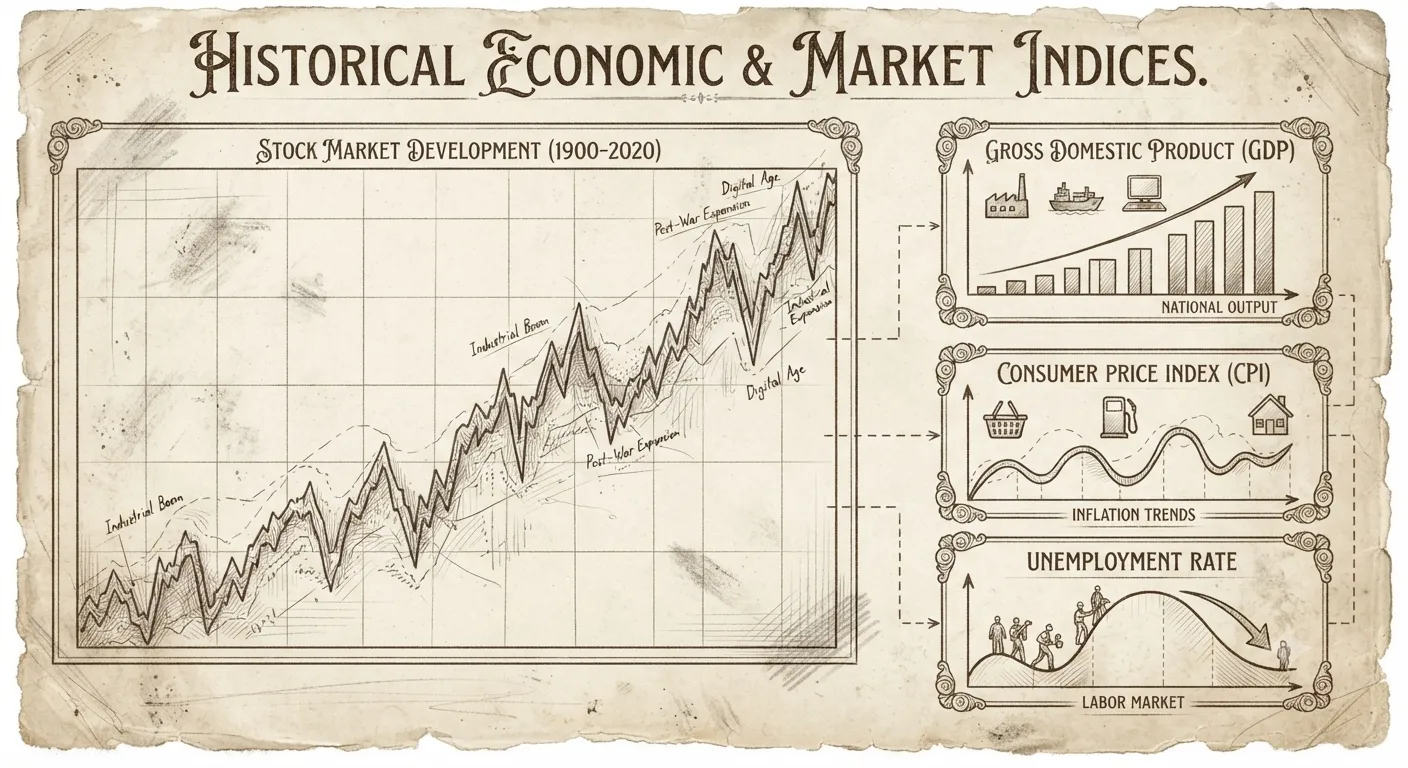
To check how big, strong, and mature a financial market is, experts use simple numerical measurements. These figures give clear math-based tools to compare stock markets across different countries or different time periods.
Analyzing Market Capitalisation and Liquidity Ratios
People judge the strength of a market by looking at its overall size and how fast traders can buy or sell shares without causing sudden price jumps. These measures show how much trust people have in the market and how well risks are spread out.
- (i) Market Capitalisation Ratio (MCR): This is the combined monetary value of all company shares listed on the exchange. It is the main way to measure market size and see how well it gathers savings while spreading financial risk among many people.
- (ii) Market Liquidity Parameters: High liquidity means trading is smooth and easy. It is measured in two main ways:
- (a) Value Traded Ratio: The total cash value of all shares traded divided by the country's total economic output (GDP), showing how closely stock trading connects with real-world business.
- (b) Turnover Ratio: The cash value of traded shares compared directly to the market capitalization, showing how active the market participants really are.
- (iii) Volatility Parameter: This tracks how fast and wide share prices move up and down. While small price changes are completely normal, huge price swings warn regulators that market risks are rising and better rules are needed.
The Great Transformation: Indian Securities Market Reforms
The early brought a major structural shift for India. The country stepped away from an old, closed system and opened up a modern, globally connected financial network. Old roadblocks were replaced with high-tech computerized trading systems and stronger safety rules.
Objectives Behind the Liberalisation of 1990s
To bring in funds from foreign investors and keep small everyday investors safe, the Indian government made large changes to organize, run, and grow the market.
- (i) Improving market working speed so orders get matched and finished very quickly.
- (ii) Making every trade clear and open so the public could trust the stock market again.
- (iii) Putting strict checks in place to stop cheating, price manipulation, and dishonest trading tricks.
Institutional Milestones: From NSE to Derivatives Trading
The changes in the were not just about adding rules on paper, but also about building real, high-tech stock trading platforms that could match global standards.
- (i) The opening of the National Stock Exchange (NSE) in , which introduced electronic computer trading across India for the first time.
- (ii) The important shift to automatic rolling settlements and the official start of trading in financial contracts called derivatives in , giving investors smart tools to protect themselves against price losses.
Core Functions and Strategic Roles of the Capital Market
A capital market acts as a bridge connecting people who have unused cash with companies that need money to expand. It turns personal savings into working business assets that create real goods and jobs.
Liquidity, Valuation, and Information Dissemination
The capital market gives people the liquidity they need, meaning they can turn their investments into cash quickly with minimal loss. The current market price gives a clear signal to everyone about what an asset is worth.
- (i) Information Efficiency: Spreading important news about business finances quickly and fairly to all buyers and sellers at the exact same time.
- (ii) Valuation: Giving a clear, open market where people can figure out the current cash value of complex investments.
- (iii) Risk Mitigation: Offering safety tools that work like insurance to protect investors from sudden loss in asset values.
- (iv) Operational Excellence: Cutting down the waiting time to complete trades and lowering processing costs for common investors.
Accelerating Economic Growth through Savings Mobilisation
By keeping money flowing smoothly, the capital market connects everyday savings with large industries, bringing together local money, public projects, and international investments.
- (i) Mobilisation of Savings: Gathering unused money sitting in bank accounts and turning it into active, productive investment for factories and power plants.
- (ii) Capital Formation: Moving funds directly to manufacturing, services, and farming, which increases the country's overall stock of tools and machinery.
- (iii) Investment Avenues: Giving people many safe choices to grow their wealth, such as company shares, government bonds, mutual funds, and insurance plans.
- (iv) Regulation and Services: Keeping strict supervision over investment funds while providing helpful financial assistance like market guarantees and expert business advice.
Shadows of the 1990s: Major Scams and Systemic Failures
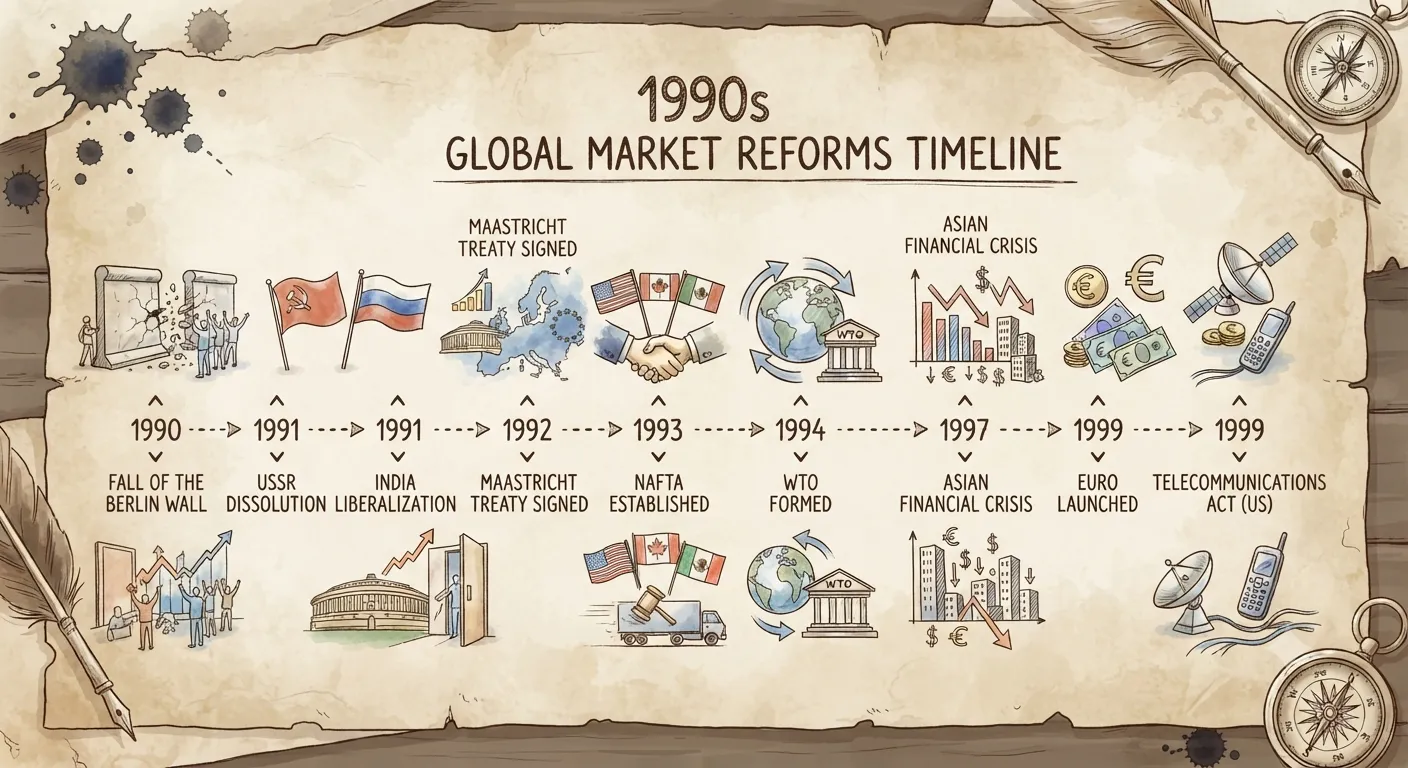
Even with great growth, the suffered from serious market scams that exposed deep gaps in the old paper-based stock system. Dishonest traders used these legal loopholes and slow paper processing to trick the banking and stock settlement systems.
The Era of Harshad Mehta and the CRB Group Crisis
The famous scam of carried out by Harshad Mehta was a major shock for India. Involving around Rs. 54 billion, it exploited weak links between government bond deals and regular share markets, proving that old physical paper trading was far too unsafe.
The Need for Dematerialisation and Electronic Settlements
Trading using physical paper certificates became a major safety hazard, creating long delays, missing papers, and fake share certificates.
- (i) In , even with computerized order matching growing, cases of fake and forged share paper deliveries rose sharply across exchanges.
- (ii) Studies by researchers like Shah & Thomas (1997) showed that dealing with fake share certificates was costing up to 1% of all trade values, proving that paperless dematerialised securities (Demat) were urgently required.
- (i) The CRB Group Scam (): A Rs. 7 billion fraud that revealed weak checking systems at both the Reserve Bank of India (RBI) and the Securities and Exchange Board of India (SEBI).
- (ii) The BSE Leadership Crisis (): A return of trickery similar to forced top leaders at the Bombay Stock Exchange to resign after they were caught altering official trading books.
Ketan Parekh and the Modern Regulatory Response
The Ketan Parekh scam centered on illegal price manipulation of specific tech and telecom shares known as K10 stocks. It used unauthorized bank loans and an old local lending system called badla right when the global internet stock bubble burst.
- (i) Systemic Response: These big financial failures forced SEBI to act firmly, rebuild public trust, and introduce strict new market protections.
- (ii) Investor Protection: Strong rules to guard small investors were put in place, and the risky badla stock lending system was completely banned.
- (iii) Modern Settlement: Introducing fast rolling settlements ensured that trade completions moved to international safety standards like T+2 and eventually T+1 days.
⚡ Quick Revision Capsule: Stock Market Metrics & Reforms
This reference table organizes the main measurements, historical changes, and regulatory steps that shaped modern Indian stock exchanges.
| Key Concept / Metric | Core Definition & Meaning | Impact on Financial System |
|---|---|---|
| Market Capitalisation Ratio | Total value of all listed company shares divided by national GDP. | Measures the total size of the stock market and its ability to absorb financial risk. |
| Value Traded Ratio | Total cash value of traded shares divided by overall national economic output. | Shows how deeply stock market trading connects with real economic activity. |
| National Stock Exchange (1993) | India's first nationwide fully automated screen-based electronic exchange. | Replaced open-cry floor trading with fast, transparent computer order matching. |
| Dematerialisation (Demat) | Converting physical paper share certificates into electronic digital records. | Completely eliminated fake share paper, stolen certificates, and transfer delays. |
| Rolling Settlement (T+2 / T+1) | System where stock trades settle fixed days after the deal date. | Ended the risky badla system and brought Indian markets up to world safety standards. |
📝 Summary
The journey of the Indian Securities Market from the troubled times of the to today's well-regulated system shows how vital investor safety and trading clarity are for economic growth. For students, learning about the creation of the National Stock Exchange, the protective steps taken by SEBI, and the lessons learned from past financial scams explains why financial rules are continually updated to keep modern stock exchanges safe, honest, and strong.
🚀 Quick Revision Points
Essential facts to review before examinations:
- (i) Stock markets act as a mirror of economic growth, working alongside banks to gather unused household savings for big national projects.
- (ii) Market health is checked using the Market Capitalisation Ratio (MCR) for size, and the Value Traded Ratio and Turnover Ratio for trading speed.
- (iii) The opening of the National Stock Exchange (NSE) in brought modern computerized screen trading to India.
- (iv) Fake share papers and delivery delays in the mid-1990s forced India to switch to paperless electronic dematerialised securities.
- (v) Market updates in banned the old badla lending method and introduced safe rolling settlements along with derivatives trading.
- 💡 Exam Tip: Remember key dates for exams: NSE was set up in 1993, research by Shah & Thomas on fake share paper came out in 1997, and derivatives along with rolling settlements began in 2001.
❓ Frequently Asked Questions (FAQ)
Q1: What are the main numbers used to measure stock market development?
A1: Economists use the Market Capitalisation Ratio (MCR) to measure market size, the Value Traded Ratio and Turnover Ratio to check trading speed and activity, and volatility measures to check price risks.Q2: What major stock exchange changes happened in India between 1993 and 2001?
A2: India started the National Stock Exchange (NSE) in for computer trading, phased out risky badla trading, introduced paperless electronic accounts, shifted to fast rolling settlements, and launched derivatives trading in .Q3: Why did physical paper share certificates become a big problem in the mid-1990s?
A3: Paper certificates led to lost documents, long delays, and many fake share papers. By , dealing with bad paper transfers was costing about 1% of total settlement values, making digital paperless trading necessary.