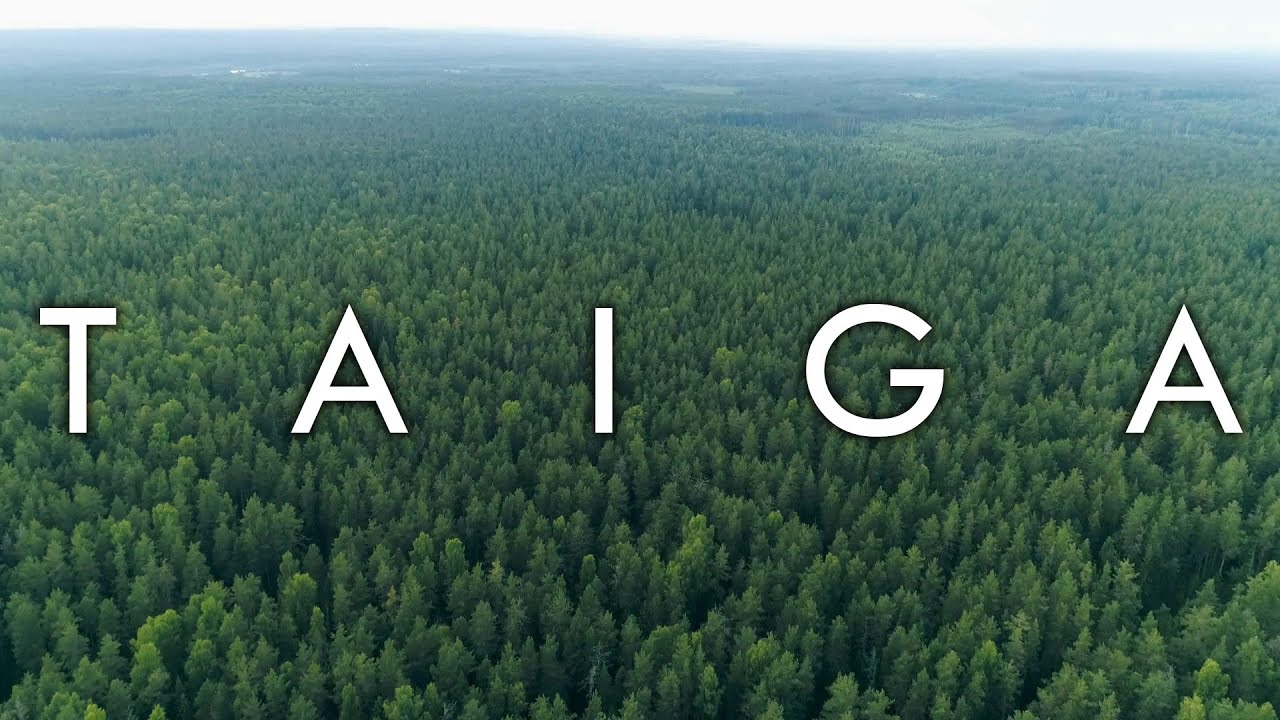
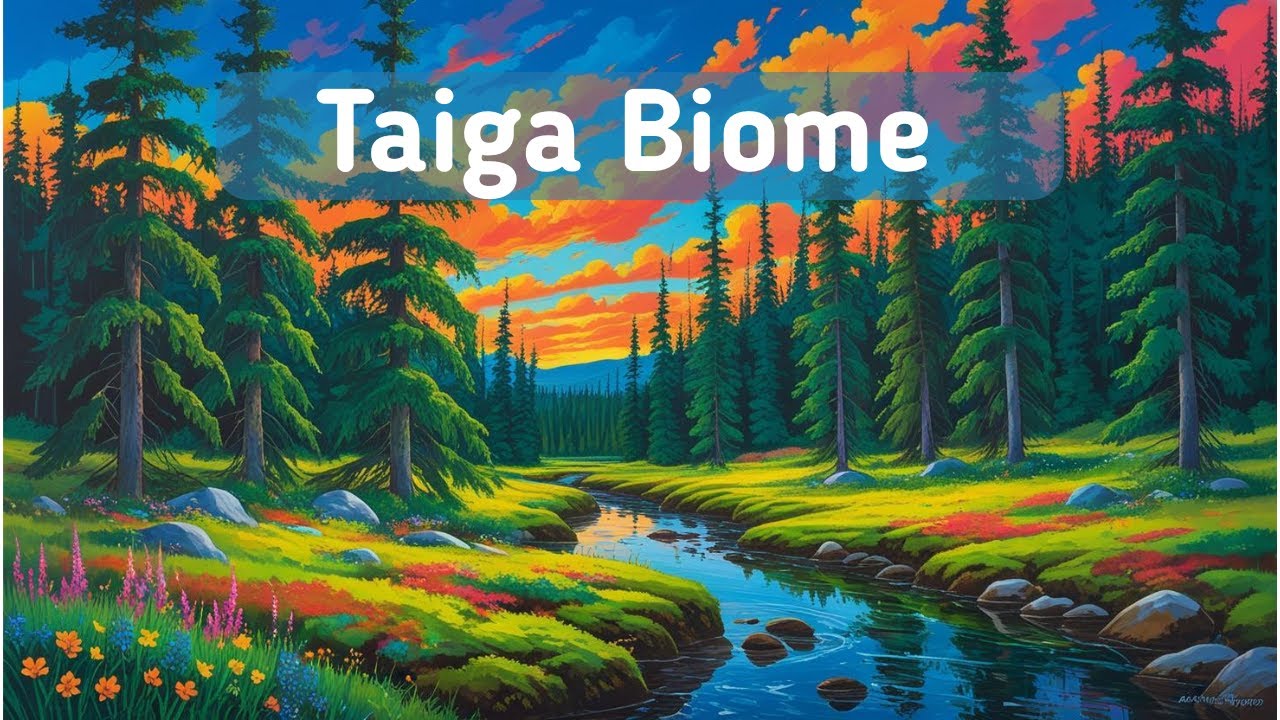
The Taiga Biome, also called the Boreal Forest or Coniferous Forest Biome, is the world's largest land-based biome and plays a vital role in balancing global nature. Located mainly between latitudes, it spans across North America, Europe, and Asia, with Siberia holding the biggest portion. Famous for its cold climate, cone-bearing evergreen trees, permafrost patches, and unique animal adaptations, this biome is essential for carbon storage and wildlife variety. For students preparing for competitive examinations, understanding the ecological significance of the taiga biome provides key insights into how climate affects plant life and human interaction with nature.
🎯 In this chapter, you will understand:
- The geographical reach and overall global area covered by the taiga biome.
- The extreme seasonal weather patterns and unique soil conditions including permafrost.
- How plant species adapt to harsh, freezing winters and short growing seasons.
- The special survival habits of wildlife, including hibernation, migration, and physical insulation.
💡 Why this topic matters: The taiga acts as a massive carbon vault for our planet, regulates water movement, and is a frequent topic in competitive geography and ecology exams.
🧠 Core Idea: The taiga serves as a major cold transition zone between the freezing tundra in the north and temperate deciduous forests in the south.
Taiga Biome Characteristics, Ecological Importance, and Environmental Significance
The taiga biome is a vast evergreen forest zone that shapes worldwide climate patterns and natural cycles.
This biome acts as a natural carbon sink, regulates water cycles, and affects where wild plants and animals can live. It sits right in the middle as a transition area between the freezing Tundra biome up north and the milder Temperate Deciduous Forest biome down south.
- (i) It spans across giant areas of Siberia, Canada, Alaska, and Scandinavia.
- (ii) It makes up nearly 29% of the total forest cover on Earth.
- (iii) It features harsh cold weather conditions along with nutrient-poor soil.
- (iv) People rarely settle here, with most human populations limited to cities like Moscow and Toronto, or local mining and logging camps.
Geographical Distribution of the Taiga Biome
The taiga stretches across the Northern Hemisphere, wrapping over huge forest belts in North America, Eurasia, and Siberia. Cold weather dominates this region, keeping human presence very low.

Latitudinal Extent and Spatial Coverage
The taiga lies between latitudes and is filled with coniferous forest vegetation. Its sheer size makes it the single largest land biome on Earth.
- (i) It spans almost the entire expanse of Canada and vast stretches of Russia.
- (ii) It reaches into Scandinavia and regions within Mongolia.
- (iii) Siberia is sometimes called a cold desert because of its empty, freezing terrain.
Population Distribution in the Taiga
Very few people live here because of the extremely cold climate. Where communities do exist, they center on timber harvesting, mineral mining, and energy extraction.
- (a) Cities like Moscow in Russia and Toronto in Canada sit along the warmer southern edges of the taiga.
- (b) The northern parts of the taiga are mostly empty, often referred to as cold desert regions.
- (c) Local indigenous groups make a living through traditional fishing, reindeer herding, and hunting.
Climatic Conditions and Permafrost Zones
The taiga goes through long, freezing winters and short, mild summers. The area is heavily shaped by cold air currents coming from the nearby polar regions.
Seasonal Climate Patterns
Extreme temperature changes drive how nature functions in this biome.
- (i) Temperatures swing wildly from -40°C during winter months to 20°C in the summer.
- (ii) Total yearly rain and snow range between 300 mm and 900 mm.
- (iii) Heavy snow covers the landscape during winter, while summer rains create extensive bogs and marshes.
Soil Characteristics and Permafrost
Ground conditions are acidic, low in plant nutrients, and rocky, created by past ice age glaciers and deep freezing.
- (a) Frozen ground called permafrost commonly lies beneath the surface in northern taiga regions.
- (b) The ground is covered by fallen leaves and needles that decay very slowly due to the cold.
- (c) Old glacial movement left behind countless bogs, lakes, and ponds.
Flora of the Taiga Biome
Plant life is dominated by cold-hardy cone-bearing trees that have evolved special shapes and traits to survive heavy snow and ice.
Dominant Tree Species and Adaptations
Evergreen forests in the taiga show remarkable survival methods in cold weather environments.
- (i) Main tree types include spruce, fir, pine, larch, birch, and aspen.
- (ii) Needle-like leaves prevent water loss and let heavy snow slide off easily.
- (iii) Evergreen trees save valuable energy by keeping their leaves all year round.
Seasonal Plant Survival Mechanisms
Trees use physiological changes and physical shape to survive freezing winters.
- (a) Frozen soil stops roots from soaking up water, forcing plants into a resting state.
- (b) Cone-shaped tree structures prevent heavy snow loads from snapping branches.
- (c) Thick bark shields inner tree layers against deep frost and destructive bugs.
Faunal Diversity and Cold-Climate Adaptations
The taiga hosts a specialized group of wild animals that rely on seasonal travel, winter sleep, and heavy insulation to live through cold periods.
Terrestrial and Avian Species
A varied range of wildlife survives here despite extreme winter cold, with many species coming and going with the seasons.
- (i) Mammals include moose, deer, bears, bobcats, squirrels, chipmunks, ermine, and moles.
- (ii) Bird species include the bald eagle, woodpeckers, and warblers.
- (iii) Summer wetlands serve as a rich breeding area for insects, which draws millions of migrating birds.
Behavioral and Physiological Survival Strategies
Animals use smart behaviors and physical adaptations to survive harsh weather conditions.
- (a) Moving away to warmer regions during freezing winter months.
- (b) Entering long winter sleep cycles, known as hibernation, used by animals like bears.
- (c) Growing strong insulating features like dense fur coats, thick feathers, or layers of fat.
- (d) Relying on glacial bogs and lakes for fresh water and food in the summer season.
⚡ Quick Revision Capsule: Taiga Biome Key Features
A fast visual guide summarizing the geographic, climatic, plant, and animal characteristics of the Boreal Forest Biome.
| Category | Key Characteristics | Examples & Details |
|---|---|---|
| Location | Northern high latitudes between | Canada, Russia (Siberia), Alaska, Scandinavia |
| Climate | Subarctic climate with extreme temperature swings | Long winters (-40°C), short summers (20°C), 300–900 mm rainfall |
| Soil Type | Acidic and nutrient-poor with permafrost | Slow leaf decomposition, glacial bogs and lakes |
| Dominant Flora | Cold-hardy evergreen coniferous trees | Spruce, fir, pine, larch, birch, and aspen |
| Fauna Adaptations | Thick coats, seasonal migration, and hibernation | Moose, bears, ermine, migratory birds, summer insects |
📝 Summary
The taiga biome is the world's largest land-based forest ecosystem, stretching across North America, Europe, and Asia. Its cold subarctic climate, evergreen tree cover, patches of permafrost, and uniquely adapted animal life make it vital for regulating the global carbon supply and supporting biodiversity. For students studying environmental geography and ecology, the taiga provides a perfect example of how climate determines plant growth, how animals adapt to extremes, and how humans interact with remote natural environments.
🚀 Quick Revision Points
Essential facts to review before examinations:
- (i) The taiga accounts for nearly 29% of all forest land on Earth and serves as a major global carbon storage area.
- (ii) Temperatures range widely from -40°C in winter to 20°C during short summer seasons.
- (iii) Tree leaves are needle-shaped to reduce water loss and let heavy snow slide off without breaking branches.
- (iv) Wildlife relies on migration, hibernation, and thick insulating coats to survive long freezing periods.
- 💡 Exam Tip: Focus on linking tree adaptations (needle leaves, evergreen nature, cone shapes) directly to the climatic challenges (frozen soil water, heavy snow, low sunlight) for analytical exam questions.
❓ Frequently Asked Questions (FAQ)
Q1: Why is the Taiga also called the Boreal Forest?
A1: The term "boreal" comes from the Greek word for the north wind, referring to the northern high-latitude location of these coniferous forests.Q2: What is permafrost and where is it found in the taiga?
A2: Permafrost is ground that remains completely frozen at or below 0°C for two or more consecutive years, commonly found beneath northern sections of the taiga.Q3: Why are taiga soils acidic and low in nutrients?
A3: Cold temperatures slow down leaf decay, while rain and melting snow leach away minerals, leaving behind acidic soil with very low nutrient levels.