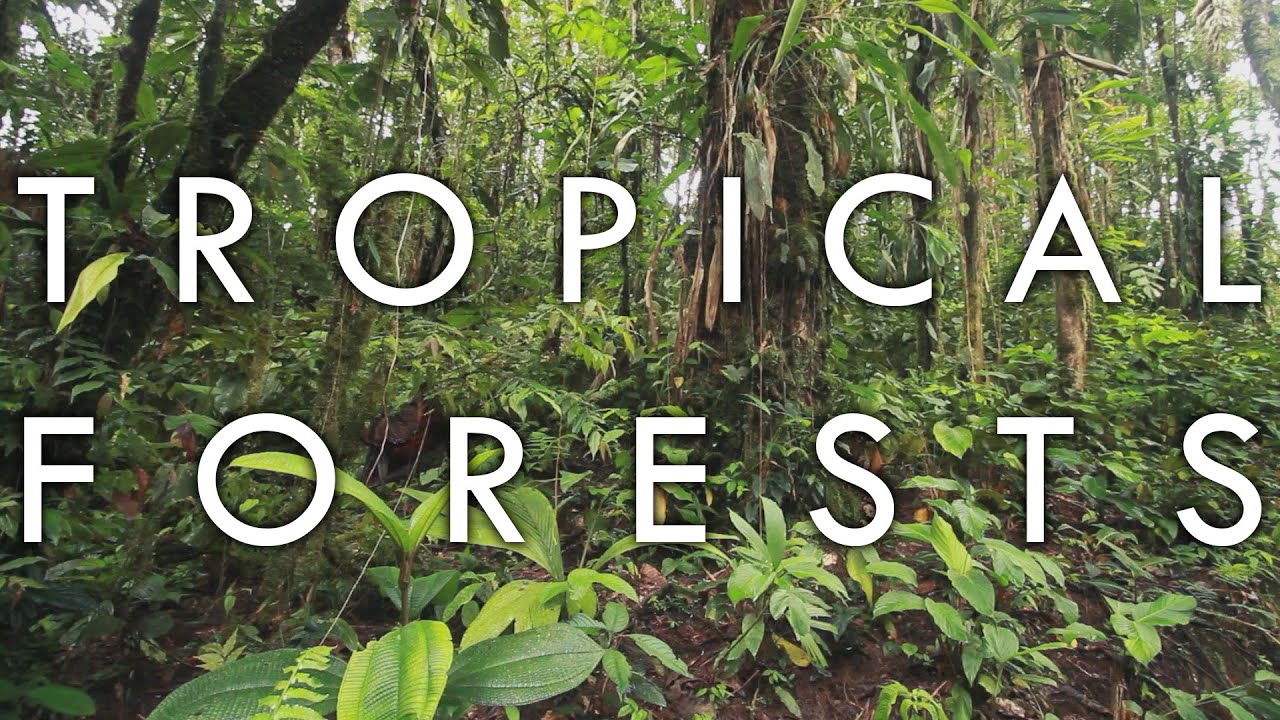
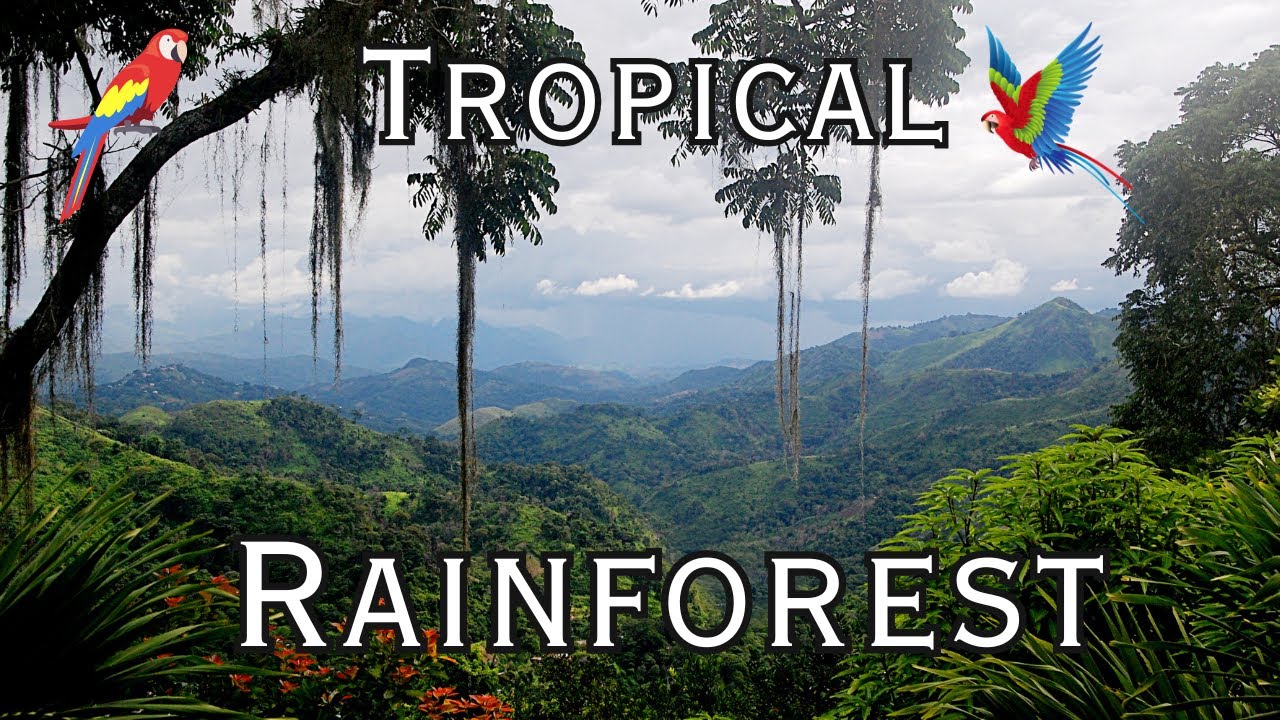
The tropical rainforest biome represents one of the most ecologically significant ecosystems on Earth, noted for its dense vegetation, consistent rainfall, and remarkable biodiversity. Spread across South America, Africa, and Southeast Asia, these forests act as the lungs of the planet by regulating global climate and sustaining innumerable species. For students and competitive exam preparation, understanding the ecological characteristics of tropical rainforests is crucial due to their role in climate regulation, ecological balance, and biodiversity conservation.
🎯 In this chapter, you will understand:
- The primary climatic conditions, annual rainfall, and temperature ranges defining tropical rainforests.
- How nutrient cycling and microorganisms maintain fertility in despite nutrient-poor soils.
- The distinct vertical canopy layers and structural plant adaptations designed to capture sunlight.
- The extraordinary diversity of fauna occupying canopy, understorey, and ground niches.
💡 Why this topic matters: Tropical rainforests host over half of the world's terrestrial species and act as essential carbon sinks, making them a central focus for geography and environmental studies.
🧠 Core Idea: Constant heat and moisture drive non-stop biological activity, continuous nutrient cycling, and complex vertical stratification of life.
🌱 Ecological Characteristics of the Tropical Rainforest Biome
The tropical rainforest biome is characterized by a unique combination of warm climate, abundant rainfall, and humid air. These conditions support the highest levels of species diversity and make rainforests vital for overall ecological stability across the planet.
- (i) Located primarily along the equatorial belt in South America (Amazon Basin), Africa (Congo Basin), and Southeast Asia.
- (ii) Provides essential ecosystem services such as carbon storage, oxygen production, and climate regulation.
- (iii) Hosts more than half of the world’s terrestrial plant and animal species.
☀️ Climatic Conditions and Global Distribution of Tropical Rainforests
The climate of tropical rainforests is marked by consistent heat, humidity, and rainfall, forming the foundation of their rich ecological makeup.

- Rainforest climates feature high stability with virtually no freezing temperatures or dry winter seasons.
Temperature and Rainfall Patterns
Tropical rainforests receive annual rainfall between 1500 mm and 4000 mm, with average annual temperatures around 25°C. Humidity remains between 77%–88%, creating a continuously moist environment.
- (i) Persistent high temperatures with minimal seasonal variation.
- (ii) Daily rainfall patterns that sustain lush, evergreen vegetation.
- (iii) Stable warm conditions that encourage year-round biological activity and growth.
Global Distribution and Geographical Spread
Rainforests are mainly concentrated along the Equatorial zone. Prominent geographic regions include:
- (a) Amazon Rainforest – South America’s vast ecological heartland.
- (b) Congo Rainforest – The largest contiguous rainforest in Africa.
- (c) Southeast Asian Rainforests – Spread across Indonesia, Malaysia, and Papua New Guinea.
🍂 Role of Soil and Microorganisms in Rainforest Ecosystem
The unique interaction of soil quality and microorganisms ensures rapid nutrient cycling despite naturally poor soil fertility.
- Rapid breakdown of fallen leaves and organic litter prevents nutrient accumulation on the forest floor.
Microorganisms and Decomposition
Bacteria and fungi thrive in the warm, moist climate. They accelerate decomposition of organic litter, releasing nutrients quickly for immediate plant absorption.
- (i) Break down dead plant and animal matter efficiently.
- (ii) Support rapid nutrient recycling vital for sustaining dense vegetation.
- (iii) Maintain overall ecological balance within surface soil ecosystems.
Soil Composition and Characteristics
Despite supporting dense vegetation, rainforest soils are often infertile and acidic due to nutrient leaching caused by persistent heavy rainfall.
- (a) Essential nutrients remain concentrated mostly in the uppermost surface soil layers.
- (b) Shallow root networks of tall trees quickly absorb available nutrients before they wash away.
- (c) Continuous decomposition maintains strong plant growth despite underlying soil limitations.
🌿 Unique Vegetation Characteristics of Tropical Rainforest Flora
The flora of tropical rainforests showcases extraordinary diversity and physical adaptations to cope with intense competition for sunlight.
- Trees grow extremely tall and straight to reach the upper sunlight levels.
Vegetation Layers and Sunlight Penetration
Rainforests receive 12 hours of daily sunlight, but only 2% reaches the forest floor due to dense canopy structures. Vegetation occurs in distinct vertical layers:
Stratification of Vegetation Layers in a Tropical Rainforest. - Canopy layer: Tallest trees forming a dense overhead green roof.
- Understorey layer: Shaded, humid zone receiving limited sunlight penetration.
- Ground layer: Minimal vegetation adapted specifically to dark, damp conditions.
Plant Types and Adaptations
Vegetation includes evergreen tall trees (20–35 m), with specialized features for survival in nutrient-poor soil and low light conditions.
- (i) Plants like orchids, bromeliads, and vines adapt to canopy growth as epiphytes.
- (ii) Ferns, mosses, and palms dominate the understorey and ground layers.
- (iii) Large, broad leaves allow plants on lower levels to maximize photosynthesis in dim light.
⚡ Quick Revision Capsule: Tropical Rainforest Layers & Features
Key structural layers and environmental characteristics of the tropical rainforest ecosystem:
| Ecosystem Layer | Key Features & Conditions | Dominant Flora & Fauna |
|---|---|---|
| Canopy Layer | Receives direct sunlight; forms a continuous umbrella-like roof between 20 to 35 meters high. | Evergreen tall trees, orchids, bromeliads, toucans, and monkeys. |
| Understorey Layer | Dark and humid; receives very low light penetration through the dense leaves above. | Ferns, palms, climbing vines, tree frogs, and jaguars. |
| Ground Layer | Receives only around 2% of total sunlight; covered in rapidly decomposing organic leaf litter. | Fungi, bacteria, mosses, insects, and decomposing microorganisms. |
| Soil System | Highly acidic and nutrient-poor due to heavy leaching from continuous rainfall. | Shallow tree root systems, soil microbes, and decomposers. |
| Global Basins | Equatorial regions featuring high annual rainfall (). | Amazon Basin, Congo Basin, and Southeast Asian rainforests. |
📝 Summary
The ecological characteristics of tropical rainforests—from consistent rainfall, dense vegetation, and layered flora to diverse fauna—make them one of the most vital ecosystems globally. They regulate climate, support biodiversity, and maintain critical soil-plant interactions across equatorial regions. For students and exam aspirants, mastering this topic provides a comprehensive understanding of environmental geography and highlights the urgent need for rainforest conservation.
🚀 Quick Revision Points
Essential facts to review before examinations:
- (i) Rainforests are located in equatorial regions and maintain high temperatures averaging 25°C year-round.
- (ii) Annual precipitation ranges between 1500 mm and 4000 mm with high humidity levels (77%–88%).
- (iii) Soil is acidic and infertile due to nutrient leaching, but rapid decomposition by microorganisms keeps nutrients recycling quickly.
- (iv) Vegetation is vertically stratified into canopy, understorey, and ground layers to optimize light access.
- 💡 Exam Tip: Focus on why rainforest soil is infertile despite lush growth—heavy rainfall causes nutrient leaching, making rapid decomposition by bacteria and fungi the primary source of plant nutrients.
❓ Frequently Asked Questions (FAQ)
Q1: Why is rainforest soil considered poor in nutrients despite lush vegetation?
A1: Heavy annual rainfall causes rapid leaching, washing nutrients deep into the soil. Plants rely on fast surface decomposition of organic matter by fungi and bacteria rather than soil fertility.Q2: What percentage of sunlight reaches the rainforest ground layer?
A2: Only about 2% of sunlight reaches the forest floor because the thick overhead canopy layer blocks most incoming light.Q3: What are the primary geographical regions where tropical rainforests are found?
A3: They are concentrated along the equatorial belt in South America (Amazon Basin), Africa (Congo Basin), and Southeast Asia (Indonesia, Malaysia, Papua New Guinea).