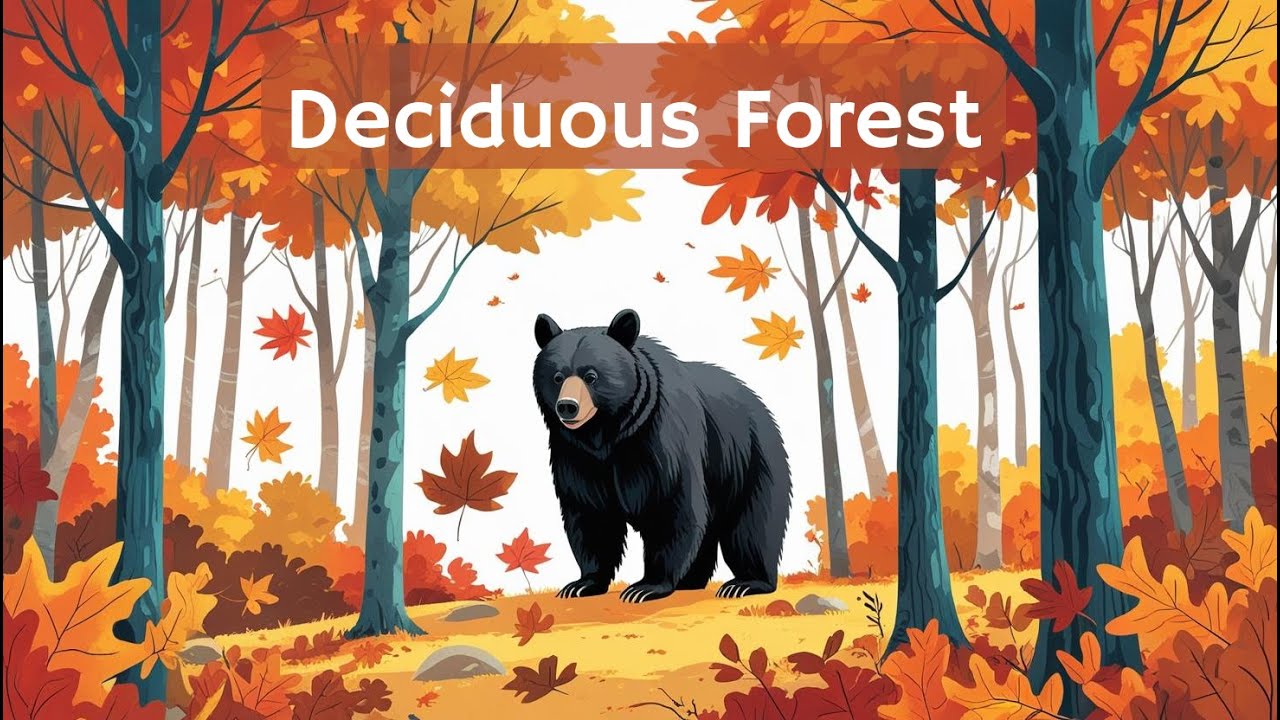
The Temperate Deciduous Forest Biome is one of the most ecologically diverse and geographically significant ecosystems of the mid-latitudes. These forests are defined by their distinct seasonal variations, fertile soils, and a rich mix of flora and fauna. With widespread presence in North America, Europe, and East Asia, this biome plays a crucial role in global biodiversity conservation, climate regulation, and human settlement patterns. For students preparing for environment geography or competitive exams, understanding its ecological characteristics provides a strong foundation for topics related to biomes, ecology, and biodiversity.
🎯 In this chapter, you will understand:
- Geographic distribution across mid-latitude regions of North America, Europe, and Asia.
- Climatic factors including seasonal shifts, temperature ranges, and annual precipitation.
- Vegetation layers, soil humus formation, and seasonal plant leaf adaptations.
- Faunal diversity and animal survival strategies like hibernation, migration, and food hoarding.
💡 Why this topic matters: This biome supports massive global human populations and agricultural zones, making it a key subject in geography and environmental studies.
🧠 Core Idea: Temperate deciduous forests operate on predictable seasonal cycles that shape fertile organic soils, multi-tiered vegetation growth, and animal survival behaviors.
Ecological Characteristics of the Temperate Deciduous Forest Biome – Location, Climate, Vegetation, and Faunal Diversity
The temperate deciduous forest biome is characterized by rich biodiversity, fertile soils, and distinct climatic conditions influenced by both polar and tropical air masses. This biome represents one of the most dynamic ecosystems on Earth, where climate, vegetation, and fauna interact cyclically to adapt to changing seasons. With temperatures ranging from -30°C to 30°C and annual precipitation between 750–1500 mm, it sustains dense human populations and supports agricultural as well as forestry activities.
- (i) Located between polar regions and tropics, mostly in Eastern United States, Canada, Central Europe, China, and Japan.
- (ii) Experiences four distinct seasons: , , , and , with noticeable climatic variations.
- (iii) Provides fertile soils enriched by decomposed organic matter, making it a cradle of agricultural civilizations.
Geographical Location and Climatic Conditions of Mid-Latitude Deciduous Forests
The mid-latitude deciduous forests are transitional zones where polar cold winds and tropical warm winds converge, producing well-defined seasonal rhythms. This results in unique ecological processes influencing both flora and fauna.

Climatic Factors
Climate is the most dominant factor shaping the biome. The temperature range (-30°C to 30°C) and high rainfall (750–1500 mm) create favorable conditions for leaf-shedding trees and rich undergrowth.
- (i) Cold winters with snow cover and plant dormancy.
- (ii) Warm summers with high photosynthesis and vegetation growth.
- (iii) Distinct autumn when trees shed leaves to conserve energy.
Human Presence and Significance
These regions host a significant portion of the global human population. Fertile soils have encouraged agriculture, urbanization, and industrial development.
- (a) Major cities in Europe, North America, and Asia developed within this biome.
- (b) Provides timber, fuelwood, and agricultural produce.
- (c) Increasingly threatened by deforestation and urban sprawl.
Vegetation Patterns and Soil Characteristics in Deciduous Forests
Deciduous trees, the dominant vegetation type, shed their leaves annually to cope with harsh winters. Their fallen leaves decompose into humus, enriching soil fertility and supporting layered vegetation.
Soil Characteristics
The soils here are rich in organic matter due to seasonal leaf fall. This makes them among the most fertile soils globally.
- (i) High nutrient recycling through leaf litter decomposition.
- (ii) Supports both natural vegetation and agriculture.
- (iii) Vulnerable to erosion when deforested.
Stratification and Adaptive Traits of Deciduous Forest Flora
The vegetation in this biome is organized into four layers, each supporting different ecological niches. Seasonal changes influence leaf morphology, dormancy, and growth strategies.
The four vegetation layers of temperate deciduous forests optimize light absorption and shelter space. Dominant Tree Species and Growth Layers
Species include oak, maple, birch, hickory, magnolia, spruce, fir, and hemlock. Stratification enhances biodiversity and optimizes resource use.
- (i) Canopy layer: Tall trees with moderate cover allowing sunlight penetration.
- (ii) Mid-story layer: Smaller trees and shrubs providing habitat for birds.
- (iii) Understory layer: Herbs like wildflowers and berries growing rapidly in .
- (iv) Ground layer: Mosses and lichens covering trunks and soil surface.
Seasonal Behavior and Leaf Adaptations
Leaves are adapted to maximize photosynthesis in summer and reduce water loss in winter. Shedding of leaves is a survival mechanism.
- (a) Thin, broad leaves maximize energy absorption in .
- (b) Shedding prevents tissue damage in winter.
- (c) Trees enter winter dormancy to conserve resources.
Diverse Fauna of the Temperate Deciduous Forest Biome
The fauna shows remarkable seasonal adaptations such as hibernation and migration. Biodiversity is high due to layered vegetation and resource availability.
Animal Variety and Seasonal Behavioral Adaptations
Species include bears, raccoons, squirrels, deer, wolves, bobcats, and migratory birds. Amphibians and reptiles like frogs, salamanders, and turtles are also common.
- (i) Birds migrate long distances to escape scarcity.
- (ii) Mammals like bears and raccoons hibernate during cold months.
- (iii) Predators like wolves and bobcats adapt to reduced prey availability.
Food Storage and Winter Strategies
Squirrels, chipmunks, and jays collect and store nuts, seeds, and acorns. Cold winters slow decomposition, preserving stored food.
- (a) Ensures survival during winter dormancy.
- (b) Shows behavioral adaptation to seasonal stress.
- (c) Contributes to seed dispersal and forest regeneration.
⚡ Quick Revision Capsule: Temperate Deciduous Forest Biome
A structured quick-reference breakdown of climate features, vegetative layers, and wildlife strategies in temperate deciduous ecosystems.
| Ecological Feature | Key Characteristics | Significance & Adaptations |
|---|---|---|
| Geographic Location | Found in mid-latitudes across Eastern North America, Europe, and East Asia. | Densely populated areas supporting major agricultural zones. |
| Climatic Profile | Temperatures from -30°C to 30°C; 750–1500 mm rainfall across . | Drives distinct growth phases in and plant dormancy in . |
| Soil Quality | Enriched by decaying fallen leaves forming deep, fertile humus. | Sustains dense natural vegetation and intensive farming. |
| Flora & Stratification | Four distinct plant layers featuring species like oak, maple, birch, and hickory. | Trees shed broad leaves in to prevent winter dehydration and freezing. |
| Faunal Adaptations | Diverse fauna including bears, deer, raccoons, and migratory birds. | Survival through winter hibernation, seed caching, and migration. |
📝 Summary
In summary, the Temperate Deciduous Forest Biome represents a globally significant ecosystem defined by seasonal cycles, stratified vegetative layers, fertile organic soils, and highly adaptable fauna. Spanning key mid-latitude regions of North America, Europe, and Asia, it sustains large human populations through agriculture and forestry while maintaining essential climate regulation. For students of environmental geography, mastering this biome provides vital insights into the interconnected dynamics of climate, soil, plant structures, and animal survival.
🚀 Quick Revision Points
Essential facts to review before examinations:
- (i) Mid-latitude distribution experiencing four distinct seasonal shifts each year.
- (ii) Highly fertile soils created through regular leaf litter decomposition into humus.
- (iii) Four-tiered plant layers (canopy, mid-story, understory, ground) optimizing sunlight capture.
- (iv) Seasonal animal survival strategies including migration, hibernation, and seed hoarding.
- 💡 Exam Tip: Highlight the direct cause-and-effect relationship between seasonal freezing temperatures and autumnal leaf loss to prevent tissue damage and transpiration water loss.
❓ Frequently Asked Questions (FAQ)
Q1: What defines a temperate deciduous forest biome?
A1: It is a mid-latitude ecosystem featuring four distinct seasons, annual rainfall of 750–1500 mm, temperatures from -30°C to 30°C, and broadleaf trees that shed foliage each autumn.Q2: Why are soils in this biome unusually fertile?
A2: Annual leaf fall decomposes on the forest floor, creating rich humus that rapidly recycles organic nutrients back into the soil.Q3: How do animals adapt to cold winter conditions here?
A3: Wildlife utilizes behavioral adaptations like hibernation (bears), long-distance migration (birds), and seed storing (squirrels) to endure winter food scarcity.