The story of the Chalukya Dynasty unfolds as a monumental chapter in the history of Peninsular India, detailing their rise to dominance in the mid-6th century, filling the void left by the decline of Andhra power around 225. Their enduring influence, marked by the establishment of powerful branches like the Chalukyas of Vatapi and the Western Chalukyas of Kalyani, is critical for students preparing for historical and competitive examinations, offering deep insights into ancient Indian administration, culture, and architecture.
In this chapter, you will understand:
- The geopolitical expansion and long-standing authority of the Chalukyas across Southern and Central India.
- The distinct administrative and historical evolution of the three major family lines: Badami, Vengi, and Kalyani.
- How contemporary inscriptions, like the famous Aihole Prasasti, help modern historians accurately reconstruct ancient dynasties.
- The artistic achievements behind the monumental rock-cut and structural architecture found at Aihole, Vatapi, and Pattadakal.
Why this topic matters: This era forms the core foundation of early medieval political systems, art development, and international trade lines in Southern India. It is a recurring, high-yield subject frequently featured in major administrative and competitive examinations.
Core Idea: The Chalukya Dynasty effectively united vast stretches of Southern and Central India under a highly organized administrative system from the 6th to the 12th century. Operating through three chronologically related branches, they successfully checked external expansions from northern empires while establishing a celebrated standard for classical temple architecture. Their legacy is preserved through extensive bilingual stone inscriptions and unique structural art styles.
The Rise, Glory, and Legacy of the Chalukya Dynasty
The Chalukyas emerged as the paramount power in South and Central India, defining the regional political landscape for nearly six centuries. Following a three-century period of instability in Peninsular India, which began after the decline of the Andhra authority around 225, they finally established a highly powerful, cohesive empire in the mid-6th century.
The dynasty's influence was geographically vast, controlling significant territories across South and Central India, demonstrating remarkable longevity and resilience through periods of internal strife and external conflict.
The Three Interconnected Branches of the Chalukya Empire
The extensive Chalukyan legacy is best understood through the structural reigns of its three principal branches: the founding lineage of Badami, the independent regional rulers of Vengi, and the later imperial revivalists of Kalyani.
The Founding Lineage: Chalukyas of Vatapi (Badami) (6th Century – 757)
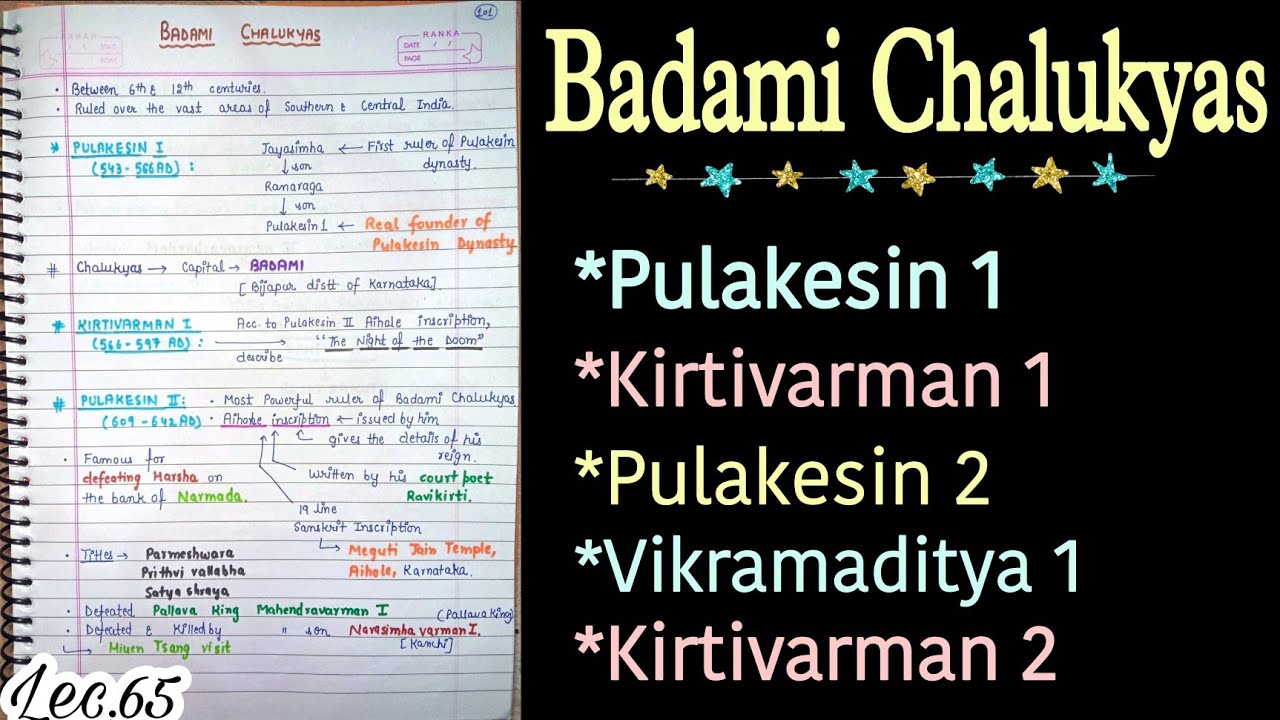
This earliest branch was the absolute cornerstone of the entire Chalukya power structure, rising in the early 6th century and establishing their capital at Vatapi (modern Badami). Their rule marked a true golden age of early Chalukyan culture and rapid military expansion.
- (i) The Chalukyas of Vatapi maintained continuous control over their foundational territories until their decisive defeat and subsequent annexation by the powerful Rashtrakutas in 757, temporarily ending the main Chalukyan line.
- (ii) The glory of the Badami Chalukyas reached its zenith under celebrated rulers like Pulakesin II, whose military achievements are recorded in surviving inscriptions, reflecting an era of intense imperial expansion.
The Secondary Branch: Eastern Chalukyas of Vengi (c. 625 – 1020)
A collateral line broke away from the main Vatapi family early on, establishing a highly successful independent kingdom in the eastern region. This structural split allowed Chalukyan influence to continue despite the eventual collapse of the founding house.
- (a) The historical separation of the Eastern Chalukyas occurred around 625, following which they independently governed the region known as Vengi, successfully maintaining their autonomy for several centuries.
- (b) Their independent rule eventually concluded around 1020 when their kingdom succumbed to powerful external invasions, marking the end of the second major Chalukyan branch.
The Revivalists: Western Chalukyas (Later Chalukyas) of Kalyani (973 – 1200)
Following a significant historical hiatus after the fall of Vatapi, the final major branch successfully revived the family legacy, completely restoring their ancestors' prestige and power in Peninsular India from a newly chosen capital city.
- Revival of Power: The Western Chalukyas successfully brought the Badami Chalukyas' legacy back to regional prominence in the late 10th century, specifically beginning their sovereign reign in 973.
- Rule from Kalyani: They established their capital at Kalyani and were the dominant political force in the region between 973 and 1200, continuing the family's long tradition of imperial administration.
- Final Decline: This revivalist dynasty effectively ensured that Chalukyan dominance persisted until their eventual and final decline near the beginning of the 13th century.
Historical Sources: Reconstructing the Story of the Chalukya Dynasty
The rich history of the Chalukya Dynasty is meticulously pieced together from a diverse array of surviving records, including architectural wonders, valuable epigraphs, and accounts from both native and foreign scholars.

- The dynasty left behind approximately 150 inscriptions in both Sanskrit and the regional language, Kannada, which form the absolute bedrock of Chalukyan history.
Epigraphical Evidence and Court Inscriptions
Inscriptions provide authentic, contemporary details on imperial genealogy, military campaigns, and regional administration.
The Aihole Prasasti of Pulakesin II
The Aihole Prasasti stands out as the single most significant epigraph from this era, offering an invaluable, detailed account of the history of the Badami Chalukyas right up to the celebrated reign of Pulakesin II.
- Composed carefully in the year 630.
- Written by the prominent court poet Ravikirtti.
- Authored in classical Sanskrit language using the old Kannada-Telugu script.
- Records the famous military victory of Pulakesin II over Emperor Harshavardhana of Kanauj.
Architectural Legacy: Temples and Stone Chronicles
The magnificent temples and structural monuments built by the Chalukyas are not merely buildings but chronicles in stone, vividly showcasing their cultural and religious development and their total mastery over architecture.
- These monumental sites display a unique blend of architectural styles, representing the absolute peak of Chalukyan artistic achievement.
Literary Records, Foreign Accounts, and Numismatic Insights
Beyond inscriptions and architecture, other secondary sources like chronicles, coins, and visitor journals add deep perspective to the administrative and diplomatic history of the powerful Chalukyas.
The royal gold coinage displaying the Varaha emblem confirms the dynasty's political sovereignty and religious affiliations. - Numismatics and the Varaha Crest: Only a few Chalukya coins have been unearthed, yet they are crucial for establishing the dynasty's chronology and understanding their trade relations; significantly, the adoption of the Varaha (wild boar) crest symbolized their strong devotion to the Hindu deity Vishnu.
- Native Literature: Despite the dynasty’s long rule, very few original compositions by Chalukya court poets survive; however, the Pampa Bharata, written in Kannada, provides valuable insights into Chalukya genealogy and the prevailing culture of the time.
- Foreign Perspectives:Foreign records offer key corroborating evidence, such as the travelogues of the Chinese traveler Hiuen-Tsang, who visited during the reign of Pulakesin II and highly praised the kingdom’s wealth and the renowned bravery of its standing army.
- Diplomatic Ties: Furthermore, the Persian historian Tabari meticulously recorded the established diplomatic ties and friendly exchanges between the powerful Pulakesin II and the ruler Khusru Perviz II of Iran, highlighting the dynasty's international reach.
Quick Revision Capsule
Review the essential branches, active timelines, and historical landmarks of the Chalukya Empire:
| Chalukya Branch | Active Timeline | Core Capital & Historic Markers |
|---|---|---|
| Chalukyas of Vatapi | Mid-6th Century to 757 | Capital at Vatapi (Badami); founded the empire; zenith under Pulakesin II; overthrown by the Rashtrakutas. |
| Eastern Chalukyas | c. 625 – 1020 | Capital at Vengi; independent collateral line that maintained autonomy in the eastern regions for centuries. |
| Western Chalukyas | 973 – 1200 | Capital at Kalyani; revivalist line that restored Chalukyan prestige and power in Peninsular India. |
| Aihole Prasasti | Composed 630 | Eulogy authored by court poet Ravikirtti in Sanskrit; details the historic military triumphs of Pulakesin II. |
| Numismatic Emblem | 6th – 12th Century | Features the Varaha (Wild Boar) crest, indicating royal imperial sovereignty and patronage of Vaishnavism. |
Summary
The Chalukya Dynasty represents a vital period of transition and consolidation in Peninsular India, spanning nearly six centuries across three dynamic branches—from the Chalukyas of Vatapi to the Western Chalukyas of Kalyani. Their historical significance is undeniable, rooted in their sophisticated administration, celebrated diplomatic relations, and especially their profound architectural legacy found at Pattadakal and Aihole. For students preparing for competitive examinations, a thorough understanding of their key rulers like Pulakesin II, their vast cultural contributions, and the historical records like the Aihole Prasasti is absolutely essential for mastering the history of South India.
Quick Revision Points
Focus directives for competitive examination preparation:
- (i) Note the exact transition year of 757, when the Rashtrakutas temporarily broke the main Vatapi line.
- (ii) Remember that the Aihole Prasasti was written in classical Sanskrit language using the early Kannada script.
- (iii) Understand the religious significance of the Varaha crest as an indicator of imperial state patronage.
- (iv) Differentiate clearly between the geographic zones of the Western rulers at Kalyani and the Eastern line at Vengi.
- Exam Tip: Pay special attention to the diplomatic accounts by Hiuen-Tsang and Tabari. Questions frequently target these foreign records to test your knowledge on the global reach and military strength of Pulakesin II.
Frequently Asked Questions (FAQ)
Q1: Who was the most powerful ruler of the Vatapi Chalukyas, and how do we know about him?
A1: The most powerful ruler was Pulakesin II. His life, genealogy, and grand military achievements—including his victory over Northern Emperor Harshavardhana—are authentically preserved in the 630Aihole Prasasti written by the court poet Ravikirtti.Q2: What is the historical importance of the Varaha emblem on Chalukyan coins?
A2: The Varaha (wild boar) crest served as the official royal symbol of the dynasty. Its presence on minted gold coins indicates both their political independence and their state devotion to the Hindu deity Vishnu.Q3: How did the geographic division of the Chalukya branches assist their survival?
A3: When the central power base at Vatapi fell to the Rashtrakutas in 757, the independent collateral branch of the Eastern Chalukyas of Vengi survived intact. This ensured the family lineage and culture continued uninterrupted until the Western Chalukyas staged a complete imperial comeback in 973.