The Chalcolithic Settlements in India mark a critical turning point in ancient history, bridging the gap between stone-reliant Neolithic life and the age of metalworking. Spanning major regional clusters across western Madhya Pradesh, southeastern Rajasthan, western Maharashtra, and parts of eastern India, these farming communities introduced copper alongside traditional stone tools. Understanding how these early villages farmed, made pottery, and worked metal gives us a clear look into the roots of rural Indian society and its civilizational growth.
In this chapter, you will understand:
- The transition from stone tools to the early use of copper.
- Geographical distribution and key archaeological sites across India.
- Craft specialization, including stone blade industries and Black-and-Red Ware.
- Socio-economic limitations that prevented full-scale urbanization.
Why this topic matters: This phase highlights the foundational shift toward settled village farming, regional metalworking, and trade networks, forming a central topic in ancient Indian history studies and examinations.
Core Idea: The Chalcolithic period represents a hybrid stone-and-copper economy where farming communities established permanent village life across central and western India. While these cultures achieved remarkable craftsmanship in pottery and metal hoards, technological limits like unalloyed soft copper kept them strictly rural.
Chalcolithic Settlements in India: Unpacking the Culture, Technological Transition, and the Copper Age
Studying Chalcolithic settlements reveals how early human groups gradually embraced metalworking without abandoning stone tool traditions. This dual setup helped establish stable farming communities across different geographical belts of the Indian subcontinent.
Emergence and Development of Chalcolithic Copper-Stone Cultures
As the Neolithic period drew to a close, communities began working with copper. Rather than replacing stone entirely, they used both materials side by side to optimize daily tasks and resource gathering.
Major Chalcolithic Settlements: Site Locations and Key Artifacts Overview
Archaeological digs show a wide spread of settlements across distinct regional clusters, each adapting to its local landscape and natural resources.
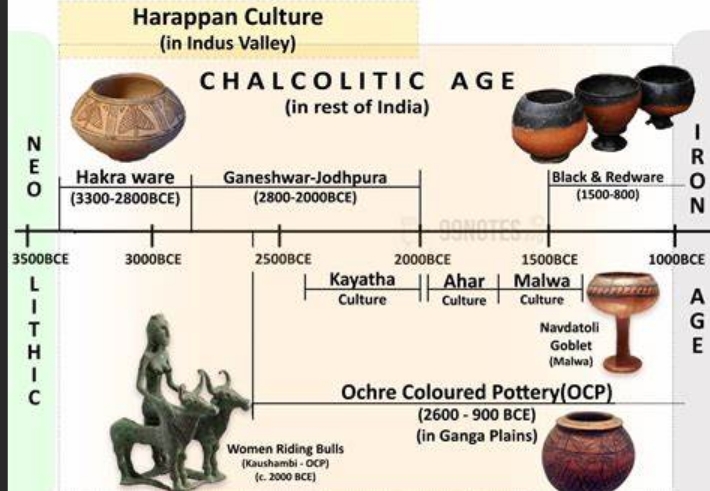
Chalcolithic Age - Coexistence of Stone and Copper Tools and Artifacts - Toolkits featured small microlithic stone blades alongside early copper implements like chisels, flat axes, and bangles.
- Major sites like Ahar and Gilund in Rajasthan, Kayatha and Eran in Madhya Pradesh, and Jorwe, Nevasa, Daimabad, and Chandoli in Maharashtra document this rural development.
Chalcolithic Culture, Specialized Craftsmanship, and Key Technological Advancements
Villagers developed specialized skills in stonework, pottery firing, and metal casting, creating regional artistic styles and functional tools for everyday agrarian life.
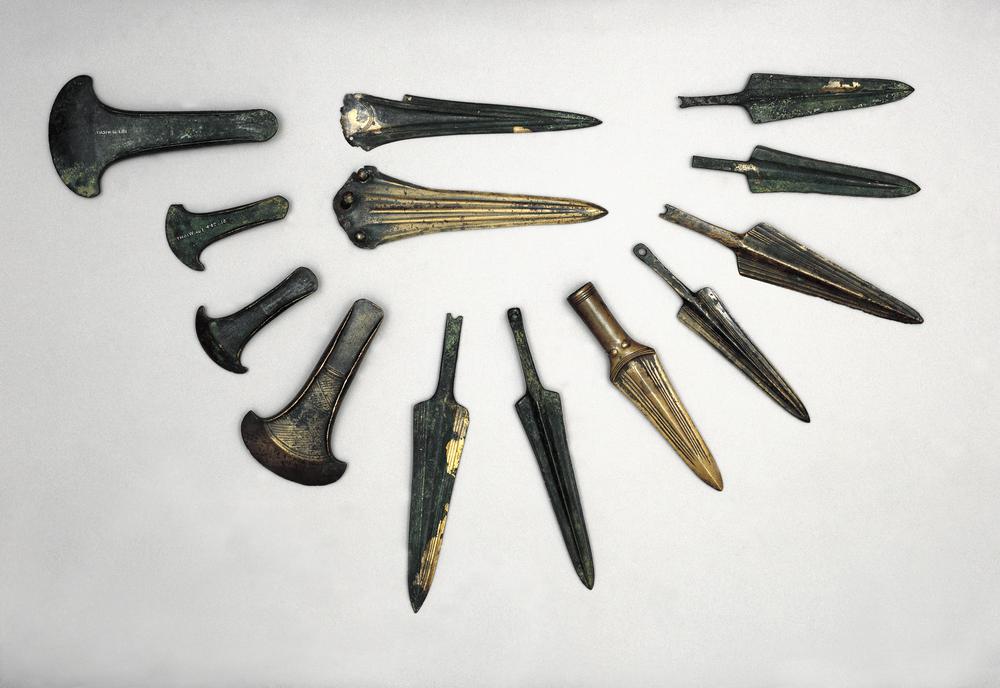
Tools, Pottery Innovation, and the Rise of Black-and-Red Ware Specialization
Advanced firing techniques enabled potters to create durable ceramics, while knappers produced mass quantities of uniform stone blades near river valleys and hills.
- Fine stone blades and points remained the primary tools for daily household chores, harvesting, and woodworking.
- Specialized stone-blade industries grew near raw material sources, strengthening local village exchange networks.
- Potters produced distinctive Black-and-Red Ware (BRW) using inverted firing techniques, turning it into a key marker of Chalcolithic sites.
Significance of Chalcolithic Cultures: Laying the Foundation for Early Indian Economy
By shifting from semi-nomadic lifestyles to permanent villages, these communities established organized agriculture and animal husbandry across major river basins.
Economic and Cultural Impact: Sedentary Agriculture and Craft Specialization
Reliable farming supported population growth and led to durable mud-brick housing, storage systems, and routine trade.
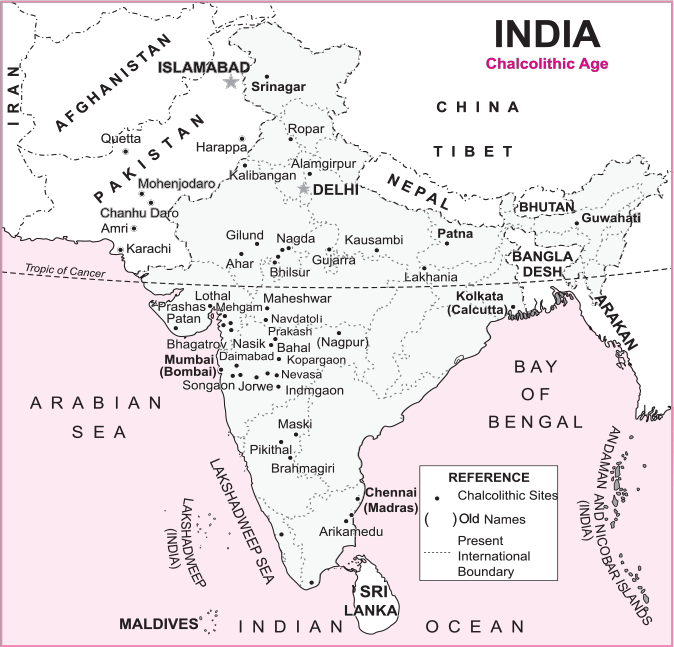
Archaeological Map of Chalcolithic Sites in India Showing Regional Distribution - Communities built permanent mud-strip houses and cultivated crops like wheat, rice, barley, lentils, and cotton.
- Progress in copper metallurgy, specialized ceramics, and cattle rearing stabilized rural food production.
- Adaptation across varied ecosystems demonstrated practical environmental knowledge and sustainable land management.
Regional Overview of Major Chalcolithic Cultures
This quick revision table highlights the key regional cultures, their main locations, and distinct characteristics:
| Culture Region | Key Archaeological Sites | Distinctive Features |
|---|---|---|
| Ahar / Banas Culture | Ahar, Gilund (Rajasthan) | Absence of microliths; rich in copper objects; stone-and-mud architecture. |
| Kayatha Culture | Kayatha, Eran (Madhya Pradesh) | Sturdy red-slipped pottery; copper axes and bangles; fine stone blades. |
| Malwa Culture | Navdatoli, Nagda (Madhya Pradesh) | Richly painted pottery; diverse agricultural grains; large village settlements. |
| Jorwe Culture | Jorwe, Nevasa, Daimabad, Inamgaon (Maharashtra) | Spouted pottery jars; house planning; social stratification seen in burials. |
| Eastern Regional Sites | Pandu Rajar Dhibi, Mahisdal (West Bengal, Bihar) | Rice cultivation focus; fish-hook crafts; Black-and-Red Ware traditions. |
Summary
The Chalcolithic Settlements in India demonstrate how early human groups combined stone and copper tools to build organized, sedentary village life. Through achievements in farming, pottery, and metallurgy, these communities created thriving rural economies across central, western, and eastern India. However, because they lacked tin to make bronze and did not develop writing or large towns, they remained rural farming societies, laying the foundation for future regional traditions.
Quick Revision Points
Key facts to remember for quick review and examination preparation:
- (i) The Chalcolithic era represents a transitional phase using both stone and copper tools concurrently.
- (ii) Black-and-Red Ware (BRW) is the most widely distributed pottery style associated with these sites.
- (iii) Pure copper was soft because these communities lacked knowledge of alloying it with tin to produce bronze.
- (iv) Major copper hoards containing celts, harpoons, and anthropomorphic figures have been unearthed in the Ganga-Yamuna Doab region.
- Exam Tip: Remember that Chalcolithic cultures were predominantly rural and non-urban. Contrast them with the Harappan Bronze Age civilization, which knew how to alloy copper with tin to build planned cities.
Frequently Asked Questions (FAQ)
Q1: What defines a Chalcolithic settlement?
A1: A settlement characterized by the simultaneous use of stone tools (like microliths) and copper implements for agriculture, hunting, and domestic tasks.Q2: Why did Chalcolithic societies fail to turn into urban cities?
A2: They relied on unalloyed soft copper rather than strong bronze, lacked writing systems, and faced high infant mortality along with seasonal water constraints.Q3: What are Copper Hoards?
A3: Archaeological caches of copper items—including flat celts, swords, harpoons, and human-like figures—found mostly in northern and eastern India, reflecting specialized metalcraft.