The Chalcolithic Age, also known as the Copper-Stone Age, represents a pivotal transition in ancient Indian history, marking the shift from the sole use of stone to the inclusion of copper. This era, crucial for students preparing for history and archaeology exams, saw the establishment of the earliest rural settlements and advancements in metallurgy and pottery, laying the groundwork for subsequent Indian civilizations. Understanding these Chalcolithic settlements and cultures is essential for grasping the evolutionary timeline of human civilization in the subcontinent.
In this chapter, you will understand:
- The transition from stone tools to hybrid stone-copper technology
- Key Chalcolithic sites, regional cultures, and pottery traditions
- Socio-environmental limitations, health issues, and technological boundaries
- The archaeological importance of copper hoards and early village life
Why this topic matters: This period documents the origin of settled farming villages, early metal technology, and regional ceramic styles across India, making it a foundational concept for history examinations.
Core Idea: The Chalcolithic Age bridges prehistoric stone technology and later urban metal-using societies. Communities combined small stone blades with copper tools to practice farming, craft distinctive pottery, and establish persistent rural settlements between and .
Emergence of Chalcolithic Settlements: Cultural Transition and The Copper Age in India (c. 2000–700 BCE)
The Chalcolithic era heralded the first widespread adoption of metal, primarily copper, alongside existing stone technologies, shaping early Indian societies. This period represents a transformative phase where early communities began to harness the potential of metal, leading to new forms of tools and socio-economic practices.
Technological and Cultural Features: The Hybrid Stone-Copper Era
The cultural life of the Chalcolithic people was characterized by a significant shift in technology, especially in tools and crafts, leading to notable regional diversity.
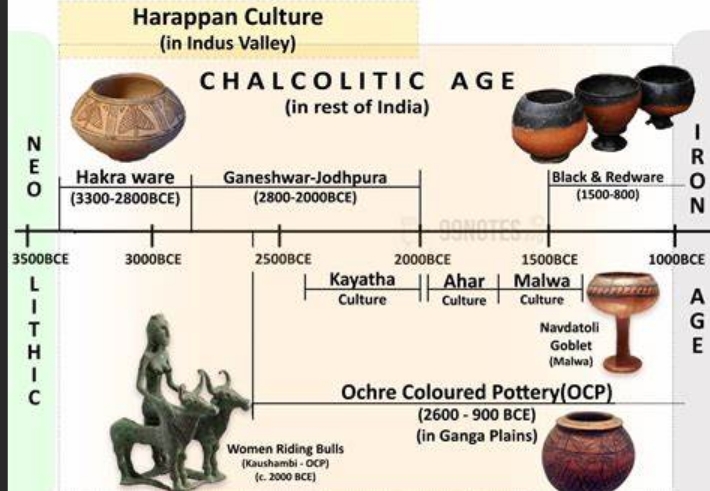
Chalcolithic Age - Tools and Artifacts Hybrid Tool Technology: The Blend of Stone and Copper
The daily lives of these early settlers revolved around a hybrid technology where the efficiency of stone was complemented by the novelty of metal. This blending of materials defined their material culture and economic activities.
- (i) The most defining feature was the dual use of implements, blending traditional stone tools with new implements made of copper, marking the transition from the Neolithic to the metallic age.
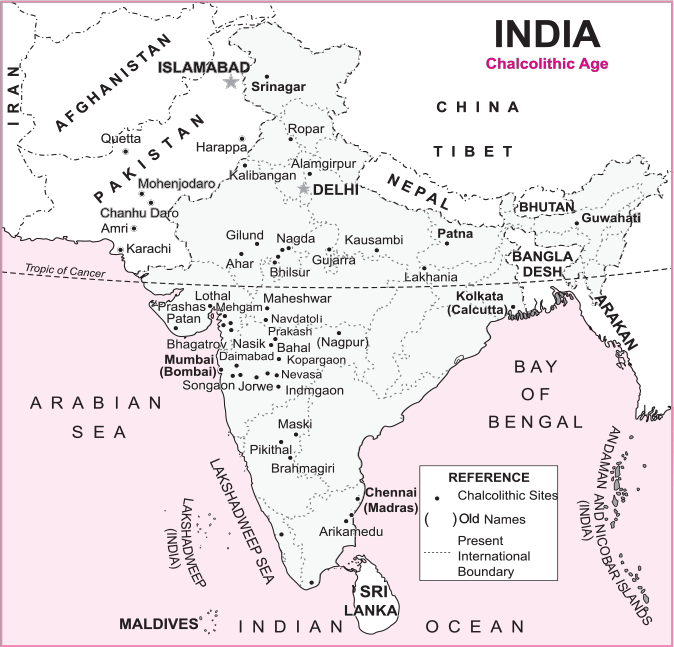
- (ii) Evidence of these cultures, indicative of wide cultural diffusion and adaptation, has been unearthed across diverse geographical regions, including southeastern Rajasthan, western Madhya Pradesh, western Maharashtra, and parts of eastern India.
- (iii) Major archaeological sites such as Ahar, Gilund, Kayatha, Eran, Jorwe, Nevasa, Daimabad, and Chandoli offer rich data on the lifestyle and early socio-economic structure of these ancient Chalcolithic communities.
- (iv) Chalcolithic communities ingeniously utilized small microlithic stone tools alongside newly emerging copper implements, establishing a distinct stone- and metal-based technology.
- (v) A notable feature was the flourishing of advanced stone-blade industries, often strategically located near accessible resource-rich areas like hills and rivers, which fostered localized economic growth and specialization.
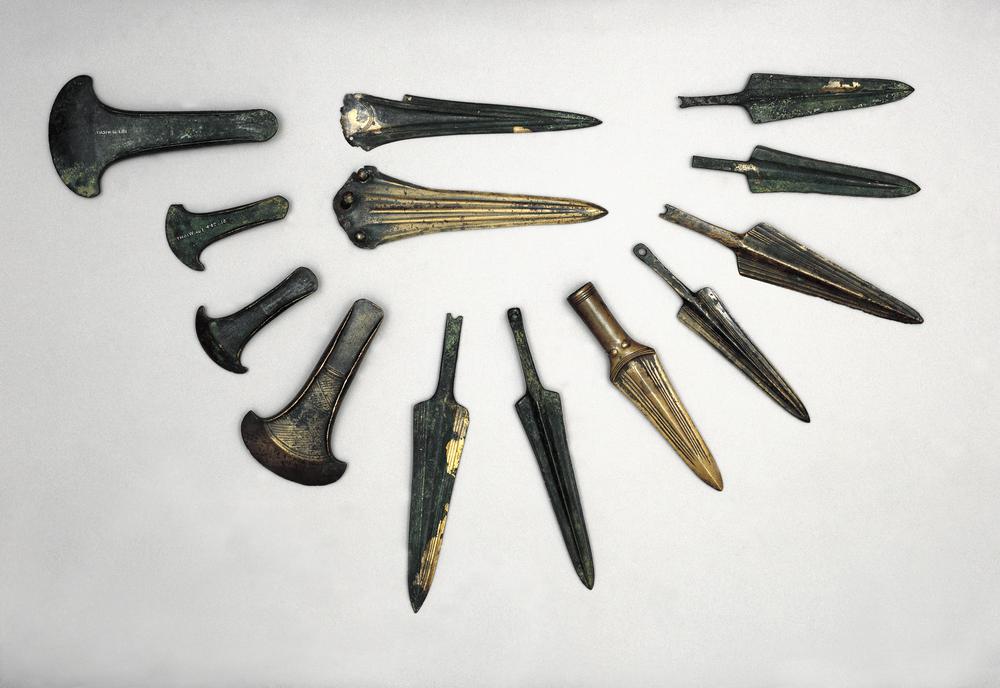
Chalcolithic Tools and Weapons Specialized Pottery and Craftsmanship in Chalcolithic Cultures
Craft specialization was evident, particularly in the production of high-quality ceramics, with pottery serving as a key marker for identifying different Chalcolithic groups.
- (a) The development of intricate and advanced pottery, most notably the characteristic black-and-red ware pottery, is a hallmark of this era.
- (b) These ceramics often featured sophisticated designs, providing valuable insights into regional diversity and the emergence of distinct craft specialization among the population.
Significance of Chalcolithic Cultures: Laying the Foundation for Rural Life
The significance of the Chalcolithic era extends beyond just technology; it was instrumental in fundamentally changing the human-environment relationship through settled life and resource utilization.
- Rural Settlements and Sedentary Life: These cultures were crucial in establishing the earliest rural settlements and fostering a sedentary lifestyle based on early agrarian practices, which was the crucial preliminary step for future complex societies.
- Economic Development and Specialization: Key advancements in metallurgy, pottery, and agriculture drove the evolution of early village economies, facilitating specialization in crafts such as metalworking and ceramic production.
- Geographical Adaptability: The widespread presence of Chalcolithic settlements across diverse ecological zones underscores the remarkable adaptability of these ancient communities in effectively utilizing various natural resources for sustainable survival and cultural expression.
Challenges and Limitations of Early Copper Age Communities
Despite their pioneering spirit, the Chalcolithic societies faced inherent constraints in terms of technology, health, and social complexity that ultimately limited their growth.
- Socio-environmental vulnerabilities and lack of sanitation exposed early farming villages to high health risks.
Socio-Environmental Vulnerabilities and Health Concerns
The rudimentary nature of their village life and lack of advanced sanitation often exposed these communities to significant environmental and health risks.
- (i) These early cultures contended with substantial vulnerability to environmental challenges and were marked by notably high infant mortality rates, reflecting the nascent stage of their medical and public health knowledge.
Technological Constraints: The Pliability of Pure Copper
The reliance on pure copper, while a revolutionary step, imposed a ceiling on the strength and durability of their tools and weapons.
- (a) The primary reliance on copper tools posed a significant challenge because of the pliability of copper itself, which is softer than bronze or iron.
- (b) These communities had not yet acquired the critical knowledge of alloying metals—mixing copper with tin or other elements—to produce stronger, more resilient materials like bronze.
Absence of Urbanization and Written Records
Lacking the institutional and infrastructural advancements of later periods, their societal structure remained relatively simple and decentralized.
- (i) Compared to subsequent Bronze Age civilizations, the absence of established urban centers and the lack of comprehensive written records constrained both social complexity and the potential for rapid technological advancements within these societies.
The Copper Age in Ancient India: Discoveries and Artifacts
The numerous copper hoards discovered across India provide tangible evidence of the widespread use of this metal and the technological capability of the Chalcolithic craftspeople.
- Over forty copper hoards found across the Indian subcontinent demonstrate widespread artisanal and agricultural usage of metal.
Archaeological Evidence from Copper Hoards
The discovery of extensive copper collections indicates the metal’s pivotal role in both utilitarian and possibly ceremonial or status-related activities in early Indian history.

Illustrative Copper Hoard Implements from the Ganga-Yamuna Doab - (i) Over forty copper hoards have been found across diverse parts of the subcontinent, unequivocally demonstrating the early importance of copper in both artisanal activities and agrarian life.
- (ii) The Ganga-Yamuna doab region is particularly renowned for containing early settlements utilizing copper, signalling the emergence of settled agrarian societies in the northern plains of India.
- (iii) The copper hoards contain a variety of sophisticated objects, including celts, harpoons, swords, and distinct anthropomorphic figures, highlighting the advanced technological capability and artistic expression of these communities.
Quick Revision Capsule
Key Chalcolithic regional cultures, primary locations, and distinctive artifacts:
| Culture Name | Geographical Region | Key Archaeological Features |
|---|---|---|
| Ahar Culture | Southeastern Rajasthan (Ahar, Gilund) | Copper smelting evidence, absence of stone blades, copper axes |
| Kayatha Culture | Western Madhya Pradesh (Kayatha, Eran) | Sturdy red-slipped ceramics, copper bangles, axe heads |
| Malwa Culture | Central & Western MP (Navdatoli) | Rich pottery designs, micro-blades, extensive agricultural remains |
| Jorwe Culture | Western Maharashtra (Inamgaon, Daimabad) | Black-on-red pottery, large rural settlements, social stratification |
| Copper Hoard Culture | Ganga-Yamuna Doab & Eastern India | Anthropomorphic figures, harpoons, celts, double axes |
Summary
The Chalcolithic Period remains a foundational chapter in Indian history, serving as the critical bridge between the prehistoric stone ages and the later highly complex Bronze Age urban centers. This era established the earliest forms of rural settlements, introduced metallurgy with copper tools, and fostered specialization in crafts like pottery and metalworking. For students, studying these settlements—like those at Ahar and Jorwe—is vital, as they represent the essential evolutionary step that preceded the Indus Valley Civilization, defining the earliest patterns of settled life and economic organization in the subcontinent.
Quick Revision Points
Essential checkpoints to remember for examinations:
- (i) The Chalcolithic era spans roughly to , characterized by combined stone and copper tools.
- (ii) Characteristic pottery of this era includes black-and-red ware along with painted regional ceramics.
- (iii) Major tool types included copper celts, harpoons, swords, and microlithic stone blades.
- (iv) Absence of tin-alloying limited tools to pure pliable copper, preventing full-scale urbanization.
- Exam Tip: Remember that Chalcolithic communities were primarily rural village economies that used pure copper alongside microliths. Do not confuse them with the urbanized Bronze Age Indus Valley Civilization, which mastered bronze alloying (copper + tin).
Frequently Asked Questions (FAQ)
Q1: What does the term "Chalcolithic" mean?
A1: The term originates from the Greek words khalkos (copper) and lithos (stone), referring to the prehistoric era where humans used both copper metal and stone implements simultaneously.Q2: Why was pure copper limited in utility during this period?
A2: Pure copper is relatively soft and pliable. Because Chalcolithic artisans had not yet mastered alloying copper with tin to produce bronze, their tools lacked the durability required for heavy clearing or rapid urban development.Q3: Where are the most prominent Chalcolithic sites located in India?
A3: Key sites include Ahar and Gilund in Rajasthan, Kayatha and Navdatoli in Madhya Pradesh, and Jorwe, Nevasa, and Daimabad in Maharashtra.