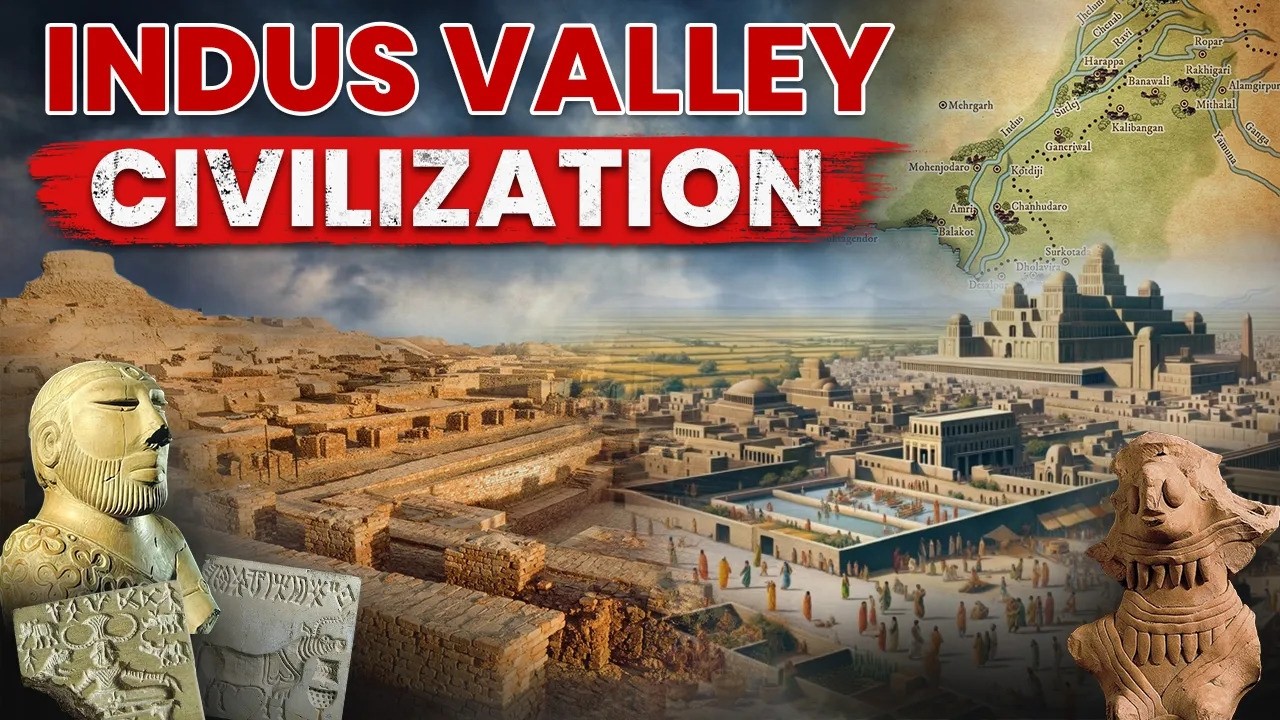
The Harappan Civilization, commonly known as the Indus Valley Civilization, stands as one of the most remarkable and earliest urban settlements in ancient India. This Bronze Age society flourished prominently during the Mature Harappan Phase, which historians date between c. 2600–1900 BCE. Extending over vast territories, its footprint includes iconic archaeological sites like Harappa, Mohenjo-Daro, Dholavira, and the port town of Lothal. The ruins of these ancient centers offer profound insights into highly advanced urban planning, a dynamic economic life, sophisticated crafts and technologies, extensive international trade networks, and structured religious practices. For students preparing for history exams, mastering the technical, social, and cultural frameworks of this ancient civilization is absolutely vital to scoring well.
In this chapter, you will understand:
- The revolutionary grid-based urban planning and civic engineering of Indus cities.
- The daily social routines, occupational diversity, and artistic pastimes of the citizens.
- The spiritual traditions, iconic deities, and multi-layered burial systems reflecting social hierarchies.
- The complex internal and external environmental factors that triggered the civilization's ultimate decline.
Why this topic matters: The Indus Valley setting represents the foundations of South Asian urbanization. Understanding its water management, standardized engineering, and trading prowess helps students tackle complex analytical questions on ancient state formations, technology baselines, and socio-economic history.
Core Idea: The Harappan civilization was an incredibly unified, highly organized urban network powered by agricultural surpluses and dynamic trade. Its people combined exceptional civic hygiene with practical technologies, creating standard cities that thrived for seven centuries before shifting environmental conditions led to their gradual de-urbanization.
The Harappan Civilization: Comprehensive Study of Urban Planning, Economy, and Society (c. 2600–1900 BCE)
The emergence of the Harappan Civilization brought a revolutionary era of planned living to the Indian subcontinent. The remains of its major settlements demonstrate a deeply structured society that prioritized sanitation, uniformity, and public utility on a scale unmatched by other contemporary cultures.
Meticulous City Blueprints and Advanced Public Engineering
Every major site reveals a deliberate blueprint that balanced administrative control with the everyday needs of the population. The architectural layout was highly standardized despite spans of thousands of kilometers.
- (i) Major Urban Centers: Pivotal settlements like Harappa and Mohenjo-Daro acted as central administrative hubs, while regional outposts like the fortified Dholavira and the maritime trading center of Lothal filled specific strategic and economic niches.
- (ii) Revolutionary Urban Planning: Cities followed a strict grid system where broad streets ran straight and intersected at neat right angles. Construction relied heavily on standard, kiln-burnt bricks built in a precise 4:2:1 ratio. The standard layout split centers into a raised, fortified Citadel for governance or rituals and a spacious lower town for residential housing.
- (iii) Sophisticated Public Infrastructure: Large-scale utility buildings highlight a strong civic administration. Key examples include the monumental Great Bath at Mohenjo-Daro, which featured waterproof brickwork for ritual bathing, massive Granaries designed with air vents for food security, and spacious pillared assembly halls.
Life in the Harappan Cities: Decoding Daily Routines and Social Fabric
Looking through the physical artifacts left behind gives us an intimate look at the daily routines, jobs, and social pastimes that filled the bustling neighborhoods of the Indus Valley. The evidence points to a highly practical, comfortable lifestyle focused on commerce and craftsmanship.

Residential Architecture and Diversified Economic Occupations
The home environments and daily workloads of the Harappan citizens reflected their organized economic structure and strong focus on personal comfort.
- (i) Houses were built with privacy in mind, featuring solid outer walls facing the main streets, multi-room layouts, central open courtyards, private wells, and indoor bathrooms tied to covered street drains.
- (ii) The urban economy was powered by a diverse work force: skilled farmers providing crop surpluses from rural zones, craftsmen working in metal and bead workshops, merchants managing maritime networks, and civic administrators.
- (iii) Deep analysis of charred grains and animal bone remains confirms a varied diet based on wheat, barley, peas, lentils, and domestic livestock like humped cattle and sheep.
Recreational Activities and Cultural Sophistication
Life in these towns wasn't just about labor and commerce; the citizens enjoyed varied cultural, artistic, and leisure pastimes that highlight their social security.
- (a) Excavations have unearthed a huge volume of terracotta toys, including wheeled carts, whistles, and movable animal figurines, showing a playful environment for children.
- (b) Artistic life is clearly visible through the discovery of musical items, intricate bronze statues like the famous 'Dancing Girl', and designated open community spaces suited for performances.
- (c) The recovery of numerous stone and terracotta dice alongside beautifully crafted gaming boards proves that structured tabletop games were highly popular forms of adult recreation.
Religion, Funerary Practices, and the Spiritual Ethos of Harappa
Recovered ritual objects and formal cemeteries give historians a valuable window into the invisible thoughts, spiritual mindset, and community values that guided the Harappan Civilization across generations.
Deities, Symbols, and Ritualistic Traditions
Though they built no massive temples like their contemporaries in Egypt or Mesopotamia, the Harappans maintained a distinct, deeply rooted belief system centered around nature and protective forces.
- (i) Clay figurines highlight the widespread worship of a Mother Goddess linked to fertility, while iconic steatite seals depict a seated, horned male deity called Pashupati (Lord of Animals), surrounded by wild beasts.
- (ii) Physical brick structures identified as fire altars have been uncovered at sites like Kalibangan and Lothal, proving the existence of community-wide ritual fire offerings and ceremonial gatherings.
- (iii) The widespread use of the swastika symbol, pipal leaf motifs, and sacred animal emblems (like the mythical unicorn and humped bull) on everyday seals tells us these markers carried deep religious value.
Burial Practices, Beliefs about Afterlife, and Social Implications
The way a society treats its dead reveals how it views social standing and the human spirit. Harappan graveyards yield crucial details about class differences and spiritual views.
Standard Harappan earthen graves contained diverse sets of funerary pottery and basic jewelry intended for use in the afterlife. - (a) The standard funeral practice was extended burial, placing the deceased on their back pointing north, surrounded by everyday pottery pots, basic mirrors, and personal ornaments.
- (b) Marked differences in the wealth and quality of grave items—ranging from plain dirt pits to brick-lined graves filled with luxury beads—clearly reveal distinct social and economic classes.
- (c) Regional variations, such as the round pit and pot burials found in Gujarat, show that distinct local customs thrived comfortably under the broader Harappan cultural umbrella.
Quick Revision Capsule
Use this structured outline to instantly review the primary traits, archaeological evidence, and central historical arguments regarding the Harappan Civilization:
| Core Domain | Primary Features & Practices | Key Archaeological Material Evidence |
|---|---|---|
| Urban Architecture | Grid-iron street networks, Citadels, and strict public sanitation channels. | The Great Bath, brick granaries, and standardized drainage networks at Mohenjo-Daro. |
| Economic System | Standard weights, advanced artisan crafts, and maritime trade routes. | Tidal dockyard at Lothal, chert weights, bead factories, and foreign seals. |
| Social Structure | Class divisions, professional specialization, and rich recreational habits. | Terracotta toys, multi-room brick dwellings, and varied gaming dice pieces. |
| Spiritual Practices | Nature worship, focus on fertility deities, and ritual fire ceremonies. | Pashupati seals, Mother Goddess figurines, and open fire altars. |
| Funerary Customs | Extended skeletal burials with dedicated pottery items for the afterlife. | Cemeteries at Harappa containing varied grave goods and personal ornaments. |
Summary
The Harappan Civilization stands as a true marvel of ancient human ingenuity. From c. 2600 to 1900 BCE, its citizens developed an urban matrix that blended strict architectural rules, hygiene, and dynamic trading networks that reached far into the Persian Gulf. By studying their homes, tools, uniform brick structures, and spiritual tokens, we uncover an advanced, peaceful, and commercial trade society. While changing climates and shifts in river patterns eventually caused its majestic cities to fade, the technological skills and social ideas pioneered by the Harappans left a permanent mark on the deep cultural evolution of the Indian subcontinent.
Key Revision Checkpoints for Students
Keep these fundamental historical metrics in mind when drafting your exam answers:
- (i) The Mature Harappan phase lasted from 2600 BCE to 1900 BCE, forming the absolute core of India's early Bronze Age.
- (ii) Look closely at the grid pattern, standard bricks, and the clear division between Citadels and Lower Towns when analyzing urban remains.
- (iii) The presence of a massive, engineered tidal basin at Lothal confirms highly developed sea trade with ancient Mesopotamia.
- (iv) Modern historical research rejects violent invasion theories for the decline, pointing instead to shifting river beds and major droughts.
- Exam Tip: When writing essays on Harappan architecture, always highlight the separation between the Citadel and the Lower Town. Be sure to link their advanced street drainage systems directly to a powerful central civic authority, as this shows a deep analytical grasp of the subject.
Frequently Asked Questions (FAQ)
Q1: What is the main reason why the Harappan Civilization is considered highly advanced in urban planning?
A1: The civilization is renowned because its towns followed a strict grid system with wide streets cutting at right angles. They also used standardized burnt bricks across all regions and built fully covered, connected drainage lines that provided elite sanitation to everyday homes.Q2: Did the Harappans trade with foreign civilizations, and how do we know?
A2: Yes, they maintained vibrant long-distance sea trade, particularly with Mesopotamia. This is proven by Indus-style seals and beads unearthed in ancient Mesopotamian cities, and Mesopotamian records mentioning a rich trading center called 'Meluhha'.Q3: What caused the ultimate decline of these grand Indus Valley cities?
A3: Rather than a single sudden war, the decline was driven by slow environmental shifts. Key factors included the drying up of the Saraswati River, severe ecological imbalance from deforestation, shifting paths of the Indus River, and a drop in international trade profits.