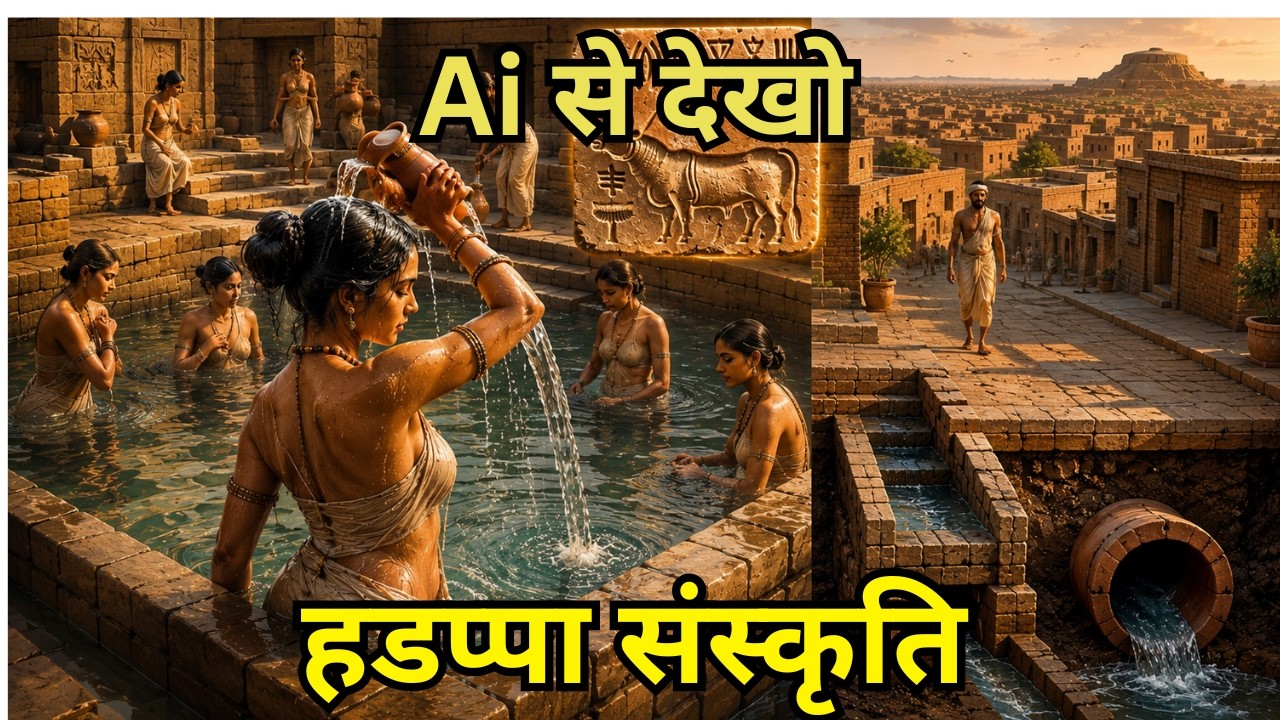
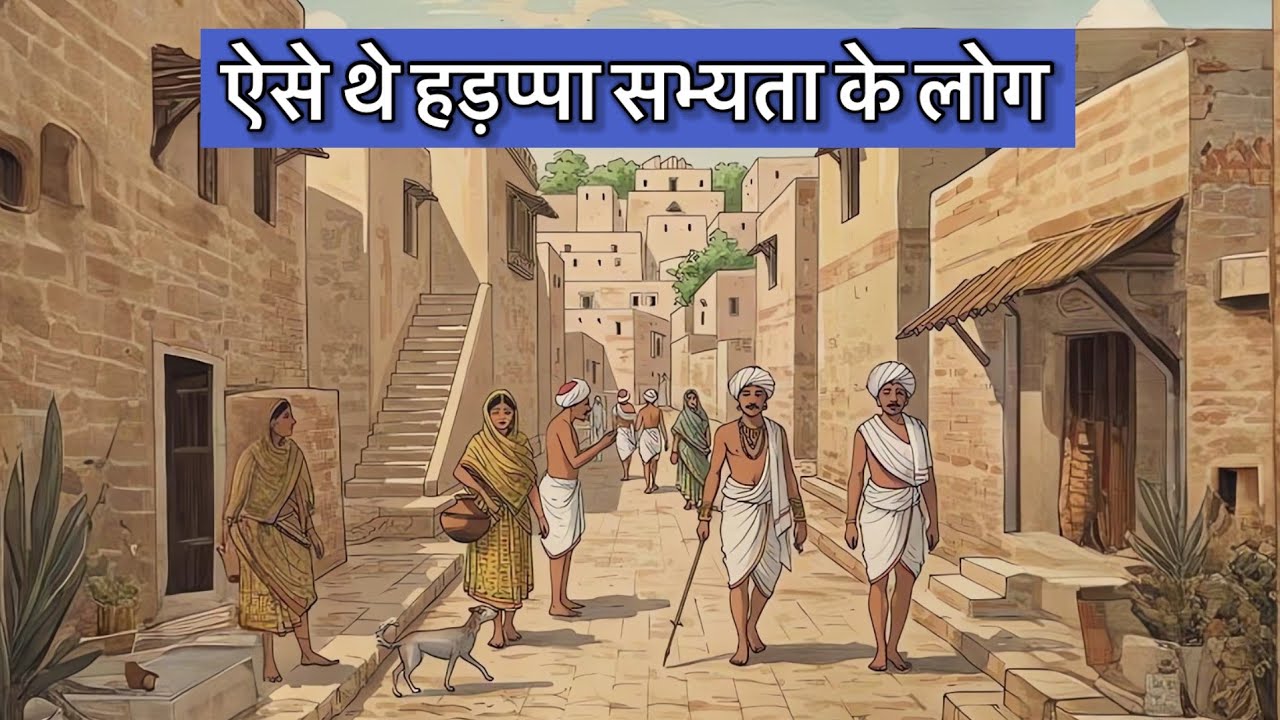
The vibrant urban centers of the Harappan world thrived on a robust foundation of advanced agriculture, highly specialized crafts, and vast international trade networks. These complex operations were carefully maintained by a discernible social hierarchy and a highly effective, centralized political organization that managed large-scale public works across the Indus valley. Understanding how this ancient society organized its workforce, fed its crowded cities, and governed its vast territories offers a fascinating glimpse into one of humanity's earliest and most successful urban experiments. The stability of their economy and the meticulous planning of their cities reveal a civilization that was deeply organized, remarkably self-sufficient, and globally connected during the Bronze Age.
In this chapter, you will understand:
- How agricultural surpluses and resource management triggered craft specialization.
- The reach of internal and maritime trade networks, particularly contacts with Mesopotamia.
- The evidence for distinct social classes based on archaeological remains and burials.
- The administrative machinery behind standard weights, uniform bricks, and public architecture.
Why this topic matters: This subject is crucial for historical analysis and examinations as it outlines the origin of state authority, urban economies, and global trade patterns in early human history.
Core Idea: The Harappan civilization sustained itself through systematic farming and intensive craft production. They traded high-value luxury items across the Indian subcontinent and maritime routes leading directly to historical Mesopotamia. This vast economic network was regulated by a centralized authority that enforced uniformity in city planning, standard measures, and large public undertakings, all while supporting a stratified urban population.
Agricultural Abundance and Craft Diversification
The Harappan economy was firmly rooted in advanced Agriculture, which involved the systematic cultivation of staple food crops like wheat, barley, and millet. The clever use of irrigation techniques and the strategic domestication of animals were absolutely crucial in producing the reliable food surplus necessary to sustain large urban populations. Complementing this agricultural wealth were the Crafts, which included a wide range of specialized production from fine pottery and intricate bead-making to sophisticated shell, ivory, and metalworking, all contributing to a dynamic and self-sufficient ancient economy.
Farming Methods and Labor Specialization
The production of food required innovative tools and disciplined control over local environmental resources, which directly paved the way for urban expansion.
- (i) Highly efficient farming techniques, including the use of the wooden plough and controlled irrigation networks, were vital in ensuring the necessary food surplus that allowed for the specialization of labor and the growth of the cities.
- (ii) Extensive craft specialization, where individual settlements or groups focused entirely on particular products (like shell workers or bead makers), acted as the primary engine that drove the urban economy and enabled extensive trade operations.
- (iii) The careful management of natural resources, including water and raw materials, strongly indicates an organized approach that fostered the sustainable nature of the Harappan settlements over many centuries.
Internal and External Trade and Commerce Networks
The impressive Harappan trade networks spanned not only extensively within the Indian subcontinent but also reached distant lands, most notably the advanced civilization of Mesopotamia. They primarily engaged in the exchange of high-value goods such as intricate beads, specialized pottery, precious metals, and fine textiles. This wide-ranging mercantile interaction offers compelling evidence of the civilization's considerable economic sophistication and global reach during this era.

- Mechanisms of Bronze Age Commerce
Trade Routes and Mesopotamian Contacts
Exchange relied on both natural geographical channels and strictly enforced standards to maintain legal trust across different regions.
- (a) A combination of overland caravan routes and established maritime trade routes (as clearly evidenced by the dockyard at Lothal) facilitated the smooth and sustained material and cultural exchange across vast geographical areas.
- (b) Archaeological evidence, including the specialized dockyards and the discovery of distinct Harappan seals in Mesopotamian cities and Mesopotamian artifacts in Harappan sites, confirms the reality of this complex, long-distance commercial interaction.
- (c) All commercial exchanges were tightly linked to the use of standardized weights, measures, and the famous engraved seals, ensuring absolute consistency and trustworthiness across the vast trade domain.
Social Stratification and Centralized Political Organization
The Harappan society, while seemingly egalitarian in some aspects, exhibited a clear social hierarchy, which can be easily inferred from the distinct differences observed in burials (such as the inclusion of luxury grave goods) and the variations in the size and layout of residential housing. The necessary political structures that governed this society are strongly inferred to have been a highly structured form of centralized authority, given the unwavering uniformity in city planning, the strict standardization of weights and bricks, and the massive coordination required to complete public works like the Great Bath and large-scale granaries.
- Social Order and Civic Administration
Social Roles and Public Administration
The complexity of the cities indicates a clear division of labor and a powerful governing body that oversaw daily life and regional infrastructure.
The distinct separation between the elevated Citadel and the lower residential town illustrates a planned civic and social hierarchy. - (i) The society consisted of distinct functional groups, including powerful artisans, wealthy traders, essential farmers, and presumed administrators, each with defined societal roles that ensured the smooth daily functioning of the city.
- (ii) The successful planning and execution of large public works projects, which demanded organized labor and centralized resource allocation, strongly suggests the presence of some form of authoritative state control or a powerful ruling elite.
- (iii) The uniformity and complexity of the administrative buildings and the meticulous urban planning across all major cities point to a common, standardized, and highly effective governance structure.
Quick Revision Capsule
Quick structural overview of the economic, social, and political pillars of the Harappan Civilization:
| Civilization Pillar | Core Strategy & Mechanism | Target Objective & Metric |
|---|---|---|
| Agriculture | Plough farming, controlled irrigation, and crop domestication (wheat, barley, millet) | Generation of regular food surplus to feed dense urban populations |
| Craft Industry | Settlement-wide specialization in bead-making, pottery, shell-work, and metallurgy | Labor diversification and production of high-value commercial commodities |
| External Commerce | Overland caravans and maritime shipping routes via coastal ports like Lothal | Long-distance luxury trade and cultural exchange with Mesopotamia |
| Social Structure | Stratification visible in residential size variations and differentiated grave goods | Organization of distinct functional groups from elite rulers to farmers |
| Political Authority | Enforcement of uniform brick sizes, standardized weights, and organized public projects | Centralized state control and meticulous regional urban administration |
Summary
The historic success of the Harappan civilization relied on an integrated system where advanced agriculture directly fed dense, industrialized cities. This urban setting nurtured a highly skilled class of craft specialists who manufactured luxury goods for both local elites and far-flung partners in Mesopotamia. To keep this complicated economic engine running smoothly, a centralized political authority maintained strict civic order. This authority is visible today in the uniform brick dimensions, standardized weight systems, and massive public structures found throughout the region. Together, these elements created a stable, stratified, and highly organized Bronze Age state that thrived for generations.
Quick Revision Points
Key historical takeaways to remember for quick review:
- (i) Core agricultural staples included wheat, barley, and millet, cultivated using systematic ploughing and water management.
- (ii) Cities like Lothal served as vital maritime trade hubs, linking the Indus valley directly with Mesopotamian buyers.
- (iii) Harappan seals and standardized weights provided a reliable legal and commercial framework across all trading zones.
- (iv) Unequal distribution of grave goods and distinct housing sizes confirm that Harappan society was socially stratified.
- Exam Tip: When writing about Harappan governance, always emphasize that while no single royal palace or monumental tomb has been definitively identified, the absolute standardization of weights, measures, and urban grid layouts across hundreds of miles is the strongest direct proof of a powerful centralized political authority.
Frequently Asked Questions (FAQ)
Q1: What evidence proves that the Harappans traded with ancient Mesopotamia?
A1: Clear archaeological evidence includes the discovery of numerous authentic Harappan seals and typical Indus luxury beads within historical Mesopotamian cities, along with records of trade goods matching the region, paired with the presence of reciprocal imports in Harappan towns.Q2: How do historians deduce the existence of a social hierarchy in Harappan cities?
A2: Social stratification is inferred by analyzing the distinct differences in the size, complexity, and layout of residential houses (such as citadels versus smaller quarters) and the varying quantities and qualities of grave items deposited in individual burials.Q3: What indicates that Harappan political organization was highly centralized?
A3: The incredible uniformity in urban grid planning, identical structural designs for public works like the Great Bath, and the strict regional enforcement of standardized weights and uniform brick ratios require a centralized administrative authority.