The Indus Valley Civilization stands as one of the most remarkable marvels of the ancient human journey, flourishing across vast swathes of South Asia thousands of years ago. Unlike many of its contemporaries, this early society relied on highly organized civil engineering, expansive trade infrastructure, and a standardized style of living that reached into every corner of its vast territory. Studying the Harappan culture helps us understand how early communities transitioned from small agricultural villages into bustling, complex metropolitan centers. By investigating their highly advanced drainage networks, architectural achievements, and dynamic economic engines, modern students and historians gain deep insights into how ancient communities managed resources, structured their towns, and coped with environmental shifting forces over centuries.
In this chapter, you will understand:
- The vast geographical footprint and the chronological transitions through the Early, Mature, and Post-Urban periods.
- The systematic urban design principles, grid-patterned streets, bipartite city divisions, and unmatched wastewater networks.
- The agrarian foundations, craft specializations, and long-distance maritime trading systems connecting the Indus to foreign lands.
- The archaeological significance of key recovery assets, the mystery of the undeciphered script, and the environmental factors that shaped their eventual cultural decline.
Why this topic matters: Analyzing the structural framework of the Indus Valley Civilization is vital for comprehending ancient urban design, governance models, and systemic human adaptations to river environments. It holds prominent diagnostic importance in history curricula and competitive examinations, serving as a primary case study for baseline civic development.
Core Idea: The Harappan culture illustrates an extraordinarily unified yet adaptable ancient ecosystem characterized by exceptional urban planning, deep-rooted trading partnerships, and artistic sophistication. Spanning multiple evolutionary stages, its complex network relied heavily on standard weights, baked bricks, and structural defenses against nature. Even after major cities experienced severe decay and populations moved into agrarian regions, many underlying religious, technological, and agricultural practices left a permanent impression on subsequent subcontinental traditions.
Geographical Spread and Evolutionary Phases of the Harappan Culture
The historical narrative of the Harappan Culture is far from static. It reflects a long, dynamic transformation spanning a colossal geographic territory that fundamentally rewrites standard limits set for ancient societies. Rather than focusing on a single pocket of growth, researchers view this civilization as an expansive network of changing lifestyle phases adapting to variable ecosystems.
Regions Covered and the Vast Scope of the IVC
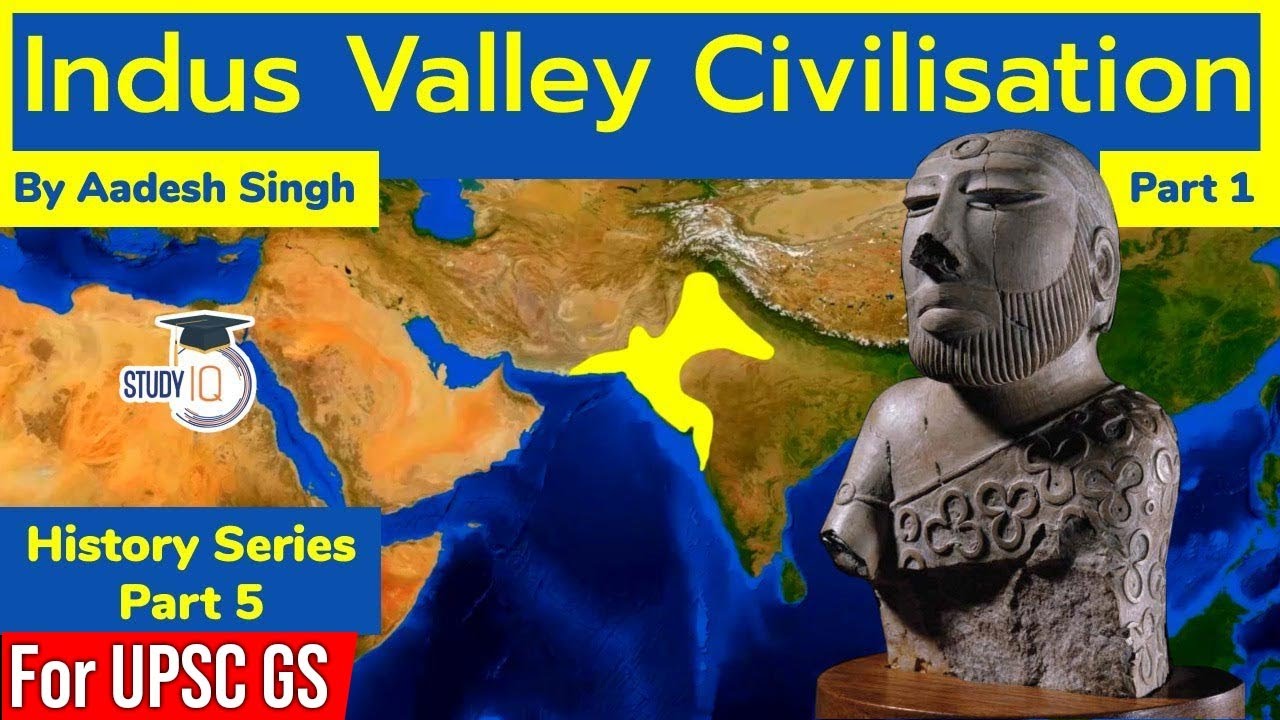
The core territory of the civilization spread across an absolute giant of an area, vastly eclipsing the physical size of its contemporary Egyptian or Mesopotamian neighbors. Its primary settlements crossed key territories throughout modern-day Pakistan, mapping closely to the expansive Indus River valley, and reached deep into Northwest India, covering rich ecological zones inside Gujarat, Rajasthan, Haryana, and Punjab.
- (i) A massive portion of discovered sites settled along the fertile banks of the main Indus River system and the ancient, now-dry pathways of the Ghaggar-Hakra river channels.
- (ii) Diagnostic sites show distinct regional features, proving the culture successfully balanced standardized ways of life with smart adjustments to local materials and environments.
The Three Major Phases: Early, Mature, and Post-Urban Development
To evaluate the long-term timeline of the Indus Valley Civilization, archaeologists group its existence into three distinct, yet deeply interconnected historical eras, each showing a pivotal step in development, stabilization, and final decentralization.
- (a) Early Harappan Phase (Pre-Urban): This initial setup period saw the slow growth of primary farming communities and fortified villages, laying down the critical base for the eventual urban boom. Places like Kot Diji and Amri show early traces of uniform pottery styles, along with the first attempts at using standard weights and scale measurements.
- (b) Mature Harappan Phase (Urban Zenith): This period represents the clear golden age of the civilization, marked by fully developed urban centers, highly regimented town layouts based on grid patterns, and the widespread use of the mysterious, still Indus Script. Major operational hubs like Mohenjo-Daro and Harappa reached their full structural peak during these years.
- (c) Post-Urban Harappan Phase (Decline/Transformation): Following its zenith, the civilization entered a visible era of transition where massive urban populations drifted away, giving way to smaller, highly localized rural settlements. While this shows a major shift in focus, numerous structural elements managed to persist in successor regional lifestyles.

Hypothetical Map of Harappan Civilization
Masterpieces of Indus Urban Planning and Infrastructure
The builders of the Indus valley stood out as brilliant, unmatched experts in civil engineering. They mapped their urban residential centers with an incredible degree of calculation, careful foresight, and uniform structural rules that humanity would not successfully duplicate for thousands of years, making it an essential focus for students analyzing engineering history.
- Cities were meticulously engineered from the ground up rather than growing organically over time.
Key Urban Centers and Standardized City Layout
Major historical cities were definitely not random, chaotic gatherings of mud houses. Key administrative and commercial spots like Harappa, Mohenjo-Daro, Dholavira, and the coastal trading port at Lothal shared a distinct, strict blueprint defined by a clear bipartite division: a highly fortified Citadel resting alongside a wider, sprawling Lower Town.
- (i) Grid-Patterned Streets: Thoroughfares and local lanes followed a precise geometric layout, cutting directly north-south and east-west to cross at neat right angles, which strongly reflects the presence of an active, centralized municipal council.
- (ii) Standardized Construction: Master builders consistently selected uniform, durable baked brick materials produced in an exact physical ratio of 4:2:1, showing tight regulatory oversight across hundreds of separated sites.
- (iii) Citadel and Lower Town: The high, fortified Citadel zone most likely housed ruling political administrators or religious leadership bodies, while the expansive Lower Town spread out to hold the everyday residences and shops of ordinary citizens.
View of Upper Citadel - Harappan Culture Advanced Water Management and Significant Public Structures
The single most revolutionary element separating the IVC from other ancient cultures was their master-level focus on water management and neighborhood sanitation. This proves their societies prioritized everyday public hygiene and clean community utility options.
- (a) Drainage Systems: Almost every single home in these towns linked up to a sophisticated network of main wastewater lines hidden safely beneath street levels, built completely from carefully set baked bricks.
- (b) Water Reservoirs: In the city of Dholavira, engineers built giant, rock-cut water storage systems that showed an brilliant approach to gathering and saving precious rain run-off, helping communities survive in a naturally dry region.
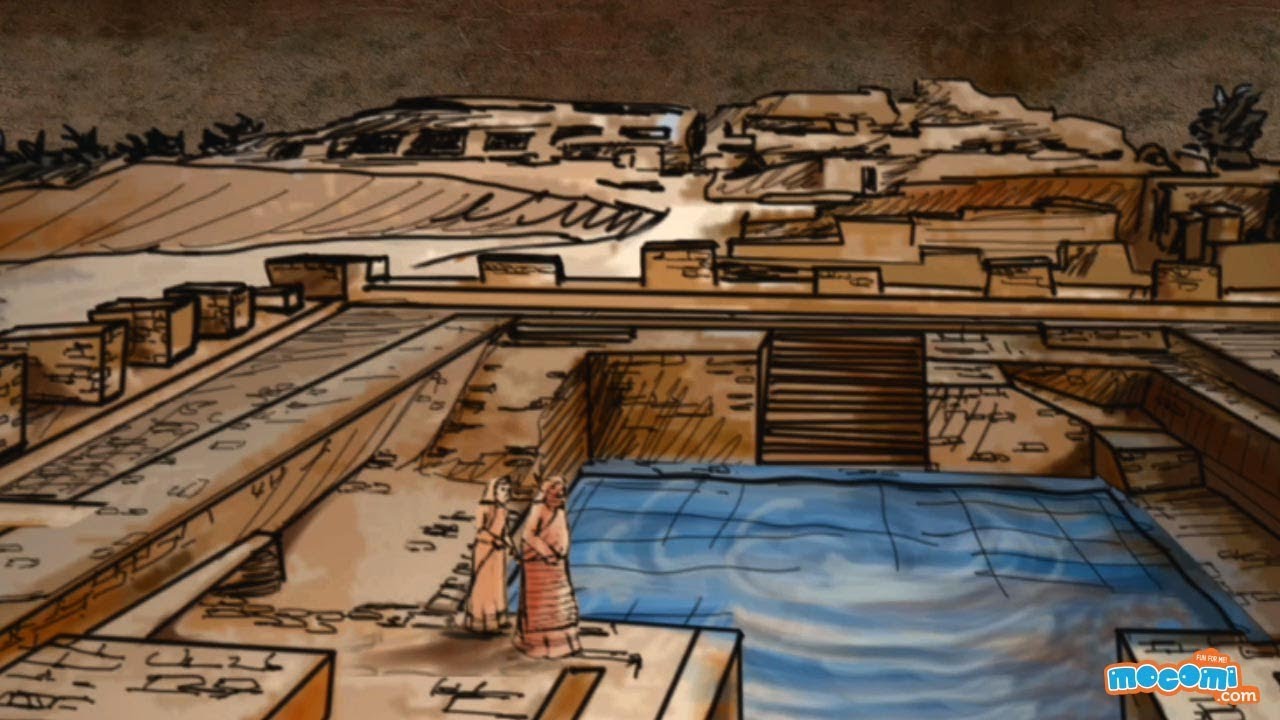
- (c) Great Bath and Granaries: Monumental civic works like the famous Great Bath situated inside Mohenjo-Daro, which likely served ceremonial or ritual washing duties, along with massive, well-ventilated Granaries designed to hold excess food reserves, reveal a high degree of civic coordination.
The Lothal Dockyard and Defenses against Nature
Different sites developed specific engineering tricks to deal with their immediate environments, proving Harappan builders could innovate to protect maritime trade routes and mitigate natural disasters.
- Lothal Dockyard: The ancient harbor settlement of Lothal in Gujarat contained an immense, expertly planned artificial dockyard basin. This worked as a major central port facility handling maritime trade directly with remote kingdoms in Mesopotamia, proving the huge role played by overseas shipping networks.
- Flood Protection: Because major rivers flooded regularly, builders deliberately constructed entire towns on top of massive artificial mounds and raised platforms made from layers of clay and stone bricks to keep primary structures clear of seasonal flood waters.
Indus Valley City Model
Economic Engines and Social Organization of Harappan Society
The amazing wealth and longevity of the IVC rested on a highly varied, self-sustaining economic model. This system was kept strong by a stable social framework where individuals developed master-level expertise in distinct creative crafts, manual manufacturing, and large-scale farming fields.
- A stable agricultural base allowed urban industries and extensive merchant classes to thrive.
Foundations in Agriculture and Animal Husbandry
Basic farming served as the essential spine supporting the Harappan financial network. It regularly brought in the solid grain surpluses needed to feed dense city populations and allowed other citizens to focus fully on luxury manufacturing and trade roles.
- (i) Diverse Crops: Rural fields produced a wide variety of domestic crops, ranging from staple grains like wheat and barley to patches of peas and mustard, along with providing the earliest historical proof of organized cotton farming.
- (ii) Farming Techniques: Laborers made good use of wooden plows to turn over deep soil, and balanced their work with basic irrigation channels and smart crop rotation choices to keep fields fertile season after season.
- (iii) Domesticated Animals: Livestock raising spread far and wide, focusing on key animals like cattle (specifically hump-backed Zebu bulls), sheep, goats, and water buffalo, which helped pull heavy farm machinery and secured the urban food supply.
Extensive Trade Networks and Specialized Crafts
The people of the Indus were never isolated from the ancient world. Their financial systems linked up local markets with adventurous, long-distance trade expeditions, a process kept highly secure by the invention of their signature seal technology.
- (a) Trade with Foreign Lands: Merchants set up clear, regular travel routes out to Mesopotamia (the Sumerian cities) and across Central Asia. This is verified by the discovery of distinct Harappan seals and diagnostic art assets deep inside those distant foreign sites.
- (b) Traded Goods: Export specialists regularly shipped out premium beads (crafted from beautiful orange carnelian), fine pottery lines, and harvested ocean shells, while buying up essential incoming raw metals like copper, tin, and gold.
- (c) Craft Specialization: Dedicated urban industrial quarters turned out polished pottery items (such as the beautiful Red Ware sets painted with black natural shapes), intricate bead making pieces, and highly advanced metallurgy tools created from stone and copper alloys.
Insights into Harappan Social Organization
Even though the exact nature of their government remains a hotly debated puzzle because of the undeciphered script, surviving physical items point clearly toward a structured, highly organized hierarchical society filled with well-defined career fields.
- (i) Hierarchical Evidence: Variations in regional burial sites (where some individuals rested alongside high-value grave goods like gems and pots while others had nothing), the strict physical split between the elevated Citadel and the Lower Town, and the building of grand public spaces point heavily to stratified social layers.
- (ii) Occupational Roles: The local population divided neatly into distinct, specialized jobs, including primary food-producing farmers, master craftsmen working in clay and metal, rich merchants controlling import-export pipelines, and civic administrators tracking public infrastructure projects.
Cross-Sectional View of Harappan Society
Archaeological Discoveries, Cultural Life, and the Indus Script Mystery
The physical objects and artwork recovered from various IVC locations give us a magnificent window view directly into the daily lives, spiritual concepts, and artistic styling choices of this ancient people. Every piece dug up tells a story about how they saw the world around them.
- Material items bridge the gap between ancient technological capabilities and their deep spiritual traditions.
Signature Artifacts, Burial Customs, and Art
The incredible range of recovered art objects highlights an advanced cultural and spiritual life, moving effortlessly from basic, everyday kitchen tools to highly complex religious symbols.
- (i) Material Artifacts: Regular excavations frequently turn up gorgeous, wheel-turned pottery, unique steatite seals carved with realistic animal shapes, delicate terracotta figurines, and fine bronze metal masterpieces like the internationally famous 'Dancing Girl' statue.
- (ii) Burial Practices: Ancient cemeteries show diverse funeral traditions. A few graves hold rich elaborate grave goods like fine neck jewelry and custom pots, which hints at a deep belief in a mysterious afterlife while confirming a clear social stratification that followed them even into death.
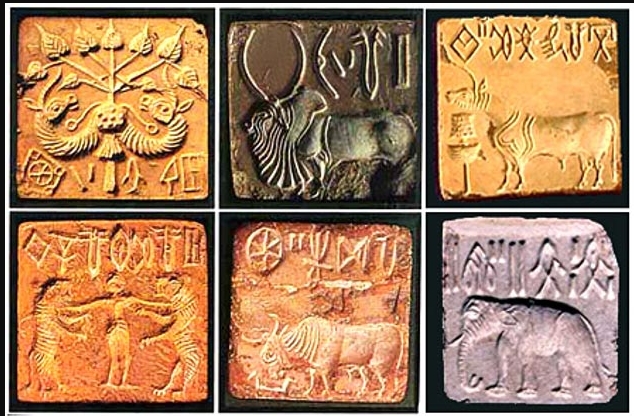
Seals, Motifs, and Models The Enigma of the Undeciphered Indus Script
The ancient Indus Script remains the single most challenging archaeological puzzle in South Asian history. Its stubborn refusal to be read continues to block a comprehensive understanding of the Harappan language, its administrative laws, and its spiritual stories.
- (a) Script Features: The brief inscriptions, found carved onto flat seals and small copper sheets, use about 400 distinct characters. This suggests a complex logo-syllabic script where symbols represent a mix of whole words and individual sound syllables.
- (b) Potential Uses: This writing method most likely filled essential administrative, commercial, and perhaps religious roles, helping ancient warehouse operators track trading shipments and allowing rulers to document local laws.
- (c) Hinderance to Understanding: Because the text remains completely undeciphered, our current view of this civilization relies entirely on analyzing hard material remains rather than reading original written accounts or historical books.
Model of Harappan Script Draft Seals, Motifs, and Models Religion, Daily Life, and Symbolism
The inner spiritual world and daily beliefs of these ancient peoples can only be pieced together by looking closely at the imagery and characters stamped onto clay shapes and stone seals.
- (i) Religious Imagery: Central discoveries include the highly famous Pashupati Seal, which displays a seated figure surrounded by beasts (often called an early proto-Shiva form), hinting at a major male god, alongside dozens of animal motifs that prove they treated local wildlife as sacred.
- (ii) Fertility Cults: Massive piles of terracotta female figurines dug up across multiple towns are commonly read as representations of a holy Mother Goddess or regional fertility deities, showing how much they valued the cycles of nature and life.
- (iii) Entertainment: Recovered toys show that daily city life included plenty of time for recreation, with structured board games, music, and dance acting as prime entertainment choices for the urban public.
Decline Factors and the Lasting Legacy of the Indus Valley Civilization
Around the year 1800 BCE, the great Harappan cities began facing a slow, unavoidable phase of structural decay. This painful shift slowly shattered the centralized urban network, turning the grand civilization into a collection of smaller, highly localized farming cultures.
- The fall was not a sudden apocalyptic event but a multi-decade decentralization process.
Signs of Urban Decay and Cultural Shift
The arrival of the Post-Urban Harappan Phase is proved by clear physical signs of decay, showing a major slide away from the strict, high quality rules that defined their golden era.
- (i) Deterioration of Planning: Once-beautiful neighborhoods showed severe neglect; new, poorly constructed houses encroached directly onto main streets, and the pristine public drainage channels were left to fill with silt and fall apart.
- (ii) Migration: Large masses of city dwellers abandoned the dying metropolitan hubs, initiating a massive trend of migration away from river systems toward small rural areas out in the east and south.
- (iii) Cultural Changes: The design and artistic finish of local pottery dropped in quality, while the complete disappearance of the iconic Indus Seals and Script proves the old administrative trading networks had broken down entirely.
View of Harappa Model Major Theories on the Harappan Decline
No single disaster can explain the complete IVC decline. Instead, a complex mix of environmental, economic, and social stresses came together to force the culture to break apart and scatter.
- (a) Environmental Factors: A primary explanation focuses on a devastating reduction in monsoon rains that hit regional agriculture, alongside the gradual drying up of the crucial Ghaggar-Hakra River network. Sudden tectonic activity (violent earthquakes) might have also blocked or shifted key river lines away from fields.
- (b) Economic Stress: The sudden collapse of lucrative long-distance trade connections with Mesopotamia, brought on by internal troubles or external chaos, would have bankrupt the merchant elite and starved the city economies of wealth.
- (c) Socio-Cultural Changes: As centralized control withered, citizens dropped the expensive urban metropolitan model in favor of highly decentralized, rural agrarian lifestyles that were easier to sustain under harsh conditions.
The Enduring Legacy of the Indus Civilization
Even though its days as a grand, grid-planned superpower drew to a close, the innovations of the IVC never truly died out. Instead, many of their creative arts and core concepts lived on to heavily shape later Indian traditions.
- (i) Urban and Craft Techniques: Specific elements of their foundational urban planning layouts, along with persistent craft techniques in clay pottery making and bronze metallurgy, were preserved and used by later regional societies.
- (ii) Religious Continuities: Deeply rooted spiritual practices, like the worship of a protective Mother Goddess and the reverence for specific religious symbols, rolled forward through time, eventually weaving themselves tightly into the modern religious traditions of the Indian subcontinent.
Quick Revision Capsule
Review the essential core elements of the Harappan Culture through this quick comparative diagnostic summary matrix:
| Historical Phase / Site | Primary Technical Mechanism | Core Target Objective / Metric |
|---|---|---|
| Early Harappan Phase | Traded basic pottery lines and initiated foundational scale rules | Establishing early agrarian footholds and basic community fortification |
| Mature Harappan Phase | Implemented rigorous grid city layouts and 4:2:1 brick casting | Maximizing grand urban centralization and expansive international commerce |
| Post-Urban Harappan Phase | De-urbanized dense cities into decentralized farming communities | Adapting to severe monsoon reduction and river course changes |
| Mohenjo-Daro | Built the monumental Great Bath and advanced covered street drains | Securing public sanitation systems and community ritual settings |
| Lothal Port | Constructed a heavy artificial basin engineered to manage tides | Serving as the primary industrial gateway for maritime trade with Mesopotamia |
Summary
The Indus Valley Civilization stands out as a true testament to ancient human brilliance, showing an unexpected mastery over architectural design, standard manufacturing, and regional trade long before modern machinery existed. Across its Early, Mature, and Post-Urban cycles, this culture created beautiful grid-based metropolises, massive maritime shipping hubs like Lothal, and highly efficient public health networks that set a high benchmark for early history. When changing environments and drying riverbeds eventually made it impossible to maintain these crowded urban centers around 1800 BCE, the civilization did not suffer a sudden violent end. Instead, its people successfully adapted by relocating into rural communities toward the east and south, carrying their artistic secrets, metallurgy skills, and deep religious concepts forward to serve as the building blocks for later subcontinental cultures.
Quick Revision Points
Focus heavily on these diagnostic facts when preparing for exams:
- (i) The Harappan civilization was massive, dwarfing contemporary Mesopotamian and Egyptian empires in geographic scale.
- (ii) Cities utilized a uniform brick ratio of 4:2:1 alongside streets crossing at precise 90-degree right angles.
- (iii) The logo-syllabic Indus script features roughly 400 unique characters and remains completely unread by modern linguists.
- (iv) Climate changes, structural urban decay, and trade failures combined to shift populations from big cities into small villages by 1800 BCE.
- Exam Tip: Examiners regularly test students on the bipartite layout of cities (Citadel vs. Lower Town) and specific unique discoveries at key locations. Always remember that Dholavira is famous for its master-level rock-cut water reservoirs, while Lothal stands out for its sophisticated tidal dockyard structure.
Frequently Asked Questions (FAQ)
Q1: What are the main reasons given for the sudden or gradual decline of the Indus Valley cities?
A1: Historical evidence points to a combination of environmental and economic strains rather than a single disaster. The main factors include a severe drop in annual monsoon rainfall, the physical drying up of the crucial Ghaggar-Hakra river system, potential course changes due to earthquakes, and the final breakdown of trade routes linking them to Mesopotamia.Q2: How did the physical structure of a Harappan city reflect social organization?
A2: The strict bipartite division of cities indicates clear social formatting. The high, heavily fortified Citadel likely protected administrative, political, or religious elites, whereas the expansive Lower Town held the homes, workshops, and marketplaces of common craft workers, merchants, and laborers.Q3: Why does the undeciphered Indus Script present such a huge obstacle to modern historians?
A3: Because the logo-syllabic writing system remains unread, researchers cannot review original written documents, court laws, king lists, or trade records. Our entire modern knowledge of Harappan life must be pieced together from surviving physical artifacts, buildings, and graves rather than their own written stories.