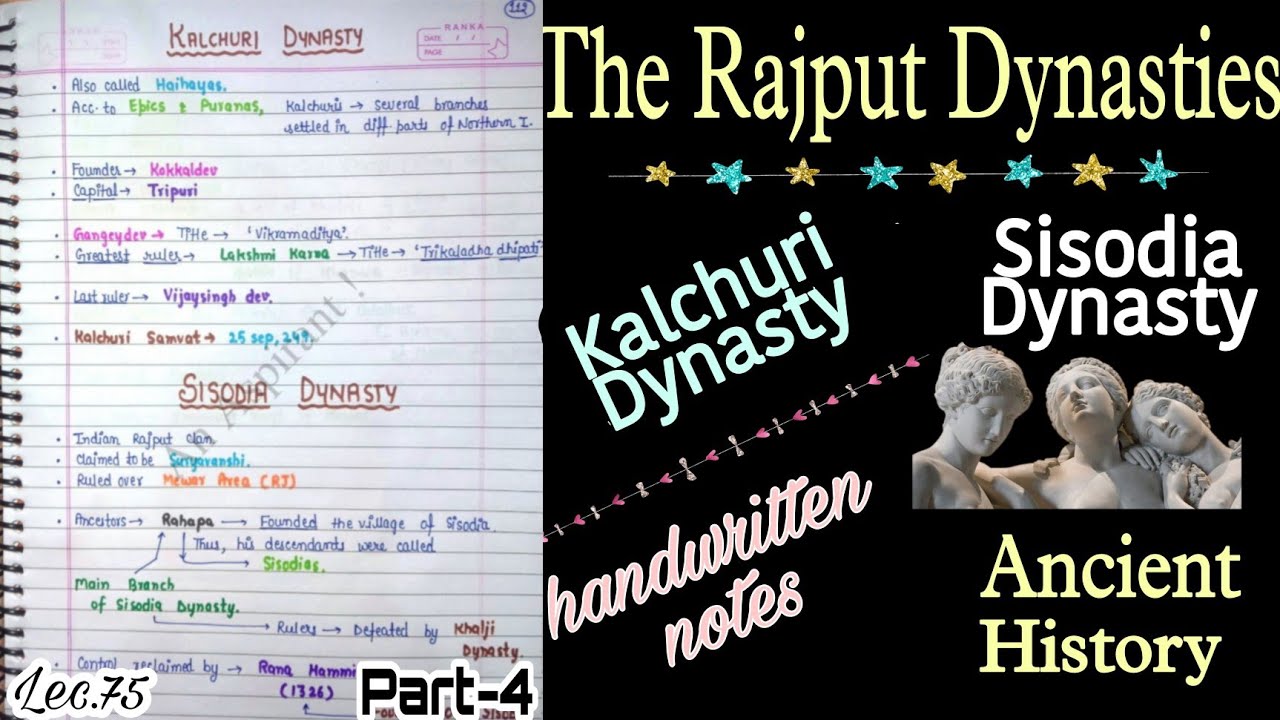
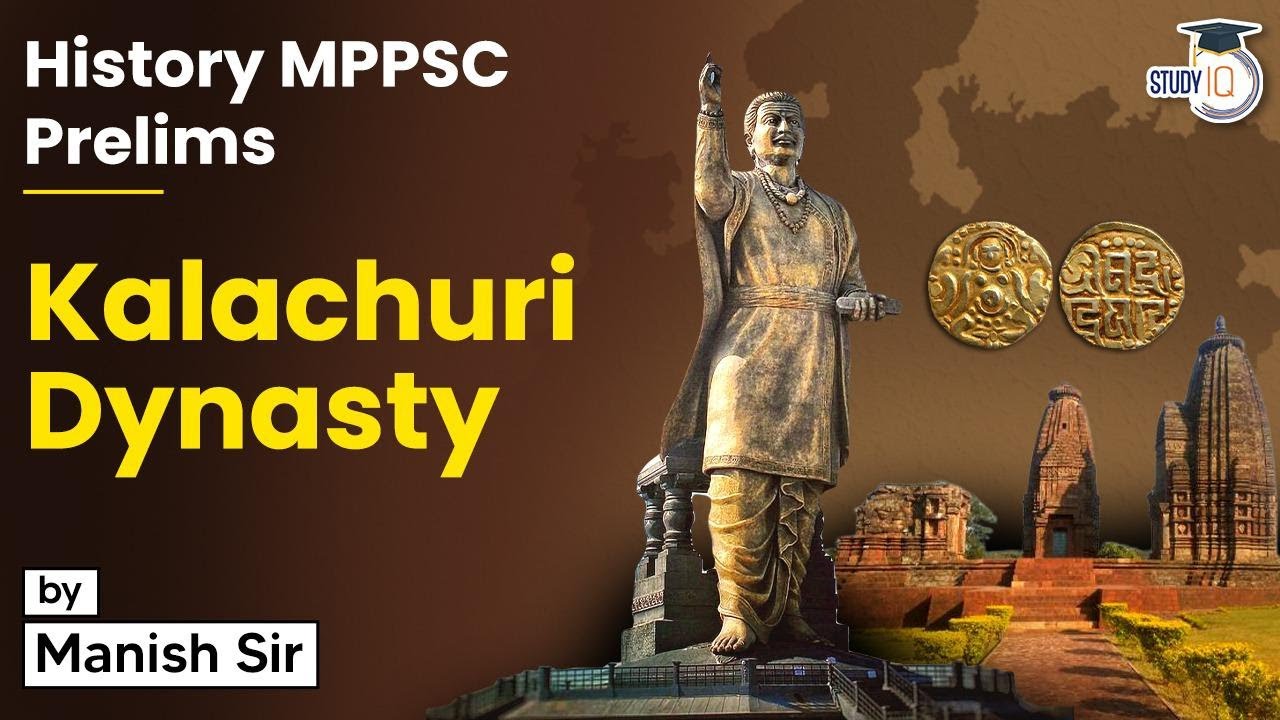
The history of the Kalachuri Dynasty, who were also called the Haihayas, gives us a detailed look into the political, social, and economic life of ancient and early medieval India. Rising from their early capital at Mahishmati, they later spread into several powerful lines, including the Kalachuris of Chedi (Tripuri) and the Kalachuris of Kalyani. Between 550 CE and 1181 CE, this ruling family influenced power balances across Central India and the Deccan, managed valuable natural resources, and witnessed major social transformations like the Virashaiva Movement. Understanding their trajectory helps students grasp how regional powers shaped statecraft, trade, and culture during this era.
In this chapter, you will understand:
- The early origins of the Haihaya lineage at Mahishmati and their primary territorial branches.
- Major military achievements under rulers like Kokalla I and Gangeyadeva of Tripuri.
- The state-managed economic framework, including land control, forest industries, and the Mandapika trade tax system.
- The emergence of the Virashaiva Movement led by Basavana under the Kalyani branch.
Why this topic matters: It connects political fragmentation with regional economic growth, trade route taxation, and major social reform movements in medieval Indian history.
Core Idea: The Kalachuris evolved from an early Kshatriya clan into several powerful regional dynasties. They maintained strong royal monopolies over land and minerals, supported thriving forest and craft industries, and served as the political backdrop for transformative religious and social changes in the Deccan and Central India.
Early Beginnings of the Kalachuris (550–620 CE)
The early Kalachuris claimed descent from the ancient Haihaya Kshatriya tribe mentioned in Brahmanical epics and Puranas. Their earliest state took shape in Western and Central India around the mid-6th century.
- Early Kalachuris of Mahishmati established their realm across parts of present-day Gujarat, Madhya Pradesh, and Maharashtra.
During their initial era of rule between 550 CE and 620 CE, prominent kings led the dynasty through significant territorial expansion and military tests.
- (i) Rulers such as Krishnaraja, Shankaragana, and Buddharaja directed early state-building effort.
- (ii) Their growth was repeatedly challenged by strong neighboring powers, most notably the Chalukyas of Vatapi and the Maitrakas of Valabhi.
- (iii) Major military struggles against Mangalesha and Pulakesin II eventually halted the expansion of this early Mahishmati line.
Regional Branches of the Dynasty
After the early Mahishmati kingdom declined, the Kalachuri Dynasty split into multiple regional branches by the 9th century CE, extending their influence across Central, Eastern, and Southern India.

Prominent Branches: Tripuri (Chedi) and Kalyani
Two main branches emerged as powerful kingdoms in their respective regions, leaving a long-lasting mark on political history.
- (i) Kalachuris of Chedi (Tripuri): Based at Tripuri near Jabalpur, this line governed the Dahala-Mandala region and became the strongest power in Central India.
- (ii) Kalachuris of Kalyani: Based in the southern Deccan, this line briefly took over the Chalukyan heartland in the 12th century.
Minor Regional Offshoots
Collateral lines established smaller yet strategically positioned states in present-day Chhattisgarh and Uttar Pradesh.
- (a) Kalachuris of Ratanpur: An offshoot of the Chedi line that developed an independent state in South Koshala.
- (b) Kalachuris of Raipur: A later secondary branch formed as the Ratanpur line expanded.
- (c) Kalachuris of South Koshala: An active regional force involved in frequent alliances and struggles with Tripuri.
- (d) Kalachuris of Gorakhpur: A northern branch representing the family's presence near the Gangetic plains.
The Chedi Line of Tripuri and Its Rulers
Ruling Dahala-Mandala from their capital at Tripuri, the Kalachuris of Chedi played an active role in the political conflicts of North-Central India.
Rise of Tripuri under Kokalla I
Kokalla I took the throne around 845 CE and turned the Tripuri line into a major power through successful military campaigns.
- (i) Key Victories:Kokalla I secured major victories against the Pratihara ruler Bhoja I and the Rashtrakuta king Krishna II.
- (ii) Subsequent Rulers: Successors like Shankaragana and Balaharsh maintained state authority. Later, under Yuvaraja I, the kingdom suffered a setback against Rashtrakuta king Krishna III before recovering its standing.
- (iii) Later Continuity: The lineage was carried forward by Laksmanaraja, Yuvaraja II, and Kokalla II, preserving the realm's borders.
Imperial Expansion Under Gangeyadeva
Gangeyadeva became one of the most prominent monarchs of the Tripuri branch, expanding the kingdom and adopting the imperial title Vikramaditya.
- (a) Conquests: He defeated Mahashivagupta Yayati of South Koshala and brought the holy city of Benaras (Varanasi) under his control.
- (b) Campaign Checks: Although he built strategic alliances with the Paramaras and Cholas, his expansion was eventually stopped after a defeat by the Chalukya king Jayasimha.
Independence of the Ratanpur Branch
Originally serving as regional governors under the main Chedi house, the Kalachuris of Ratanpur gradually built up local strength to form an independent state.
Autonomy in South Koshala
Founded by a son of Kokalla I, this branch formally broke away from Tripuri control during the 12th century under Jajjaladeva I.

Archaeological evidence of independent titles assumed by the Ratanpur rulers in South Koshala - (i) Sovereign Titles: Upon asserting independence, Jajjaladeva I took high imperial titles such as Maharajadhiraja and Parameshvara.
- (ii) Territorial Growth: Their control over South Koshala expanded over time, later giving rise to the Kalachuris of Raipur.
The Kalyani Branch and the Usurper Bijjala II
In the southern region, the Kalachuris of Kalyani held power for a short period of roughly 25 years (1156–1181 CE), altering Deccan politics before the Chalukyas regained control.
Rise and Fall of the Kalyani Line
Bijjala II seized authority from the weak Chalukya ruler Taila III and established his own rule over the area.
- (i) Unstable Succession: Following the death of Bijjala II, his successors Someshvara and Sangama struggled to maintain order across their territories.
- (ii) Chalukya Restoration: Ongoing political strife enabled the Chalukyas to re-establish control, ending Kalachuri power at Kalyani by 1181 CE.
Resource Control and Economic Organization
The economic strength of the Kalachuris rested on royal control over primary assets, structured land administration, and rich natural resources.
Monopoly on Land and Minerals
Contemporary inscriptions reveal that the state maintained direct control over essential economic resources.
- (i) The king held ultimate ownership of all land within the kingdom, maintaining sole rights to issue formal land grants and village transfers.
- (ii) The royal treasury enforced a complete monopoly over mineral resources, including mines and underground wealth.
Social Structure and Reform Movements
While the state upheld traditional social order through land grants to religious groups, it also became the site of an influential social reform movement.
Royal Grants and Social Order
Kings granted land systematically to preserve religious traditions and support local administration.
- (i) Direct land grants to Brahmanas provided economic security while solidifying their social role across villages.
- (ii) Land was also granted to mathas and temple-affiliated schools, strengthening the traditional varnashrama dharma system.
Basavana and the Virashaiva Movement
During the reign of the Kalachuris of Kalyani, the philosopher and minister Basavana launched the revolutionary Virashaiva (Lingayat) movement.
- (a) The movement opposed rigid caste barriers and promoted social and gender equality.
- (b) Basavana set up the Anubhava Mantapa (Hall of Spiritual Experience), a public venue where men and women from all social backgrounds met to discuss spiritual and social issues freely.
Farming, Crafts, and Commercial Centers
A balanced combination of farming, forest resources, active crafts, and regulated markets created a stable economic base throughout the realm.
Farming Support and Forest Wealth
Farming was the main livelihood, backed by state-assisted water management.
- (i) The government supported the development of irrigation facilities to increase crop productivity.
- (ii) Extensive forest areas in Chedi provided timber, resins, and raw materials that supplied growing local industries.
Manufacturing and Local Crafts
Abundant raw materials supported a wide variety of specialized occupations across towns and villages.
- Woodwork and Tanning: Wood and leather trades grew rapidly due to easy access to forest materials.
- Key Sectors: Active crafts included Mining, Oil pressing, Textiles, Metalwork, Distillations, and Stone carving.
Markets and Trade Routes
Commercial activities were organized through state-monitored trade stations and marketplaces.
- (a) Trade goods passed through the Mandapika, a centralized tax office where items were checked and taxed before sale.
- (b) Approved goods were sold in retail shops called vithis. The capital city Tripuri sat on major trade highways, becoming a central hub for regional commerce.
Quick Revision Capsule
Key political lines, locations, and historical contributions of the Kalachuri Dynasty:
| Branch / Entity | Capital / Region | Key Rulers & Historical Features |
|---|---|---|
| Early Kalachuris | Mahishmati (Gujarat, MP, MH) | Krishnaraja, Buddharaja; fought Chalukyas of Vatapi. |
| Kalachuris of Chedi | Tripuri (Dahala-Mandala) | Kokalla I, Gangeyadeva (Vikramaditya); major Central Indian power. |
| Kalachuris of Ratanpur | Ratanpur (South Koshala) | Jajjaladeva I; declared independence, assumed imperial titles. |
| Kalachuris of Kalyani | Kalyani (Deccan) | Bijjala II; site of Basavana'sVirashaiva Movement. |
| State Economy | Kingdom-wide | Royal monopoly on land/mines; tax at Mandapika; sales in vithis. |
Summary
The Kalachuri Dynasty represents a key period in ancient and medieval Indian history, lasting from 550 CE to 1181 CE. From their early roots at Mahishmati, they expanded into powerful branches across Central India and the Deccan. Rulers like Kokalla I and Gangeyadeva turned Tripuri into a major military power, while the Ratanpur branch built an independent kingdom in South Koshala. Their administration maintained strict monopolies over land and mineral wealth, developed craft industries, and taxed commerce through the Mandapika system. In the southern branch at Kalyani, the reign of Bijjala II provided the setting for Basavana'sVirashaiva movement, which challenged traditional caste distinctions through the Anubhava Mantapa.
Key Points for Revision
Core facts to review before examinations:
- (i) Origins: Traced to the Haihaya Kshatriya clan, starting at Mahishmati (550–620 CE).
- (ii) Tripuri Branch: Led by Kokalla I (fought Bhoja I) and Gangeyadeva (took title Vikramaditya, captured Benaras).
- (iii) Ratanpur Branch: Declared independent by Jajjaladeva I in the 12th century.
- (iv) Kalyani Branch & Social Reform: Founded by Bijjala II; hosted Basavana and the egalitarian Virashaiva movement at the Anubhava Mantapa.
- (v) Trade Framework: Goods taxed at the central Mandapika and retailed in vithis.
- Exam Tip: For history exams, pay close attention to the distinction between the Tripuri branch (military campaigns under Gangeyadeva) and the Kalyani branch (social reform under Basavana). Questions frequently target the Mandapika tax system and the Anubhava Mantapa platform.
Frequently Asked Questions (FAQ)
Q1: Who was the most powerful ruler of the Kalachuris of Tripuri, and what titles did he take?
A1: Gangeyadeva was the most prominent king of the Tripuri line. He expanded control into South Koshala, took the holy city of Benaras, and adopted the imperial title Vikramaditya.Q2: How was internal trade regulated within the Kalachuri kingdom?
A2: All commercial products were brought to a centralized market facility called the Mandapika for official quality assessment and tax collection. Once cleared, goods were moved to market shops called vithis for retail sale.Q3: What was the significance of the Kalyani Kalachuri rule in social history?
A3: During the reign of Bijjala II at Kalyani, the minister and philosopher Basavana started the Virashaiva (Lingayat) movement. He established the Anubhava Mantapa, promoting caste and gender equality through open debate.