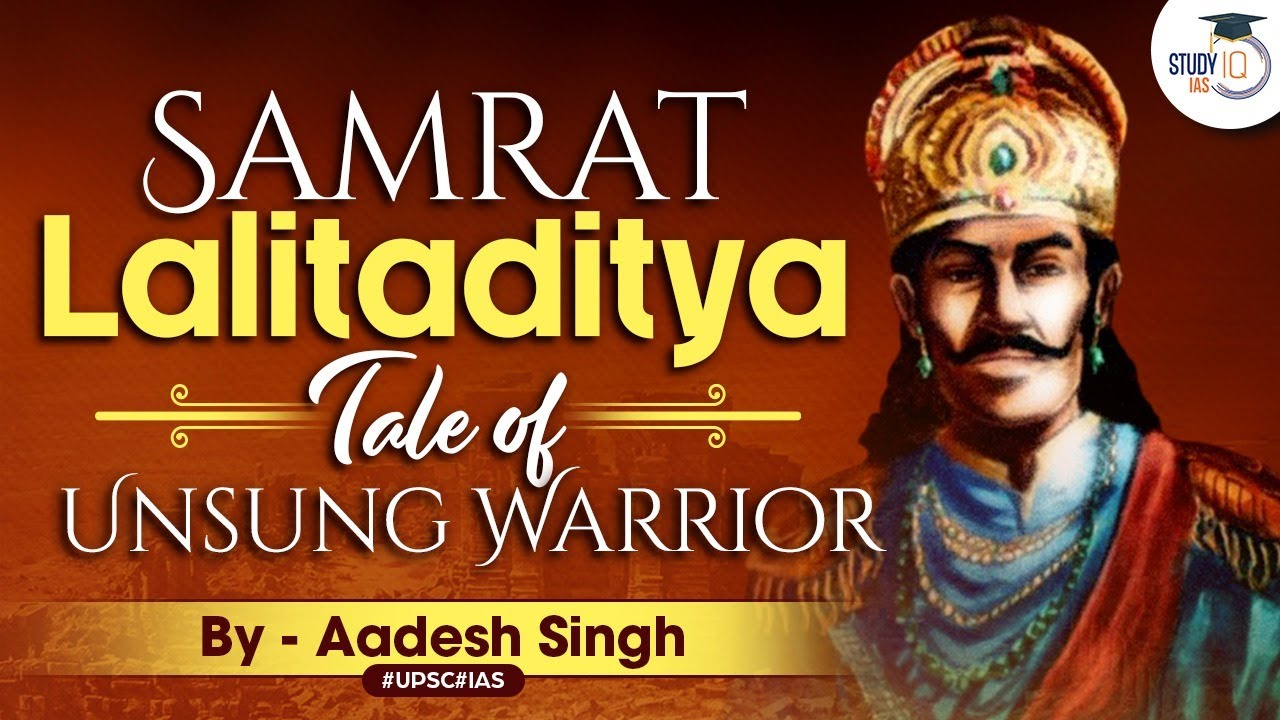
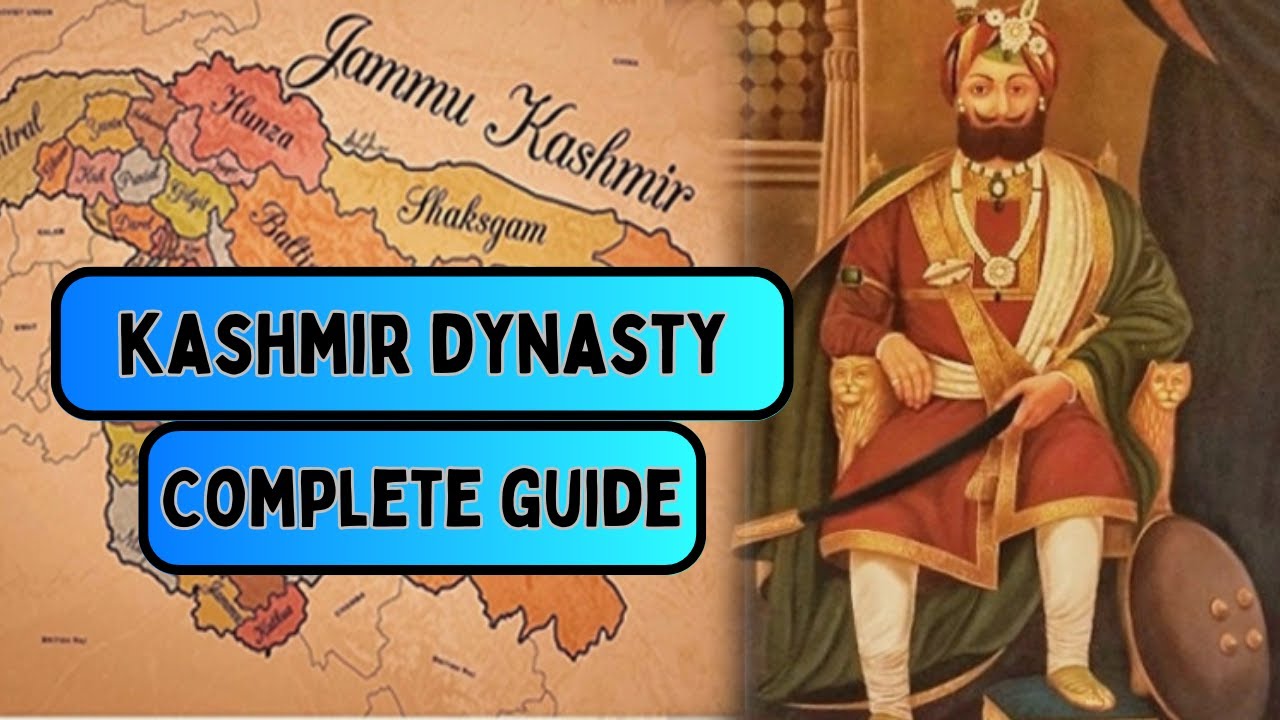
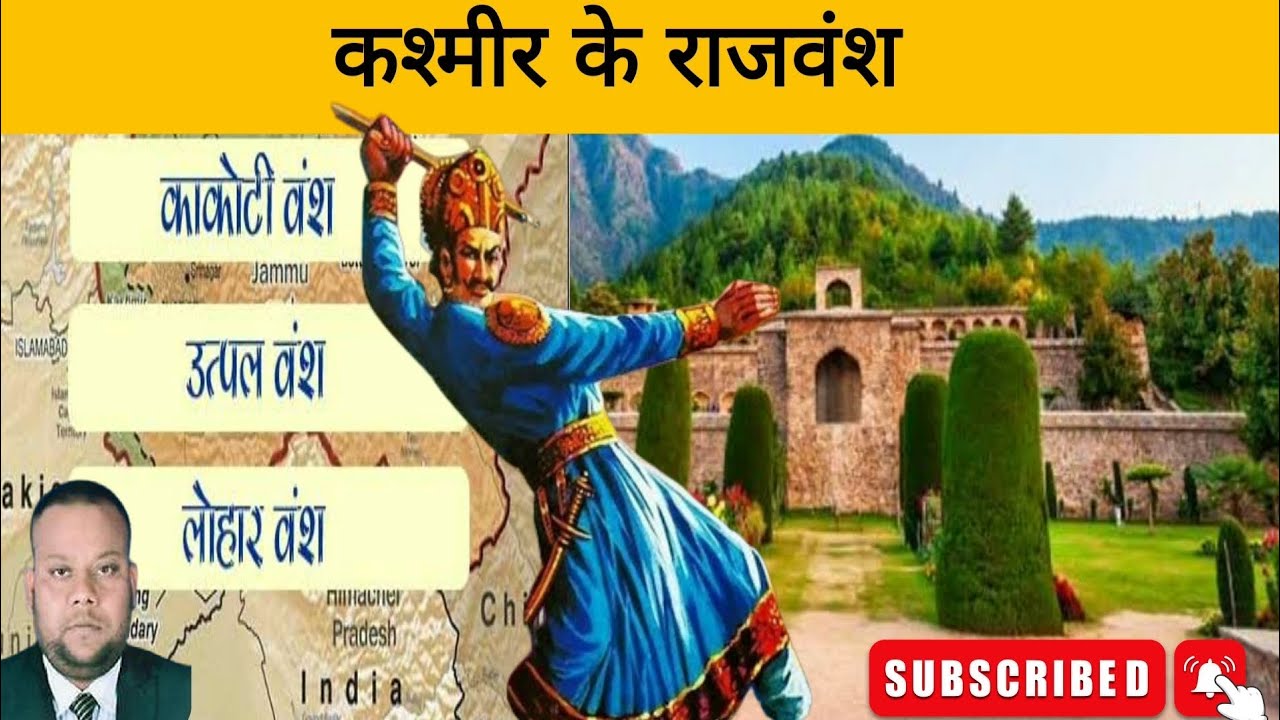
The medieval history of Kashmir stands out as a remarkable period marked by intense political shifts, pioneering rulers, and long military standoffs. During this era, the region transitioned from the iron-fisted, absolute governance of iconic female monarchs to the structurally volatile periods of the Lohara Dynasty. Understanding these centuries matters deeply because they reveal how internal administrative fractures, fiscal mismanagement, and powerful regional landlords could destabilize a wealthy frontier kingdom. This historical phase details not only the internal dynamics of Kashmiri court politics but also highlights how the valley positioned itself against sweeping foreign invasions, specifically resisting the early expansions of Turkic forces before eventually succumbing to geopolitical pressures.
In this chapter, you will understand:
- How Queen Didda consolidated absolute sovereign authority and managed royal succession.
- The structural weaknesses and major foreign military challenges faced by Samgramaraja.
- The tactical military campaigns of Ananta and the cultural vs. fiscal paradox of Harsha's reign.
- The chaotic final breakdown, fragmentation, and terminal collapse of independent Kashmiri Hindu rule.
Why this topic matters: This period is essential for understanding the geopolitical vulnerabilities of medieval border kingdoms. It shows how strategic domestic policies, financial discipline, and unified defense lines dictate the longevity of empires facing foreign pressures.
Core Idea: Independent Hindu rule in medieval Kashmir shifted from highly centralized autocracy under Queen Didda into an era of deep fragmentation during the Lohara Dynasty. Constant rebellions by feudal lords, combined with excessive treasury spending and tactical military mistakes against foreign powers, steadily chipped away at the state's foundations, eventually causing the total collapse of the ruling order.
Queen Didda’s Absolute Rule (980–1003 A.D.)
In the year 980 A.D., Queen Didda officially claimed the throne of Kashmir for herself. She established an unprecedented era of female governance where she exercised total and absolute authority over all state affairs. Her path to the throne was forged through immense political determination and a ruthless drive to crush any internal opposition that dared challenge her court throughout her entire reign.
The Lohara Succession and Political Continuity
Maintaining stable control over the palace required foresight regarding the royal line. Before her death in the year 1003 A.D., the powerful queen took decisive steps to ensure that her family's political dominance would outlive her own rule.
- She named her nephew, Samgramaraja, as the official heir to the throne.
The Foundation of the First Lohara Dynasty
This calculated transfer of power formally established the Lohara Dynasty in Kashmir, ensuring a smooth transition without a bloody succession vacuum.
- The succession successfully bridged the old ruling structure with the new dynasty.
- It unified prominent regional family alliances under one stable crown.
- The move temporarily quieted the ambitious rival factions inside the royal court.
- It set the stage for the next century of Kashmiri administrative and military history.
The Lohara Dynasty: Military Struggles and Final Collapse
The rise of the Lohara Dynasty marked the beginning of a highly volatile era for Kashmir. This historical stretch was characterized by structural administrative weaknesses, constant military conflicts, extreme fiscal strain, internal betrayal from local landholders, and an eventual inability to hold off aggressive foreign expansions.

- The era exposed how deeply internal rivalries could weaken a kingdom's border defense systems.
Samgramaraja and Mahmud's Challenge
Ascending the throne in 1003 A.D., Samgramaraja proved to be a weak monarch. Because of his passive leadership style, the actual administrative control and direct military command fell completely onto his influential Prime Minister, Tunga.
- (i) Foreign Intervention: In the year 1014 A.D., Samgramaraja ordered Tunga to lead a large army out of the valley to assist the Shahi King Trilochanpala, who was facing aggressive attacks from Sultan Mahmud of Ghazni.
- (ii) Military Defeat: Despite securing a few early tactical wins, Tunga's forces were decisively crushed by Sultan Mahmud’s battle-tested army, marking a major turning point where Kashmir's army failed to stop the rising Turkic power.
Ananta and the Resurgence of Territorial Dominance
Following a short, chaotic crisis over who would rule after Samgramaraja’s death, Ananta claimed the crown. He quickly showed the strong military capability needed to rebuild Kashmir’s regional standing through a series of focused, aggressive campaigns.
- Suppressing Internal Foes: He successfully put down a major uprising organized by the Damaras (feudal landlords) and defeated an invading army of Dards coming down from the northern frontiers.
- Regional Supremacy:Ananta re-established royal dominance by overthrowing Salavahana, the ruler of Chamba, while successfully expanding his political influence over Darvabhisara, Trigarta, and Bhartula.
Harsha: Cultural Patron and Fiscal Ruin
Following the death of Ananta and the brief, unstable reigns of Kalasha and Utkarsha, Harsha ascended the throne. At the start of his rule, he looked like an exceptional monarch, showing genuine talent for organized governance and providing deep, dedicated patronage to culture, literature, and art.
- (i) Military Victories:Harsha successfully collected tribute from the kingdom of Rajapuri (modern Rajouri) and turned back a dangerous domestic invasion led by his half-brother Vijayamalla, who had secured military backing from the king of Darada.
- (ii) Financial Collapse: Despite his obvious intelligence and cultural achievements, Harsha’s rule fell apart due to his extravagant personal spending, which completely emptied the royal treasury.
- (iii) Tragic End: His turbulent reign ended in bloodshed in the year 1101 A.D. when he was assassinated by his own kinsmen, Ucchala and Sussala, who cleared the way to build the Second Lohara Dynasty.
The Second Lohara Dynasty and Jayasimha's Struggles
The Second Lohara Dynasty, started by Ucchala, suffered from the exact same destructive internal power struggles that had plagued the past. The regional Damaras remained a constant threat, actively working to destabilize the crown's authority.
- (i) Sussala’s Conflict:Ucchala's brother, Sussala, spent his reign fighting brutal rebellions launched by the Damaras. These rebels were led by Harsha's vengeful grandson, Bhikshachara, who briefly managed to drive Sussala completely out of the capital city.
- (ii) Jayasimha’s Reign (1128–1155 A.D.):Jayasimha, the son of Sussala, brought back a desperate measure of law and order to the valley and successfully won back the home territory of Lohara.
- (iii) Diplomatic Relations: Showing strong political intelligence, Jayasimha formed vital alliance networks with other powerful Indian ruling houses, including the Gahadavalas and the Silahara king of Konkan.
The Final Decline and End of Hindu Rule in Kashmir
Following the death of Jayasimha, the dynasty slipped into its absolute final breakdown. This phase was defined by weak monarchs, predatory ministers who controlled the crown, and endless internal civil wars.
Late medieval archaeological remains from the twilight of independent Hindu rule in the Kashmir Valley. - (a) Vantideva’s Weakness:Paramanuka was followed by Vantideva (who died in 1165 A.D.). His weak administration marked the definitive downward spiral for the dynasty as real power shifted completely into the hands of palace ministers.
- (b) Tragic Usurpation: A destructive civil war tore through the region, resulting in the murder of Samgramadeva in 1252 A.D. by members of Kalhana’s highly influential family line, leaving the crown completely unprotected.
- (c) Final Foreign Attack: The chosen ruler, Lakshmanadeva (1273 A.D.), who was widely known as a learned scholar, was defeated and executed by the Turkic invader Kajjala in 1286 A.D.. This defeat triggered the immediate Partition of Kashmir between Sangramachandra and Simhadeva, ending unified ancient Hindu rule across the Kashmir Valley.
Quick Revision Capsule: Key Rulers of Medieval Kashmir
Review this comprehensive summary table detailing the major rulers, their core policies, and the direct historical impacts of their reigns:
| Ruler & Timeline | Key Policy & Governance Style | Major Historic Outcome |
|---|---|---|
| Queen Didda (980–1003 A.D.) | Absolute centralized autocracy; crushed all noble opposition. | Secured long-term family continuity by establishing the Lohara Dynasty. |
| Samgramaraja (1003–1028 A.D.) | Weak, passive monarch; left administration to Prime Minister Tunga. | Faced critical military defeats against Sultan Mahmud of Ghazni in 1014 A.D.. |
| Ananta (Late 11th Century) | Aggressive territorial expansion and robust border security operations. | Suppressed the Damaras and overthrew the hostile kingdom of Chamba. |
| Harsha (Died 1101 A.D.) | Cultural patronage mixed with unchecked, lavish palace expenditure. | Caused complete financial collapse of the state treasury; assassinated by kinsmen. |
| Jayasimha (1128–1155 A.D.) | Strategic diplomacy with external kingdoms like the Gahadavalas. | Temporarily restored internal order and recovered lost family territories. |
Summary
The historical trajectory of medieval Kashmir underscores how critical internal administrative cohesion and economic stability are to the preservation of national sovereignty. The absolute authority built by Queen Didda provided a firm foundation, but the subsequent Lohara Dynasty struggled to control the rising power of internal feudal landlords known as the Damaras. The combination of hollowed-out public finances under spendthrift kings like Harsha and a sequence of vulnerable, hands-off rulers left the valley exposed to external military shocks. The final breakdown accelerated through palace plots and civil wars, leaving Kashmir politically fractured and unable to withstand foreign Turkic campaigns, culminating in the historic collapse of independent Hindu rule by the late 13th century.
Quick Revision Points
Focus heavily on these crucial historical checkpoints for your examinations:
- (i) Queen Didda held complete control of the state, crushing all palace rivals before passing power to her nephew in 1003 A.D..
- (ii) The early Lohara era suffered major defeats when Tunga's allied expedition failed against Mahmud of Ghazni in 1014 A.D..
- (iii) King Harsha's reign presents a stark contrast between high cultural achievement and absolute fiscal ruin caused by unchecked spending.
- (iv) The execution of the scholar-king Lakshmanadeva by the invader Kajjala in 1286 A.D. directly brought independent Hindu rule to its close.
- Exam Tip: Pay close attention to the destructive role of the Damaras across multiple reigns. Evaluators frequently ask how these domestic feudal landlords systematically dismantled central royal power and paved the way for foreign invasions.
Frequently Asked Questions (FAQ)
Q1: Why is Queen Didda considered an exceptional ruler in Kashmiri history?
A1: Queen Didda is standout because she successfully broke through traditional gender boundaries to claim absolute sovereign power in 980 A.D.. She maintained total dominance over a fractured court by systematically eliminating political rivals and securing long-term institutional stability by founding the Lohara Dynasty.Q2: What caused the economic breakdown of the kingdom during King Harsha's reign?
A2: Although King Harsha was an intellectual patron of art and literature, his administration collapsed due to extravagant spending habits. His massive, unregulated expenses completely drained the imperial treasury, sparking domestic revolutions that ended in his assassination in 1101 A.D..Q3: How did independent Hindu rule in the Kashmir Valley finally terminate?
A3: The final collapse occurred after long periods of civil conflict and weak ministerial governance. The structural end came in 1286 A.D. when the invader Kajjala defeated and executed King Lakshmanadeva, causing a permanent political partition of the valley between regional contenders.